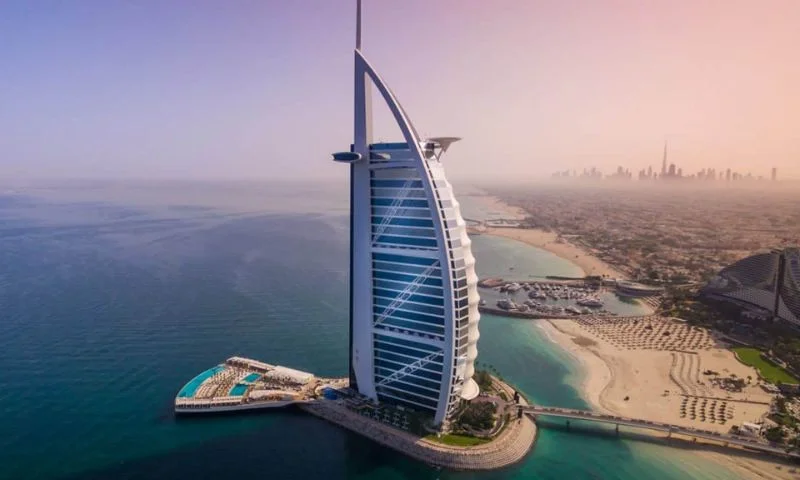
Dubai’s iconic luxury hotel, the Burj Al Arab, is set to undergo a comprehensive 18-month restoration project, marking one of the most significant upgrades since the property first opened in 1999.
The announcement was confirmed by operator Jumeirah Group, which said the hotel will temporarily close to guests while extensive refurbishment works are carried out across its interiors.
Focus on preserving identity while modernising interiors
According to the operator, the restoration will focus primarily on upgrading the hotel’s interiors while ensuring that its distinctive design and architectural identity are preserved.
The project has been described as a carefully planned effort to maintain the property’s globally recognised aesthetic while modernising facilities to meet evolving luxury standards.
Officials said the restoration will be led by an international design expert, highlighting the scale and precision of the upgrade.
The Burj Al Arab, often described as one of the world’s most recognisable hotels, has been a defining symbol of Dubai’s luxury tourism industry for more than two decades.
Landmark status and global appeal
Built on an artificial island approximately 280 metres off Jumeirah Beach, the sail-shaped hotel has become synonymous with Dubai’s rise as a global tourism hub.
Since its opening in 1999, the property has attracted high-profile guests and global attention, frequently marketed as one of the most luxurious hotels in the world.
Its interiors are known for their opulence, featuring extensive use of gold leaf, rare marble and elaborate design elements that have defined its “seven-star” reputation.
The restoration comes as the hotel approaches more than 25 years of operation, with analysts noting that high-end hospitality assets often require major upgrades to remain competitive in the luxury segment.
Timing and strategic positioning
The closure is expected to take effect in 2026, with the hotel remaining unavailable to guests throughout the 18-month restoration period.
Industry experts say the timing reflects a broader strategy within Dubai’s tourism sector to refresh flagship properties while maintaining the city’s reputation for premium hospitality.
The move also coincides with increased competition in the luxury hotel market, both within the UAE and globally, as new high-end developments continue to emerge.
Broader implications for Dubai tourism
The temporary closure of such a high-profile landmark is likely to have short-term implications for the city’s luxury tourism offerings, though officials say the long-term benefits will outweigh the disruption.
Analysts note that Dubai has a diverse hospitality portfolio, allowing it to absorb the temporary loss of one of its flagship properties.
The restoration is expected to reinforce the Burj Al Arab’s position as a leading luxury destination once it reopens, with upgraded interiors and enhanced guest experiences.
Outlook
The planned restoration underscores Dubai’s continued investment in maintaining its status as a global luxury tourism hub.
By modernising one of its most iconic properties while preserving its architectural identity, the city is aiming to balance heritage with innovation in a competitive global market.