

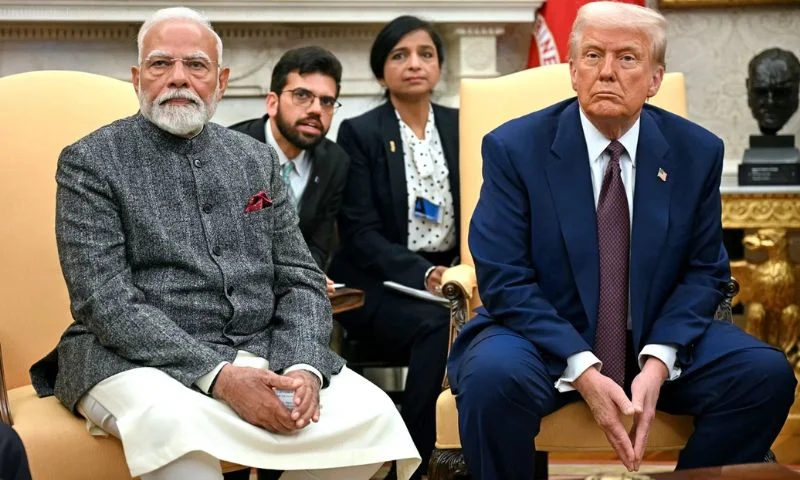
Former United States President Donald Trump has amplified controversial remarks about India after sharing a post on social media that described the country as a “hellhole” while arguing against US birthright citizenship laws. The post, originally written by conservative commentator Michael Savage and later shared by Trump on his Truth Social platform, criticised the long-standing policy that grants citizenship to individuals born in the United States. In the message, Savage wrote, “A baby here becomes an instant citizen, and then they bring the entire family in from China, or India, or some other hellhole on the planet.” Trump reshared the post without additional comment, effectively endorsing the statement as part of his broader immigration stance. Immigration argument tied to controversial claim Trump has repeatedly argued that birthright citizenship is being misused and should be restricted. The reshared post framed the issue as a loophole that allows immigrants to secure legal status through childbirth in the US. The remarks align with Trump’s long-standing criticism of what he has described as “birth tourism”, a term used by opponents of the policy to refer to individuals travelling to the US to give birth and obtain citizenship for their children. The debate centres on the interpretation of the 14th Amendment, which guarantees citizenship to most people born on US soil. Trump and his allies have argued for revisiting this provision, although legal experts say such changes would face significant constitutional hurdles. Continued focus on immigration rhetoric The post reflects Trump’s continued use of strong language when addressing immigration, particularly in the context of policy proposals aimed at tightening citizenship rules. In recent years, he has repeatedly highlighted concerns about illegal immigration and its economic and social impact, positioning the issue as a central pillar of his political messaging. By sharing Savage’s remarks, Trump has reinforced a narrative that links immigration policy to broader perceptions of other countries, including India and China. Political messaging ahead of policy push The timing of the post comes as Trump continues to advocate for stricter immigration measures, including ending automatic citizenship for children born to non-citizen parents. Analysts say such statements are often used to energise political support and bring attention to policy debates that remain unresolved in US lawmaking. While Trump did not add commentary of his own, his decision to repost the statement has placed the language and its implications at the centre of ongoing discussions about immigration policy. Broader implications The use of such terminology in political discourse highlights how debates over immigration can extend beyond policy details into broader narratives about global inequality and migration patterns. Experts note that the birthright citizenship debate is likely to remain a key issue in US politics, particularly as discussions intensify around border control, legal immigration pathways and constitutional interpretation.

This 26-Year-Old Pakistani Just Joined the World’s Richest List
A 26-year-old entrepreneur from Karachi has entered the ranks of the world’s billionaires, as Forbes included Sualeh Asif in its 2026 global rich list, marking Pakistan’s return to the elite club after more than a decade. Asif, cofounder of the fast-growing artificial intelligence startup Cursor, is estimated to have a net worth of around $1.3 billion, according to Forbes data. Forbes listed him among the youngest billionaires globally and the only Pakistani to feature on this year’s ranking. The milestone is significant for Pakistan, which had not appeared on the global billionaire index since 2010. Analysts say Asif’s inclusion reflects the rising influence of AI-driven businesses in shaping new wealth globally. AI startup behind the rise Asif is a cofounder of Cursor, an AI-powered coding tool developed by the company Anysphere, which has seen rapid adoption among developers worldwide. The platform allows users to generate and edit code using artificial intelligence, streamlining software development processes. Cursor is now used by millions of developers across tens of thousands of companies, including major global firms. The company’s explosive growth has been driven by strong investor backing. In late 2025, Cursor’s parent company reached a valuation of approximately $29.3 billion after raising $2.3 billion in funding from leading venture capital firms. Industry observers say the startup is among the fastest-growing AI companies globally, generating more than $1 billion in annualised revenue, a rare milestone for a relatively young firm. From Karachi to MIT Originally from Karachi, Asif’s journey reflects a blend of academic excellence and entrepreneurial ambition. He represented Pakistan in the International Mathematics Olympiad between 2016 and 2018 before moving to the United States for higher education. He later studied at the Massachusetts Institute of Technology, where he met his cofounders. The four founders launched their startup in Silicon Valley, capitalising on the rapid rise of artificial intelligence tools in software development. Experts note that many of today’s youngest billionaires have emerged from the AI sector, which continues to attract massive global investment and reshape industries. Pakistan’s return to the billionaire map Asif’s entry into the Forbes list has broader implications for Pakistan’s global economic standing. His success places Pakistan back on the billionaire map, highlighting the growing role of overseas-based entrepreneurs with roots in the country. Economists say such milestones can boost investor confidence and inspire a new generation of tech founders in Pakistan. A broader AI-driven wealth trend The rise of Sualeh Asif comes amid a wider surge in AI entrepreneurship, with several young founders joining the ranks of billionaires through software and data-driven businesses. Cursor’s success underscores how AI tools are becoming central to global productivity, particularly in sectors like software development where automation is rapidly advancing. Analysts say the next wave of wealth creation is likely to be led by founders who can build scalable AI platforms with global reach. Outlook While Asif’s achievement marks a breakthrough moment, experts caution that sustaining such growth will depend on continued innovation and competition in the AI space. For now, his rise from Karachi to Silicon Valley represents a rare success story that bridges emerging markets and global technology leadership.
Is China Really 6,000x Ahead in AI? The Reality May Surprise You
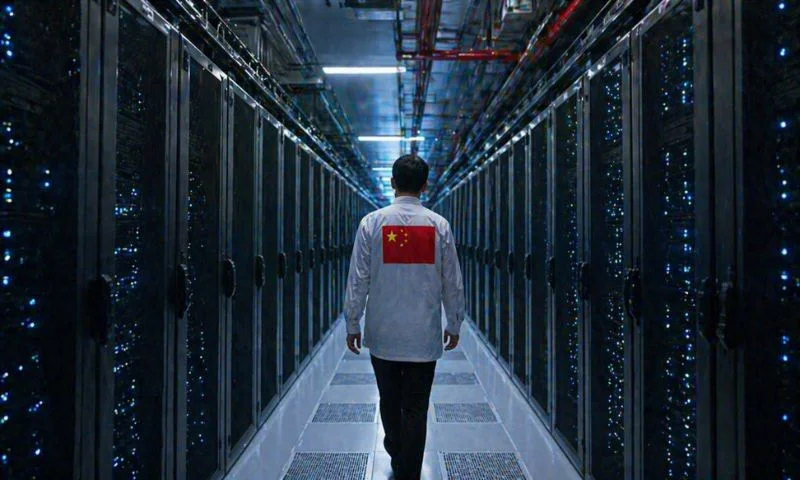
China’s reported artificial intelligence computing power has sparked global attention after figures suggested it could be as much as 6,000 times larger than what is reflected in widely used international benchmarks, raising questions about how AI capacity is measured and compared. The striking gap stems from differences in methodology rather than a sudden technological leap, according to analysis cited in recent reporting. Official Chinese data points to a massive domestic computing capacity, while global rankings such as the Top500 list capture only a fraction of that power. At the centre of the debate is the concept of a “dark pool” of computing resources, referring to infrastructure that is not fully accounted for in international comparisons. China’s Ministry of Industry and Information Technology has reported national AI computing power reaching around 1,882 exaflops, or quintillions of calculations per second, far exceeding figures seen in global rankings. Different metrics, different results Experts say the apparent 6,000-fold difference is largely due to how computing power is measured. International benchmarks such as Top500 focus on high-performance supercomputers, while China’s figures include a broader range of distributed computing resources, including data centres and AI-specific infrastructure. This means the two datasets are not directly comparable, even though they are often interpreted as such. Analysts note that China’s approach reflects a shift toward measuring practical AI capacity rather than just peak performance of individual machines. Massive infrastructure push The data also highlights China’s aggressive investment in AI infrastructure. The country has been building large-scale computing clusters and nationwide networks linking multiple data centres, enabling them to function as a single system. Recent developments include the launch of massive AI computing clusters and distributed networks connecting dozens of cities, designed to accelerate training of large AI models and support industrial applications. China’s strong electricity supply and energy infrastructure are also seen as key advantages, as AI systems require vast amounts of power to operate at scale. Narrowing gap with the US The debate comes amid intensifying competition between China and the United States in artificial intelligence. While the US continues to dominate global AI benchmarks and hosts many of the world’s largest data centres, China’s rapid expansion of domestic computing capacity is narrowing the gap. Unlike China, the US does not publish a single national figure for AI computing power, as much of its infrastructure is privately owned and measured differently. This makes direct comparisons difficult and contributes to the perception of a dramatic disparity. What it means for the AI race Experts say the key takeaway is not the headline number, but the underlying trend. China’s computing capacity is growing rapidly, supported by government policy, infrastructure investment and industrial demand for AI applications. The country has made artificial intelligence a central pillar of its economic strategy, integrating it across manufacturing, healthcare and technology sectors. Reality behind the numbers Despite the attention-grabbing figure, analysts caution against interpreting the 6,000 times claim as a direct measure of technological superiority. Instead, it reflects differences in reporting standards and the inclusion of broader computing resources. Even so, the data underscores the scale of China’s AI ambitions and its determination to compete at the highest level. As global competition intensifies, the race for computing power is likely to become a defining factor in the future of artificial intelligence.
Pakistan’s Electric Revolution Gains Momentum as Bold Shift Targets Fuel Import Reduction
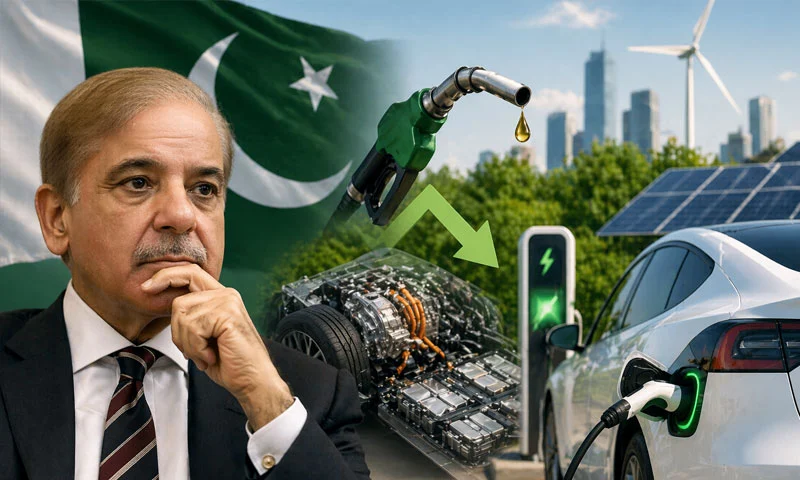
Pakistan is exploring large-scale electric vehicle retrofitting as part of efforts to reduce its fuel import bill, with officials informing Prime Minister Shehbaz Sharif that converting existing vehicles to electric could significantly ease pressure on foreign exchange reserves. The proposal was discussed during a high-level briefing, where authorities highlighted the potential of retrofitting conventional vehicles with electric powertrains as a cost-effective alternative to importing new electric vehicles. Retrofitting Strategy to Ease Fuel Burden Officials said the initiative could help Pakistan reduce its reliance on imported petroleum products, which account for a major share of the country’s import bill. By converting existing cars, buses and commercial vehicles into electric variants, the country could cut fuel consumption without requiring large-scale replacement of its vehicle fleet. The prime minister was informed that the plan would not only reduce fuel imports but also lower emissions and operational costs for vehicle owners. “Electric vehicle retrofitting can play a key role in reducing Pakistan’s fuel import burden while promoting clean energy,” officials said during the briefing. Authorities are also considering policy support, incentives and regulatory frameworks to facilitate the adoption of retrofitting technology across the country. Global Shift Toward Electric Vehicles The move aligns with a broader global transition toward electric mobility. According to the International Energy Agency, global electric vehicle sales exceeded 14 million units in 2023, accounting for nearly one in five new cars sold worldwide. This figure is expected to grow further as governments introduce stricter emissions standards and incentives for clean transport. Countries such as China, the United States and members of the European Union are rapidly expanding EV adoption, supported by infrastructure development and policy backing. In China alone, EVs make up more than 30 percent of new car sales, while Europe has also seen steady growth in electric mobility. Experts say the transition to EVs has already begun to reduce oil demand in several markets. The IEA estimates that widespread EV adoption could displace millions of barrels of oil per day globally by 2030, significantly lowering fuel consumption and import dependence for many countries. For developing economies like Pakistan, adopting EVs and retrofitting solutions could provide a practical pathway to achieve similar benefits without the high upfront costs associated with new electric vehicles. Economic and Environmental Impact Officials noted that EV retrofitting could generate economic benefits by creating new industries focused on conversion technology, battery systems and maintenance services. The initiative is also expected to support Pakistan’s climate goals by reducing carbon emissions and improving air quality in urban areas, where pollution levels remain high. Analysts say the success of the programme will depend on infrastructure development, including charging networks, as well as financial incentives to make retrofitting affordable for consumers. The government has already introduced policies to promote electric vehicles, including tax incentives and import duty reductions, as part of its long-term strategy to transition toward cleaner energy. As global momentum toward electric mobility continues to build, Pakistan’s focus on EV retrofitting reflects a pragmatic approach to reducing fuel dependency while embracing sustainable transport solutions.
Korean Fighter Jets Collided Mid-Air Because Pilots Were Taking Photos
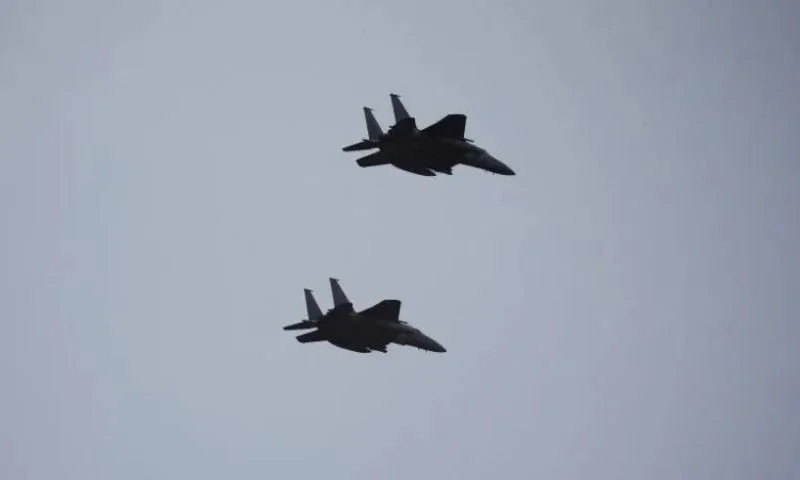
Two South Korean fighter jets collided mid-air after pilots attempted to take photos and videos during a routine flight, according to findings revealed in an official audit report, raising concerns over safety practices within the country’s air force. The incident, which occurred in December 2021 but has only recently been detailed, involved two F-15K aircraft flying in formation near the city of Daegu. Investigators found that the collision was triggered by in-flight manoeuvres linked to capturing images from the cockpit. According to the report, one of the pilots was on his final flight with the unit and wanted to document the moment. While returning to base, he began taking photographs using his personal mobile phone. Photo attempt led to dangerous manoeuvre The situation escalated when another pilot asked for video footage of his aircraft. In response, the pilot taking photos abruptly adjusted his position in the air to get a better angle. Investigators said the pilot “abruptly flew his jet up higher” to capture the shot, bringing the aircraft dangerously close to each other. One of the jets attempted to descend sharply to avoid impact, but the manoeuvre was unsuccessful, and the two aircraft collided mid-air. Both planes sustained damage, with one suffering a damaged wing and the other a damaged tail stabiliser. Despite the collision, both pilots managed to land safely and no injuries were reported. Costly mistake and disciplinary action The financial cost of the incident was significant, with repair expenses estimated at around 880 million South Korean won, equivalent to nearly $600,000. Following the incident, the pilot responsible for the manoeuvre was suspended from duty and later left the military to join a commercial airline. Authorities initially sought full compensation for the damages, but the amount was later reduced to about 88 million won after an appeal. The audit report concluded that the pilot’s actions were the primary cause of the collision but also pointed to broader institutional shortcomings. Widespread practice and systemic gaps Investigators noted that taking photos during flights had been a “widespread practice” among pilots at the time, suggesting that the behaviour was not an isolated case. The report also found that the South Korean Air Force shared some responsibility for failing to properly regulate the use of personal devices during flights. Experts say the findings highlight the importance of stricter operational protocols and enforcement, particularly in high-risk environments such as military aviation. Safety concerns in focus The revelation comes amid broader scrutiny of aviation safety standards in South Korea, where recent incidents have drawn attention to training procedures and operational discipline. Analysts note that while no lives were lost in this case, the incident underscores how seemingly minor lapses in judgment can lead to serious consequences. Authorities are expected to review policies governing the use of personal devices during flights to prevent similar incidents in the future.
