


Pakistan’s annual remittance inflows could rise to $50 billion if cryptocurrencies are legalised and properly regulated, according to Malik Bostan, chairman of the Exchange Companies Association of Pakistan. Speaking at a meeting of exchange company stakeholders on April 28, Bostan said remittances currently stand at around $38 billion. He argued that integrating digital assets into the formal financial system could unlock significant growth. “Pakistan is entering a new phase of digital transformation and will achieve stronger economic progress through modern financial systems,” he said. Read More: Pakistan Signs Deal with Trump-Linked Crypto Firm to Explore Stablecoin Payments Officials and industry representatives attended the session, including Zafar Paracha, Sheikh Sajid Hussain, Syed Zohaib and Bilal Bin Saqib, who leads the proposed Pakistan Virtual Assets Regulatory Authority. Bostan said transaction costs could drop sharply under a regulated crypto framework. He estimated costs would fall from around 6 percent to nearly 1 percent, making transfers cheaper and faster for overseas Pakistanis. Pakistan ranks among the world’s top remittance-receiving countries. Data from the State Bank of Pakistan shows inflows have remained a key support for foreign exchange reserves and economic stability. Licensing Framework and Regulatory Plans Authorities plan to introduce a phased licensing system for crypto-related activities. Bilal Bin Saqib said exchange companies will receive licenses under a proposed Crypto Council framework. “In the first stage, firms will be allowed to open accounts after obtaining an NOC from the Crypto Council,” he said. The broader framework aims to regulate exchanges, improve transparency and bring digital finance into the formal economy. Officials want to replace informal crypto usage with a monitored system that supports compliance and investor protection. Read More: The Biggest Bitcoin Mistakes Pakistanis Make And Why They Keep Happening Pakistan has seen growing interest in digital assets despite the absence of a formal regulatory structure. Analysts say a clear legal framework could attract investment and encourage innovation in fintech. Bostan said exchange companies will integrate fully into the system in the second phase. He added that authorities are working to start transactions soon so the public can benefit from the digital framework. Potential Economic Impact Experts believe lower transaction costs could significantly increase remittance flows through official channels. Many overseas Pakistanis currently rely on informal methods due to high fees and limited access. By reducing costs and improving convenience, the proposed system could redirect billions of dollars into the formal banking sector. This shift may strengthen foreign reserves and improve financial transparency. Bostan expressed confidence in the outcome. He said once the system becomes fully operational, Pakistan’s remittances could reach $50 billion annually. The move aligns with broader efforts to modernise the economy and adopt digital financial systems. Global institutions such as the World Bank have highlighted the role of fintech in improving financial inclusion and reducing transfer costs. Analysts caution that implementation and regulatory clarity will determine success. Still, they see the initiative as a major step toward integrating Pakistan into the global digital economy.

Property Market Set for Overhaul as Pakistan Moves to End Property File System
Pakistan is set to introduce sweeping real estate reforms within the next two months, aiming to overhaul how property transactions take place across the country. A key change includes abolishing the long-standing “property file system,” a practice where plots are traded on paper without clear ownership or development. Officials say the proposals will soon go before the federal cabinet for approval. Authorities believe ending this system will reduce speculation and bring greater transparency to the market. Under the proposed framework, full responsibility will shift to real estate developers. This means developers will become directly accountable for project delivery, legal compliance and investor protection. Experts say the current property file system has encouraged informal trading and price manipulation for years. Investors often buy files linked to future plots without guarantees, exposing them to delays or losses. The reforms will replace this structure with a more documented and regulated system. Industry analysts expect the move to improve trust among buyers and attract more formal investment into the sector. Tackling Structural Weaknesses Pakistan’s property market has long operated with limited oversight. Weak documentation, cash-based transactions and speculative buying have distorted pricing trends and reduced transparency. The new reforms seek to address these issues by tightening accountability at the developer level. By placing responsibility on developers, regulators hope to ensure that projects meet timelines and legal standards. Read More: Sazgar Engineering Plans Rs1.47 Billion Real Estate Investment in Lahore Officials also emphasised that the changes will align the sector with broader economic reforms. International financial institutions have repeatedly pointed to corruption risks and weak governance as barriers to sustainable growth in Pakistan. Recent governance assessments have highlighted the need for stronger institutions and better enforcement mechanisms. The real estate sector, due to its size and influence, remains central to these concerns. Focus on Accountability and Investor Protection Alongside structural changes, authorities say enforcement practices are also evolving. Several cases involving public officials remain under process, though communication around such matters has become more restrained. Officials confirmed that people have referred multiple cases to investigative and anti-corruption bodies. They stressed that due process and respect for all parties will remain a priority. Read More: FBR Cuts Islamabad Property Rates by Up to 35% in Major Relief Move They also raised concerns about how international surveys assess corruption levels, questioning both methodology and sample size. At the same time, they pointed to recent recovery efforts, claiming that funds retrieved over the past three months have reached unprecedented levels globally. All recovered amounts, they said, have been deposited into the federal consolidated fund. None of the funds are retained by any agency. Analysts believe the success of the real estate reforms will depend on consistent enforcement and clear implementation guidelines. If applied effectively, the changes could reshape one of Pakistan’s largest economic sectors and reduce long-standing risks for investors.

Swimmer Survives 34-Mile Crocodile River Challenge in Record Time
Andy Donaldson completed a record-breaking 34-mile swim through crocodile-inhabited waters in Western Australia, finishing the gruelling challenge in under 12 hours. The 35-year-old entered the Ord River just after 5:00 a.m. on April 29. He swam from Lake Argyle Dam wall to the Diversion Dam in Kununurra. The river runs through the remote Kimberley region. Experts estimate around 5,500 crocodiles live there. Read More: Australia Cracks Down on Gambling Ads in Major Reform Donaldson completed the route in 11 hours and 51 minutes, beating the previous record by more than four hours, according to reports from Australian Associated Press and ABC Australia. Despite the risks, he said he did not encounter any crocodiles during the swim. “I still have all my limbs,” he joked. “I didn’t see a single one, other than the Crocs that my coach was wearing on his feet. I don’t know whether to feel relieved or disappointed.” Heat, Currents and Mental Strain Donaldson faced multiple physical challenges throughout the swim, including strong currents and intense heat.The effort proved mentally and physically draining after nearly 12 hours in the water. “I felt like I was carrying an elephant on my back,” he told AAP. “Mentally, I was fatigued, physically, I was fatigued. I’d been sweating for over 10 hours, and I think I was quite dehydrated, so my muscles were starting to cramp really hard.” View this post on Instagram A post shared by Andy Donaldson (@andy.swimming) He added that the psychological aspect of endurance played a critical role in completing the challenge. “The mind always gives up before the body does,” he said, noting that he could have continued swimming if required. Support came from Simone Blaser, who became the first person to complete the same Ord River ultra swim in 16 hours and 13 minutes two years ago. She joined Donaldson for part of the route and helped pace sections of the swim. A Career Built on Extreme Endurance Donaldson has built a reputation as one of the world’s leading endurance swimmers. Born in Scotland, he has set multiple records across open water challenges globally. These include the fastest swim across the Cook Strait between New Zealand’s North and South Islands and a record relay circumnavigation of Bahrain. He also previously held the fastest time for the Oceans Seven, a demanding series of seven channel swims across different continents. His achievements also include the fastest circumnavigation of Manhattan Island, a benchmark event in marathon swimming. Read More: Man Sets Bizarre Guinness World Record by Passing Balloons Through Nose and Mouth Andy said he plans to pause before deciding his next challenge. “It’s important to celebrate the achievement, lift up the people that have helped make it possible, and just reflect on the learnings from it before moving on,” he told AAP. Experts say extreme swims like this highlight both the risks and the growing appeal of endurance sports. The Ord River route, known for its wildlife and harsh conditions, now stands as one of the most demanding river swims completed in record time.

Pakistan Claims Three Medals in Asian Beach Games
Pakistan’s Asian Beach Games medals Pakistan campaign gathered momentum in Sanya, China, as the country secured three medals through strong performances in wrestling and kabaddi. Wrestling Delivers Two Silvers and a Bronze Pakistan’s wrestling contingent led the medal tally with disciplined performances across multiple weight categories. Asad Ullah claimed a silver medal in the 80 kg category after reaching the final, where he lost to an Iranian opponent. Read More: LA Olympic 2028: Ticket Rush, T20 Format and Teams Qualification Explained Similarly, Inam Butt secured silver in the 90 kg weight class. He advanced to the final but fell short against an Iranian wrestler in the decisive bout. In the 70 kg category, Muhammad Abdullah added a bronze medal to Pakistan’s tally. He lost to a competitor from Kyrgyzstan but still finished on the podium. The results underline Pakistan’s continued strength in wrestling, particularly in regional and continental competitions where the country has historically performed well. Kabaddi Team Adds to Medal Count Pakistan also earned a bronze medal in kabaddi, extending its presence across multiple disciplines at the Asian Beach Games. The team’s performance reflected competitive depth and resilience against strong regional opponents. Read More: $3.8 Billion Olympic Stadium Plan Sparks Debate Over Green Space Kabaddi remains one of Pakistan’s traditional strengths, and the bronze finish highlights consistent participation at international events. The result also reinforces the sport’s relevance in multi-sport competitions such as the Asian Beach Games. Pakistan’s Presence at Asian Beach Games The Asian Beach Games bring together athletes from across Asia to compete in beach and coastal sports. The event, organised under the Olympic Council of Asia, includes disciplines such as wrestling, kabaddi, volleyball, and water sports. Pakistan’s medal haul in Sanya reflects a focused effort in select sports where the country has competitive advantages. Wrestling continues to serve as a key source of medals, while kabaddi contributes to overall standings. The performances in China highlight the importance of continued investment in training and international exposure. Athletes competing at this level gain valuable experience against regional rivals such as Iran and Central Asian countries. Read More:Rajasthan Royals Sale Explained: How Shane Warne’s Family Will Earn Rs 450 Crore Pakistan’s showing at the Asian Beach Games may also boost confidence ahead of future continental and global competitions. Success in events like these often plays a role in shaping preparations for larger tournaments. The three-medal outcome demonstrates steady progress and maintains Pakistan’s presence in Asian multi-sport events. With wrestling and kabaddi delivering results, the country continues to rely on its traditional strengths to compete at the regional level.

American Finds Dream Life in China After Slashing Costs by 75%
Bradley Krae says his life in Shenzhen represents his version of the American Dream in China, after moving from the United States nearly a decade ago and building a new life with his family. From One-Way Ticket to New Life Krae moved to Shenzhen in 2016 at the age of 27 after securing a job as an English teacher. He funded the move by selling his car in North Carolina and buying a one-way ticket. It marked his first trip outside the United States. “If you’d told me back then that I’d end up in China, I would’ve laughed,” he said. Read More: Five New Chinese EVs in The Price of One Car in US: The Price Gap Shaking the Auto Industry Born in California, Krae grew up across several states including Arizona, Colorado, Virginia, Montana and Oklahoma. He said he never stayed in one place long enough to call it home. Over the next four years, he travelled across Asia, visiting countries such as Cambodia and Thailand. He said the experience helped him “test” his courage and expand his worldview. Krae later met his wife in Shenzhen. She was born in French Polynesia to Chinese parents and worked as a French teacher. The couple spent three years in China before the Covid-19 pandemic forced them to relocate to Tahiti when borders closed. Five years later, they decided to return. “China still felt like our true home,” he said. The family moved back to Shenzhen in June 2025 and now live there with their two young children. Lower Costs and Tech-Driven Lifestyle Krae said the cost of living played a major role in his decision. He estimates that he now spends about 25 percent of what he used to spend in the United States. “All told, I’m paying about a fourth of the cost of what I used to pay for my monthly expenses when I lived in the US — and that was when I was living by myself,” he said. Read More: Is China Really 6,000x Ahead in AI? The Reality May Surprise You He earns around $4,000 a month teaching English. The family rents a three-bedroom apartment for about $1,000 monthly. Internet costs roughly $29, electricity averages $100, and groceries for a family of four total about $100 per month. Dining out remains affordable, with meals rarely exceeding $10 for the entire family. Healthcare costs stand at around $90 per month. Krae described Shenzhen as a city shaped by rapid technological growth. “To me, Shenzhen is like if Silicon Valley and New York City had a baby,” he said. He pointed to drone deliveries, autonomous taxis and widespread QR-code payments as examples of everyday innovation. Public transport also remains inexpensive, with subway fares starting at around 30 cents. “Technology feels both advanced and accessible here,” he added. Family Life and New Opportunities Krae said safety remains one of the biggest advantages of living in Shenzhen. “I have no need or desire to become a helicopter parent here,” he said. “I’m not worried about things like gun violence.” He joked that his main concern involves “electric scooters flying down the sidewalks.” Read More: China Launches World’s First Floating Artificial Island for Deep-Sea Research The city offers more than 1,000 parks and multiple indoor play areas. His children attend a public kindergarten where they learn Mandarin. At home, they speak English with him and French with their mother. The school costs about $300 per semester for both children, including meals. Krae also said food quality appears healthier compared to his experience in the United States. During his time in Tahiti, Krae began sharing his experiences online. In 2025, he started posting regularly on TikTok, encouraged by his wife. His videos gained traction, turning him into a social media influencer. He later secured a marketing manager role earning about $3,500 monthly, alongside $1,200 from side income and content creation. “It’s a more traditional job than what I’m used to,” he said, “but I’m not stuck at a desk all day.” “No one is more surprised than me that I’ve found my own version of the American Dream here in China,” he said.

Japan Airlines Tests Humanoid Robots to Take Over Cargo Jobs at Tokyo Airport
Japan Airlines plans to introduce humanoid robots for ground handling operations at Haneda Airport starting May, marking a significant shift in how airports manage labour-intensive tasks. The airline said the two-year trial aims to reduce the physical burden on workers as Japan’s aviation sector faces a deepening labour shortage. The robots, developed in China and deployed in partnership with GMO AI & Robotics, will initially handle cargo loading and unloading. During a media demonstration on Monday, the machines lifted and moved cargo containers, replicating tasks that typically require multiple human workers. JAL currently employs around 4,000 ground handling staff, but rising demand has stretched operations. Japan’s travel sector has seen a sharp rebound, with more than seven million foreign visitors arriving in the first two months of the year, according to data from JTB Group. This surge has intensified pressure on airport services already grappling with a shrinking workforce. Labour Shortage Driving Automation JAL said the combination of rising inbound tourism and a declining working-age population has created operational challenges across airports. Industry experts have long warned that Japan’s demographic trends could disrupt labour-heavy sectors like aviation. “While airports appear highly automated and standardised, their back-end operations still rely heavily on human labour and face serious labour shortages,” said Tomohiro Uchida during the demonstration. The airline hopes the robots will eventually take on additional duties such as cabin cleaning and operating ground support equipment. These tasks often involve repetitive movement and physical strain, which companies increasingly want to offload to machines. “Using robots for physically demanding tasks will provide significant benefits to employees,” Kyodo news agency quoted Yoshiteru Suzuki as saying. Humans Still Central to Safety Despite the push toward automation, JAL emphasized that human workers will remain essential in critical areas. Suzuki noted that responsibilities like safety management cannot be replaced by machines. Airports across Japan have already begun integrating robotics into daily operations. Some facilities use robots for security patrols and retail assistance, reflecting a broader national effort to adopt automation in response to demographic pressures. Analysts say JAL’s trial could set a precedent for other airlines worldwide. If successful, it may accelerate the adoption of humanoid robotics in aviation, particularly in regions facing similar labour shortages. However, experts caution that large-scale deployment will depend on reliability, cost efficiency, and regulatory approval. For now, the trial at Haneda will serve as a test case for blending human expertise with robotic support in one of the world’s busiest travel hubs.
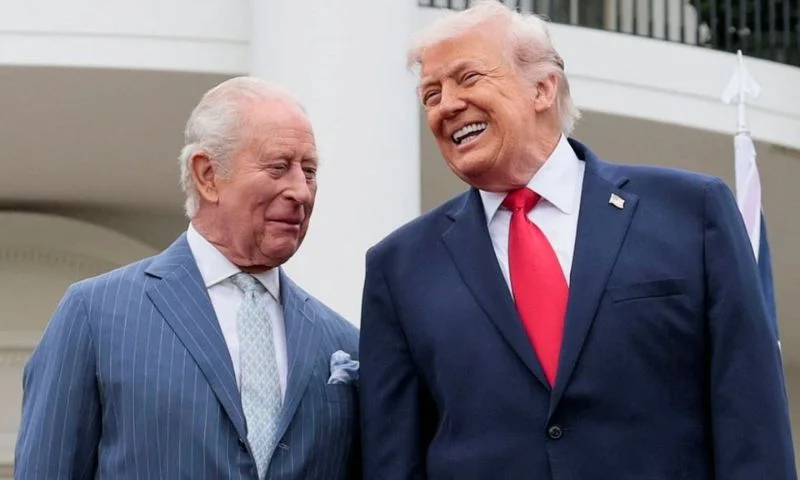
“You’d Be Speaking French”: Charles Teases Trump in Viral Moment
King Charles jokes about Trump at White House dinner during a high-profile state visit, as the British monarch used humor to reference past comments by Donald Trump and underline the long-standing alliance between the United States and the United Kingdom. Speaking at a formal dinner in the East Room of the White House on April 28, King Charles III responded to Trump’s earlier remarks about World War II. “You recently commented, Mr. President, that if it were not for the United States, European countries would be speaking German,” Charles said. He added, “Dare I say that, if it wasn’t for us, you’d be speaking French.” The comment drew laughter from the audience and echoed Trump’s statement at the Davos summit in January, where he said that without US help in World War II, “you’d be speaking German and a little Japanese.” Read More: “He’s So Cute”: Trump Says His Mother Had a Crush on King Charles Jokes reflect history and diplomacy Charles framed his remarks within a historical context, referring to British and French colonial influence in North America before US independence. Britain and France competed for control of the continent, shaping early cultural and linguistic influences. The monarch continued with further lighthearted references. He joked about renovations at the White House, noting recent structural changes linked to Trump’s plans for a $400 million ballroom. “I am sorry to say that we British, of course, made our own attempt at real estate redevelopment of the White House in 1814,” Charles said, referencing the burning of the building by British troops during the War of 1812. He also described the evening as “a very considerable improvement on the Boston Tea Party,” referring to the 1773 protest that became a defining moment in American history. Despite the humor, the tone of the evening emphasized the “special relationship” between London and Washington. Both sides highlighted shared history and cooperation, even as tensions persist over issues such as Iran. Gift and political undertones Charles presented Trump with a symbolic gift during the dinner. He handed over the bell from the British submarine HMS Trump, which was launched in 1944 during World War II. “May it stand as a testimony to our nations’ shared history and shining future,” Charles said. He added, “And should you ever need to get hold of us, well, just give us a ring.” Trump responded with his own remarks, praising the monarch’s earlier speech to Congress. “I want to congratulate Charles on having made a fantastic speech today at Congress,” he said. “He got the Democrats to stand – I’ve never been able to do that.” The exchange took place against a backdrop of geopolitical tension, particularly over the conflict involving Iran. Trump has criticized European allies in recent months, including British Prime Minister Keir Starmer, over defense cooperation. Analysts say the humor displayed at the dinner served a diplomatic purpose. It reinforced personal rapport while signaling continuity in US-UK relations. The evening combined symbolism, history, and politics, illustrating how ceremonial events often carry deeper strategic meaning. The exchange between Charles and Trump captured global attention, blending wit with diplomacy at a moment of international focus.

Players Risk Red Cards for Covering Mouths at FIFA World Cup
The FIFA red card rule mouth covering directive will take centre stage at the upcoming Club World Cup as officials confirmed that players who cover their mouths during disputes with referees could face dismissal, in a move aimed at increasing transparency in the game. New FIFA Rules Approved Ahead of World Cup International Football Association Board approved two law amendments during a special meeting in Vancouver, Canada. The changes followed proposals submitted by FIFA. Read More: From $15 to $150: Train Fare Spike Hits FIFA World Cup Fans Under the updated rules, players could face a red card if they cover their mouths while speaking to opponents during disputes. Officials said the move aims to improve transparency and accountability during matches. The second amendment targets players who leave the pitch in protest at refereeing decisions. Referees can now issue red cards in such cases, especially when actions disrupt the flow of the match. Both changes will operate as competition opt-ins. FIFA has confirmed that it will apply them at the upcoming World Cup. Incidents Prompting Rule Changes The issue of players covering their mouths gained attention in February during a Champions League match. Gianluca Prestianni raised his shirt while speaking to Vinicius Jr. Authorities accused Prestianni of racist abuse at first. A later investigation by UEFA found him guilty of homophobic conduct. Officials handed him a six-match ban, with three matches suspended. Read More: FIFA Confirms Iran Will Play World Cup Matches in US Despite War Tensions Lawmakers discussed the incident at the annual meeting in Wales before reconvening ahead of the FIFA Council session in Vancouver. The final decision gives referees full discretion when applying the rule. The second rule follows events at the Africa Cup of Nations final. Senegal players walked off the pitch in protest at a penalty awarded to Morocco. The team returned later, but the incident triggered disciplinary action. The Confederation of African Football later stripped Senegal of the title and awarded Morocco a 3-0 win. Officials said the new rule will also apply to team staff who incite such actions. FIFA Pushes Deterrence and Transparency Gianni Infantino said the rule aims to create a deterrent effect. He supported strict punishment in cases where players hide communication during disputes. Infantino said: “If a player covers his mouth and says something, and this has a racist consequence, then he has to be sent off, obviously.” Read More: TikTok Named FIFA’s First Preferred Platform: A New Era for World Cup 2026 Fans He added: “There must be a presumption that he has said something he shouldn’t have said, otherwise he wouldn’t have had to cover his mouth.” Infantino further said: “If you do not have something to hide, you don’t hide your mouth when you say something. That’s it, as simple as that.” Officials confirmed that referees will consider all circumstances before issuing a red card. Teams that abandon matches could also forfeit results under the updated regulations. The measures reflect FIFA’s broader effort to strengthen discipline and ensure fair conduct at the World Cup.
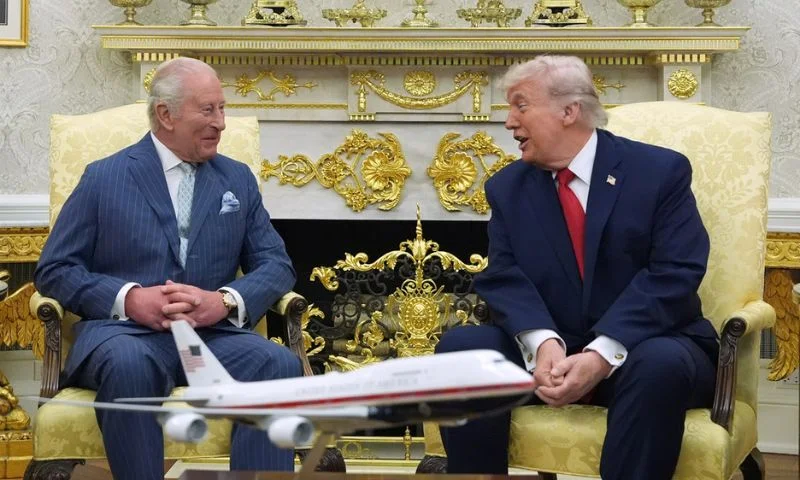
“He’s So Cute”: Trump Says His Mother Had a Crush on King Charles
Trump recalls mother crush on King Charles during a formal welcome ceremony at the White House, where Donald Trump shared a personal story about his Scottish-born mother while hosting King Charles III and Queen Camilla. Speaking on the South Lawn on Tuesday, Trump said his late mother, Mary Anne MacLeod, “loved the royal family” and closely followed appearances by Queen Elizabeth II. “Any time the Queen was involved in the ceremony or anything, my mother would be glued to the television,” Trump said. He added that she would often remark, “Look, Donald, how beautiful that is.” Recalling her reaction to a younger Prince Charles, Trump said, “I also remember her saying, very clearly, ‘Charles, look, young Charles. He’s so cute’.” He then told the audience, “My mother, my mother, had a crush on Charles. Can you believe it? Amazing.” Read More: New Epstein Revelations Draw Rare Royal Response From Prince William, Kate Ceremony Marks Royal Visit and Personal Reflection Trump made the remarks while welcoming the British monarch and Queen Camilla during their official state visit to the United States. The event formed part of a broader diplomatic engagement between Washington and London. During his speech, Trump also spoke about his family background. He noted that his mother was born in Stornoway in Scotland’s Outer Hebrides and moved to the United States at the age of 19. The US president used the occasion to pay tribute to Queen Elizabeth II, who died in 2022. He described her as a “very, very special woman who is very greatly missed on both sides of that mighty Atlantic.” Observers said the anecdote added a personal tone to a ceremony that otherwise focused on diplomatic ties. The British royal family has long held symbolic significance in US-UK relations, often featuring in state visits and public events. Read More: New Passport Design in US to Include Trump Picture Political Remarks Surface During Speech Trump also briefly shifted to foreign policy during his address. He referred to tensions involving Iran and said the issue had been discussed in the context of ongoing diplomatic engagement. “We’re doing a little Middle East work right now,” Trump said, adding, “we’re doing very well.” He went on to claim that both he and King Charles shared concerns about Iran’s nuclear ambitions. “We’re never going to let that opponent have a nuclear weapon,” he said, adding, “Charles agrees with me even more than I do.” The comment introduced a political dimension to the ceremony, highlighting ongoing geopolitical discussions between allies. Despite that, Trump’s remarks about his mother remained the most widely shared moment from the event. Clips of the anecdote circulated quickly online, drawing attention for their informal tone during an otherwise formal occasion. The story underscores how personal narratives can intersect with diplomacy, especially when involving globally recognized figures such as the British monarch.

Historic Century Puts Babar Azam at Top of PSL Records
Pakistan captain Babar Azam delivered a record-equalling performance in the Pakistan Super League as his century against Islamabad United saw him match key milestones, including the most centuries in PSL history while also strengthening his position among the top performers for most runs in a PSL season. Babar Azam Equals PSL Century Record Babar Azam scored a composed century that placed him level with the record for most centuries in PSL history, reaching four centuries in 110 innings. Read More: Big Blow for Naseem Shah as PCB Imposes Rs2 Crore Fine for Contract Breach He now shares the top spot with Usman Khan, who also has four centuries but achieved the mark in just 35 innings. Behind them are Kamran Akmal with three centuries in 74 innings, Rilee Rossouw with three in 98 innings, and Fakhar Zaman with three in 105 innings. The latest knock added another milestone to Babar’s PSL career and reinforced his consistency across multiple seasons. Dominance Reflected in Season Run Records Babar Azam’s performance also highlights his dominance in the list of most runs in a PSL season, where he features multiple times among the top performers. Fakhar Zaman holds the joint record with 588 runs in 2022 for Lahore Qalandars, while Babar Azam matched that tally with 588 runs for Peshawar Zalmi in 2024. He also recorded 569 runs in 2024 for Peshawar Zalmi and 554 runs in 2021 for Karachi Kings. In addition, he scored 522 runs in 2023 for Peshawar Zalmi, further underlining his consistency. Read More: LA Olympic 2028: Ticket Rush, T20 Format and Teams Qualification Explained Other notable performances include Mohammad Rizwan with 550 runs in 2023 and 546 runs in 2022 for Multan Sultans, as well as 500 runs in 2021. Kusal Mendis has also entered the list with 541 runs in 2026 for Peshawar Zalmi. Consistency Across PSL Seasons Babar Azam has remained a central figure in the PSL due to his ability to deliver consistently at the top of the order. His presence across multiple entries in the season run charts highlights sustained performance over several years. The century against Islamabad United not only brought him level with the all-time centuries record but also reinforced his standing as one of the most reliable batters in the tournament. His achievements across both cumulative records and single-season performances continue to define his impact on the Pakistan Super League.
