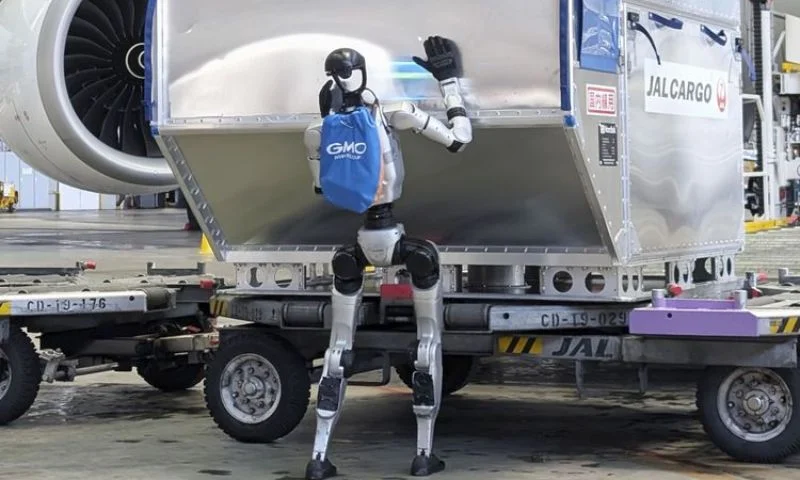
Japan Airlines plans to introduce humanoid robots for ground handling operations at Haneda Airport starting May, marking a significant shift in how airports manage labour-intensive tasks.
The airline said the two-year trial aims to reduce the physical burden on workers as Japan’s aviation sector faces a deepening labour shortage. The robots, developed in China and deployed in partnership with GMO AI & Robotics, will initially handle cargo loading and unloading.
During a media demonstration on Monday, the machines lifted and moved cargo containers, replicating tasks that typically require multiple human workers. JAL currently employs around 4,000 ground handling staff, but rising demand has stretched operations.
Japan’s travel sector has seen a sharp rebound, with more than seven million foreign visitors arriving in the first two months of the year, according to data from JTB Group. This surge has intensified pressure on airport services already grappling with a shrinking workforce.
Labour Shortage Driving Automation
JAL said the combination of rising inbound tourism and a declining working-age population has created operational challenges across airports. Industry experts have long warned that Japan’s demographic trends could disrupt labour-heavy sectors like aviation.
“While airports appear highly automated and standardised, their back-end operations still rely heavily on human labour and face serious labour shortages,” said Tomohiro Uchida during the demonstration.
The airline hopes the robots will eventually take on additional duties such as cabin cleaning and operating ground support equipment. These tasks often involve repetitive movement and physical strain, which companies increasingly want to offload to machines.
“Using robots for physically demanding tasks will provide significant benefits to employees,” Kyodo news agency quoted Yoshiteru Suzuki as saying.
Humans Still Central to Safety
Despite the push toward automation, JAL emphasized that human workers will remain essential in critical areas. Suzuki noted that responsibilities like safety management cannot be replaced by machines.
Airports across Japan have already begun integrating robotics into daily operations. Some facilities use robots for security patrols and retail assistance, reflecting a broader national effort to adopt automation in response to demographic pressures.
Analysts say JAL’s trial could set a precedent for other airlines worldwide. If successful, it may accelerate the adoption of humanoid robotics in aviation, particularly in regions facing similar labour shortages.
However, experts caution that large-scale deployment will depend on reliability, cost efficiency, and regulatory approval. For now, the trial at Haneda will serve as a test case for blending human expertise with robotic support in one of the world’s busiest travel hubs.