


New research suggests that losing weight may depend not only on what people eat but also on how they think about their food, highlighting the role of the mind-body connection in shaping appetite and metabolism. Scientists say expectations about food can influence how the brain perceives hunger and fullness. This means that enjoyment and satisfaction may play a direct role in maintaining a healthy weight. “Ultra-processed products are essentially like being at a heavy metal concert. They’re designed to drown everything else out. And it’s really hard for folks to tune in to the subtle classical music of a fruit or a vegetable,” said Ashley Gearhardt. Experts say humans are naturally drawn to energy-dense, sweet foods, a trait linked to early survival. Today’s environment, filled with ultra-processed options, makes it harder to resist such cravings and often leads to guilt when people indulge. What You Believe You Eat Matters A well-known experiment led by Alia Crum found that beliefs about food can directly affect the body’s response. Participants were given the same milkshake but told different calorie counts. Some believed they consumed a 620-calorie indulgent shake, while others thought it was a 140-calorie healthy version. In reality, both groups drank the same 380-calorie shake. Those who believed they had the indulgent drink showed a sharper drop in ghrelin, a hormone that signals hunger. Lower ghrelin levels typically indicate greater feelings of fullness. Read More: The Surprising Reason Food Feels Tastier at Night “Believing you’re eating enough makes your body respond as if it’s had enough,” Crum said. Researchers say this response can affect metabolism and weight loss. A restrictive mindset may prevent the body from feeling satisfied, reducing calorie burn and increasing the risk of overeating later. Crum’s work also shows that expectations can influence other hormones such as GLP-1, which helps regulate appetite. People who believed they had genes linked to higher satiety produced more of the hormone, regardless of their actual genetic makeup. Labels, Guilt and Eating Behavior Food labeling also shapes perception. In one study, participants ate identical protein bars labeled either “healthy” or “tasty.” Those who consumed the “healthy” version reported feeling less satisfied and later ate more food. The findings suggest that labeling food as healthy may reduce expectations of enjoyment, leading to lower satisfaction and higher calorie intake afterward. Researchers say guilt around eating indulgent foods can also undermine weight loss efforts. Studies show that individuals who feel guilty after eating treats often struggle more to maintain a healthy weight. Read More: The Quiet Shift: Why Natural Health Is Becoming a Long-Term Lifestyle Instead, experts recommend focusing on balanced eating without emphasizing deprivation. Avoiding labels such as “low” or “light” may help shift mindset away from restriction. “When we limit ourselves it can become a chore,” Gearhardt said. Crum suggests adopting what she calls a “mindset of indulgence,” where people trust their bodies and aim to feel satisfied rather than deprived. “Trust yourself and your body to be hungry for the right things at the right time,” she said. Experts agree that reducing ultra-processed foods while enjoying meals, including occasional treats, may offer a more sustainable path to weight management.

PM Shehbaz Steps In to Stop Fare Hikes, Extends Relief Package
Prime Minister Shehbaz Sharif on Thursday approved a one-month extension of the fuel subsidy extension Pakistan scheme for motorcyclists, public transport operators, and goods transporters, aiming to sustain relief amid ongoing economic pressures linked to instability in the Middle East. The decision comes at a time when global oil markets remain volatile, driven by regional tensions that have pushed up petroleum prices for import-dependent countries like Pakistan. Officials say the extension seeks to protect lower and middle-income groups from further financial strain. Read More: Airlines’ Busiest Summer Holiday Season Under Pressure as Fuel Costs Soar According to a statement issued by the Prime Minister’s Office, the premier also directed authorities to ensure that passenger and freight transport fares do not increase during this period. Relief measures to continue across transport sectors While approving the continuation of relief measures, the prime minister emphasized strict oversight. “Effective monitoring of public welfare initiatives must be ensured to directly benefit deserving individuals,” he said. He added that the federal government, working with provincial administrations, had already delivered a nationwide relief package worth billions under difficult economic conditions. “The government will continue to extend possible support,” he stated. Read More: Pakistan’s Electric Revolution Gains Momentum as Bold Shift Targets Fuel Import Reduction The scheme, first announced earlier this month, targets key transport segments that directly impact daily commuting and goods movement. Under the plan, motorcycle owners receive a subsidy of Rs100 per litre on petrol, offering significant relief to millions of riders who rely on bikes for daily travel. Small truck operators benefit from a monthly subsidy of Rs70,000 to offset rising operational costs. Larger trucks receive Rs80,000 per month, while public transport operators are granted Rs100,000 monthly to maintain fare stability. اسلام آباد: 30 اپریل 2026. وزیرِ اعظم محمد شہباز شریف نے حالیہ صورتحال کے پیش نظر معاشی طور پر کمزور طبقے کو ریلیف کی فراہمی کے تسلسل کو قائم رکھنے کا فیصلہ کیا ہے.وزیرِ اعظم نے موٹر سائیکل سواروں، پبلک و گڈز ٹرانسپورٹ کیلئے گزشتہ ماہ دی جانے والی سبسڈی میں ایک ماہ کی مزید…— Prime Minister's Office (@PakPMO) April 30, 2026 Freight vehicles also receive a Rs100 per litre fuel subsidy, a move aimed at reducing transportation costs and stabilizing prices of essential goods across the country. Government aims to control inflationary pressure Officials say the initiative reflects a broader effort to curb inflationary pressures linked to fuel price hikes. Transport costs often drive up food and commodity prices, making such subsidies critical in maintaining economic balance. “The public will not be left alone,” PM Shehbaz said, reiterating that providing relief to ordinary citizens remains the government’s top priority. He also expressed optimism about the regional outlook. “Conditions in the region would improve soon, allowing for stability in petroleum product prices and easing economic pressure on the public,” he said. Read More: ‘Fuel Chhoro, Electric Chalao’: Revoo Announces Major Discounts Pakistan heavily relies on imported fuel, making its economy vulnerable to global price fluctuations. Analysts note that targeted subsidies, while costly, can help prevent a sharper rise in inflation and protect vulnerable groups in the short term. However, economists caution that sustained subsidies could strain fiscal resources if global prices remain elevated for a prolonged period. The government has not yet indicated whether the scheme will extend beyond the current one-month period. For now, authorities appear focused on immediate relief while closely monitoring global developments and domestic inflation trends.

Nishat Brings iCaur EV SUVs to Pakistan in Bold Market Move
Nishat Group is preparing to launch a new electric vehicle brand, iCaur, to Pakistan, marking another step in its strategy to expand beyond conventional offerings in the local auto market. The company confirmed through a recent statement that it has signed a partnership agreement to bring iCaur vehicles through its subsidiary NexGen Auto. The move follows Nishat’s earlier introduction of Omoda and Jaecoo, both linked to China’s Chery. Read More: Five New Chinese EVs in The Price of One Car in US: The Price Gap Shaking the Auto Industry iCaur, established in April 2023, is a Chery-backed brand focused on new energy vehicles. It operates under the name iCar in China but uses the iCaur branding overseas due to trademark constraints. The brand’s portfolio centres on rugged, boxy SUVs powered by electric and range-extended electric systems. These designs combine upright stances with modern technology, a mix that remains uncommon in Pakistan’s market. Industry analysts say the entry signals a shift in strategy for local distributors, who have historically avoided untested segments. Pakistan’s auto sector has long favoured established petrol and diesel models with predictable resale value. Global Footprint and Product Lineup iCaur has already expanded into several international markets, including Russia, Saudi Arabia, the United Arab Emirates, Qatar, Kuwait, Spain, Italy, Malaysia and South Africa. Pakistan is expected to join this list soon. The brand currently offers three core models. The iCaur V23 is a compact electric SUV and the company’s bestselling model globally. Its design draws inspiration from classic off-road vehicles such as the Beijing BJ212. Read More: Local Auto Parts Production Gets Major Boost in Pakistan The iCaur 03T shares its design with the Jaecoo J6, which launched in Pakistan last year. However, the 03T uses a range-extended electric system, while the J6 runs fully on battery power. The flagship V27 focuses on off-road capability. It combines an electric drivetrain with a petrol engine that acts as a generator, allowing extended range without relying solely on charging infrastructure. The company describes its design approach as modular. It allows owners to customise vehicles with accessories, exterior modifications and functional upgrades, reflecting its slogan “Born to Play.” Opportunity Meets Risk in Local Market Pakistan’s premium SUV segment has long been dominated by established models such as the Toyota Fortuner and Land Cruiser. These vehicles offer strong resale value and reliable after-sales support. iCaur is targeting a different customer profile. It aims to attract buyers willing to explore new technology and design rather than traditional nameplates. Recent entrants like the Tank 500 and Hyundai Palisade have shown that some buyers are open to alternatives. Analysts say iCaur may benefit from this gradual shift in consumer preferences. However, challenges remain. The brand will enter a market where resale value plays a major role in purchase decisions. There is currently no data on how iCaur vehicles will perform in the used market. After-sales infrastructure, spare parts availability and technician training will also need to develop quickly. These factors often determine long-term success in Pakistan’s auto sector. For some buyers, the appeal of a new electric SUV may outweigh these concerns. For others, uncertainty could limit early adoption despite the brand’s global expansion.

Just 355 Out of 12792 Clear CSS 2025 Written Test in Pakistan
The CSS 2025 result FPSC has once again highlighted the extreme competitiveness of Pakistan’s civil service examination, with only a small fraction of candidates clearing the written stage and an even smaller number securing final allocation. Low Success Rate Reflects Tough Standards The Federal Public Service Commission announced that 12,792 candidates appeared in the CSS 2025 written examination. Out of them, only 355 candidates passed, resulting in a success rate of just 2.77 percent. Read More: Google Gemini Now Creates Word, Excel and LaTeX Files Instantly The data shows that fewer than three candidates out of every hundred managed to qualify for the next stage. Officials attributed the low pass rate to strict evaluation standards and limited vacancies in the civil service structure. The CSS exam remains one of the most competitive entry routes into Pakistan’s bureaucracy, where thousands compete annually for a limited number of positions across federal services. Final Allocations and Top Positions The CSS 2025 result FPSC further revealed that final allocation to various occupational groups under the quota and merit system were awarded to 170 candidates. Among these candidates, 84 are male and 86 are female, indicating a nearly balanced gender distribution. Allocations were made based on merit rankings, provincial quotas and available seats. Read More: Teen Invents AI Device That Could Treat Crossed Eyes Without Surgery High-performing candidates secured top positions. Usaid Rafique achieved first place, followed by Muhammad Mohsin Khalid in second position and Tariq Hafeez in third. These candidates will join key government services and contribute to administrative and policy-making roles. Allocation Trends and Provincial Distribution Most of the top 30 candidates were placed in the Pakistan Administrative Service and the Police Service of Pakistan while no candidate from the top 30 was allocated to the Foreign Service this year as per the result. Provincial data indicates that Punjab dominated the top positions, with 23 candidates among the top 30. Sindh and Khyber Pakhtunkhwa contributed two candidates each, while Balochistan accounted for three. Read More: This 26-Year-Old Pakistani Just Joined the World’s Richest List The outcome reflects both the regional distribution of candidates and the competitive nature of the allocation process. Merit ranking, preferences and quota availability decide each candidate’s placement. Candidates can now access detailed merit lists and allocation breakdowns through official channels. The announcement reinforces the reputation of the CSS examination as a rigorous and highly selective recruitment process. The CSS 2025 result FPSC highlights the scale of competition and the level of preparation required to succeed. With thousands of aspirants competing each year, the exam continues to test academic ability, analytical skills and perseverance at the highest level.

YouTuber Solves Rubik’s Cube While Skydiving in Record Time
Tom Kopke, a 23-year-old content creator known as Tooleko on YouTube, has set a new Guinness World Record by solving a rotating puzzle cube while skydiving. Kopke completed the challenge in 23.333 seconds during a freefall jump over Mossel Bay in February. He opened his parachute moments after finishing the puzzle, securing the record under strict timing conditions. The feat surpassed the previous record of 28.25 seconds set in 2023 by Sam Sieracki. Guinness World Records confirmed the attempt, which required solving the cube entirely during freefall before deploying the parachute. The timing excludes parachute descent and begins once the cube is first handled in the air. From Hobby to High-Risk Challenge Kopke said his journey with the puzzle began years earlier. “I first solved the Rubik’s cube when I was 18 and practiced a lot back then,” he told Guinness World Records. “I even made a video attempting some crazy Rubik’s cube challenges, where I also said that one day I would solve it while skydiving,” he added. Read More: Swimmer Survives 34-Mile Crocodile River Challenge in Record Time The idea remained on hold for some time due to a key requirement. Kopke needed a skydiving license before attempting such a high-risk stunt. He later trained in skydiving as part of a broader plan to create extreme content. “I always wanted to learn skydiving because I have a lot more crazy skydiving videos planned, and I thought it would be really cool to start this journey with a clear goal in mind, which was to break the record,” he said. Experts say combining speedcubing with skydiving adds multiple layers of difficulty. Wind resistance, body control and time pressure make even simple hand movements more complex in freefall. Precision, Practice and Risk Kopke highlighted the importance of preparation before attempting the jump. He practiced extensively to ensure he could handle the cube mid-air without losing control. “I practiced a lot with the cube in the air so I got used to it,” he said. One of his biggest concerns was dropping the cube during the descent. Losing grip would have ended the attempt instantly. “The most dangerous part is actually the handover, kind of like in track and field where a lot of mistakes happen during the baton exchange,” he explained. Skydiving records often involve strict safety oversight, with backup measures in place to protect participants. While Kopke focused on speed, he also had to manage altitude awareness to deploy his parachute on time. Read More: Man Sets Bizarre Guinness World Record by Passing Balloons Through Nose and Mouth The achievement reflects a growing trend of combining extreme sports with skill-based challenges for online audiences. Content creators increasingly push boundaries to capture attention, but experts caution that such stunts require professional training and safety planning. Kopke said he plans to take a short break before deciding his next challenge. He hinted at more ambitious skydiving content in the future, building on his latest record.

Google Gemini Now Creates Word, Excel and LaTeX Files Instantly
Google has expanded the capabilities of its AI chatbot with a major upgrade, allowing users to create downloadable files directly within chat, marking a shift in how conversational tools support productivity workflows. For years, AI chatbots focused on generating responses that users had to copy, paste and format manually. With the latest Google Gemini file generation feature, that extra step is no longer required. Read More: Japan Airlines Tests Humanoid Robots to Take Over Cargo Jobs at Tokyo Airport Google Gemini can now generate downloadable files across multiple formats, including Microsoft Word documents, Excel spreadsheets, PDFs, CSV files, plain text documents, Markdown files and LaTeX files. The feature is rolling out globally across Gemini web and mobile, including for individual Workspace users. The workflow allows users to type a request such as a report, budget sheet, resume or academic draft, and receive a fully formatted file ready for export. Google said the update is designed to help users “move work into different applications” without needing separate tools for formatting or conversion. LaTeX Support Signals Shift Toward Professional Use One of the most notable additions in the Google Gemini file generation feature is support for LaTeX, a format widely used in scientific publishing and technical documentation. LaTeX plays a key role in academic writing, particularly for research papers, equations and structured documents. Gemini’s ability to generate LaTeX files and format content accordingly expands its relevance beyond everyday productivity tasks. Read More: Your Charging Cable Is Dying Faster Than You Think According to Engadget, the system can also generate diagrams within LaTeX-supported outputs, which could enhance its usefulness for researchers, engineers and students working in technical fields. The update reflects a broader push by Google to position Gemini as a comprehensive productivity tool across professional environments. Growing Competition in AI Productivity Tools The rollout aligns with recent updates across Google’s ecosystem. Earlier this month, Gemini features inside Google Docs began supporting structured writing based on reference files, along with formatting that matches existing layouts. Google’s wider Workspace strategy integrates Gemini across Docs, Sheets and Slides, allowing users to generate content that pulls context from Google Drive, Gmail and web sources. Read More: WhatsApp Rolls Out Instant Image-to-Sticker Feature for Faster Chats Rival platforms continue to expand their capabilities as well. Anthropic has added file editing and spreadsheet tools to its Claude system, while OpenAI continues enhancing document and coding workflows in ChatGPT. Industry observers say the competition has shifted away from generating answers toward delivering ready-to-use outputs. The ability to convert prompts into finished files directly within chat represents a new phase in AI development. The update signals a move toward treating AI chatbots as software layers that can produce complete work products. As a result, users can turn a single prompt into a file that is ready to open, edit or share without additional steps.
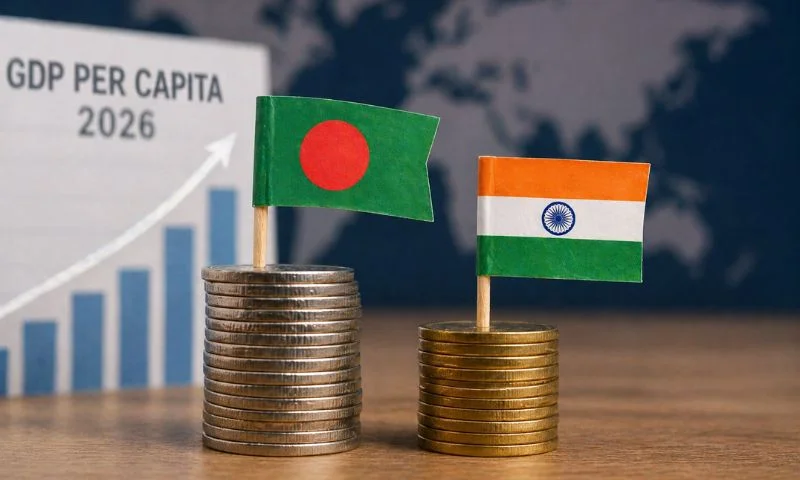
Bangladesh Overtakes India in GDP Per Capita Rankings
Bangladesh has overtaken India in the latest global rankings of GDP per capita, underlining a shift in relative living standards between the two neighbouring economies. According to the International Monetary Fund World Economic Outlook released in April 2026, Bangladesh’s GDP per capita stands at around $2,910, placing it 148th globally. India, by comparison, ranks lower at 150th with a per capita income of about $2,810. The difference may appear small, but economists say it reflects broader structural trends. GDP per capita measures the average economic output per person and offers a clearer picture of individual prosperity than total economic size. Analysts note that while India remains one of the world’s largest economies overall, its vast population dilutes income levels when measured on a per-person basis. Why GDP Per Capita Matters Experts often prefer GDP per capita adjusted for purchasing power parity as a better indicator of everyday economic well-being. It accounts for population size and cost of living, providing a more realistic comparison between countries. Bangladesh’s steady gains in recent years have come from consistent growth in manufacturing, exports and remittance inflows. The country has also benefited from improvements in social indicators and industrial productivity. Read More: Global Shift: Women Becoming Key Earners in Modern Economy India, on the other hand, continues to post strong aggregate growth but faces challenges in distributing that growth evenly across its population. Economists say this gap explains why it ranks higher in total GDP but lower in per capita terms. The IMF projects global economic growth at about 3.9 percent in 2026, though it warns that uncertainty remains due to geopolitical tensions and financial pressures. Global Context and Shifting Rankings The rankings highlight a broader trend where smaller or more balanced economies often outperform larger nations in per capita measures. Countries with strong export sectors and controlled population growth tend to climb faster in such metrics. While Bangladesh’s lead over India remains narrow, the development carries symbolic importance in South Asia. It reflects how economic progress at the household level can diverge from headline growth figures. Read More: “Not just diplomacy, Pakistan’s role added over $3tn to global wealth” Analysts caution that per capita rankings can fluctuate due to currency movements, inflation and demographic changes. However, they agree that the latest data signals meaningful progress for Bangladesh in raising income levels. The comparison is likely to fuel policy debates in both countries about inclusive growth, productivity and income distribution in the years ahead.

Airlines’ Busiest Summer Holiday Season Under Pressure as Fuel Costs Soar
European airlines are heading into the crucial summer holiday season under growing pressure as the Iran-linked conflict drives up jet fuel prices and disrupts key travel routes, threatening their most profitable period of the year. The summer months typically deliver the highest earnings for airlines, driven by strong leisure travel demand across Europe, the Middle East and Asia. This year, however, rising costs and uncertainty are forcing carriers to rethink capacity, pricing and schedules. Jet fuel prices have jumped nearly 84 percent since the conflict escalated on February 28, sharply increasing operating expenses at a time when airlines usually maximise margins. “There is a risk that we’ll see rationing of fuel supply, particularly in Asia and Europe,” said Willie Walsh, head of the International Air Transport Association. Walsh said supply remains stable for now but warned that prolonged conflict could disrupt availability during peak travel demand. Bookings Shift as Costs Rise Airlines say the uncertainty has already begun to affect passenger behaviour. Many travellers are delaying bookings or choosing destinations closer to home to avoid potential disruption and higher fares. Fuel hedging has helped airlines absorb some of the cost surge so far. However, these protections are beginning to run out, leaving carriers more exposed just as summer travel ramps up. Read More: PIA Ends Discounts, Cuts Flights Amid Fuel Price Crisis Sweden’s energy minister Ebba Busch issued an early warning about possible shortages despite current stable supply. She urged travellers to think carefully about their holiday plans. Some airline executives remain cautiously optimistic. Michael O’Leary said the risk of supply disruption is easing after discussions with fuel suppliers. Others see mixed signals. Jozsef Varadi said summer bookings remain strong but warned that fuel prices may stay elevated even if the conflict ends. Meanwhile, carriers such as easyJet and tour operator TUI have reported weaker forward bookings and issued profit warnings, reflecting growing consumer caution. Profits Under Pressure Despite Strong Demand Airlines stress that demand for travel remains strong overall, unlike during the pandemic when passenger numbers collapsed. “I think Covid was on a completely different scale,” Walsh said. “What we’re seeing here is, in effect, a cost issue for the airlines. The underlying demand for aviation remains robust, and that’s a positive.” Still, higher fuel costs are forcing airlines to raise ticket prices and cut some flight capacity, especially on routes affected by airspace disruptions in the Middle East. Read More: Jet Fuel Crisis Explained: What It Means for Travelers Data from Cirium Ascend shows flights by Middle Eastern carriers dropped 50 percent year on year in March. Bookings through major Gulf hubs for the next two quarters are down more than 40 percent. The Strait of Hormuz remains a critical concern for energy markets, and any disruption could tighten global fuel supply further. Some airlines have managed to avoid the worst effects. Finland’s Finnair reported stronger demand on Asian routes, while Norwegian said it sees limited risk to supply. Analysts say the aviation sector has become more resilient after past crises. “They’re much, much more agile now than they were,” said Cirium’s George Dimitroff. Even so, the coming weeks will test airlines’ ability to navigate rising costs during the most important revenue window of the year.

Big Relief for Investors as Dubai Eases Property Visa Rules
Dubai has revised its Dubai property visa rules 2026, easing eligibility for investors seeking a two-year residency permit linked to real estate ownership, according to updated guidelines published through the Cube Centre affiliated with the Dubai Land Department. Key Changes to Investor Eligibility The updated Dubai property visa rules 2026 remove the earlier minimum property value requirement of Dh750,000 for individual investors. Authorities now allow sole property owners to apply without a fixed minimum value condition, provided ownership is clear and documented. Read More: Dubai’s Iconic Burj Al Arab Set to Close for 18 Months However, new conditions apply to jointly owned properties. Each investor must hold a minimum share of Dh400,000 to qualify for the visa, even when ownership is split equally. This adjustment tightens requirements for shared investments while broadening access for individual buyers. The changes have not been formally announced through official channels, but the updated criteria appear on platforms linked to the Dubai Land Department’s investor services. Documentation and Financial Conditions Applicants must submit a range of documents to secure the property-linked residency visa. These include a valid title deed issued in Dubai, a passport with at least six months validity, an Emirates ID, and a high-quality digital photograph that meets federal identity guidelines. Medical insurance remains mandatory for all applicants. Investors must also provide a certificate of good conduct issued by Dubai Police and addressed to the Dubai Land Department. Read More: War in the Region Forces Investors to Rethink Dubai’s Security and Stability Authorities require applicants from Iran, Pakistan, Iraq, Libya and Afghanistan to submit their national identity documents. The name on the title deed must match the passport details. If the property is mortgaged or purchased through instalments, investors must present a no-objection certificate from the bank or developer. The document must confirm the amount paid, the remaining balance, and include a formal mortgage statement. Dubai has updated its two-year investment residency requirements. Here is everything you need to know.#EmiratesNews #DubaiOneTv #UAE #Dubai #News pic.twitter.com/1MbG3dsI0Q— Emirates News (@Emirates_News) April 29, 2026 For completed properties, investors must show proof that at least 50 percent of the property value, or Dh375,000, has been paid. Qualified applicants can also sponsor family members under the residency permit. Market Growth Supports Policy Shift The revised Dubai property visa rules 2026 come as the emirate’s real estate sector continues to show strong performance. In the first quarter of 2026, property transactions reached Dh138.7 billion across 44,150 deals. Market data shows transaction values increased by 21.2 percent compared to the previous year, while the number of deals rose by 4.35 percent. Analysts say the growth reflects rising demand for premium residential properties. Read More: Dubai’s Super-Rich Pay $200,000 to Escape Gulf War In January alone, sales reached around Dh53.6 billion from more than 16,000 transactions. The average deal size climbed to about Dh3.3 million, indicating stronger participation from high-net-worth individuals and institutional investors. Dubai introduced the two-year property investor visa in 2019 as part of broader reforms to attract foreign investment. The programme allows property owners to live, work and invest in the UAE without a local sponsor. The latest changes suggest a more flexible approach to investor residency. Authorities aim to expand access while maintaining financial transparency in property ownership.

Crude Rally Sparks Fears of $140 Oil Amid Rising Tensions
Global markets jolted as the oil price surge global markets intensified following fears that Donald Trump could tighten or prolong measures affecting Iranian oil flows, pushing crude prices sharply higher and fuelling inflation concerns. Oil Prices Spike on Geopolitical Fears Brent crude jumped about 6 percent overnight to a four-year high of $122.53 a barrel. Traders reacted to concerns that the Strait of Hormuz could remain constrained, a critical route for global energy supplies. The sharp rise in oil prices amplified volatility across financial markets. Higher energy costs raised expectations that inflation pressures will persist, especially in major economies. Read More: Oil, Weapons and Gold: The Industries Profiting From the Iran-US Tensions The surge weighed on global bonds, where yields climbed as investors reassessed interest rate outlooks. Markets now expect fewer chances of rate cuts by the Federal Reserve this year. Pricing suggests an almost even chance of a rate hike by next spring. The shift follows one of the most divided Federal Reserve decisions since 1992. Three policymakers opposed an easing bias, while another supported a rate cut. The central bank also warned that rising energy prices were feeding inflation risks. Investors are now closely watching signals from the European Central Bank and the Bank of England, both expected to adopt a more hawkish stance. Markets React as Dollar Strengthens Equity markets in Asia showed resilience despite the broader uncertainty. Technology and artificial intelligence-linked stocks gained support from strong earnings. Futures tracking US tech shares also advanced, reinforcing optimism around AI-driven growth. However, caution persisted as geopolitical tensions continued to shape investor sentiment. “Macroeconomic risks are significant at this juncture, but stock market bulls hope a rosy path for artificial intelligence can continue to offset cyclical weakness,” said Jose Torres, senior economist at Interactive Brokers. Read More: Pakistan Holds Four Weeks of Fuel as Global Oil Routes Face Disruption He added: “If earnings, capital expenditures and outlooks are buoyant, investors could remain sanguine even as the threat of a slowdown in overall activity, loftier borrowing costs and widening credit spreads raise eyebrows.” Currency markets reflected diverging policy expectations. The US dollar strengthened alongside rising yields, while the Japanese yen weakened. Iran Pushes Back on US Measures Iran’s parliament speaker Mohammad Bagher Ghalibaf rejected claims that US actions had disrupted Iran’s oil sector. He said production remained intact despite the measures. Read More: Major Oil & Gas Discovery in Khyber Pakhtunkhwa: What It Means for Pakistan’s Energy Supply “Three days in, no well exploded,” Ghalibaf said. “We could extend to 30 and livestream the well here.” 3 days in, no well exploded.We could extend to 30 and livestream the well here. That was the kind of junk advice the US admin gets from people like Bessent who also push the blockade theory and cranked oil up to $120+. Next stop:140. The issue isn't the theory, it's the mindset.— محمدباقر قالیباف | MB Ghalibaf (@mb_ghalibaf) April 29, 2026 He criticised US officials, including Treasury Secretary Scott Bessent, accusing them of relying on flawed assessments. “They push the blockade theory and cranked oil up to $120+. Next stop: 140. The issue isn’t the theory, it’s the mindset,” he said. The comments highlight escalating rhetoric between Tehran and Washington over sanctions and oil market stability. Analysts say tensions in the region continue to influence global energy prices and investor behaviour.
