Nishat Group is preparing to launch a new electric vehicle brand, iCaur, to Pakistan, marking another step in its strategy to expand beyond conventional offerings in the local auto market.
The company confirmed through a recent statement that it has signed a partnership agreement to bring iCaur vehicles through its subsidiary NexGen Auto. The move follows Nishat’s earlier introduction of Omoda and Jaecoo, both linked to China’s Chery.
Read More: Five New Chinese EVs in The Price of One Car in US: The Price Gap Shaking the Auto Industry
iCaur, established in April 2023, is a Chery-backed brand focused on new energy vehicles. It operates under the name iCar in China but uses the iCaur branding overseas due to trademark constraints.
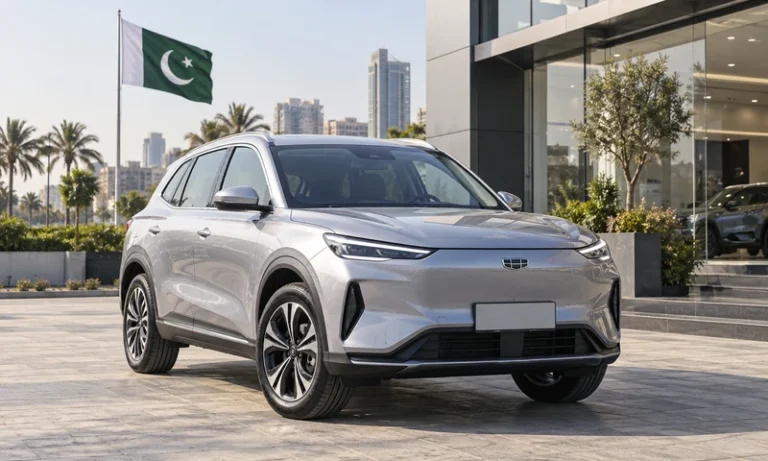
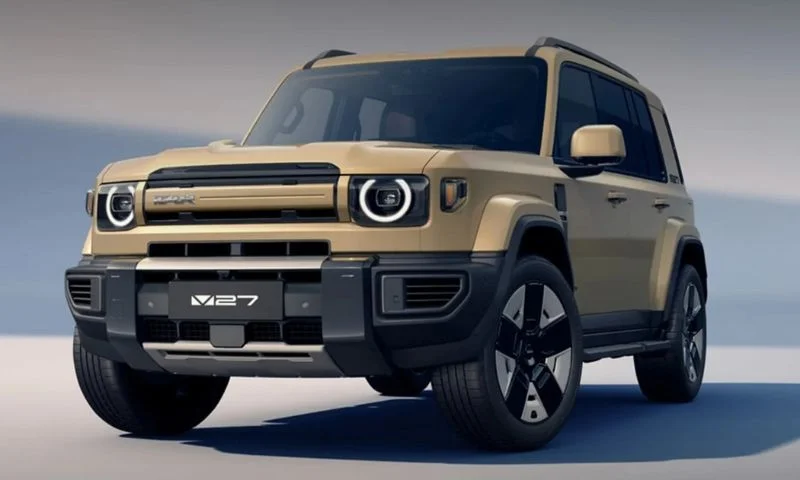
The brand’s portfolio centres on rugged, boxy SUVs powered by electric and range-extended electric systems. These designs combine upright stances with modern technology, a mix that remains uncommon in Pakistan’s market.
Industry analysts say the entry signals a shift in strategy for local distributors, who have historically avoided untested segments. Pakistan’s auto sector has long favoured established petrol and diesel models with predictable resale value.
Global Footprint and Product Lineup
iCaur has already expanded into several international markets, including Russia, Saudi Arabia, the United Arab Emirates, Qatar, Kuwait, Spain, Italy, Malaysia and South Africa. Pakistan is expected to join this list soon.
The brand currently offers three core models. The iCaur V23 is a compact electric SUV and the company’s bestselling model globally. Its design draws inspiration from classic off-road vehicles such as the Beijing BJ212.
Read More: Local Auto Parts Production Gets Major Boost in Pakistan
The iCaur 03T shares its design with the Jaecoo J6, which launched in Pakistan last year. However, the 03T uses a range-extended electric system, while the J6 runs fully on battery power.
The flagship V27 focuses on off-road capability. It combines an electric drivetrain with a petrol engine that acts as a generator, allowing extended range without relying solely on charging infrastructure.
The company describes its design approach as modular. It allows owners to customise vehicles with accessories, exterior modifications and functional upgrades, reflecting its slogan “Born to Play.”
Opportunity Meets Risk in Local Market
Pakistan’s premium SUV segment has long been dominated by established models such as the Toyota Fortuner and Land Cruiser. These vehicles offer strong resale value and reliable after-sales support.
iCaur is targeting a different customer profile. It aims to attract buyers willing to explore new technology and design rather than traditional nameplates.
Recent entrants like the Tank 500 and Hyundai Palisade have shown that some buyers are open to alternatives. Analysts say iCaur may benefit from this gradual shift in consumer preferences.
However, challenges remain. The brand will enter a market where resale value plays a major role in purchase decisions. There is currently no data on how iCaur vehicles will perform in the used market.
After-sales infrastructure, spare parts availability and technician training will also need to develop quickly. These factors often determine long-term success in Pakistan’s auto sector.
For some buyers, the appeal of a new electric SUV may outweigh these concerns. For others, uncertainty could limit early adoption despite the brand’s global expansion.