

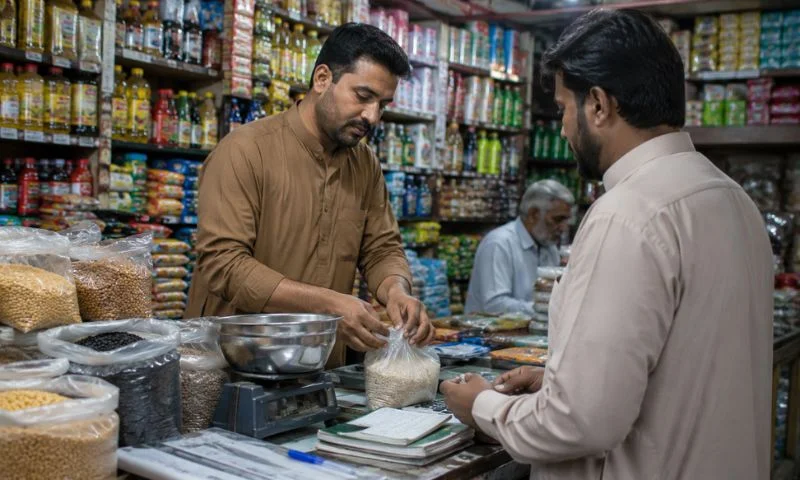
The Federal Board of Revenue (FBR) has prepared a new tax scheme for small traders and shopkeepers. The government is likely to announce it in the federal budget for fiscal year 2026-27. The FBR is consulting stakeholders before the launch. Officials say the scheme aims to simplify tax compliance and encourage more businesses to join the tax net. The proposed framework targets small businesses with annual turnover of up to Rs20 million. It offers easier registration, simplified taxation and lower compliance requirements. Salient Features of Small Taxpayers Guidance System 1. The scheme targets small traders and shopkeepers with annual turnover of up to approximately Rs20 million. 2. Individuals who have operated a business for at least three years, maintain a shop or business premises, and belong to professions other than specialised services may qualify. 3. Small taxpayers who filed tax returns before 2025 may also join the scheme if they meet the required conditions. 4. Applicants can register through the FBR IRIS web portal, mobile application, or authorised tax practitioners and facilitators. 5. Participation remains voluntary. However, traders who join must maintain accurate and transparent financial records. 6. A lower tax rate may apply to eligible taxpayers. The scheme aims to simplify tax calculations and reduce compliance costs. 7. Tax liability generally applies when annual income exceeds the prescribed minimum threshold. 8. The FBR is less likely to audit participants. However, unusual financial activity or unexplained transactions may trigger scrutiny. 9. Taxpayers should maintain simple and organised records of sales, purchases, expenses and business transactions. 10.Certain withholding tax obligations and standard tax rules may still apply where legally required. 11. Failure to file returns, concealment of income or violation of scheme conditions may result in fines and legal action. 12. Some small businesses may not need POS systems. They may also avoid advanced digital integration requirements. 13. Compliant taxpayers may receive ATL status, lower withholding taxes and improved financial credibility. 14. Under the FBR’s proposed 2026 guidelines, authorities will generally focus audits on unusual or high-risk cases. 15. Bank deposits and withdrawals should reasonably match declared income, business activities and daily expenses. 16. Large unexplained gaps between declared income and banking transactions may trigger an audit. 17. The FBR may compare taxpayer declarations with data from government departments and financial institutions. 18. Property ownership, business scale, assets and lifestyle should remain consistent with declared income. 19. Authorities may review cases where assets, investments or spending appear much higher than declared income. 20. Honest and compliant taxpayers generally do not need to fear audits if they maintain accurate records and declarations. Purpose of the Scheme The FBR says the scheme will help document the economy and expand the tax base. Officials want to encourage voluntary tax compliance among small businesses. They also want to reduce the burden of complicated tax procedures. The proposed framework may help more traders become active taxpayers. It could also improve transparency in business transactions. The tax authority hopes the scheme will attract businesses that currently operate outside the formal tax system. Small traders who maintain proper records and file returns regularly may benefit from simplified procedures and reduced compliance costs.
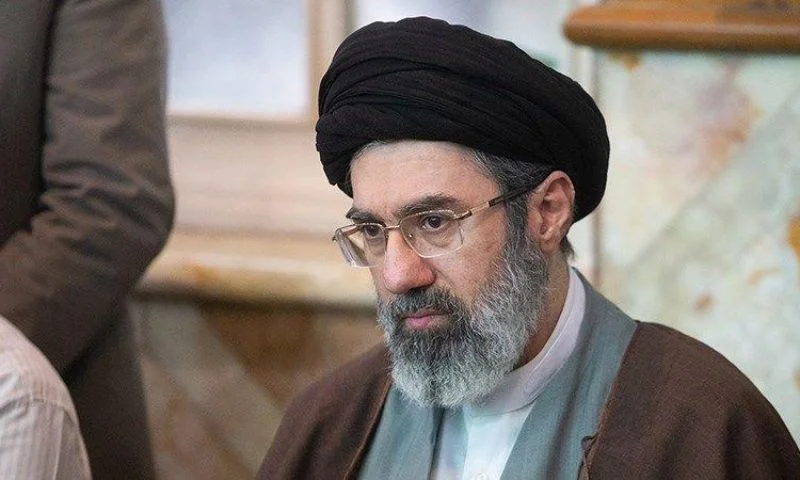
Iran’s Supreme Leader Mojtaba Khamenei Says Enemies Have Shifted to Hybrid Warfare
Iran’s Supreme Leader Ayatollah Mojtaba Khamenei has accused the country’s adversaries of shifting to “hybrid warfare” after suffering what he described as a major defeat in military confrontation and efforts to destabilise the country. In a message marking the 37th anniversary of the death of Islamic Republic founder Ayatollah Ruhollah Khomeini, Mojtaba said Iran’s enemies were now focusing on psychological and political tactics aimed at creating divisions among the Iranian people and undermining confidence in state institutions. The message appeared on his official X account and Iranian media outlets carried it nationwide. It marked one of the most significant public statements by Iran’s third supreme leader since he assumed office on March 8 following the death of his father, Ayatollah Ali Khamenei. Focus Shifts to ‘Hybrid Warfare’ Mojtaba said Iran’s adversaries changed strategy after failing to achieve their goals through military means during the recent conflict that engulfed the region. “The malicious enemy has been defeated in its confrontation with the armed forces. Since it has received a decisive blow both in military combat and in Iran’s public squares and streets, it’s experiencing a profound and significant humiliation,” he said. According to Mojtaba, foreign powers are now trying to weaken public resilience and influence decision-making inside Iran. “The enemy has focused its schemes in hybrid warfare on two points: the resilience of the Iranian people and trying to create errors in the assessments of the country’s officials. The instrument it’s using for both is sowing the seeds of doubt, despair, fear, mistrust and discord.” He urged Iranians to maintain national unity and resist efforts aimed at creating internal divisions. “In confronting these ill intentions, everyone must, through steadfastness, insight, preserving unity and cohesion … neutralise their sinister plot,” the message said. Remarks Come After Regional Conflict The statement comes months after a major regional conflict erupted following US and Israeli strikes on Iran on February 28. Those attacks killed former supreme leader Ali Khamenei and triggered a wider confrontation that drew international concern. The fighting continued until April 8, when both sides accepted a ceasefire. Diplomatic efforts since then have failed to secure a permanent agreement. Mojtaba also criticised the United States and Israel during his message. “Imperialism, led by the US, has built a military base called Israel over the past 80 years. And they don’t accept the existence of a strong, independent Iran on the eastern border of the false, illegitimate geography of ‘Greater Israel’ that is, east of the Euphrates River.” Iranian state broadcaster Press TV reported that Mojtaba also warned against actions that could weaken public confidence. He said that “any act that causes pessimism and disappointment among the people is considered a kind of aid to the enemy of this country and its people”. Officials read the message during a ceremony at Khomeini’s mausoleum in southern Tehran. The event marked the first June 4 commemoration without a speech from Ali Khamenei since he succeeded Khomeini in 1989. State television footage showed an empty chair carrying Ali Khamenei’s portrait at the site. Portraits of Mojtaba, Ruhollah Khomeini and Ali Khamenei also appeared throughout the venue. Supporters waved Iranian flags and banners of Hezbollah during the ceremony. The anniversary remains one of the most important political and religious events in Iran’s calendar and often serves as a platform for leaders to outline the country’s direction during periods of regional tension.
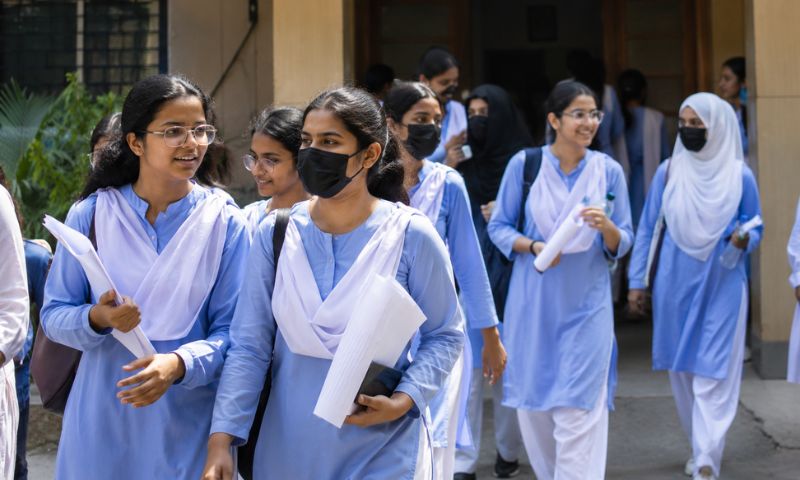
Sindh Announces Key Dates for Matric and Intermediate Results
The Sindh government has announced timelines for the release of Matric and Intermediate examination results, aiming to ensure students receive their results in time for the next admission cycle. The decision came during a meeting of education boards chaired by Sindh Minister for Universities and Boards Ismail Rahoo. Officials reviewed the progress of annual examinations conducted across the province and discussed arrangements for result compilation and publication. According to the Education Department spokesperson, all education boards must release Matric results by July 10, while Intermediate results must be announced by July 31. The meeting also set deadlines for Class 9 and Class 11 results. Education boards will issue those results by August 31. Officials from various boards briefed the minister on examinations conducted in their respective divisions. They also provided updates on monitoring, administration and ongoing assessment work. Government Pushes for Timely Results Rahoo stressed the importance of publishing results on schedule to avoid disruptions in the academic calendar. “Results should be issued on time so that students can get timely facilitation in admissions,” the minister said. Thousands of students across Sindh rely on examination results to secure admissions in colleges, universities and professional institutions. Delays in previous years often created uncertainty for students and parents. The minister directed all boards to complete result processing within the announced timelines. He also instructed officials to strengthen coordination between examination branches and assessment teams. Rahoo said the government would continue supporting education boards in improving their operations. He said every possible support would be provided to improve transparency, merit and the examination system in education boards. The annual Matric and Intermediate examinations began in April. Examination activities in some parts of Sindh will continue until mid-June before the result preparation process enters its final phase. Read More: Parents Struggle as School Admissions Freeze Across Punjab Exam Controversies Remain Under Spotlight This year’s examination season has faced criticism after reports of paper leaks, cheating allegations and administrative irregularities emerged from several centres. The meeting received updates on enforcement measures taken during examinations. Officials informed participants that authorities had registered cases against several individuals for violating Section 144 during examinations in Karachi. The Sindh government has repeatedly pledged action against malpractice and has instructed education boards to strengthen monitoring mechanisms. Education experts have long called for reforms in the examination system. They argue that stronger oversight, improved security and digital monitoring could help reduce irregularities and restore public confidence. The announcement of result dates comes as students and parents await clarity following months of examination-related controversy. Education authorities hope timely result declarations will help maintain the academic schedule and ease concerns among candidates preparing for the next stage of their education. With result deadlines now officially announced, education boards across Sindh face increasing pressure to ensure both accuracy and transparency while meeting the government’s timeline.

FIFA Bans Water Bottles at World Cup 2026 Amid Heat Concerns
FIFA has introduced a controversial policy ahead of the 2026 World Cup. The governing body will not allow fans to bring refillable water bottles into stadiums across the United States, Canada and Mexico. The decision has triggered debate among supporters and health experts. Many have raised concerns about spectator welfare during the summer tournament. The Athletic first reported the policy change. FIFA later confirmed it in a statement. Just weeks ago, FIFA allowed fans to carry empty transparent reusable plastic bottles with a capacity of up to one litre into stadiums. The earlier code of conduct stated: “For the avoidance of doubt, empty, transparent, reusable plastic bottles, up to (1 litre in) capacity, may be brought into the Stadium.” FIFA has now changed that rule. The updated code states: “For the avoidance of doubt, reusable water bottles may not be brought into the stadium.” FIFA Defends the Decision FIFA says safety concerns drove the policy shift. “Fifa is committed to protecting the health and safety of all players, referees, fans, volunteers, and staff,” a FIFA spokesperson told AFP. “Fifa made the decision to prohibit bottles to prevent risk and injury to players and attendees. “Outside bottles are already prohibited at several of these venues for safety considerations, and Fifa is applying this consideration across its tournament stadiums.” Several host venues already ban outside bottles during sporting events. FIFA decided to apply the same rule across all World Cup stadiums. The organisation says fans will still have access to hydration facilities. These include misting stations, cooling tents, fans and dedicated hydration points. FIFA also said spectators can buy bottled water inside stadiums. According to the governing body, prices will remain similar to those charged during other events. Heat Concerns Continue to Grow The announcement comes as climate experts warn about the risk of extreme heat during the tournament. Last month, the World Weather Attribution research group released a report on World Cup conditions. Researchers estimated that 26 of the tournament’s 104 matches could take place in conditions where the Wet Bulb Globe Temperature exceeds 26 degrees Celsius. The Wet Bulb Globe Temperature, or WBGT, measures heat stress on the human body. It combines temperature, humidity, sunlight and wind into a single index. Scientists and sports organisations use WBGT to assess heat-related risks. Several host cities could experience high temperatures during the competition. Concerns about fan safety have therefore intensified in recent months. Similar issues emerged during last year’s FIFA Club World Cup in the United States. Many supporters complained about intense heat inside venues. Tournament organisers also banned outside water bottles during that competition. The 2026 World Cup will feature 48 teams and 104 matches. It will be the largest tournament in FIFA history. Organisers expect record crowds across North America. As kickoff approaches, the debate over fan comfort, hydration and safety is likely to continue. For now, supporters attending matches must leave reusable water bottles at home. They will need to rely on hydration stations or purchase water inside the stadiums.

Lost for Nearly 100 Years, This Stunning Indonesian Parrot Has Been Found Again
A colourful Indonesian parrot that remained one of the country’s greatest bird mysteries for nearly a century has reappeared in a remote mountain forest, offering conservationists new hope for a species many feared had vanished from sight. The Blue-fronted Lorikeet, a small parrot found only on Indonesia’s Buru Island, was photographed in April during an expedition to the highlands of Mount Kapalatmada. The discovery marked the first confirmed photographic record of the bird in 12 years and the first-ever audio recording of its calls. Researchers spotted at least nine birds during the expedition, which involved days of climbing through steep limestone terrain, dense forest and insect-filled mountain slopes. The finding has renewed interest in one of Indonesia’s least-understood bird species. Search for a Lost Species The expedition was organised by an Indonesian mountaineering group and supported by international bird experts. The team specifically targeted the Blue-fronted Lorikeet, despite the long odds of success. “When you are looking for a bird that has only been documented once in the past century it feels like a long shot,” said John Mittermeier, director of the Search for Lost Birds programme at the American Bird Conservancy. Scientists first described the species from seven specimens collected in the 1920s. After that, the bird disappeared from scientific records for almost 90 years. Researchers finally photographed it in 2014, but no further confirmed sightings followed for more than a decade. Many experts suspected the species had survived in remote mountain habitats beyond the reach of previous surveys. That theory gained support when local climbers recently mapped new routes into the rugged highlands of Buru. The team identified the bird through its bright green plumage, orange bill, blue hindcrown and distinctive pointed tail. They also recorded its high-pitched calls for the first time, providing scientists with valuable information for future research. “There are no other birds on the island that look like the lorikeets, so when we saw them we knew immediately what they were,” Mittermeier said. “We saw at least nine during the trip,” he added. Gruelling Journey Ends in Breakthrough Reaching the bird’s habitat proved as challenging as finding it. Mittermeier described the landscape as a maze of sharp limestone, steep cliffs and giant boulders. The area also lacks reliable water sources, making expeditions physically demanding. Bird expert James Eaton, who took part in the search, said the conditions tested even experienced explorers. “The rain, jagged limestone, river torrents and lack of trails meant anyone trying to reach the peak needed a strong or crazy reason to even attempt it.” “This bird was our reason for doing so,” Eaton said. After a week of difficult trekking, the team’s persistence paid off. “To actually photograph our holy grail suddenly made all the hardships disappear. It’s a feeling adrenaline junkies would know well,” Eaton said. The Blue-fronted Lorikeet currently holds a Data Deficient status on the International Union for Conservation of Nature (IUCN) Red List. The Search for Lost Birds initiative, a partnership between American Bird Conservancy, Re and BirdLife International, formally recognised it as a lost species in 2024. Mittermeier said scientists must now determine the bird’s population size and identify possible threats to its survival. “A finding like this is the first step to being able to protect it,” he said. For Eaton, the rediscovery offered a rare moment of optimism. “These moments of joy and discovery are a healthy reminder of what a beautiful world is there,” he said. “This small green parrot, it was here long before humans stepped foot on the island, just like birds living in your garden at home. They have more right to be there than you or I.”

Mitchell Santner Says He Got Only Half His IPL Salary
New Zealand all-rounder Mitchell Santner says Mumbai Indians paid him only half of his IPL 2026 salary after injuries cut short his campaign. His comments have sparked fresh debate over player contracts and compensation in the world’s richest T20 league. Santner, one of New Zealand’s most experienced T20 players, joined Mumbai Indians for INR20 million at the 2025 IPL mega auction. The franchise retained him for the 2026 season and expected him to play a key role in its campaign. The 34-year-old played only four matches. He took five wickets and scored 26 runs before injuries forced him out of the tournament. He suffered injuries to both shoulders within a span of two weeks. His early departure sparked speculation among some fans. They claimed he exaggerated his injury to leave the IPL and prepare for New Zealand’s upcoming international assignments. Santner has strongly rejected those accusations. Santner Opens Up About Salary Cut Speaking on the Grade Cricketer Podcast, Santner revealed that Mumbai Indians paid only part of his contracted salary despite his efforts to return to the field. “Well, they gave me half my cash, so that actually hurt a little bit,” Santner said. The all-rounder explained that he joined the team shortly after the birth of his second child. He then suffered a series of setbacks that ultimately ended his season. “I got there, missed the first game, birth of my second child, got there straight off the plane, played Delhi, did [injured] my right shoulder, out for kind of week. “I came back a couple of games later, did [injured] my left and went home. So I did [injured] two shoulders in the space of kind of two weeks. So I thought I was putting my body on the line for them, but obviously not.” His remarks suggest frustration over both the payment issue and the criticism that followed his injury. Quick Recovery Fuels Debate Medical staff initially expected Santner to miss around eight weeks because of his left shoulder injury. However, he recovered much faster than anticipated. His recovery earned him a place in New Zealand’s three-match Test series against England, which begins this week. That swift return led some observers to question the severity of his injury and fuelled further speculation about his IPL exit. Santner’s comments appear aimed at ending those rumours. He insists that the injuries were genuine and points to the financial loss he suffered as evidence that leaving the tournament early offered him no benefit. The issue has attracted attention because IPL regulations generally require franchises to pay players their full contracted amount if injuries occur during the tournament. Those rules exist to protect players who suffer setbacks while representing their teams. Neither Mumbai Indians nor IPL officials have publicly responded to Santner’s remarks. As a result, questions remain about the circumstances behind the reported payment reduction. For now, Santner has shifted his focus back to international cricket. Yet his revelation has created an unexpected controversy and raised fresh questions about how IPL franchises handle injury-related payments.

Why Is India Suddenly Spending More Than $2 Billion on Drones?
India is preparing to place its largest-ever military drone order, with planned purchases from domestic manufacturers expected to exceed $2 billion this year as New Delhi accelerates efforts to modernise its armed forces and adapt to rapidly changing battlefield realities. The move comes amid growing global demand for unmanned systems following conflicts in Ukraine, the Middle East and recent clashes between India and Pakistan. The procurement plans are in advanced stages and could see deliveries completed within 18 to 24 months, according to Smit Shah, president of Drone Federation India (DFI), an industry body representing more than 550 companies that works closely with the government. “In the next phase, tactical drone procurements in India may exceed 200 billion rupees, or more than $2 billion,” Shah told Reuters. He added that the purchases are likely to proceed through a fast-track procurement route designed to meet urgent operational requirements. The expected order would mark a sharp increase from recent government contracts worth about 30 billion rupees ($313 million) for tactical-class drones. Officials have not publicly confirmed the final value of the upcoming procurement, but industry executives describe it as a transformative step for India’s defence sector. Drones Move to Centre Stage India’s latest push follows the May 2025 confrontation with Pakistan, during which both countries deployed unmanned aerial vehicles on a large scale for the first time. Military planners viewed the clashes as a turning point that highlighted the offensive and surveillance capabilities of relatively low-cost drone systems. The wars in Ukraine and Iran have further reinforced the importance of drones, reshaping military tactics and encouraging governments worldwide to invest heavily in autonomous and remotely operated platforms. Analysts say these conflicts have demonstrated how drones can provide intelligence, precision strikes and force protection at a fraction of the cost of traditional military assets. In March, India’s Defence Ministry approved a broader procurement proposal worth about 2.38 trillion rupees ($24.85 billion) covering transport aircraft, missile systems and remotely piloted strike aircraft, though it did not disclose the specific allocation for drones. “Drones are force multipliers on the modern battlefield,” said Ramesh Chandra Padhi, an executive at IG Defence and a former senior Indian Army officer. “The Indian army is following emergency or fast-track procurement to expedite the induction of drones on a very large scale,” he added. Domestic Industry Sees Major Opportunity India’s drone ecosystem has expanded rapidly in recent years. The country now hosts more than 600 companies manufacturing drones and components, including over 100 focused on defence applications. Major industrial groups such as Adani Group, Larsen & Toubro and Tata Advanced Systems operate alongside emerging firms including ideaForge, Newspace Research and Asteria Aerospace. These companies develop reconnaissance drones, loitering munitions, logistics platforms, precision-strike systems and critical components. New Delhi has simultaneously reformed defence procurement rules, shortened acquisition timelines and expanded initiatives such as Innovations for Defence Excellence (iDEX) to support domestic manufacturers and startups. Industry executives say the government’s emphasis on indigenous production is attracting new investment and partnerships while helping firms expand manufacturing capacity. The planned $2 billion purchase is expected to accelerate that trend and further strengthen India’s ambition to build a self-reliant defence industry capable of meeting future military requirements.
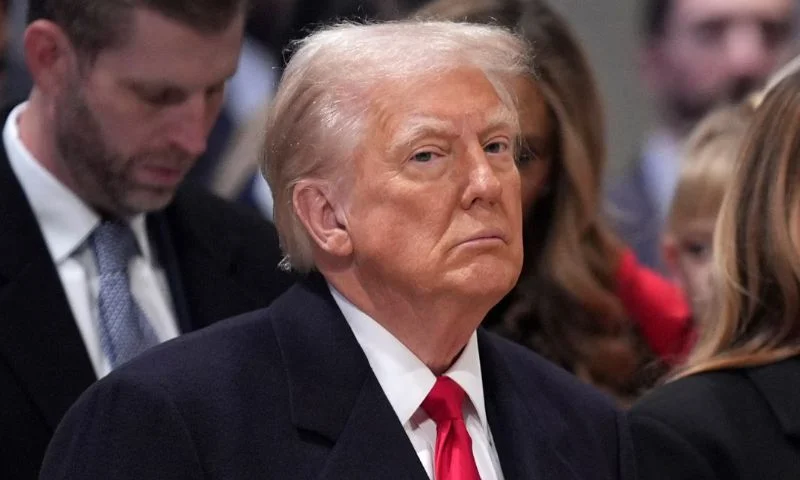
Trump Suffers Major Blow as Republican-Led House Votes to End Iran War
In a significant political setback for President Donald Trump, the Republican-led US House of Representatives on Wednesday approved a resolution aimed at ending American involvement in the war against Iran, reflecting growing unease within the president’s own party over a conflict that has stretched into its fourth month. The House voted 215-208 in favour of the war powers resolution, with four Republicans joining Democrats to support the measure. The resolution directs Trump to withdraw US troops from Iran unless Congress formally declares war or authorises the use of military force. Statement from Ranking Member @RepGregoryMeeks on the passage of his War Powers Resolution terminating U.S. hostilities against Iran: pic.twitter.com/ShtZ500Jzh — House Foreign Affairs Committee Dems (@HouseForeign) June 3, 2026 >The four Republicans who broke ranks were Representatives Tom Barrett of Michigan, Warren Davidson of Ohio, Brian Fitzpatrick of Pennsylvania and Thomas Massie of Kentucky. No Democrats voted against the measure, while seven House members did not cast votes. The vote marked the first time the Republican-controlled House has approved legislation seeking to force Trump to scale back military operations against Tehran since the conflict began following joint US-Israeli air strikes on Iran on February 28. Growing Republican Unease Although the resolution is largely symbolic for now, it represents a rare bipartisan challenge to presidential war powers and highlights increasing frustration in Congress over the administration’s handling of the conflict. The measure must still pass the Senate before it can take effect, and legal experts continue to debate whether such resolutions are constitutional. Three previous House attempts to curb Trump’s war powers failed by narrow margins. Last month, Republican leaders even postponed a scheduled vote when it appeared likely to pass. The Senate has also shown signs of shifting sentiment. In May, senators advanced a similar resolution in a procedural vote after several earlier efforts failed. Further action on that measure has not yet been scheduled. The House vote came amid broader Republican resistance to several Trump initiatives. On the same day, lawmakers advanced the Ukraine Support Act and criticised Trump’s choice of Bill Pulte, a mortgage regulator with no national security background, to serve as acting director of national intelligence. Debate Over War Powers Democrats argue that the US Constitution grants Congress, not the president, the authority to declare war. They have repeatedly called on Trump to seek congressional approval for military action against Iran. Lawmakers have also linked the conflict to rising prices for fuel, food and consumer goods, making economic concerns a major issue ahead of November’s midterm elections. US producer prices recorded their largest increase in four years in April as war-related costs climbed. “The passage of this WPR today signals a significant turning point: more and more Republicans are listening to their constituents who do not want another open-ended war in the Middle East,” Representative Gregory Meeks said after the vote. 🚨BREAKING🚨 The House just PASSED @RepGregoryMeeks‘ Iran War Powers Resolution. This is a loud and unambiguous message to Donald Trump on behalf of the American people: it’s time to end his deeply unpopular and illegal war of choice in Iran. pic.twitter.com/xhHU1djuzp — House Foreign Affairs Committee Dems (@HouseForeign) June 3, 2026 In a separate statement, House Foreign Affairs Committee Democrats declared: “This is a loud and unambiguous message to Donald Trump on behalf of the American people: it’s time to end his deeply unpopular and illegal war of choice in Iran.” The Trump administration has defended the military campaign, arguing that it is necessary to prevent Iran from developing a nuclear weapon and to protect US national security interests. Republican critics of the resolution dismissed it as political grandstanding designed to weaken the president.
