A colourful Indonesian parrot that remained one of the country’s greatest bird mysteries for nearly a century has reappeared in a remote mountain forest, offering conservationists new hope for a species many feared had vanished from sight.
The Blue-fronted Lorikeet, a small parrot found only on Indonesia’s Buru Island, was photographed in April during an expedition to the highlands of Mount Kapalatmada. The discovery marked the first confirmed photographic record of the bird in 12 years and the first-ever audio recording of its calls.
Researchers spotted at least nine birds during the expedition, which involved days of climbing through steep limestone terrain, dense forest and insect-filled mountain slopes. The finding has renewed interest in one of Indonesia’s least-understood bird species.
Search for a Lost Species
The expedition was organised by an Indonesian mountaineering group and supported by international bird experts. The team specifically targeted the Blue-fronted Lorikeet, despite the long odds of success.
“When you are looking for a bird that has only been documented once in the past century it feels like a long shot,” said John Mittermeier, director of the Search for Lost Birds programme at the American Bird Conservancy.
Scientists first described the species from seven specimens collected in the 1920s. After that, the bird disappeared from scientific records for almost 90 years. Researchers finally photographed it in 2014, but no further confirmed sightings followed for more than a decade.
Many experts suspected the species had survived in remote mountain habitats beyond the reach of previous surveys. That theory gained support when local climbers recently mapped new routes into the rugged highlands of Buru.
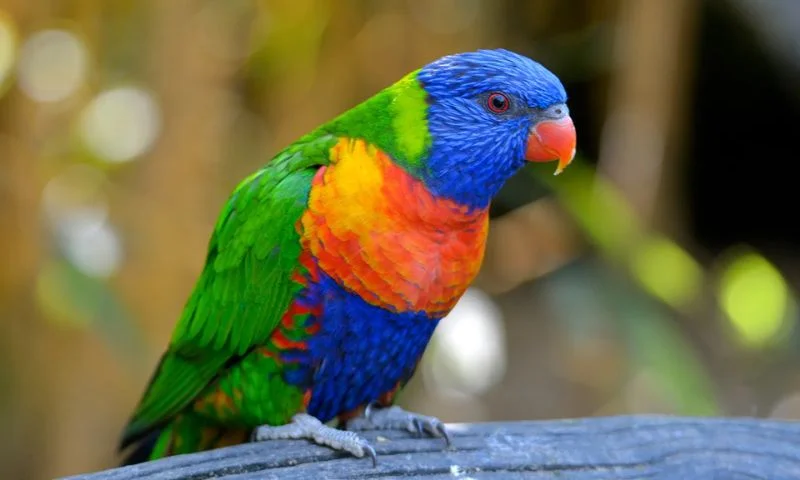
The team identified the bird through its bright green plumage, orange bill, blue hindcrown and distinctive pointed tail. They also recorded its high-pitched calls for the first time, providing scientists with valuable information for future research.
“There are no other birds on the island that look like the lorikeets, so when we saw them we knew immediately what they were,” Mittermeier said.
“We saw at least nine during the trip,” he added.
Gruelling Journey Ends in Breakthrough
Reaching the bird’s habitat proved as challenging as finding it. Mittermeier described the landscape as a maze of sharp limestone, steep cliffs and giant boulders. The area also lacks reliable water sources, making expeditions physically demanding.
Bird expert James Eaton, who took part in the search, said the conditions tested even experienced explorers.
“The rain, jagged limestone, river torrents and lack of trails meant anyone trying to reach the peak needed a strong or crazy reason to even attempt it.”
“This bird was our reason for doing so,” Eaton said.
After a week of difficult trekking, the team’s persistence paid off.
“To actually photograph our holy grail suddenly made all the hardships disappear. It’s a feeling adrenaline junkies would know well,” Eaton said.
The Blue-fronted Lorikeet currently holds a Data Deficient status on the International Union for Conservation of Nature (IUCN) Red List. The Search for Lost Birds initiative, a partnership between American Bird Conservancy, Re and BirdLife International, formally recognised it as a lost species in 2024.
Mittermeier said scientists must now determine the bird’s population size and identify possible threats to its survival.
“A finding like this is the first step to being able to protect it,” he said.
For Eaton, the rediscovery offered a rare moment of optimism.
“These moments of joy and discovery are a healthy reminder of what a beautiful world is there,” he said.
“This small green parrot, it was here long before humans stepped foot on the island, just like birds living in your garden at home. They have more right to be there than you or I.”