

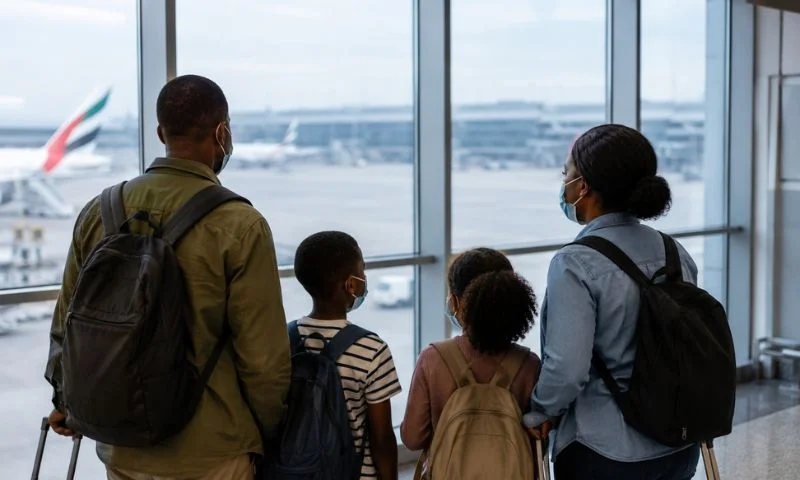
The United Arab Emirates has announced new travel restrictions for nationals of three African countries as part of its Ebola preparedness measures. The National Emergency Crisis and Disasters Management Authority (NCEMA) and the Federal Authority for Identity, Citizenship, Customs and Port Security (ICP) jointly announced the decision on Friday. The measures target travellers from the Democratic Republic of the Congo, Uganda and South Sudan. Authorities said the move forms part of the country’s efforts to strengthen health preparedness and protect the public from potential Ebola outbreaks. In a statement, officials said the decision is part of the country’s “preventive and proactive strategy to address developments related to the Ebola virus and safeguard public health.” Starting at 1 p.m. on June 6, 2026, the UAE will suspend all new visas for nationals of the three countries, including visit visas. The UAE will also restrict entry for travellers arriving from those countries. The restrictions will cover passengers who travel through third countries before reaching the Emirates. Exceptions and Operational Changes Authorities clarified that some travellers will qualify for an exemption. Travellers who spend more than 21 consecutive days outside the listed countries before arriving in the UAE may still enter the country. Officials said they could extend the measures if global health conditions worsen. At the same time, the UAE will keep cargo operations running between the Emirates and the affected countries. Transit flights will also continue. These arrangements will help maintain trade flows and international air connectivity. NCEMA and ICP said they will continue to monitor global health developments with local and international partners. “Authorities will assess any potential implications for other countries and implement further measures when necessary, based on approved health standards and risk assessments,” the statement said. Global Attention on Ebola The announcement comes as governments around the world closely watch Ebola-related developments in parts of Africa. According to the World Health Organization (WHO), Ebola virus disease is a severe illness that spreads through direct contact with infected bodily fluids. Common symptoms include fever, fatigue, muscle pain, vomiting and diarrhoea. Severe cases can lead to internal and external bleeding. The Democratic Republic of the Congo has experienced several Ebola outbreaks during the past decade. Uganda has also reported outbreaks that triggered regional health alerts. The UAE has not reported any Ebola cases linked to the current concerns. However, authorities have often taken precautionary measures when international health risks emerge. The country introduced strict health controls during previous outbreaks, including the COVID-19 pandemic. The latest restrictions highlight the UAE’s focus on prevention and rapid response. Officials said they will continue reviewing the situation and adjust measures when necessary. The decision also reflects a broader international effort to strengthen disease surveillance while keeping trade and transportation networks open.

The End of Keyboards? Tech Giants Are Building Computers That Work for You
The world’s biggest technology companies are intensifying efforts to create computers that can complete complex tasks with little human input, betting that a new generation of AI agents will transform how people interact with their devices. For years, digital assistants such as Siri, Alexa and Google Assistant promised to simplify everyday computing. In practice, most users relied on them for basic tasks such as setting alarms, playing music or checking the weather. Now companies including Nvidia, Microsoft and Google believe advances in generative AI can finally unlock a more capable generation of digital assistants that understand instructions, make decisions and carry out multi-step tasks independently. “The goal eventually is to figure out, ‘Hey, how do I just tell the computer essentially what I want it to do, and then have it do it?’” said Bob O’Donnell, founder and chief analyst at technology research firm Technalysis. The shift comes as AI adoption accelerates worldwide following the launch of OpenAI’s ChatGPT in late 2022. Since then, technology firms have invested billions of dollars in AI infrastructure, software and hardware designed to support increasingly autonomous systems. New Hardware Powers the AI Push Nvidia, Microsoft and Google unveiled several new AI-focused products in recent days as competition intensifies. Nvidia introduced the RTX Spark chip for Windows laptops on June 1. The company says the processor can run powerful AI agents directly on a device without relying on cloud computing. Dell, HP and Lenovo plan to launch laptops powered by the chip later this year. At the same time, Microsoft is redesigning parts of Windows and expanding AI capabilities across its software ecosystem. The company recently announced Scout, a new Microsoft 365 agent built using OpenClaw technology. Microsoft says Scout can work across files stored on a user’s computer, cloud services and workplace applications such as Outlook and Teams. The agent could monitor emails, track conversations and help organise work with minimal supervision. Google is also developing new AI features that can suggest actions based on what appears on a user’s screen. Future versions of Google’s software could propose scheduling meetings or managing tasks when users hover over relevant information. Promise Meets Practical Challenges Supporters argue that AI agents could fundamentally change how people use computers. Nvidia CEO Jensen Huang recently demonstrated how AI agents could move between design applications to assist with planning a house. Meanwhile, developers increasingly use OpenClaw to conduct research and complete complex workflows while communicating with the system through messaging apps. “Things are quite different now because more people have now become quite used to using like Chat GPT or Gemini or Anthropic,” said David Naranjo, associate director at Counterpoint Research. Despite the excitement, analysts caution that widespread adoption may still take years. High hardware costs remain a challenge. Many consumers also question whether AI systems can reliably handle important tasks without making costly mistakes. “There’s a whole host of issues that need to be resolved before this becomes mass market,” said Jitesh Ubrani, research manager at International Data Corporation. “But are we on the right track? Yes.” Analysts say businesses will likely adopt AI agents faster than consumers because local AI processing offers greater security and lower long-term operating costs. The success of the technology may ultimately depend on whether users trust computers to make decisions on their behalf.
Indonesia Volcano Erupts Again, Forcing Airport Shutdown
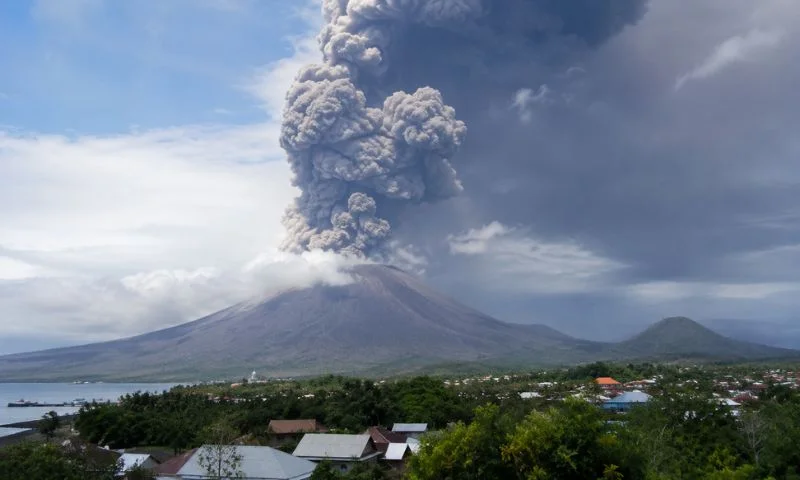
A highly active volcano in eastern Indonesia erupted several times on Friday, sending towering columns of ash into the sky and forcing the closure of a nearby airport, authorities said. Mount Lewotobi Laki-Laki, located on Flores Island in East Nusa Tenggara province, erupted at 11:15 a.m. local time, ejecting volcanic material 2.5 kilometres above its summit, according to Indonesia’s volcanology agency. The eruption followed a series of smaller explosions earlier in the day, underscoring the volcano’s continued activity in one of the world’s most geologically volatile regions. Officials maintained the volcano at Indonesia’s second-highest alert level and continued to enforce a five-kilometre exclusion zone around the crater. The volcanology agency warned residents to stay away from restricted areas and remain alert to secondary hazards caused by heavy rainfall. Airport Operations Halted Authorities suspended all operations at Frans Seda Airport in Maumere, a town located about 60 kilometres west of the volcano. The closure disrupted at least five domestic flights on Friday. Airport head Partahian Panjaitan told AFP that officials halted services as a precaution after ash clouds spread across the region. Volcanic ash poses a serious threat to aircraft because it can damage engines, reduce visibility and interfere with navigation systems. The volcanology agency also warned communities living near rivers to remain vigilant. Officials said heavy rain could trigger dangerous mudflows known as lahars. These fast-moving flows contain volcanic ash, rocks and debris and can travel long distances from eruption sites. Images released by Indonesia’s Geological Agency showed a thick grey ash column rising high above the crater and drifting across nearby areas. The latest eruption did not immediately result in reports of casualties or major property damage. History of Major Eruptions Mount Lewotobi Laki-Laki stands 1,584 metres high and forms part of a twin-volcano system. Its neighbouring peak, Lewotobi Perempuan, rises to 1,703 metres and generally remains less active. The names reflect Indonesian words for “man” and “woman”. The volcano has shown heightened activity over the past two years. In July 2025, Lewotobi Laki-Laki erupted dramatically and sent an ash plume about 18 kilometres into the atmosphere. The eruption forced authorities to cancel 24 flights at Bali’s international airport and disrupted travel for thousands of passengers. Indonesia frequently experiences earthquakes and volcanic eruptions because it sits along the Pacific Ring of Fire. The vast horseshoe-shaped belt contains hundreds of active volcanoes and some of the world’s most active tectonic fault lines. The Southeast Asian nation hosts more than 120 active volcanoes, making volcanic monitoring a critical part of disaster management efforts. Scientists continue to closely monitor Lewotobi Laki-Laki for signs of further escalation. Authorities have urged residents and travellers to follow official updates as volcanic activity continues. The latest eruption serves as another reminder of the natural hazards faced by communities living along Indonesia’s active volcanic chain.

Australia Finds 100,000 Illegal Cockroaches Worth $140,000 in Shocking Raid
Australian wildlife authorities have uncovered one of the country’s largest illegal cockroaches breeding operations, seizing more than 100,000 exotic cockroaches from a commercial breeder in rural New South Wales. The raid took place in the town of Bathurst, about 200 kilometres west of Sydney. Officials from Australia’s Department of Climate Change, Energy, Environment and Water (DCCEEW) carried out the operation on May 26 and announced details on Friday. Authorities said the seized insects had an estimated black market value of about US$140,000, or roughly A$200,000. The haul included thousands of Madagascar hissing cockroaches and dubia cockroaches. Both species remain highly sought after in the exotic pet trade. Photos released by the department showed some of the insects packed into plastic containers. One Madagascar hissing cockroach appeared large enough to cover most of an adult’s palm. Authorities Warn Illegal Breeders Officials said the insects entered Australia illegally and posed a potential threat to local ecosystems. Madagascar hissing cockroaches originate from the island of Madagascar and rank among the world’s largest cockroach species. Unlike common household cockroaches, they produce a distinctive hissing sound by forcing air through breathing pores in their bodies. Exotic pet owners often keep them because of their unusual appearance and behaviour. Dubia cockroaches, native to Central and South America, have become popular worldwide as feeder insects for reptiles, amphibians and exotic pets. Australian authorities classify them as a prohibited species because escaped populations could threaten native biodiversity. “We take our job protecting Australia’s unique biodiversity and breaches of national environment law very seriously,” an environment department spokesman said. “We’re seeing illegal breeding and trading of exotic cockroaches and we’re putting pet businesses and pet owners on notice.” Australia maintains some of the world’s strictest biosecurity laws. Authorities regularly target illegal imports of animals, insects and plants that could damage the country’s unique ecosystems. Environmental experts say invasive species have already caused significant ecological and economic damage across Australia. Rabbits, cane toads and feral cats rank among the most well-known examples. Tough Biosecurity Rules The seizure highlights growing concerns about the underground trade in exotic insects. Collectors and breeders often buy rare species online and sell them through private networks, making enforcement difficult. Australian law prohibits the import and breeding of many exotic invertebrates without special permits. Authorities fear that escaped insects could establish breeding populations and compete with native species. Officials now face the challenge of destroying the massive cockroach collection. The department confirmed that staff will euthanise the insects to eliminate any risk of escape or accidental release. The task may prove unpleasant, but authorities say it remains necessary to protect Australia’s environment. Cockroaches have earned a reputation for resilience and adaptability. Their toughness helped fuel the long-running myth that they could survive a nuclear explosion. Scientists have repeatedly challenged that claim, although researchers acknowledge that some cockroach species can withstand higher radiation levels than humans. The Bathurst seizure marks another high-profile enforcement action as Australia intensifies efforts to curb illegal wildlife trading and protect its biodiversity from invasive species.

Nepra Announces Big Power Relief: Here’s How Much Your Bill Could Drop
Electricity consumers across Pakistan will receive tariff relief over the next three months after the National Electric Power Regulatory Authority (Nepra) approved a reduction in power rates with a cumulative financial impact of about Rs56 billion. The regulator issued two separate determinations on Thursday. One relates to the monthly fuel cost adjustment (FCA) for April 2026, while the other covers the quarterly tariff adjustment (QTA) for the January-March period. Together, the decisions will lower electricity bills from June through August, although consumers will first see a smaller reduction in June before larger relief continues during the following two months. Two Adjustments Shape Consumer Bills Under the monthly fuel cost adjustment, Nepra approved an increase of Rs1.1907 per unit for electricity consumed in April. Distribution companies had sought a higher increase of Rs1.74 per unit to recover around Rs16 billion from consumers. However, the regulator reduced the amount and allowed recovery of about Rs11 billion instead. Nepra stated: “has decided that positive FCA for April 2026 i.e (Rs1.1907/kWh)…shall be applicable to all the consumer categories of KE and XWDISCOs except lifeline consumers, Electric Vehicle Charging Stations (EVCS) and pre-paid electricity consumers of all categories who opted for pre-paid tariff”. The notification added that power distribution companies and K-Electric would reflect the FCA in June bills. At the same time, Nepra approved a quarterly tariff adjustment that will reduce rates by Rs1.99 per unit. The reduction will remain in place for June, July and August and carries a total financial impact of about Rs67 billion. The regulator said the adjustment would apply to most consumer categories. Lifeline consumers, prepaid users and consumers covered under the incremental consumption package will remain exempt. Distribution companies had proposed a refund of about Rs64 billion under the quarterly adjustment mechanism at a rate of roughly Rs1.75 per unit. Nepra increased the relief and approved a larger reduction. Net Relief of 80 Paisa Per Unit in June The simultaneous implementation of both adjustments will shape electricity bills over the next three months. Consumers will pay Rs1.19 per unit more under the fuel adjustment in June. At the same time, they will receive a Rs1.99 per unit reduction under the quarterly adjustment. As a result, the net impact for June will be a reduction of about 80 paisa per unit. The Rs1.99 per unit relief will then continue through July and August without the April fuel adjustment. According to Nepra’s calculations, consumers will receive about Rs67 billion in relief over three months. After accounting for the Rs11 billion fuel cost recovery in June, the net benefit will reach approximately Rs56 billion. Officials said lower quarterly adjustments emerged mainly from changes in capacity charges, transmission charges and market operator fees. The calculations also included the impact of the government’s incremental consumption package for industrial and agricultural consumers, along with transmission losses and operational costs during the first quarter of calendar year 2026. The latest reduction comes as households and businesses continue to struggle with high energy costs. The government has repeatedly pledged to lower electricity prices through reforms in the power sector and improved management of generation and distribution expenses.

Pakistan Turns Down India Invite for Major Asian Sports Event
Pakistan has decided not to send its fencing team to the Asian Senior Fencing Championships in New Delhi later this month, despite receiving an official invitation from the event organisers. The championship will take place from June 19 to 24 at Bharat Mandapam in New Delhi. India will host the continental event for the first time. More than 30 countries from Asia and Oceania will compete, while nearly 100 delegates and technical officials will oversee the tournament. India’s Press Trust of India (PTI) reported on Thursday that Pakistan did not submit entries before the registration deadline. As a result, Pakistani fencers will not take part in the competition. “We sent an invite to Pakistan, as well as Afghanistan, to participate in the championships but they chose not to send their fencers. The deadline for sending entries is long over and we are now in the process of procuring visas for the athletes and officials,” Fencing Association of India Secretary General Rajeev Mehta told PTI. Pakistan’s fencing authorities have not publicly explained the decision. Sports exchanges between India and Pakistan Limited The development comes amid strained sporting relations between the two neighbours. Last month, India’s Sports Ministry reaffirmed its ban on bilateral sporting ties with Pakistan. Authorities introduced the restriction last year following tensions between the two countries. However, New Delhi also clarified that Pakistani athletes could still travel to India for international and continental competitions. Indian officials said they would continue to honour obligations linked to global sporting events. Despite that assurance, Pakistan chose not to enter its athletes for the fencing championship. The decision means Pakistan will miss one of Asia’s most important fencing tournaments. The championship attracts leading competitors from across the continent and offers valuable international ranking points in foil, épée and sabre events. Sports exchanges between India and Pakistan have remained limited in recent years. Political tensions have often affected sporting engagements, although both countries continue to participate in multinational events organised by international federations. Landmark Event for Fencing Champions The 2026 championship marks a significant milestone for Indian fencing. India secured hosting rights for the event after years of efforts to expand the sport’s profile in the country. Organisers expect some of Asia’s top-ranked fencers to compete in New Delhi. The tournament will also coincide with the General Assembly of the Fencing Confederation of Asia. The gathering will bring senior officials from across the continent to India for key discussions on the sport’s future. Interim International Fencing Federation President Abdelmoneim El Husseiny is also expected to attend. Mehta said preparations continue according to schedule despite a few logistical challenges. “Preparations for the championship are progressing smoothly, with coordination being undertaken alongside international and national authorities to ensure world-class event management and athlete experience,” he said. Officials have reported visa-related issues involving some participants from Hong Kong and Australia. Organisers remain confident that all delegations will arrive before the competition begins. Pakistan’s absence removes a regional rival from the championship. Organisers, however, expect strong participation from the rest of Asia and Oceania as India hosts the event for the first time.
