A highly active volcano in eastern Indonesia erupted several times on Friday, sending towering columns of ash into the sky and forcing the closure of a nearby airport, authorities said.
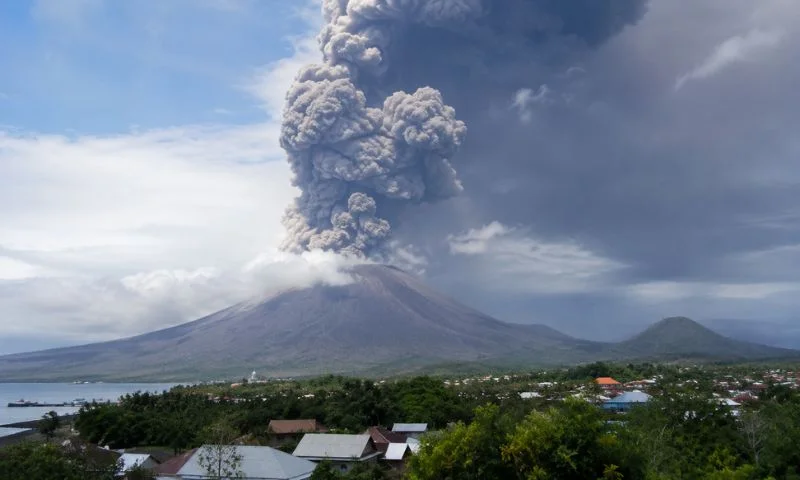
Mount Lewotobi Laki-Laki, located on Flores Island in East Nusa Tenggara province, erupted at 11:15 a.m. local time, ejecting volcanic material 2.5 kilometres above its summit, according to Indonesia’s volcanology agency.
The eruption followed a series of smaller explosions earlier in the day, underscoring the volcano’s continued activity in one of the world’s most geologically volatile regions.
Officials maintained the volcano at Indonesia’s second-highest alert level and continued to enforce a five-kilometre exclusion zone around the crater.
The volcanology agency warned residents to stay away from restricted areas and remain alert to secondary hazards caused by heavy rainfall.
Airport Operations Halted
Authorities suspended all operations at Frans Seda Airport in Maumere, a town located about 60 kilometres west of the volcano.
The closure disrupted at least five domestic flights on Friday.
Airport head Partahian Panjaitan told AFP that officials halted services as a precaution after ash clouds spread across the region.
Volcanic ash poses a serious threat to aircraft because it can damage engines, reduce visibility and interfere with navigation systems.
The volcanology agency also warned communities living near rivers to remain vigilant.
Officials said heavy rain could trigger dangerous mudflows known as lahars. These fast-moving flows contain volcanic ash, rocks and debris and can travel long distances from eruption sites.
Images released by Indonesia’s Geological Agency showed a thick grey ash column rising high above the crater and drifting across nearby areas.
The latest eruption did not immediately result in reports of casualties or major property damage.
History of Major Eruptions
Mount Lewotobi Laki-Laki stands 1,584 metres high and forms part of a twin-volcano system. Its neighbouring peak, Lewotobi Perempuan, rises to 1,703 metres and generally remains less active.
The names reflect Indonesian words for “man” and “woman”.
The volcano has shown heightened activity over the past two years. In July 2025, Lewotobi Laki-Laki erupted dramatically and sent an ash plume about 18 kilometres into the atmosphere. The eruption forced authorities to cancel 24 flights at Bali’s international airport and disrupted travel for thousands of passengers.
Indonesia frequently experiences earthquakes and volcanic eruptions because it sits along the Pacific Ring of Fire. The vast horseshoe-shaped belt contains hundreds of active volcanoes and some of the world’s most active tectonic fault lines.
The Southeast Asian nation hosts more than 120 active volcanoes, making volcanic monitoring a critical part of disaster management efforts.
Scientists continue to closely monitor Lewotobi Laki-Laki for signs of further escalation. Authorities have urged residents and travellers to follow official updates as volcanic activity continues.
The latest eruption serves as another reminder of the natural hazards faced by communities living along Indonesia’s active volcanic chain.