


The International Cricket Council (ICC) has provisionally scheduled the 2027 Men’s ODI World Cup from October 4 to November 21, marking the return of cricket’s flagship 50-over event to Africa for the first time in nearly a quarter century. According to details discussed at the ICC Board meeting in Ahmedabad in May, the tournament will take place across South Africa, Zimbabwe and Namibia. The governing body is expected to formally approve the schedule and operational details at its Annual General Meeting in Edinburgh in July. The event will feature 14 teams and 54 matches, restoring the larger format last used before the previous two editions were reduced to 10 teams. South Africa is expected to host the majority of the tournament. Cricket officials anticipate at least 41 matches will take place across eight South African venues. Zimbabwe will likely stage between eight and 10 matches. The country will use three venues instead of the originally planned two. Alongside Harare Sports Club and Queens Sports Club in Bulawayo, Victoria Falls will also host matches. Namibia is expected to host three games. A major addition to Zimbabwe’s preparations is the new Fale Mosi-oa-Tunya International Cricket Stadium in Victoria Falls. Construction is nearing completion and officials expect the venue to host domestic cricket later this year before its formal inauguration in May 2027. South Africa had initially explored plans to open the stadium with an international fixture in August 2026, but organisers have postponed those discussions. Africa Hosts ODI World Cup for First Time Since 2003 The 2027 edition will become the first ODI World Cup held in Africa since the 2003 tournament, which South Africa, Zimbabwe and Kenya jointly hosted. Since then, South Africa has organised several major ICC events, including the 2007 ICC World Twenty20, the 2009 ICC Champions Trophy and the 2023 ICC Women’s T20 World Cup. Zimbabwe and Namibia also successfully co-hosted the ICC Under-19 Men’s Cricket World Cup in 2026. The tournament format will feature two groups of seven teams. The top three sides from each group will progress to the Super Six stage before the knockout rounds. As Full Members of the ICC, South Africa and Zimbabwe qualify automatically. Namibia must secure qualification through the ICC pathway. Wider ICC Decisions Still Await Approval The World Cup will also launch the ICC’s 2027-2031 Future Tours Programme (FTP), which governs bilateral international cricket schedules. Cricket administrators continue to discuss several major issues linked to the new FTP cycle. One key topic is the future structure of the World Test Championship (WTC). ICC officials are considering expanding the competition to include all 12 Full Member nations. Currently, Zimbabwe, Ireland and Afghanistan do not participate in the WTC. Officials are also debating whether standalone Test matches should count toward WTC standings. Sources indicate the ICC could take a final decision on both matters during the Edinburgh AGM. Once members approve the framework, officials will finalise the full FTP schedule later this year. For now, attention turns to the 2027 ODI World Cup, a tournament that promises to bring cricket’s biggest prize back to African soil and showcase the sport across three nations with growing ambitions on the global stage.

What Does $1 Million Buy You at the 2026 World Cup Final?
As demand for the FIFA World Cup 2026 final continues to surge, a luxury Manhattan hotel has introduced a hospitality package carrying a price tag few football fans can afford. The Mark Hotel in New York has unveiled a World Cup weekend experience worth $1 million, positioning it among the most expensive football hospitality packages ever offered. The package, called the “World Cup Extravaganza,” includes exclusive access to the FIFA World Cup final, private helicopter transportation, luxury accommodation and high-end hospitality services for six guests. The offer covers a five-night stay from July 16 to July 21, 2026, at The Mark Penthouse, which the hotel describes as the largest hotel penthouse suite in North America. The FIFA World Cup 2026 will take place across the United States, Canada and Mexico. The tournament final is scheduled for July 19 at New York New Jersey Stadium in East Rutherford, New Jersey. With New York expected to attract hundreds of thousands of football fans during the final weekend, the package targets ultra-high-net-worth travellers seeking privacy and premium access. Helicopters, Caviar and a Private Yacht Guests will stay in a sprawling penthouse occupying the hotel’s top two floors. The property overlooks Central Park and offers panoramic views of the Manhattan skyline. The suite will feature oversized screens showing every World Cup match, private lounges and personalized entertainment services. The package accommodates six guests. The hotel will also provide two additional rooms for assistants, security personnel or support staff. A dedicated butler and an on-call massage therapist will remain available throughout the stay. One of the headline attractions is a private charter aboard The Mark’s 70-foot Herreshoff sailboat. Guests will sail around New York Harbor and pass landmarks including the Statue of Liberty. The experience also includes bespoke dining prepared by renowned chef Jean-Georges Vongerichten or luxury dining brand Caviar Kaspia. Visitors will enjoy caviar service and drinks on the penthouse terrace while taking in views of Manhattan. The suite also includes access to a private gym and a cold plunge area. Pitchside Access to Football History Perhaps the most exclusive feature comes on match day. Guests will travel to and from the World Cup final by private helicopter, avoiding the congestion expected around the stadium and across New York City. A chauffeur-driven luxury vehicle will remain available throughout the trip. At the stadium, guests will receive midfield pitchside premium seats, among the most sought-after tickets in world football. The package also includes access to exclusive lounges, private entrances, premium hospitality services and commemorative gifts. Read More: FIFA Just Made the 2026 World Cup Richer Than Ever Before After the final whistle, guests will return to The Mark for a private celebration overlooking Madison Avenue. Luxury travel experts say major sporting events increasingly attract high-end hospitality offerings. The FIFA World Cup, the Olympics and Formula One races have all become major opportunities for luxury brands and hotels to target wealthy travellers. For most football supporters, the World Cup final remains a dream. For six guests at The Mark Hotel, that dream comes with helicopters, caviar and a $1 million bill.

FIFA Just Made the 2026 World Cup Richer Than Ever Before
FIFA has turned the 2026 World Cup into the richest tournament in football history, with prize money rising by about 50 percent compared to the 2022 edition in Qatar. The expanded tournament, which will be hosted by the United States, Canada and Mexico, will feature 48 teams and 104 matches. It will also distribute a record $727 million among participating nations, according to figures approved by the FIFA Council. Of that amount, $655 million will be paid as performance-based prize money. The biggest reward will go to the eventual champions. FIFA has confirmed that the winning federation will receive $50 million, the largest prize ever awarded to a World Cup winner. The runners-up will earn $33 million, while the third and fourth-placed teams will receive $29 million and $27 million respectively. As a result, the final weekend of the tournament could mean a difference of millions of dollars for the remaining contenders. The increase reflects FIFA’s growing revenues and the commercial strength of the world’s most watched sporting event. FIFA expects the 2023-2026 cycle to generate record income, helping fund larger payments to participating nations and development programs around the world. Every Stage Carries Major Financial Rewards Teams that reach the quarterfinals will each receive $19 million. Meanwhile, nations that advance to the round of 16 will collect $15 million. A place in the newly introduced round of 32 guarantees $11 million. Even countries that fail to progress beyond the group stage will not leave empty-handed. FIFA has allocated $9 million to each group-stage team. In addition, every qualified nation will receive a separate preparation payment of $1.5 million. This means all 48 participants are guaranteed at least $10.5 million simply for reaching the tournament. For smaller football nations, those figures could transform the future of the sport. Football associations often use World Cup earnings to build academies, improve stadiums, expand coaching programs and support women’s football initiatives. Furthermore, the expanded format creates new opportunities for countries that rarely qualify for the tournament. More nations will have access to substantial funding, helping narrow the development gap between football’s traditional powers and emerging teams. Financial Windfall Beyond the Pitch The official prize money represents only part of the financial picture. Successful teams can also benefit from sponsorship agreements, commercial bonuses, broadcasting incentives and player-related endorsement deals. FIFA President Gianni Infantino described the financial package as groundbreaking for global football. “The FIFA World Cup 2026 will also be groundbreaking in terms of its financial contribution to the global football community,” Infantino said when FIFA approved the record funding structure. The tournament will run from June 11 to July 19, 2026, across North America. By the time the final whistle blows, FIFA’s biggest World Cup could also become its most financially significant. For many nations, the rewards may continue long after the trophy has been lifted.
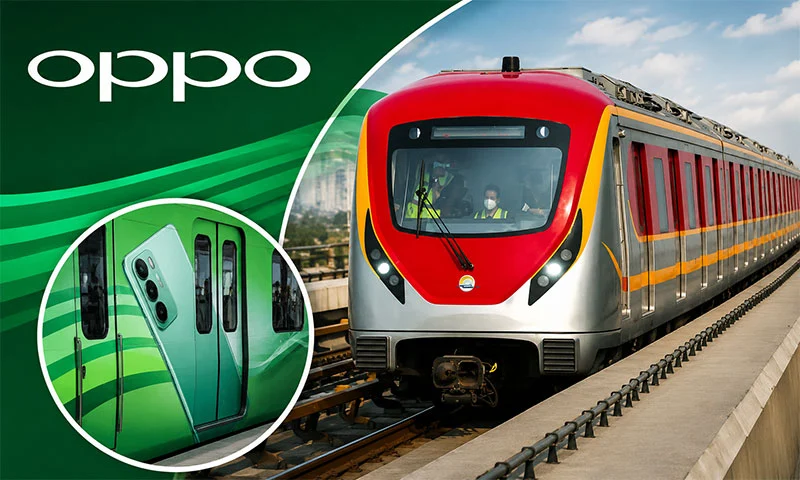
What’s Special About Lahore’s New OPPO-Themed Metro Train?
OPPO Pakistan, in partnership with the Punjab Mass Transit Authority (PMA) and NORINCO International, has launched Pakistan’s first fully branded metro train on the Lahore Orange Line Metro Train system. The train was unveiled during a special ceremony at the Orange Line Depot in Lahore. Senior officials from OPPO Pakistan, PMA, Orange Line Metro operations, NORINCO International, and the Chinese Consulate in Lahore attended the event. The ceremony began with a ribbon-cutting event. Guests then toured the newly unveiled OPPO-themed train and the exclusive OPPO A6s Pro branded carriage. The initiative marks the first collaboration of its kind in Pakistan between a global technology company and a public mass transit system. As a result, it introduces a new approach to commuter engagement while highlighting the value of public-private partnerships. Speaking at the ceremony, George Long, CEO of OPPO Pakistan, said: “This initiative reflects OPPO’s commitment to innovation beyond technology products alone. Through this collaboration with PMA and our partners, we are proud to contribute to a project that connects with millions of people in a meaningful and visible way. Pakistan remains an important market for OPPO, and we believe partnerships like these open new opportunities for innovation, engagement, and long-term collaboration between Pakistan and China.” Innovation Meets Urban Mobility Designed as a moving symbol of innovation and connectivity, the themed train reflects the long-standing friendship between Pakistan and China. Furthermore, the project demonstrates how technology and public infrastructure can work together to improve daily urban experiences. Officials from PMA welcomed the initiative. They described it as a progressive step toward modernizing commuter experiences. Additionally, they said it could create more engaging public spaces within transport systems. The OPPO-themed train will now operate across Lahore’s metro network. Consequently, thousands of commuters will experience a refreshed visual environment during their daily journeys. Moreover, officials expect the partnership to encourage similar collaborations between public institutions and private companies. Earlier this year, OPPO introduced a special train wrap inspired by its OPPO A6s Pro smartphone. The initiative celebrated 75 years of diplomatic relations between Pakistan and China. Orange Line Remains a Symbol of Development The Orange Line Metro remains one of Pakistan’s most important transport projects. It began operations in 2020 and became the country’s first metro rail system. The 27.1-kilometre line connects major parts of Lahore through 26 stations. Today, it serves hundreds of thousands of passengers every week. Meanwhile, Chinese companies played a key role in the project’s development. NORINCO International remains one of the major partners associated with the system. Industry experts believe the branded train could open new opportunities for innovation-led partnerships. They also see potential for new advertising and passenger engagement models. As one of Pakistan’s most visible transport systems, the Orange Line Metro symbolizes development and cooperation. This latest initiative further strengthens that image. At the same time, it brings together technology, infrastructure and public engagement on a single platform. Ultimately, the project reflects the broader partnership between Pakistan and China. It also showcases how cooperation across industries can create meaningful experiences for communities while supporting urban modernization.

Anti-Ageing Science Enters New Era With Landmark Human Trial
A biotechnology company in the United States has administered an experimental anti-ageing gene therapy to a human for the first time, marking a major milestone in the emerging field of cellular rejuvenation. Boston-based Life Biosciences announced that the first participant has received ER-100, an experimental treatment designed to partially reverse ageing at a cellular level. The therapy forms part of what researchers believe is the world’s first human clinical trial of partial cellular reprogramming. The treatment targets glaucoma, a leading cause of blindness that damages the optic nerve and gradually reduces vision. Researchers also plan to study the therapy in patients suffering from non-arteritic anterior ischaemic optic neuropathy (NAION), a serious condition that can cause sudden vision loss. Participants receive a single injection directly into the eye. They then take antibiotics over several weeks. The medication activates three therapeutic genes carried by the treatment. Life Biosciences has launched the Phase 1 trial primarily to evaluate safety and tolerability. The company expects fewer than 20 patients to participate. Researchers are recruiting volunteers in Boston, New York, Los Angeles and Charleston. The trial follows approval from the US Food and Drug Administration (FDA), which cleared the programme earlier this year. Science Behind the Therapy The technology builds on Nobel Prize-winning research by Japanese scientist Shinya Yamanaka. Nearly two decades ago, Yamanaka demonstrated that a small group of genes could reset mature cells and return them to a stem cell-like state. Scientists later named these genes “Yamanaka factors.” Researchers soon discovered that a complete cellular reset carried significant risks because cells could lose their identity or become cancerous. Scientists therefore developed a safer approach known as partial cellular reprogramming. Instead of fully resetting cells, they activate selected genes for a limited period. The process aims to make cells behave like younger versions of themselves while preserving their original function. Read More: From Bird Droppings to Bee Venom: Weird Skincare Trends That Actually Work ER-100 uses three reprogramming genes to target damaged retinal cells. Researchers hope the treatment can rejuvenate ageing cells and restore lost vision. Scientists selected the eye as the first testing ground because it offers a controlled environment. Changes remain largely confined to the treated area, reducing the risk of body-wide side effects. Longevity Researchers and Investors Watch Closely The trial has attracted attention from both the medical community and prominent technology figures. Earlier this year, Elon Musk described human ageing as a “very solvable” problem during discussions at the World Economic Forum. Life Biosciences co-founder and Harvard researcher David Sinclair later hinted that human trials were approaching. When Musk posted the question, “ER-100?”, Sinclair replied with a single word: “Yes.” Sinclair has previously reported that partial cellular reprogramming restored vision in laboratory mice after researchers damaged their optic nerves. Despite the excitement, scientists remain cautious. Experts warn that altering gene expression could trigger unintended effects, including the possibility that some cells may become cancerous. Researchers stress that ER-100 is not an anti-ageing cure. Instead, it represents the first real-world test of whether partial cellular reprogramming can safely rejuvenate human cells. The trial’s results may take years to emerge. However, scientists view the study as a crucial first step in determining whether age-related decline can one day be treated at the cellular level.
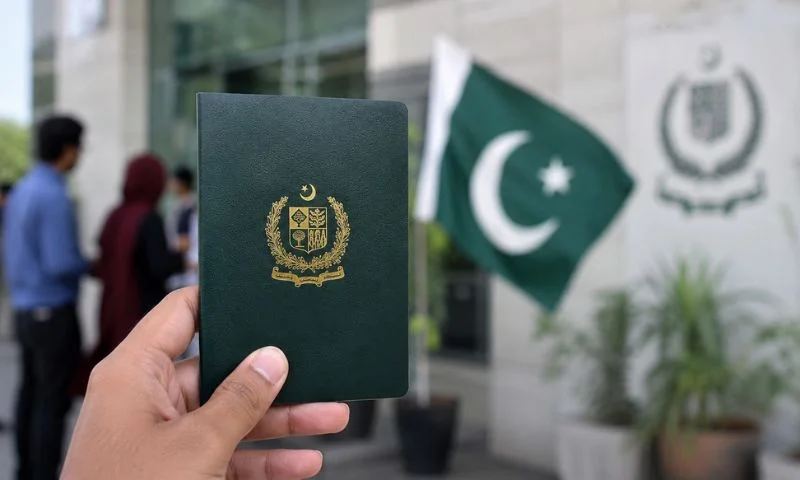
Pakistan to Launch Doorstep Passport Delivery and Cashless Passport Offices
The federal government has decided to launch a doorstep passport delivery service to make passport collection easier and faster for citizens across Pakistan. The decision came during a meeting chaired by Director General Immigration and Passports Muhammad Ali Randhawa in Islamabad. Officials reviewed progress on a dedicated digital application that will support the new service. They also finalised standard operating procedures for passport delivery. The move marks another step in the government’s effort to modernise public services and improve the passport system. Officials expect the service to save applicants time and reduce visits to passport offices. The facility will especially benefit people living in remote areas and large cities. The government plans to roll out the service nationwide after completing the final implementation process. Faster Processing and Cashless Passport Offices The latest development follows a high-level meeting held on April 30. Interior Minister Mohsin Naqvi and Minister of State Talal Chaudhry chaired the session. During the meeting, officials presented several reforms for the passport system. The government approved those measures to improve service delivery. Officials informed the ministers that authorities had reduced the processing time for normal passports from 21 days to 14 days. The government also reviewed plans for home delivery and directed officials to improve the proposed system further. Authorities took another major decision during the meeting. They approved a fully cashless payment system for passport offices across the country. Read More: Pakistani Passport Drops to 100th Place in Global Rankings Officials plan to introduce the system within 15 days. The new framework will eliminate cash transactions at passport offices. Authorities believe the move will improve transparency and reduce opportunities for corruption. Officials also hope the system will curb the influence of middlemen, commonly known as the “agent mafia”. The Directorate General of Immigration and Passports has already introduced several digital reforms. These include online passport renewal services for overseas Pakistanis and digital appointment systems. Those initiatives have helped reduce congestion at passport offices and improve efficiency. Business Passport Proposal Under Review Officials also reviewed progress on the proposed Business Passport category. The initiative aims to support frequent travellers, exporters and business professionals who require faster documentation services. The meeting also discussed the creation of a dedicated Passport Authority. Officials believe the proposed authority will strengthen institutional capacity and improve long-term service delivery. Pakistan has seen a steady increase in passport applications in recent years. Rising overseas employment and growing international travel have driven demand. Officials say the latest reforms reflect the government’s broader push to digitise public services. Once authorities launch the programme, applicants will receive passports at their homes instead of visiting collection centres. The initiative could become one of the most significant citizen-focused reforms introduced by the immigration department in recent years.
New Budget Makes Non-Filer Car Ownership More Expensive Than Ever
Pakistan’s proposed Budget 2026-27 is set to increase the cost of buying and owning a vehicle, especially for people who are not on the Federal Board of Revenue’s Active Taxpayers List (ATL). The government plans to introduce new taxes that will raise vehicle prices, increase fuel costs and widen the financial gap between filers and non-filers from July 1. One major change is the increase in the Climate Support Levy on locally assembled and imported petrol vehicles with engine capacities up to 1300cc. The levy will rise from 1% to 3% of the ex-factory price. The measure will directly affect popular models such as the Suzuki Alto, Suzuki Cultus and Suzuki Swift. For a vehicle priced at Rs3 million, the higher levy will add around Rs60,000 to the ex-factory cost before registration and other taxes. Motorists will also pay more at fuel stations. The Climate Support Levy on petrol will increase from Rs2.50 per litre to Rs5 per litre under Pakistan’s IMF-linked fiscal commitments. For a car with a 35-litre fuel tank, the increase will add about Rs87.50 to each refill. Non-Filers Face Higher Registration Charges The biggest impact will come at the vehicle registration stage. The government wants to expand the tax net and encourage more people to file returns. Officials aim to make non-compliance more expensive through higher withholding taxes. Under Section 231B of the Income Tax Ordinance, non-filers already pay double the withholding tax charged to ATL members when registering a new vehicle. Read More: Budget 2026-27: Pakistan Likely to Impose Up to 25pc Sales Tax on Imported EVs For vehicles up to 850cc, filers pay Rs10,000 while non-filers pay Rs20,000. For vehicles between 1301cc and 1600cc, filers pay Rs5,000 while non-filers pay Rs10,000. Owners of vehicles above 2500cc pay Rs15,000 if they are filers and Rs30,000 if they are non-filers. These charges apply before provincial token taxes, transfer fees and other registration costs. Provincial governments also offer benefits to tax-compliant citizens. In Khyber Pakhtunkhwa, an 1800cc vehicle owner pays Rs6,000 in annual token tax as a filer and Rs12,000 as a non-filer. Punjab has adopted a value-based taxation system that also rewards registered taxpayers. Filing Returns Could Save Buyers Money Tax experts say ATL membership has become increasingly important for major financial transactions. The FBR allows salaried individuals to use their CNIC as their National Tax Number. Taxpayers can file returns online through the IRIS portal. Even individuals with no tax liability can submit a zero-tax return and qualify for ATL status. The deadline for Tax Year 2025 returns is September 30, 2026. Late filers can restore their status by paying a surcharge, but they still face higher rates than active taxpayers. The latest budget measures show that tax status now plays a larger role in vehicle purchases. Higher car prices, rising fuel costs and increased registration charges will add pressure on buyers. Non-filers will face the biggest burden. For many Pakistanis, filing a tax return before buying a vehicle could save thousands of rupees and reduce costs throughout the year.
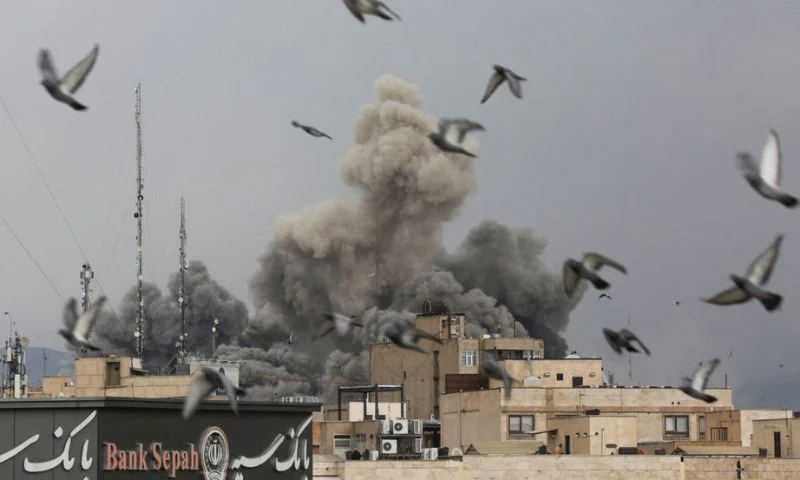
Gulf Tensions Explode as Iran Fires Missiles and Trump Demands Deal
The United States and Iran exchanged fresh air and missile strikes on Thursday for a second consecutive day, deepening tensions and casting fresh doubt on a fragile ceasefire that has struggled to hold since April. The latest escalation followed the downing of a US Apache helicopter near the Strait of Hormuz earlier this week, an incident that triggered a new round of military action across the Gulf region. The US military said it carried out strikes targeting Iranian military surveillance systems, communication networks and air defence sites. According to US Central Command, the operation aimed to counter what it described as Tehran’s “unwarranted and continued aggression.” President Donald Trump signalled that military pressure would continue unless Iran accepted a peace agreement with Washington. Fox News correspondent Trey Yingst reported on X that Trump said the strikes would end shortly but warned he would resume heavy bombing if Iranian leaders did not immediately sign a deal with the United States. The renewed fighting marks the most serious challenge yet to the ceasefire reached in April. The truce followed weeks of intense warfare that began in late February after large-scale US and Israeli air strikes on Iran. Oil markets reacted swiftly. Crude prices jumped nearly $3 after Trump’s latest warning and extended gains during early Asian trading, reflecting concerns over disruptions to global energy supplies. Iran Launches Counterattacks Across Gulf Iran’s Islamic Revolutionary Guard Corps (IRGC) said it responded by targeting 18 US military positions, including facilities in Kuwait and Bahrain and the headquarters of the US Navy’s Fifth Fleet. The IRGC also announced a second consecutive night of missile attacks on the al-Azraq air base in Jordan, saying it launched 12 ballistic missiles at the installation. Kuwait’s military reported that its air defences were engaging hostile aerial targets, while Bahraini authorities said they intercepted and destroyed incoming Iranian threats. Iran’s top joint military command also warned that any vessel attempting to pass through the Strait of Hormuz could come under fire. Iranian state media claimed forces had fired on two US ships in the strategic waterway. Read More: Iran Conflict Triggers $100 Billion Shock for Global Airlines US Central Command rejected those claims and insisted commercial vessels continued to transit the strait despite Iranian threats. Iranian media reported explosions in several cities, including Sirik, Kargan, Bandar Abbas, Minab, Karaj and Varamin. US Defence Secretary Pete Hegseth defended the military action during a visit to Central Command headquarters in Florida. The strikes would “advance our military interests and also enhance our diplomatic position,” he said. “We will strike them hard tonight, and hopefully Iran makes a good decision,” Hegseth added. “If we need to negotiate with bombs, we’ll negotiate with bombs.” Hormuz Dispute, Lebanon Fighting Complicate Peace Efforts The Strait of Hormuz remains at the centre of the crisis. Iran says it has effectively closed the vital shipping route, while US officials deny the claim and maintain that maritime traffic continues. The waterway handles roughly one-fifth of the world’s crude oil and liquefied natural gas shipments, making it one of the most important energy corridors on the planet. Iran accused the United States of striking reservoirs that supplied drinking water to 10 villages. “This is not collateral damage – it is a calculated war crime and a flagrant violation of human rights,” Iranian Foreign Ministry spokesperson Esmaeil Baghei said. At the same time, fighting continued in Lebanon. Lebanese security sources said Israeli air strikes in southern Lebanon killed at least 13 people on Wednesday. Hezbollah later claimed new attacks against Israeli forces, while Israel reported launches near areas where its troops were operating. Diplomatic efforts remain stalled despite repeated claims from Trump that a deal is within reach. Tehran continues to demand an end to Israeli attacks in Lebanon, the lifting of sanctions, the release of frozen Iranian assets and recognition of its control over the Strait of Hormuz. Washington insists any agreement must guarantee freedom of navigation through Hormuz and prevent Iran from developing a nuclear weapon, an ambition Tehran continues to deny.
