


A humanoid robot spotted asking people for money on a busy street in China’s Sichuan province has gone viral online, sparking amusement, curiosity and debate about the growing role of robots in everyday life. The unusual scene showed a two-legged robot kneeling on one knee while holding its hands together as passersby stopped to watch. Nearby, a loudspeaker appealed for donations, telling the public that the machine had “no money to recharge” and needed help paying its electricity bills. The robot also had a plate placed in front of it to collect cash and coins. For people without physical money, its operators even provided a QR code for digital payments. Videos of the encounter quickly spread across social media platforms, where users joked that artificial intelligence might not be ready to replace humans after all. While the identity of the operators remains unknown, online observers identified the machine as a Unitree G1 humanoid robot. The Chinese-made robot has attracted global attention in recent months for its advanced mobility, artificial intelligence capabilities and relatively affordable price compared with rival humanoid robots. Industry reports estimate the Unitree G1 costs around $16,000, making it one of the world’s most expensive “beggars” ever seen on a street corner. Social Media Reacts With Humor The footage generated thousands of comments as users shared jokes and observations about the unexpected sight. One user on X wrote: “Footage of humanoid-style robots used in street performance or donation-driven setups have raised questions about automation, employment, and the blurred line between entertainment and technology.” Another commenter claimed: “China is 30 years ahead of the U.S. and Europe.” A third user joked: “Since robots are begging for money. The AI takeover is on hold for now.” The lighthearted reactions reflected growing public fascination with humanoid robots, which have become increasingly visible across China. Companies now deploy them in factories, shopping centres, exhibitions and public demonstrations. Rise of Humanoid Robots Raises Bigger Questions The viral video arrives at a time when Chinese robotics firms are accelerating development of human-like machines. Companies such as Unitree, AgiBot and UBTech have showcased robots capable of running, dancing, carrying objects and interacting with people. Unitree launched the G1 humanoid robot as a lower-cost alternative to more expensive competitors from the United States and Europe. The company has promoted the robot for research, education and commercial applications. Experts say demonstrations like the Sichuan incident often blur the line between marketing, entertainment and real-world robotics deployment. While the robot’s request for recharge money was almost certainly part of a performance, the scene highlighted how quickly humanoid machines are becoming familiar in public spaces. For many viewers, however, the biggest surprise was not the robot itself but the fact that a machine worth thousands of dollars appeared to be asking strangers for spare change. As the video continues to spread online, it has become another example of how artificial intelligence and robotics can generate both serious discussion and viral comedy at the same time.

Ralph Lauren’s Spring 2027 Collection Stole the Spotlight in Milan
Ralph Lauren returned to the Milan runway with a collection that blended timeless American luxury with a fresh, youthful edge, opening Milan Men’s Fashion Week with a showcase that highlighted the brand’s appeal across generations. The Spring/Summer 2027 collection combined heritage tailoring, relaxed silhouettes and sporty influences. It reflected the vision that has defined Ralph Lauren’s brand for decades while appealing to younger consumers driving growth in the global luxury market. Presented inside the company’s historic palazzo in central Milan, the show marked Ralph Lauren’s second appearance on the city’s fashion calendar this year after a long absence. The collection opened with soft neutral tones and indigo two-piece sets from the luxury Purple Label line. Designers paired sharp tailoring with relaxed cuts, creating a balance between sophistication and comfort. The mood shifted as Polo Ralph Lauren pieces brought colour and energy to the runway. Models wore patchwork jackets, textured fabrics and richly detailed garments that reinterpreted classic American style codes. Fashion industry observers noted that the collection reflected a broader trend in luxury fashion, where established brands increasingly combine traditional craftsmanship with casual and athletic influences to attract younger buyers. Strong Business Momentum Supports Brand Expansion The Milan presentation arrived during a period of strong performance for Ralph Lauren. The company has reported steady growth despite challenges facing the global luxury sector. Recent earnings showed continued demand across key markets, including China, where many luxury brands have struggled with slower consumer spending. Ralph Lauren also strengthened its global visibility earlier this year by designing Team USA’s uniforms for the Winter Olympics, reinforcing its long-standing connection to American identity and sports culture. In a statement released alongside the show, founder Ralph Lauren explained the inspiration behind the collection. “My approach has always been cinematic, creating visual stories and aspirational worlds. Each a tribute to the personality of the man who lives to push creativity, competition, and expressions of personal style to the limit.” Although the 86-year-old designer did not attend the event, his influence remained visible throughout the collection, which emphasized storytelling and aspirational lifestyles. Celebrity Guests Add Star Power Several high-profile guests attended the show, including Formula One star Lewis Hamilton, actor Henry Golding and Colombian singer Maluma. The intimate venue created a residential atmosphere that allowed guests to view the collection up close. Golding singled out one particular design as his favourite. “The one that really stood out was that navy blue tuxedo… Oh my god, it was phenomenal,” he said. The show also highlighted changing dynamics within Milan Men’s Fashion Week. This season features a smaller lineup than usual, with several major labels shifting to co-ed presentations. Luxury houses Dolce & Gabbana, Prada and Giorgio Armani remain on the schedule. Gucci, Fendi and Emporio Armani have moved toward combined men’s and women’s runway formats. Italian luxury group Zegna recently staged its latest collection in Los Angeles rather than Milan. As luxury brands compete for younger consumers while retaining loyal customers, Ralph Lauren’s latest collection demonstrated how heritage fashion houses can balance tradition and innovation without losing their identity.
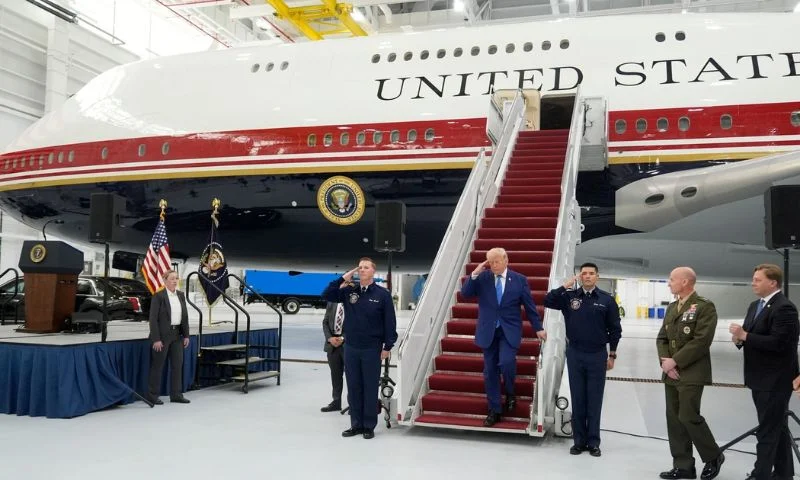
Trump Unveils Qatar-Gifted Air Force One Amid Ethics Questions
US President Donald Trump on Friday unveiled a converted Boeing 747 gifted by Qatar, introducing it as a temporary Air Force One while Boeing completes a delayed replacement program. Speaking at Joint Base Andrews in Maryland, Trump praised the aircraft and defended the decision to accept it. “This is considered the world’s most luxurious plane. When it was built, it was built at a level that will probably never be seen again,” Trump told supporters. The aircraft will serve as a “bridge” plane until Boeing delivers two new presidential Boeing 747-8 jets. Boeing secured the $3.9 billion contract during Trump’s first administration. However, repeated production delays pushed delivery to 2028. The revised timeline could leave Trump without a new purpose-built presidential aircraft before his term ends in January 2029. Trump said the United States needed a modern presidential fleet to match aircraft used by other world leaders. Critics Question Acceptance of Foreign Gift The Qatari aircraft has sparked criticism from lawmakers, ethics groups and legal experts. Critics argue that accepting such an expensive gift from a foreign government raises legal and constitutional concerns. Some experts have pointed to the Emoluments Clause, which limits gifts from foreign states to US officeholders without congressional approval. Trump rejected those concerns and defended the decision. He previously said it would be “stupid” to refuse the aircraft. The president argued that taxpayers would benefit because the aircraft fills a gap while Boeing completes its delayed project. The US Air Force carried out extensive modifications to transform the aircraft into a presidential transport platform. Officials have not disclosed the full upgrade cost. However, the Air Force previously estimated security modifications would cost less than $400 million. The aircraft features a new design. A navy-blue lower fuselage replaces the traditional light-blue scheme. A red stripe runs along the body, while a large American flag covers the tail. The presidential seal appears near the main boarding area used by the president. NATO Summit to Mark First Overseas Trip Trump confirmed he will use the aircraft for next month’s NATO summit in Ankara, Turkey. The trip will mark the jet’s first major international mission as Air Force One. He also signaled plans to return to China and attend the Asia-Pacific Economic Cooperation summit later this year. Earlier this week, Trump returned from Europe aboard the aging Boeing 747-200 that has carried US presidents for more than 30 years. He described that journey as the aircraft’s final presidential mission. Trump said officials will eventually place the retired jet in a museum. “The rest of the Air Force One fleet will have the new design,” he said. Trump also repeated that he will not use the Qatari aircraft after leaving office. Instead, he said it will become part of a future presidential library. The move aims to end speculation that he could retain access to the aircraft after his presidency.
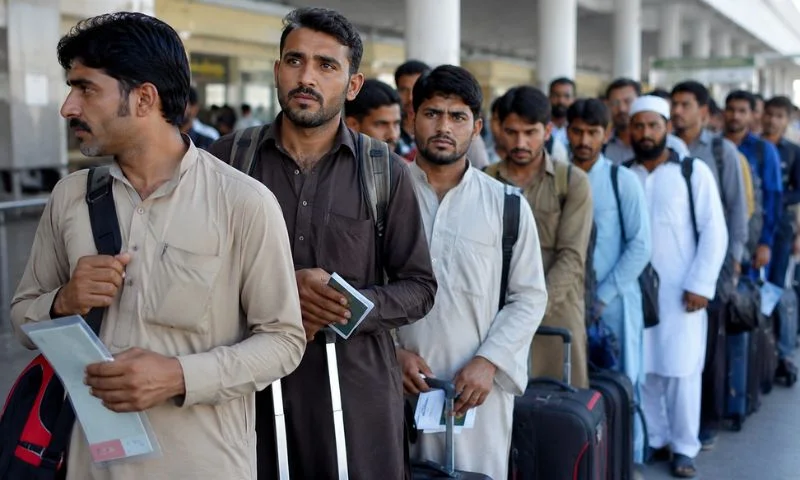
Why Over 278,000 Pakistanis Registered for Foreign Jobs in 2026
More than 278,000 Pakistanis registered for overseas employment during the first five months of 2026, highlighting the country’s continued reliance on foreign job markets and the strong demand for workers in Gulf economies. According to data released by the Bureau of Emigration and Overseas Employment (BE&OE), a total of 278,563 Pakistanis registered for overseas jobs between January and May this year. Labourers accounted for the largest share of registrations, with 171,206 individuals seeking work abroad. Drivers ranked second with 52,652 registrations. Together, the two categories made up nearly 80 percent of all overseas employment registrations during the period. The figures reflect the sustained demand for Pakistani workers in construction, transportation, logistics and other labour-intensive sectors, particularly across Gulf Cooperation Council (GCC) countries. The latest data comes as overseas employment remains a key source of livelihood for thousands of Pakistani families and a major contributor to the country’s remittance inflows. Skilled Workers Also Find Opportunities Abroad Beyond labourers and drivers, several skilled professions recorded notable registration numbers. According to the BE&OE, 9,824 cooks registered for overseas employment during the first five months of the year, underlining continued demand from the hospitality industry in destination countries. Registrations also came from technicians, engineers, fitters, electricians, carpenters, machine operators, plumbers and welders. These professions remain in demand across infrastructure, manufacturing and energy projects in the Middle East. The data further showed participation from professional categories including doctors, accountants, computer analysts, teachers, nurses and agriculturists. While these professions represented a smaller portion of overall registrations, they demonstrated the diversity of Pakistan’s overseas workforce. Saudi Arabia remains the leading destination for Pakistani workers, followed by the United Arab Emirates, Oman, Qatar, Bahrain and other Gulf states. In recent years, labour migration has increasingly expanded into sectors requiring technical and vocational skills. Government officials have repeatedly emphasized the importance of skills development and workforce certification to help Pakistani workers access better-paying opportunities abroad. Overseas Employment Remains Key Economic Lifeline The latest figures align with broader trends highlighted in the Economic Survey 2025-26, which reported 762,499 overseas employment registrations during 2025. The survey described overseas employment as a critical pillar of Pakistan’s economy, supporting millions of households through remittances and easing pressure on the domestic labour market. Pakistan received more than $38 billion in workers’ remittances during the last fiscal year, according to State Bank of Pakistan data, with a significant share originating from Gulf countries where most Pakistani migrant workers are employed. Economists say overseas employment continues to play a vital role in strengthening foreign exchange reserves and supporting economic stability. However, they also stress the need to expand opportunities for skilled and professional workers to increase earnings and improve the global competitiveness of Pakistan’s workforce. With more than a quarter of a million registrations already recorded in the first five months of 2026, the latest data suggests overseas employment will remain a major source of economic support for Pakistan in the years ahead.

Car Financing Hits New Peak. What It Means for Vehicle Buyers
Pakistan’s auto financing portfolio climbed to a record Rs369 billion in May 2026, signalling a strong recovery in consumer demand and renewed momentum in the country’s automobile market. According to data released by the State Bank of Pakistan (SBP) and highlighted by brokerage house Topline Securities, auto financing reached its highest level on record, surpassing the previous peak of Rs368 billion recorded in June 2022. The latest figure represents a 36% increase compared to May 2025 and a 3% rise from the previous month, reflecting growing consumer confidence and improving economic conditions. The development comes after a prolonged slowdown in vehicle financing, which followed aggressive monetary tightening, high inflation and supply chain disruptions that weighed on Pakistan’s auto sector over the last two years. Lower Interest Rates Drive Demand Analysts attribute the recovery largely to lower borrowing costs and improved affordability. The State Bank has gradually eased monetary policy over recent months as inflationary pressures moderated. Lower financing rates have encouraged consumers to return to bank-financed vehicle purchases after many postponed buying decisions during the period of high interest rates. According to Topline Securities, the latest numbers indicate that financing demand has returned across various vehicle categories. Improved vehicle availability has also supported the trend. Pakistan’s automobile industry faced severe production disruptions in 2022 and 2023 due to import restrictions, foreign exchange shortages and supply chain challenges. Conditions have improved considerably since then, allowing automakers to increase deliveries and reduce waiting periods. The return of financing activity is particularly significant because car purchases in Pakistan often rely heavily on bank lending, especially in middle and upper-income segments. Industry experts view auto financing as an important indicator of consumer sentiment and broader economic confidence. Positive Outlook for Auto Sales The record financing figure is expected to support passenger vehicle sales in the coming months. Higher financing volumes generally translate into stronger demand for new vehicles, particularly in premium and higher-priced categories where buyers depend on installment-based purchases. Several automakers have already reported improved sales trends during the current fiscal year as financing conditions become more favourable. The rise in auto financing also suggests that consumers are becoming more comfortable making long-term financial commitments after a period marked by economic uncertainty. Analysts caution that future growth will depend on interest rates, inflation and overall economic stability. However, the latest figures point to a significant improvement in market conditions. For Pakistan’s automobile industry, the new record represents more than a financing milestone. It signals a broader recovery in consumer demand and strengthens expectations that vehicle sales could maintain their upward trajectory in the months ahead. With auto financing now exceeding its previous peak, the sector appears to be entering a new growth phase after one of the most challenging periods in recent years.
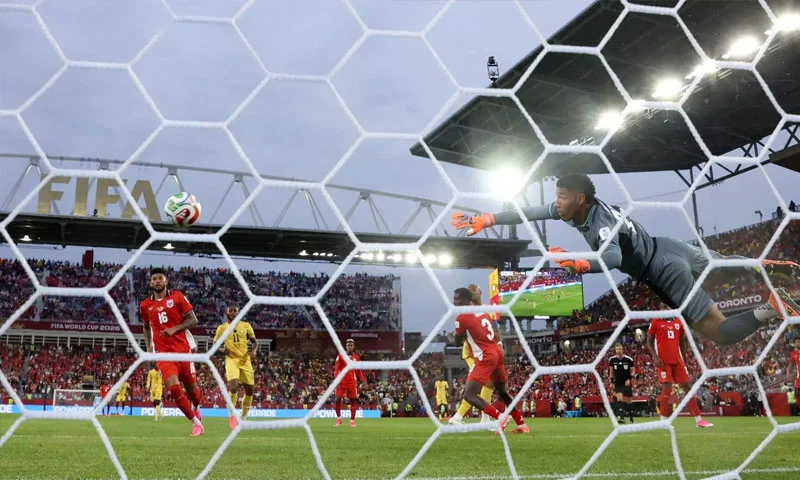
World Cup Last 32 Battle: Who’s In, Who’s Out and What’s Next
The race for the knockout stage of the 2026 FIFA World Cup is gathering pace, with co-hosts Mexico and the United States becoming the first two teams to secure places in the round of 32 as the expanded tournament begins to take shape. The tournament’s new 48-team format has added a fresh layer of complexity to qualification scenarios. For the first time, eight of the 12 third-placed teams will also advance, making projections more difficult and keeping hopes alive for many nations heading into the final group-stage matches. According to FIFA regulations, teams level on points are first separated by head-to-head results before overall goal difference and goals scored come into play. The revised format has already created a series of high-stakes battles across multiple groups. Mexico became the first nation to book its place in the knockout rounds after defeating South Korea 1-0 in Guadalajara. The victory also secured top spot in Group A with one game remaining. The Mexicans will now face a third-placed team in the round of 32. The United States followed shortly afterwards. The Americans sealed qualification with a 2-0 victory over Australia after opening their campaign with a historic win against Paraguay. Türkiye’s defeat to Paraguay confirmed the United States as Group D winners and simultaneously eliminated Türkiye from the competition. At the other end of the standings, Haiti and Türkiye became the first teams officially eliminated from the tournament. Haiti’s defeat to Brazil ended its hopes of progression, while Türkiye’s results left no mathematical path to the knockout stage. Heavyweights Close In on Qualification Several traditional football powers now stand on the brink of qualification. Brazil tops Group C after defeating Haiti and can secure first place with a victory over Scotland. Morocco also sits in a strong position and can guarantee a top-two finish with a win or draw in its final group match. Germany strengthened its position in Group E with a dominant 7-1 victory over Curaçao. A win against Ivory Coast could send the four-time champions into the knockout rounds. Ivory Coast also remains well placed after defeating Ecuador. France and Norway have similarly placed themselves in commanding positions in Group I. Wins in their upcoming matches would secure progression and set up a final group-stage showdown for first place. Kylian Mbappé and Erling Haaland have already played key roles in their teams’ strong starts. Argentina and Austria could also qualify during the next round of fixtures. The two teams meet in a crucial Group J clash where victory would likely secure passage to the last 32. Expanded Format Keeps More Teams Alive The introduction of the round of 32 has ensured that many teams remain in contention despite mixed starts. Paraguay, Scotland and several other nations still hold realistic hopes of advancing as some of the tournament’s best third-placed teams. Goal difference could prove decisive in many groups. Groups G and H remain completely open after both opening matches in each group ended in draws. None of the teams in those groups can qualify or be eliminated after Matchweek Two, ensuring a dramatic finish. In Group K, Colombia could secure qualification with a win over Congo DR. Portugal, led by Cristiano Ronaldo, remains under pressure after a surprise draw against Congo DR in its opening match. England and Ghana also have an opportunity to qualify when they meet in Group L. The winner of that contest will secure a place in the knockout rounds, adding further significance to one of the tournament’s most anticipated fixtures. With several groups still finely balanced, the final round of matches is expected to determine not only the remaining automatic qualifiers but also the eight third-placed teams that will advance under FIFA’s expanded World Cup format.
NA Panel Blocks FBR’s Plan to Access Taxpayers’ Banking Data
The National Assembly Standing Committee on Finance on Friday rejected key amendments that would have allowed the Federal Board of Revenue (FBR) to access banking information through a new State Bank of Pakistan (SBP) data-sharing mechanism. The committee reviewed proposed changes to Section 175AA of the Income Tax Ordinance, 2001. Lawmakers raised concerns about taxpayer privacy and the possible misuse of financial information. As a result, the committee blocked several powers sought by the tax authority. However, it retained a provision allowing the SBP to establish and maintain a secure centralised virtual repository of banking data held by scheduled banks. Privacy Concerns Dominate Debate PPP lawmaker Sharmila Faruqui questioned whether taxpayer information could be misused. Director General Tax Policy Unit Dr Najeeb Memon defended the proposal. He said the FBR analyses returns through a compliance risk management system. He also assured lawmakers that information involving major mismatches would remain confidential. According to Memon, the amendment aimed to identify people conducting large banking transactions while remaining outside the tax net. “The purpose of the proposed amendments in the section 175AA of the Income Tax Ordinance 2001 is to question those taxpayers who are engaged in huge banking transactions, but not filing their income tax returns,” he said. Former foreign minister Hina Rabbani Khar opposed the proposal. She argued that banks should not become part of tax investigations. “The FBR is investigating taxpayers and now banks would also do the same kind of investigation,” she said. Committee Chairman Naveed Qamar later announced the committee’s decision. He said the SBP repository provision would remain. All remaining amendments under Section 175AA would be removed. The committee also rejected another proposal. That amendment would have allowed the SBP, microfinance banks and Electronic Money Institutions to provide algorithm-based banking analysis to the FBR. FBR Defends Proposal FBR Member Strategic Transformation Dr Hamid Ateeq Sarwar said stronger verification tools were necessary. He told lawmakers that nearly Rs37 trillion was circulating through bank accounts. “How, we can go after those persons, doing huge transactions, but not filing their income tax returns?” he asked. Sarwar also highlighted Pakistan’s dependence on corporate taxpayers. “Around 76 percent of the tax is paid by big companies. Can we continue to rely only on the corporate sector?” he said. The committee also discussed proposed penalties for late tax return filing. Members objected to raising the penalty from Rs1,000 to Rs25,000 for individuals. Sarwar said the measure targeted people who file returns only when purchasing property or vehicles. He said genuine late filers already receive a 15-day grace period. They can also obtain extensions. He added that legally disabled persons would remain exempt. Naveed Qamar questioned how the FBR would distinguish between genuine late filers and opportunistic filers. After discussion, lawmakers agreed on a compromise. The committee decided to add an explanation to the law. Under the proposal, enhanced penalties will not apply to late filers who avoid purchasing immovable property for three months after becoming active taxpayers. The decision marks a setback for the FBR’s push for broader data-driven tax enforcement. It also reflects growing parliamentary concerns about privacy and taxpayer rights.
Using Nayatel? Your Monthly Internet Bill Is About to Increase
Nayatel has announced an increase in the prices of its home internet packages, with revised rates set to take effect from July 1, 2026. The company informed subscribers through email that it was making the “minimum possible price increase” due to rising operational costs and the evolving requirements of its broadband network. The move will affect residential customers across multiple speed tiers and will apply to both existing and new subscribers. According to the company, customers currently using Nayatel’s fiber broadband services will automatically transition to the updated pricing structure once the new rates come into force. The announcement comes as internet service providers across Pakistan face increasing infrastructure, maintenance and operating expenses amid broader economic pressures. New Internet Package Rates Under the revised pricing, Nayatel’s Home Unlimited 70 Mbps package will increase by Rs300 per month. The package currently costs Rs5,000 and will rise to Rs5,300 from July 1. The Home Unlimited 40 Mbps package will increase by Rs100. Its monthly price will move from Rs3,350 to Rs3,450. Meanwhile, the Home Unlimited 30 Mbps package will become Rs75 more expensive. The monthly charge will increase from Rs2,150 to Rs2,225. Nayatel said the adjustment was necessary to align service pricing with operational costs while maintaining service quality and network performance. The company encouraged subscribers to review the revised package details before the new rates become effective. At the time of publication, Nayatel’s official website continued to display the previous package prices. However, customers have already received notifications about the updated rates. The new charges will apply from July 1 regardless of when the website reflects the changes. Impact on Customers The increase is expected to affect households that rely on high-speed internet for remote work, online education, video streaming and gaming. Nayatel remains one of Pakistan’s leading fiber-to-the-home internet providers, offering services in Islamabad, Rawalpindi, Faisalabad, Peshawar and several other cities. Industry observers note that the latest increase reflects a wider trend in Pakistan’s telecom and broadband sector, where service providers have adjusted tariffs in response to higher operating costs, currency pressures and infrastructure investments. Despite the increase, the price gap between Nayatel’s speed tiers remains relatively narrow. The revised pricing means the 70 Mbps package costs roughly 2.4 times more than the 30 Mbps package while offering more than double the speed. For households with multiple users, remote workers or heavy streaming requirements, the higher-speed package may still offer better value despite the increase. The announcement has generated significant attention among subscribers, many of whom depend on reliable internet connectivity for daily activities. The latest revision underscores the growing challenge facing internet providers as they balance rising costs with increasing demand for faster and more stable broadband services.
The End of Traditional Passports? Pakistan Approves Major Move
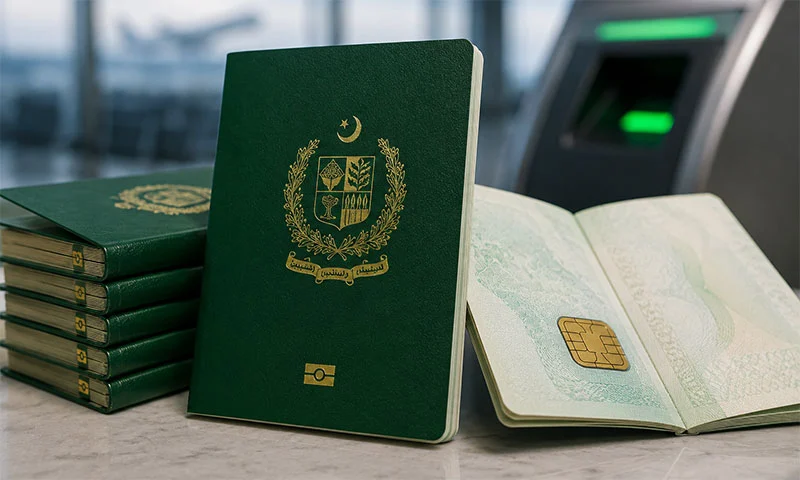
Pakistan has decided to gradually phase out machine-readable passports and move entirely to e-passports, Interior Minister Mohsin Naqvi announced on Friday, calling the move a major step towards stronger security, faster immigration processing and modern digital services. The decision emerged during a special meeting chaired by Naqvi at the Directorate General of Immigration and Passports headquarters in Islamabad. Officials said the transition will improve document security, reduce fraud and align Pakistan’s travel documentation system with international standards. “The complete transition to e-passports will end fraud and forgery related to passports,” Naqvi said during the meeting. Director General Passports and Immigration Muhammad Ali Randhawa briefed the minister on ongoing reforms and future plans for passport services. The meeting approved in principle the complete shift to e-passports. However, officials did not announce a deadline for phasing out machine-readable passports. E-Passports to Offer Enhanced Security Pakistan launched e-passports in 2022 as part of efforts to modernise travel documentation and improve compliance with global aviation standards. An e-passport contains a secure electronic chip embedded in one of its pages. The contactless NFC chip stores biometric information, facial data, biographical details, a unique identification number and a digital signature. Authorities say the technology makes forgery significantly more difficult and enables faster identity verification. Pakistan’s e-passports comply with standards set by the International Civil Aviation Organisation (ICAO), the United Nations agency responsible for global aviation regulations. The compliance allows Pakistani e-passport holders to use automated e-gate facilities at airports that support the technology. Officials expect this to reduce waiting times and speed up immigration procedures for travellers. The Directorate General of Immigration and Passports has expanded e-passport issuance across the country in recent years as demand for the document continues to grow. Cashless Payments and Home Delivery Planned The meeting also approved several reforms aimed at improving passport services. Officials decided that all passport offices will shift to a cashless payment system from July 1. The move will end manual cash handling through banks and streamline fee payments. Randhawa informed the meeting that initial work on home delivery services for passport applicants in Pakistan and abroad had been completed. “The process of providing passports at citizens’ doorsteps will start soon,” Naqvi said. The government also plans to integrate the Pak ID platform into online passport applications. Officials say the measure will simplify submissions and reduce processing times. Naqvi directed authorities to finalise a policy for business passports at the earliest opportunity in consultation with the Federal Board of Revenue. The latest reforms form part of a broader government effort to digitise public services and improve service delivery through technology-driven solutions. Officials believe the transition to e-passports, combined with cashless payments and home delivery, will modernise Pakistan’s passport system and make international travel more convenient for citizens.
