
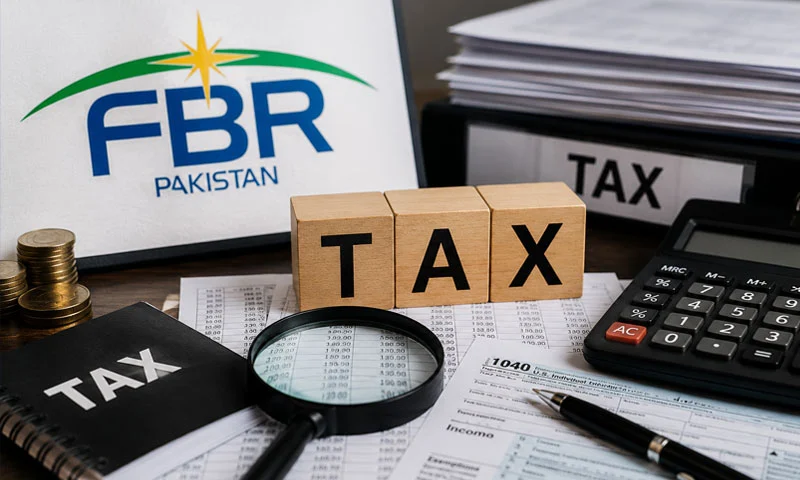
The National Assembly Standing Committee on Finance on Friday rejected key amendments that would have allowed the Federal Board of Revenue (FBR) to access banking information through a new State Bank of Pakistan (SBP) data-sharing mechanism.
The committee reviewed proposed changes to Section 175AA of the Income Tax Ordinance, 2001.
Lawmakers raised concerns about taxpayer privacy and the possible misuse of financial information.
As a result, the committee blocked several powers sought by the tax authority.
However, it retained a provision allowing the SBP to establish and maintain a secure centralised virtual repository of banking data held by scheduled banks.
Privacy Concerns Dominate Debate
PPP lawmaker Sharmila Faruqui questioned whether taxpayer information could be misused.
Director General Tax Policy Unit Dr Najeeb Memon defended the proposal. He said the FBR analyses returns through a compliance risk management system. He also assured lawmakers that information involving major mismatches would remain confidential.
According to Memon, the amendment aimed to identify people conducting large banking transactions while remaining outside the tax net.
“The purpose of the proposed amendments in the section 175AA of the Income Tax Ordinance 2001 is to question those taxpayers who are engaged in huge banking transactions, but not filing their income tax returns,” he said.
Former foreign minister Hina Rabbani Khar opposed the proposal. She argued that banks should not become part of tax investigations.
“The FBR is investigating taxpayers and now banks would also do the same kind of investigation,” she said.
Committee Chairman Naveed Qamar later announced the committee’s decision. He said the SBP repository provision would remain.
All remaining amendments under Section 175AA would be removed. The committee also rejected another proposal.
That amendment would have allowed the SBP, microfinance banks and Electronic Money Institutions to provide algorithm-based banking analysis to the FBR.
FBR Defends Proposal
FBR Member Strategic Transformation Dr Hamid Ateeq Sarwar said stronger verification tools were necessary. He told lawmakers that nearly Rs37 trillion was circulating through bank accounts.
“How, we can go after those persons, doing huge transactions, but not filing their income tax returns?” he asked. Sarwar also highlighted Pakistan’s dependence on corporate taxpayers.
“Around 76 percent of the tax is paid by big companies. Can we continue to rely only on the corporate sector?” he said.
The committee also discussed proposed penalties for late tax return filing.
Members objected to raising the penalty from Rs1,000 to Rs25,000 for individuals.
Sarwar said the measure targeted people who file returns only when purchasing property or vehicles. He said genuine late filers already receive a 15-day grace period.
They can also obtain extensions.
He added that legally disabled persons would remain exempt.
Naveed Qamar questioned how the FBR would distinguish between genuine late filers and opportunistic filers.
After discussion, lawmakers agreed on a compromise. The committee decided to add an explanation to the law.
Under the proposal, enhanced penalties will not apply to late filers who avoid purchasing immovable property for three months after becoming active taxpayers.
The decision marks a setback for the FBR’s push for broader data-driven tax enforcement.
It also reflects growing parliamentary concerns about privacy and taxpayer rights.