


Ireland produced one of the biggest victories in their cricket history by defeating India by 34 runs in the opening T20 International in Belfast on Friday, securing their first ever men’s international victory over India across all formats. The memorable win at Stormont Cricket Ground ended a run of 11 consecutive defeats against India in One Day Internationals and T20 Internationals. It also handed Ireland a 1-0 lead in the two match series, leaving India’s new captain Shreyas Iyer facing an early setback in his first assignment leading the T20 side. India entered the series as reigning T20 world champions and overwhelming favourites. However, Ireland produced a disciplined all round performance to secure one of the finest wins in the country’s cricket history. Batting first after India chose to field, Ireland recovered well to post 182 for 9 from their 20 overs. Captain Lorcan Tucker led from the front with a composed 50 from 36 deliveries, anchoring the innings after early pressure. Gareth Delany then provided the late acceleration, smashing 49 from just 32 balls to push the hosts beyond the 180 mark. India’s Harshit Rana impressed with the ball, returning figures of 3 for 24 to keep Ireland from posting an even bigger total. Prasidh Krishna, however, endured a difficult outing as Ireland targeted him throughout his spell. The fast bowler finished with expensive figures of 57 runs conceded from four overs. Ireland bowlers trigger dramatic collapse India began the chase in explosive fashion as opener Abhishek Sharma blasted a rapid 50 from only 20 balls, briefly putting the visitors on course for victory. The momentum changed immediately after Sharma’s dismissal. Ireland’s bowlers tightened their grip, applied relentless pressure and exposed India’s middle order. Matthew Hollard led the attack with outstanding figures of 3 for 28, while left arm spinner Matthew Humphreys claimed 3 for 38. Their combined efforts bundled India out for 148 in 18.5 overs, sealing a famous 34 run victory. The defeat marked India’s first loss to Ireland in men’s international cricket and represented one of the biggest upsets involving the reigning T20 world champions in recent years. Following the landmark victory, Ireland captain Lorcan Tucker said: “A series win over India would be pretty special.” He praised his team’s determination, adding they managed to “scrap through and stay in the game,” while also highlighting the contributions of Ireland’s debutants. India, led by Shreyas Iyer in his first T20I series as captain, will now look to avoid a rare bilateral series defeat when the second and final match takes place at the same Belfast venue on Sunday, June 28. The match also serves as part of India’s preparations ahead of a five match T20I series in England next month.
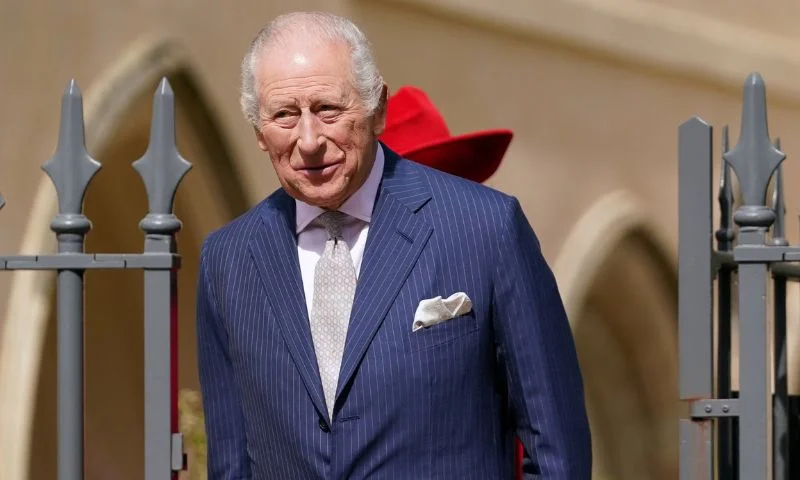
Royal Finances Exposed: King Charles Paid Millions in Tax Since 2022
Britain’s King Charles III has paid more than £30 million in taxes since becoming monarch in 2022, royal officials revealed on Thursday for the first time. The disclosure places the king among Britain’s top taxpayers and marks another step in the royal family’s push for greater financial transparency. Officials also confirmed that Charles will not move into Buckingham Palace after its extensive refurbishment finishes next year. Instead, he will continue living at nearby Clarence House, where he has lived for more than two decades. The announcements came as Buckingham Palace released its annual financial report. The report outlined the king’s tax payments, the future of the palace and changes to public funding for the monarchy. Palace to remain “monarchy HQ” Buckingham Palace has undergone a £369 million refurbishment since 2017. Workers have replaced ageing electrical wiring, plumbing and heating systems across the historic building. Before the project began, officials expected the palace to remain the monarch’s main London residence after the renovation. Charles has now decided otherwise. James Chalmers, the king’s treasurer and Keeper of the Privy Purse, said Buckingham Palace would continue serving as the centre of royal duties. “It is and will remain ‘monarchy HQ’, the crown jewel of our national buildings, with the sovereign’s standard flying proudly from the roof whenever His Majesty is in London,” Chalmers told reporters. Neither Charles nor the late Queen Elizabeth II has spent a night at Buckingham Palace since 2019. The king will keep private rooms there for official use and occasional overnight stays. Around 700,000 visitors tour Buckingham Palace every year. Chalmers said officials plan to expand public access after the renovation, although he did not provide further details. Tax payments and royal finances Under British law, the monarch does not have to pay income tax, capital gains tax or inheritance tax. However, Charles has continued the voluntary practice introduced by Queen Elizabeth II in 1993. The king receives private income from the Duchy of Lancaster, which generated £25.2 million during the 2025 to 2026 financial year. He also earns income from personal investments and other private assets. Chalmers said Charles paid £11.7 million in tax during the 2023 to 2024 financial year. He added that the king has paid more than £30 million in total since ascending the throne in September 2022. Charles also receives funding through the Sovereign Grant, which pays for official duties, palace maintenance, staff and royal travel. The grant increased from £86 million in 2024 to 2025 to £132 million in 2025 to 2026 after higher Crown Estate profits from offshore wind farm leases. It will reach £137.9 million in 2026 to 2027. Chalmers said the grant would fall to £100 million in 2027 to 2028, following what he described as “His Majesty’s clear wishes.” He added, “This is not a blank cheque,” stressing that safeguards remain in place. The financial disclosures follow criticism over royal estates after media reports revealed that the Duchy of Lancaster and Prince William’s Duchy of Cornwall charged rent to public bodies, including the NHS, schools and the military. Prince William’s office said he paid £7.76 million in tax during 2024 to 2025. Officials also confirmed he directed £1.5 million in rent from a closed prison to the local community. Republic, the anti-monarchy campaign group, argued that important questions remain unanswered. Chief executive Graham Smith criticised the latest disclosures, saying: “Another hike for Charles, more spin and gloss and more misdirection on taxes. This is the way with royal reporting: the more they reveal, the more questions are raised.”

Ms Rachel Cites UN Report, Demands Answers Over Gaza Children’s Deaths
Children’s educator and YouTube star Rachel Accurso, widely known as Ms Rachel, has renewed her call for action after a United Nations report accused Israeli security forces of deliberately targeting Palestinian children in Gaza. Accurso shared an emotional video on Instagram after the UN Independent International Commission of Inquiry released its latest findings. Fighting back tears, she questioned why many world leaders had remained silent despite the mounting humanitarian crisis. “Where have you been?” she asked. “Did you not see these kids as kids because of where they were born? Did you not think the 20,000 kids that were killed and the countless others under the rubble who died of starvation and other causes that would be so simple to treat.” She then asked whether the children of Gaza “had beating hearts like your kids.” Referring to the UN findings, Accurso said 151 children had died from starvation. She also cited what the report described as “the deliberate targeting of children.” Among the incidents she mentioned was the killing of a breastfeeding baby by a quadcopter while inside a tent. Accurso also challenged political leaders over their silence. “What do you have to lose by speaking up for what is right?” she asked. She added that she could not understand how leaders could “go to sleep at night knowing you didn’t say anything.” UN report raises fresh international scrutiny The UN Independent International Commission of Inquiry published the report earlier this week. Investigators reviewed events between October 2023 and October 2025. They concluded that Israeli authorities and security forces deliberately targeted Palestinian children. The commission said those actions amounted to genocide, crimes against humanity and war crimes under international law. According to the report, more than 20,000 Palestinian children died during the period under review. Children accounted for about 30 percent of all reported deaths in Gaza. The report also documented widespread starvation and attacks on civilians. Israel rejected the findings. Israeli officials called the report biased and defamatory. They denied deliberately targeting civilians and said the military continues to target Hamas while taking measures to reduce civilian harm. The report has intensified international debate over the humanitarian crisis in Gaza. Human rights groups and several UN agencies have continued to urge governments to protect civilians and ensure humanitarian aid reaches those in need. Longstanding support for Palestinian children Accurso has become one of the most prominent public figures advocating for children affected by the war in Gaza. She has consistently used her social media platforms to highlight the humanitarian crisis and encourage support for families living through the conflict. Her advocacy has drawn criticism from several pro-Israel organisations. Those groups accused her of anti-Semitism because of her support for Palestinian children. Accurso has repeatedly rejected those allegations. She has said she speaks for every child affected by war, regardless of nationality, ethnicity or religion. As a global ambassador for the Palestine Children’s Relief Fund (PCRF), Accurso raises funds for the organisation, supports its programmes and spends time with Palestinian children receiving medical treatment in the United States. One of those children is Rahaf, a four-year-old double amputee from Gaza. Accurso has developed a close friendship with her and has frequently shared their meetings online. She says Rahaf’s story reminds the world that every child deserves safety, dignity and hope. Her latest appeal has gained widespread attention across social media. It also comes as international pressure continues to grow following the UN commission’s findings on the impact of the war on Gaza’s children.
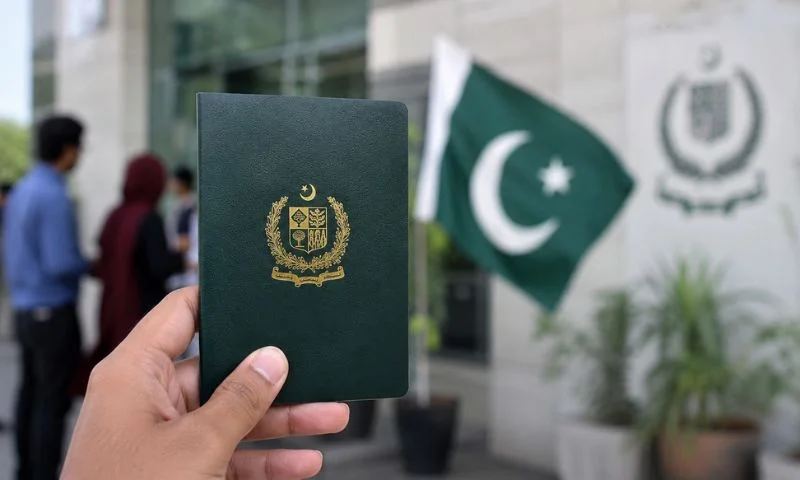
New Passport App and Home Delivery Coming Soon for Pakistanis
Pakistan’s Directorate General of Immigration and Passports has announced a sweeping digital transformation aimed at making passport services faster, more transparent and easier to access. The reforms include a dedicated passport mobile app, home delivery of passports and a QR code based payment system to reduce delays and eliminate illegal practices. Director General of Immigration and Passports Muhammad Ali Randhawa unveiled the initiative on Friday during a media interaction. He said the reforms will modernise passport services and improve convenience for millions of Pakistanis. The initiative follows directives issued by Interior Minister Mohsin Naqvi, who has repeatedly stressed the need to digitise public services and improve transparency across government departments. Passport Services to Go Digital Randhawa said the upcoming passport mobile app will allow citizens to apply for new passports, renew existing ones and track the status of their applications directly from their mobile phones. Users will also gain access to other essential passport related services without visiting passport offices. He said the department is also preparing to launch a home delivery service. The facility will allow applicants to receive their passports at their doorstep, reducing repeated visits to passport offices and making the process more convenient, particularly for elderly citizens, overseas Pakistanis visiting the country and people living far from passport centres. The department also plans to introduce a QR code based digital payment system. Officials believe the new payment method will make transactions faster, safer and more transparent while reducing opportunities for fraud and unofficial payments. Randhawa said the reforms aim to remove middlemen from the passport issuance process and ensure that applicants receive services through a secure and transparent digital system. Focus on Transparency and Public Convenience The Director General said the reforms reflect the government’s broader commitment to citizen friendly governance through technology. He explained that digital services would improve efficiency, shorten processing times and increase transparency across the passport system. He added that technology would also help the department deliver services more reliably while strengthening public trust. Randhawa concluded by saying that the digital reforms are designed to build “a transparent, efficient, and citizen-focused passport system where corruption, middlemen and illegal practices have no place, ensuring every applicant receives services fairly and securely.” Pakistan has expanded digital public services in recent years through online identity, taxation and licensing platforms. The latest initiative represents another step toward digitising essential government services and reducing dependence on manual procedures. The Directorate General of Immigration and Passports expects the new digital facilities to simplify passport applications and improve the overall customer experience. Officials believe the reforms will save applicants time, reduce unnecessary visits to passport offices and strengthen accountability throughout the system. While the department has announced the key features of the initiative, it has yet to confirm official launch dates for the mobile application, home delivery service and QR code payment system. Authorities say they will share further implementation details as development work progresses.

Doctor Says One Bedtime Habit Could Increase Your Cancer Risk
Many people sacrifice sleep to meet deadlines, scroll through social media or work late into the night. However, a surgical oncologist says this common habit may quietly increase the risk of developing cancer over time. Dr Arrjun Sankaran, a Hyderabad based surgical oncologist, highlighted the link between poor sleep and cancer risk in a social media post shared on June 17. He urged people to rethink late night routines, explaining that healthy sleep plays a vital role in the body’s natural defence against abnormal cell growth. In the caption of his post, he wrote, “Did you know that you have a higher risk of cancer if you do a lot of late-night phone scrolling, don’t sleep too well at night, or are a night shift worker?” Why Sleep Matters According to Dr Sankaran, the brain releases melatonin every night. This hormone helps repair damaged DNA, controls abnormal cell growth and reduces cancer driving hormones such as oestrogen. He explained that melatonin forms only in darkness. That means spending an hour scrolling on a phone before bedtime may do more than delay sleep. It may also reduce the body’s natural production of melatonin. “The WHO or IRC classifies night shift work as a Group 2A carcinogen, which means that it is just less than the risk associated with a cigarette or alcohol,” he noted. The oncologist stressed that the concern is not an occasional late night. Instead, he warned about the long term effects of chronic sleep deprivation. According to him, sleep remains one of the most powerful and cost free tools for reducing cancer risk. He added that people with long term sleep disruption face a higher risk of breast, colorectal and prostate cancers. He linked this to three major factors. First, poor sleep disrupts the body’s circadian rhythm and natural repair system. Second, reduced melatonin allows more DNA errors and abnormal cell changes to accumulate. Third, many night shift workers receive less morning sunlight, which may lower vitamin D production. Simple Habits That May Protect Your Health Dr Sankaran advised people to turn off screens at least one hour before bedtime. He also recommended using blackout curtains or a sleep mask to create complete darkness. For families with young children, he suggested using red or amber lights instead of bright white lighting at night. He also encouraged people to avoid using their phones for at least 15 minutes before sleeping and, if possible, keep devices outside the bedroom. Finally, he urged people to follow a consistent sleep routine. “Try to stick to a regular sleep schedule because your circadian rhythm depends on it. Make sure you prioritise your sleep like your life depends on it, because quite literally it does.” Health experts continue to emphasise that good sleep supports overall wellbeing, strengthens immune function and helps the body recover from daily stress. While sleep alone cannot prevent cancer, maintaining healthy sleep habits forms an important part of a balanced lifestyle alongside regular exercise, a nutritious diet, avoiding tobacco and limiting alcohol. Note: This article is for informational purposes only and is not a substitute for professional medical advice. Consult a qualified healthcare professional for medical concerns.

Pakistan Announces Relief for Used Car Imports, What It Means
Pakistan has introduced two major policy changes for used vehicles imported under the Gift and Transfer of Residence schemes. The move aims to clear a prolonged backlog at ports while tightening compliance checks on vehicle quality. The Ministry of Commerce issued two directives. One clarifies the validity of Pre Shipment Inspection (PSI) certificates. The other grants a one time, conditional waiver from inspection requirements for selected imported vehicles. Officials hope the measures will speed up customs clearance. However, local automobile manufacturers say the policy could hurt domestic production, reduce tax revenues and weaken investor confidence. Government Clarifies Inspection Rules In an official office memorandum, the ministry confirmed that it will accept PSI certificates issued by EAA Company (Pvt) Ltd and Auto Terminal Pak (Pvt) Ltd through their foreign principals in Japan. Both companies recently secured registration with the Pakistan Standards and Quality Control Authority (PSQCA) for automobile inspections. The government directed the Federal Board of Revenue and Customs authorities to verify every certificate with the companies’ local offices before clearing vehicles. The local offices will accept full legal responsibility for the declarations. They must also certify that every vehicle meets environmental, safety and quality standards that match international requirements. In a separate notification issued under the Imports and Exports (Control) Act, the ministry announced a strict one time waiver for vehicles shipped under a Master Bill of Lading between January 16 and March 9, 2026. The exemption allows eligible shipments to bypass the pre shipment inspection requirement introduced through SRO 61(I)/2026. However, the ministry stressed that the waiver applies only to this specific period. It does not provide a blanket exemption for all imported vehicles. Industry Warns of Economic Fallout The government also introduced safeguards to keep unsafe vehicles out of the country. Customs officials cannot clear vehicles carrying Japanese auction grades of Below Average (Grade 3), Poor Condition (Grade 2), Repaired Accident (Grade R) or Minor Accident Repair (Grade RA). Despite these restrictions, the local automotive industry strongly opposed the decision. Industry representatives described it as an ad hoc policy shift that could undermine Pakistan’s manufacturing sector. According to industry estimates, nearly 15,000 vehicles could enter Pakistan under the exemption. That figure roughly equals the annual sales of a major local assembler. Industry representatives argue that the waiver weakens safety and environmental standards designed to protect consumers. Auto sector experts also estimate that the policy could trigger an outflow of about $180 million through unofficial payment channels. They warn that this could increase pressure on Pakistan’s import bill and foreign exchange reserves. Local auto parts manufacturers expect losses of around Rs22 billion. They also estimate that the government could lose another Rs8 billion in tax revenue. Analysts say local assembly plants already operate at about 50 percent capacity because of weak demand and economic pressures. They warn that sudden policy changes could further damage investor confidence and slow future investment in Pakistan’s automobile industry. The latest directives show the government’s effort to clear port congestion while maintaining regulatory oversight. Industry stakeholders, however, insist that stable and predictable policies remain essential for protecting local manufacturing and encouraging long term investment.
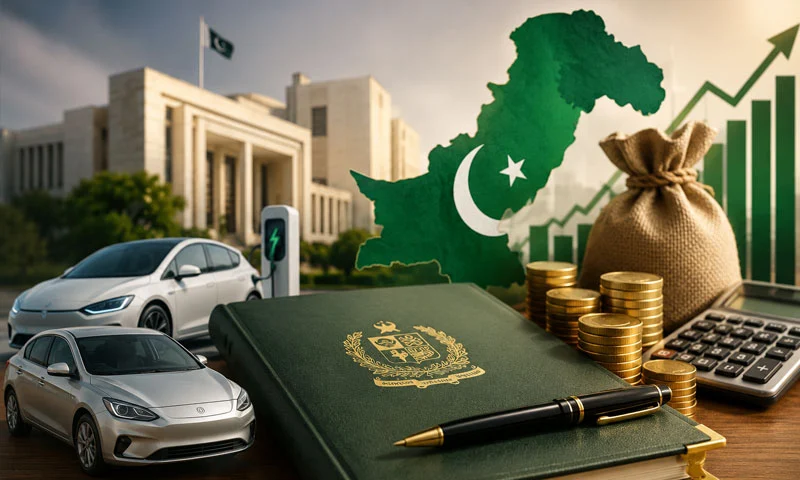
President Signs Finance Bill 2026: What Changes From July 1
President Asif Ali Zardari on Friday gave his assent to the Finance Bill, 2026, formally approving Pakistan’s federal budget for the fiscal year 2026-27 after it cleared the National Assembly earlier this week. The presidential approval marks the final constitutional step before the budget comes into force on July 1, setting the government’s fiscal roadmap with total expenditures of Rs18.77 trillion, an ambitious revenue target, revised tax measures, and relief for salaried employees. In a post on the Presidency’s X account, the President’s Office said: “President Asif Ali Zardari has assented to the Finance Bill, 2026, relating to the federal budget for fiscal year 2026-27.” The National Assembly approved the Finance Bill on Tuesday after extensive debate. Lawmakers adopted amendments moved by Finance Minister Muhammad Aurangzeb in Clauses 5, 6 and 6A while rejecting the Senate’s recommendations related to Clause 6. The House also voted down more than 60 amendments proposed by opposition members from Pakistan Tehreek-e-Insaf (PTI) and Jamiat Ulema-e-Islam Fazl (JUIF) covering Clauses 2, 3, 4, 5, 6 and 8. Growth Targets and Major Spending Plans The budget outlines the government’s economic priorities for the next fiscal year, projecting economic growth of 4.0 percent while targeting inflation at 8.2 percent. Authorities expect to keep the fiscal deficit at 3.6 percent of gross domestic product and generate a primary surplus of 2.0 percent of GDP as Pakistan continues efforts to strengthen public finances. The Federal Board of Revenue has received a tax collection target of Rs15.264 trillion. Net federal revenues are estimated at Rs11.752 trillion. Debt servicing remains the government’s biggest expense. Around Rs8.05 trillion has been allocated for markup payments and debt repayment obligations. President Asif Ali Zardari has assented to the Finance Bill, 2026, relating to the Federal Budget for fiscal year 2026 – 27.— The President of Pakistan (@PresOfPakistan) June 26, 2026 The federal government has earmarked Rs1 trillion for the Federal Public Sector Development Programme, while the overall national development programme stands at approximately Rs3.675 trillion. Defence spending will receive Rs3 trillion under the approved budget. The government has also allocated significant funding for pensions, civil administration, subsidies and social protection programmes. The Benazir Income Support Programme will receive Rs838 billion, reflecting a major increase over last year’s allocation to expand support for low-income families and vulnerable households across the country. The budget also provides a 7 percent increase in salaries for government employees and a similar increase in pensions. It includes additional relief measures for public sector employees and armed forces personnel while reducing the tax burden on salaried individuals across four income slabs. Tax Changes, Imported Vehicles and Electric Cars The Finance Bill introduces several changes affecting imports, vehicles and consumer taxation from the new fiscal year. Beginning July 1, imported vehicles with engine capacities between 2,000cc and 3,000cc will face an 86 percent duty. Vehicles above 3,001cc will attract a 92 percent duty. Imported electric vehicles valued at up to $75,000 will remain exempt from Customs duty. Electric vehicles priced between $75,000 and $110,000 will face a 30 percent Customs duty, while those exceeding $110,000 will be subject to a 40 percent duty. The government has also imposed a concessional 10 percent sales tax on children’s pencils, pens and sharpeners. Owners of vehicles up to 1,000cc registered in the federal jurisdiction will pay a one-time fixed tax of Rs10,000. Pre-2010 models in the same engine category will be charged a token tax of Rs20,000. The budget reflects the government’s broader strategy of increasing revenue, improving fiscal discipline and maintaining support for development spending while continuing reforms linked to economic stability. The approval also comes as Pakistan seeks to sustain macroeconomic gains achieved over the past year through fiscal consolidation, stronger revenue collection and structural reforms aimed at supporting long-term economic growth. With the President’s assent, the Finance Bill, 2026, will take effect from July 1, paving the way for implementation of the federal government’s financial agenda for the new fiscal year.
