
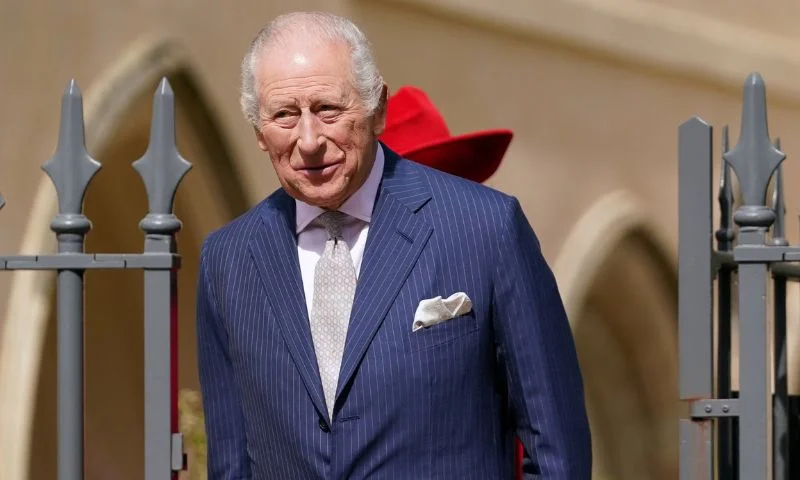
Britain’s King Charles III has paid more than £30 million in taxes since becoming monarch in 2022, royal officials revealed on Thursday for the first time. The disclosure places the king among Britain’s top taxpayers and marks another step in the royal family’s push for greater financial transparency.
Officials also confirmed that Charles will not move into Buckingham Palace after its extensive refurbishment finishes next year. Instead, he will continue living at nearby Clarence House, where he has lived for more than two decades.
The announcements came as Buckingham Palace released its annual financial report. The report outlined the king’s tax payments, the future of the palace and changes to public funding for the monarchy.
Palace to remain “monarchy HQ”
Buckingham Palace has undergone a £369 million refurbishment since 2017. Workers have replaced ageing electrical wiring, plumbing and heating systems across the historic building.
Before the project began, officials expected the palace to remain the monarch’s main London residence after the renovation. Charles has now decided otherwise.
James Chalmers, the king’s treasurer and Keeper of the Privy Purse, said Buckingham Palace would continue serving as the centre of royal duties.
“It is and will remain ‘monarchy HQ’, the crown jewel of our national buildings, with the sovereign’s standard flying proudly from the roof whenever His Majesty is in London,” Chalmers told reporters.
Neither Charles nor the late Queen Elizabeth II has spent a night at Buckingham Palace since 2019. The king will keep private rooms there for official use and occasional overnight stays.
Around 700,000 visitors tour Buckingham Palace every year. Chalmers said officials plan to expand public access after the renovation, although he did not provide further details.
Tax payments and royal finances
Under British law, the monarch does not have to pay income tax, capital gains tax or inheritance tax. However, Charles has continued the voluntary practice introduced by Queen Elizabeth II in 1993.
The king receives private income from the Duchy of Lancaster, which generated £25.2 million during the 2025 to 2026 financial year. He also earns income from personal investments and other private assets.
Chalmers said Charles paid £11.7 million in tax during the 2023 to 2024 financial year. He added that the king has paid more than £30 million in total since ascending the throne in September 2022.
Charles also receives funding through the Sovereign Grant, which pays for official duties, palace maintenance, staff and royal travel. The grant increased from £86 million in 2024 to 2025 to £132 million in 2025 to 2026 after higher Crown Estate profits from offshore wind farm leases. It will reach £137.9 million in 2026 to 2027.
Chalmers said the grant would fall to £100 million in 2027 to 2028, following what he described as “His Majesty’s clear wishes.” He added, “This is not a blank cheque,” stressing that safeguards remain in place.
The financial disclosures follow criticism over royal estates after media reports revealed that the Duchy of Lancaster and Prince William’s Duchy of Cornwall charged rent to public bodies, including the NHS, schools and the military.
Prince William’s office said he paid £7.76 million in tax during 2024 to 2025. Officials also confirmed he directed £1.5 million in rent from a closed prison to the local community.
Republic, the anti-monarchy campaign group, argued that important questions remain unanswered. Chief executive Graham Smith criticised the latest disclosures, saying: “Another hike for Charles, more spin and gloss and more misdirection on taxes. This is the way with royal reporting: the more they reveal, the more questions are raised.”