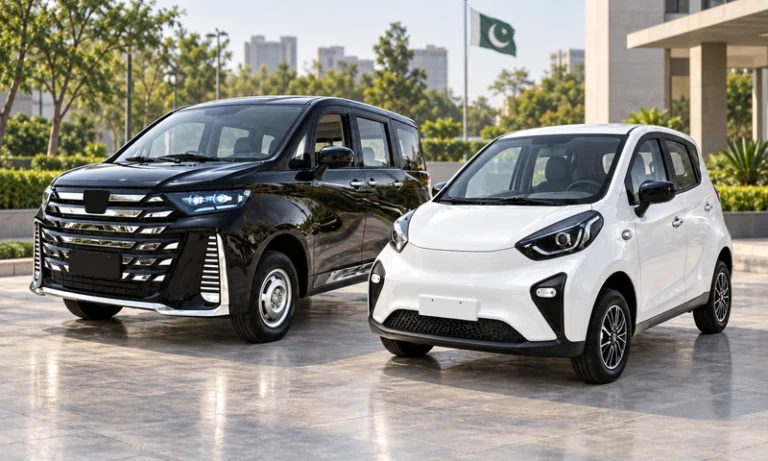

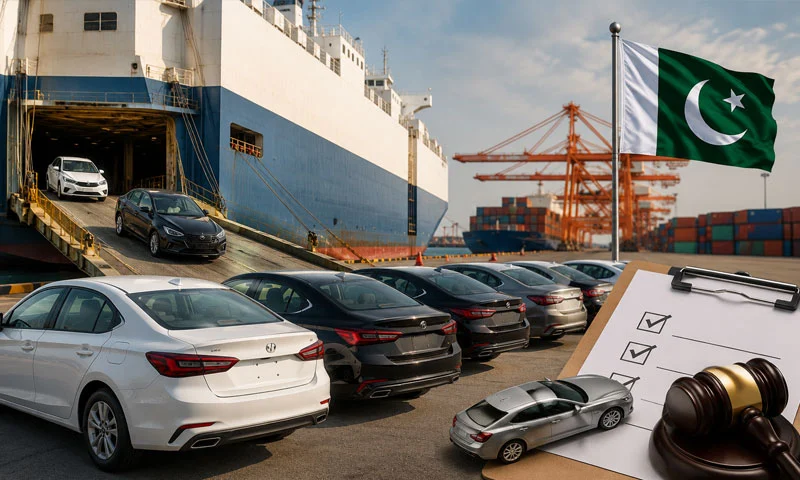
Pakistan has introduced two major policy changes for used vehicles imported under the Gift and Transfer of Residence schemes. The move aims to clear a prolonged backlog at ports while tightening compliance checks on vehicle quality.
The Ministry of Commerce issued two directives. One clarifies the validity of Pre Shipment Inspection (PSI) certificates. The other grants a one time, conditional waiver from inspection requirements for selected imported vehicles. Officials hope the measures will speed up customs clearance. However, local automobile manufacturers say the policy could hurt domestic production, reduce tax revenues and weaken investor confidence.
Government Clarifies Inspection Rules
In an official office memorandum, the ministry confirmed that it will accept PSI certificates issued by EAA Company (Pvt) Ltd and Auto Terminal Pak (Pvt) Ltd through their foreign principals in Japan. Both companies recently secured registration with the Pakistan Standards and Quality Control Authority (PSQCA) for automobile inspections.
The government directed the Federal Board of Revenue and Customs authorities to verify every certificate with the companies’ local offices before clearing vehicles. The local offices will accept full legal responsibility for the declarations. They must also certify that every vehicle meets environmental, safety and quality standards that match international requirements.
In a separate notification issued under the Imports and Exports (Control) Act, the ministry announced a strict one time waiver for vehicles shipped under a Master Bill of Lading between January 16 and March 9, 2026. The exemption allows eligible shipments to bypass the pre shipment inspection requirement introduced through SRO 61(I)/2026.
However, the ministry stressed that the waiver applies only to this specific period. It does not provide a blanket exemption for all imported vehicles.
Industry Warns of Economic Fallout
The government also introduced safeguards to keep unsafe vehicles out of the country. Customs officials cannot clear vehicles carrying Japanese auction grades of Below Average (Grade 3), Poor Condition (Grade 2), Repaired Accident (Grade R) or Minor Accident Repair (Grade RA).
Despite these restrictions, the local automotive industry strongly opposed the decision. Industry representatives described it as an ad hoc policy shift that could undermine Pakistan’s manufacturing sector.
According to industry estimates, nearly 15,000 vehicles could enter Pakistan under the exemption. That figure roughly equals the annual sales of a major local assembler. Industry representatives argue that the waiver weakens safety and environmental standards designed to protect consumers.
Auto sector experts also estimate that the policy could trigger an outflow of about $180 million through unofficial payment channels. They warn that this could increase pressure on Pakistan’s import bill and foreign exchange reserves.
Local auto parts manufacturers expect losses of around Rs22 billion. They also estimate that the government could lose another Rs8 billion in tax revenue. Analysts say local assembly plants already operate at about 50 percent capacity because of weak demand and economic pressures. They warn that sudden policy changes could further damage investor confidence and slow future investment in Pakistan’s automobile industry.
The latest directives show the government’s effort to clear port congestion while maintaining regulatory oversight. Industry stakeholders, however, insist that stable and predictable policies remain essential for protecting local manufacturing and encouraging long term investment.