


Train enthusiasts from across Europe are gathering in Switzerland this weekend to celebrate the 100th anniversary of one of the country’s most iconic mountain railways, as restored steam locomotives once again climb through the spectacular Furka Pass. The celebrations mark exactly one century since a steam train completed the first continuous journey across the Furka Pass on July 3, 1926. The railway created a vital connection between the Swiss regions of Uri and Valais and became a major engineering achievement in the Alps. Located 2,431 metres above sea level, the Furka Pass ranks among Switzerland’s highest Alpine crossings. It is famous for dramatic mountain scenery and the winding hairpin roads featured in the 1964 James Bond film Goldfinger, starring Sean Connery. Long before Hollywood arrived, however, the railway had already earned a place in Swiss transport history. The anniversary celebrations run from July 3 to July 5 in Realp and Gletsch. Visitors can enjoy historic exhibitions, vintage railway vehicles, special steam train services and guided displays celebrating the line’s remarkable history. Volunteers brought the railway back to life after closure The railway’s future looked uncertain in the early 1980s after the opening of the Furka Base Tunnel diverted regular rail traffic away from the mountain route. The historic line closed, but hundreds of volunteers refused to let it disappear. Known as the railway’s “pioneers,” they spent decades restoring tracks, repairing locomotives and rebuilding infrastructure. Their efforts allowed the first section to reopen as a heritage railway in 1992. The complete 18 kilometre route finally reopened in 2010. Today, the railway operates exclusively during the summer tourist season between Realp and Oberwald. Read More: New UAE Train Will Reach Abu Dhabi in Just 1 Hour 45 Minutes Passengers travel in restored vintage carriages through Alpine meadows, rivers, mountain tunnels and lush green valleys where patches of snow often remain even in summer. A one way ticket starts at 46 Swiss francs, or about $57, for a journey lasting just under two and a half hours. Passenger Stephan Willareth described the experience as “wonderful,” while former Swiss railway employee Kurt Guldemann praised the engineering and history behind the century old locomotives. Steam locomotives continue to inspire a new generation Operating the railway requires years of training and dedication. Bernhard Lang, one of the volunteer locomotive drivers, said mastering a steam engine demands patience and instinct. “It’s something like a living machine, so you have to get kind of the feeling for it,” he said. “To feel how it behaves, how it moves, how it smells, how it sounds.” Jacob Kallert, a 21 year old German transport engineering student and the railway’s youngest train manager, said listening carefully to the locomotives is essential. “You hear every sound, you hear if everything is right,” he said. “You can pretty much feel how it was then and how it is now.” Volunteer Sergio Rovelli said nearly everyone who joins the restoration project develops a lifelong attachment. “We say, in German, that everyone who works here has the ‘Furka Virus, the Furka disease,’” he joked. “Once you come here, you like it, and you stay.” Organisers expect thousands of visitors throughout the anniversary weekend, celebrating not only a remarkable railway but also the volunteers whose dedication has kept a century of Swiss railway history alive.

Millionaire Entrepreneur Retired at 32, Calls It the Biggest Mistake
American entrepreneur Logan Chierotti, recently named the EY Entrepreneur Of The Year 2026 Mountain West Award winner, has revealed why retiring at the age of 32 turned out to be one of the biggest mistakes of his life. In a video shared on Instagram, Chierotti reflected on life after selling his business and achieving financial independence. Although he retired with several million dollars in the bank, he said the experience quickly became emotionally draining. “Freedom without purpose = boredom,” Chierotti wrote alongside the video. “I retired at 32 with a few million bucks in the bank. It was the worst mistake of my life,” he said. The entrepreneur explained that after stepping away from work, he struggled to find meaning in his daily routine. “I was sitting around, gardening, playing with chickens, trying to figure out stuff to stay busy to kill the day.” At the time, Chierotti had a one year old child, and his wife was expecting another baby. Because of those family responsibilities, he said constant travel was not a realistic option. “I have done it, it’s not that fulfilling,” he said while explaining that even extensive travel eventually loses its appeal. Search for purpose led him back to business Chierotti admitted that the financial success initially felt rewarding. “Initially after I got the money it felt good. I remember feeling ‘I made it’.” However, the excitement faded as he realised that complete freedom without meaningful work created an unexpected sense of emptiness. “I was going crazy. I was driving myself nuts.” He tried several activities to fill his time, including day trading, but nothing gave him the same satisfaction he had experienced while building a company. View this post on Instagram A post shared by Logan Chierotti (@loganchierotti) Eventually, he realised he missed solving problems, creating new businesses and working with talented people. The entrepreneur decided to leave retirement and launch another company. His experience reflects a growing conversation among business leaders about the psychological impact of early retirement. Research has shown that many entrepreneurs strongly identify with their work, making sudden retirement emotionally challenging despite financial security. Social media users share mixed reactions Chierotti’s video sparked widespread discussion on social media, where many users shared similar experiences while others defended early retirement. One user asked, “Thank you for sharing! And how are you feeling today? After all of this?” Chierotti replied, “I started another company and that has filled the void for me.” Another commenter wrote, “This is incredible. What a story to help remind everyone that it’s not about the destination, it’s the journey that gives true fulfilment. Thank you so much for posting this.” A third person added, “Hey Logan, thanks for sharing. I relate a lot. Exiting a CEO role at 33, and yeah, freedom without purpose is definitely boring.” Not everyone agreed. One user argued that retirement offers opportunities beyond work. “Retiring is the best thing that has happened to me… at 32. Purpose can mean different things. More time for family, more time for God. Fun activities, etc.” Chierotti’s story has resonated with entrepreneurs around the world by highlighting that financial success alone may not guarantee long term fulfilment. For many founders, purpose often comes not from reaching the finish line, but from continuing to build, create and solve meaningful problems.

Phillips Sets All Time Watch Auction Record in Just Six Months
Luxury watch auction house Phillips has recorded the strongest first half in auction history after generating more than $235 million in watch sales across Geneva, Hong Kong and New York during the first six months of 2026. The record breaking figure surpassed the annual total achieved by any watch auction house in previous years. Phillips reached the milestone in just six months. The company sold 935 of the 937 watches offered during the season. That produced a remarkable sell through rate of 99.8 percent, with only two lots remaining unsold. Industry observers say the results reflect continued strength in the high end collector market despite wider economic uncertainty. They also show changing buyer preferences, with independent watchmakers attracting unprecedented demand alongside traditional luxury brands. F.P. Journe leads historic auction results The biggest result of the season came in New York, where an F.P. Journe Souscription Résonance No. 007 sold for $13.9 million. The sale made it the most expensive watch ever created by an independent watchmaker. It also became the highest priced 21st century watch sold at a commercial auction and the biggest watch auction result ever recorded in the Americas since Paul Newman’s Rolex Daytona transformed the collectors’ market. Independent brands have steadily gained popularity among serious collectors in recent years. Many buyers now seek rarity, craftsmanship and historical significance instead of focusing only on globally recognised luxury names. Brands including F.P. Journe, Kari Voutilainen, Philippe Dufour, Roger Smith and Akrivia all contributed to Phillips’ record breaking season. Analysts say collectors increasingly value watches with unique stories, exceptional craftsmanship and limited production rather than simply pursuing famous logos. Patek Philippe remains a dominant force Despite the rise of independent brands, Patek Philippe continued to command extraordinary prices throughout the auction season. A Ref. 2523 “South America” World Time sold for $10.2 million in Geneva. A Ref. 2499 First Series in pink gold reached $10.3 million in Hong Kong. Meanwhile, a Ref. 1518 perpetual calendar chronograph realised nearly $4 million in New York. Provenance also remained a major factor in determining value. A Patek Philippe once owned by musician Eric Clapton achieved $5.2 million, while another presented to former French President Charles de Gaulle sold for $1.87 million. Auction experts say collectors continue paying significant premiums for watches connected to prominent historical figures or celebrities. Phillips’ latest results suggest the luxury watch market has entered a new phase. Established brands such as Rolex and Patek Philippe continue attracting strong demand, but independent watchmakers now compete at the highest level. The record setting season highlights a broader shift in collector behaviour. Buyers increasingly seek rarity, originality and historical importance, creating stronger competition across the world’s most prestigious watch brands.
Germany Plans Tough Sick Leave Rules and Workers Are Furious
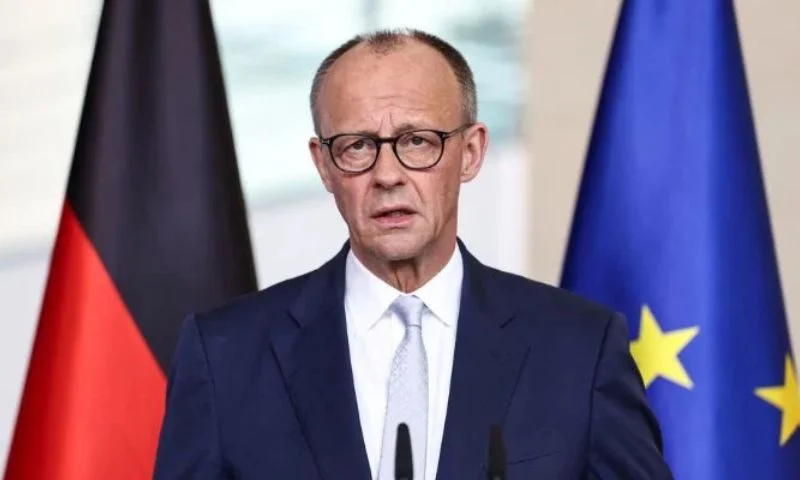
Germany’s government has unveiled controversial plans that would require workers to provide medical proof from the very first day they call in sick, marking one of the most significant changes to the country’s workplace rules in years. The proposal forms part of Chancellor Friedrich Merz’s 34 point economic reform package, which aims to revive Germany’s struggling economy, improve productivity and reduce bureaucracy. The government hopes to pass the main measures through parliament before the end of the year. Under the proposed rules, employees would no longer be able to obtain a sick note through a telephone consultation. Instead, they would need to visit a doctor in person and submit a medical certificate from the first day of illness if requested by their employer. Current rules allow many workers to stay home without a doctor’s certificate for the first three days of illness. They can also receive short term sick notes through telephone consultations in certain cases. The proposed reform would end both practices. Merz defended the proposal by pointing to Germany’s growing number of sick leave days. “We can no longer afford the competitive disadvantage caused by prolonged absences from work,” he said. He acknowledged that the move would not be popular. “We are creating a set of tools that will enable those involved, both employees and companies, to help decrease the number of sick days.” Trade unions and doctors warn of unintended consequences The proposal immediately drew criticism from labour groups and medical organisations. Frank Werneke, head of Germany’s services union Verdi, accused the government of creating “a culture of distrust toward employees.” Doctors also warned that the changes could overwhelm already busy medical practices. The German Association of Family Physicians said, “Our practices would be flooded with patients who don’t need in person care and would be better off in bed.” Medical groups argue that many people with minor illnesses recover more quickly at home. They say forcing patients to visit clinics could increase the spread of infectious diseases while placing additional pressure on family doctors. Reform package aims to strengthen Germany’s economy The sick leave proposal forms only one part of a broader reform agenda. The government also announced income tax relief for low and middle income households, pension reforms linked to life expectancy, measures to reduce red tape and changes that give employers greater flexibility to hire workers on short term contracts. Officials believe the package will improve Germany’s competitiveness after several years of weak economic growth. Business groups have largely welcomed the reforms, arguing that high absenteeism has reduced productivity across Europe’s largest economy. Economists, however, say the benefits may take time to appear and will depend on how parliament implements the proposals. Despite mounting criticism from unions and doctors, the Merz government has shown no sign of abandoning the proposal. The debate is expected to intensify as lawmakers begin discussing the reforms in parliament later this year.

Paris Hospitals to Receive 1,000 Air Conditioners as France Prepares for Another Heatwave
Hospitals across the Paris region will receive around 1,000 air conditioners by the end of this week as France prepares for another spell of extreme heat, according to French broadcaster BFMTV. The deliveries form part of a nationwide government plan to supply 30,000 air conditioners to hospitals. Officials hope the programme will strengthen healthcare facilities after the country’s record breaking June heatwave placed hospitals under intense pressure. Many hospitals in the Paris region have already started buying extra cooling units while waiting for the government’s deliveries. “I think it’s very important and really necessary to get through a second heatwave, especially if it comes in a short period of time,” Emmanuel Raffoux, head of the haematology department at Saint Louis Hospital, told BFMTV. “Our bodies have suffered and are trying to recover. For the patients here, many will likely experience a second heatwave during the same hospital stay,” he added. The latest preparations come only days after France endured an intense heatwave that pushed temperatures above 35 degrees Celsius across much of the country. Several regions also recorded temperatures exceeding 40 degrees Celsius, forcing authorities to issue widespread heat alerts. Hospitals expand cooling capacity before another hot spell The recent heatwave exposed major weaknesses in hospital infrastructure. Temperatures inside some hospital rooms climbed to 32 degrees Celsius during last week’s extreme weather. Doctors struggled to keep patients comfortable, particularly older people and those receiving long term treatment. The Paris Public Hospital Network, known as AP HP, said it deployed or purchased 800 air conditioners between late summer 2025 and mid 2026. The network also bought another 1,000 units in less than one week as temperatures surged. Hospital officials said they expect the government to reimburse those emergency purchases through the national procurement programme. Some hospitals have also introduced other measures. Staff have reorganised wards, moved vulnerable patients into cooler areas and increased supplies of ice, fans and hydration equipment after emergency departments saw a sharp rise in heat related illnesses. France prepares for hotter summers as climate risks grow French weather forecasters expect another period of intense heat next week, prompting hospitals to accelerate preparations. Prime Minister Sebastien Lecornu recently announced a €100 million investment package to improve cooling systems and strengthen hospitals against future heatwaves. He described reducing pressure on hospitals during extreme heat as an “absolute priority.” The World Health Organization has warned that Europe’s recent heatwave should serve as “a dress rehearsal” for hotter summers ahead. The agency said Europe is warming more than twice as fast as the global average. It also warned that heatwaves have become a recurring public health threat rather than isolated weather events. French health officials believe the new cooling equipment will improve patient care during future heatwaves. They also acknowledge that hospitals must continue adapting as climate change increases the frequency and intensity of extreme summer temperatures.

Taylor Swift’s Wedding Turns NYC Into a High Security Zone
Taylor Swift and Travis Kelce are expected to marry on Friday, July 3, in one of the most anticipated celebrity weddings of the year. The celebrations have transformed parts of Manhattan into a high security zone. Authorities have also introduced temporary street closures around Madison Square Garden. The event comes during the busy Independence Day holiday weekend and America’s 250th anniversary celebrations. City officials have increased security across the area. According to a permit obtained by The Associated Press, the ceremony will begin at 5 pm Eastern Time on Friday. Celebrations could continue until 4 am on Saturday. New York City’s permitting office approved an application for a “Special Event at MSG” earlier this week. The permit also allows extensive preparations around the venue. Festivities started on Thursday, July 2, with a private rehearsal dinner. Around 100 close friends and family members attended the event. The gathering lasted from 5:30 pm until 10:30 pm. Social media speculation also increased after Selena Gomez shared a brief update. Many fans believed it hinted at her arrival for the celebrations. Security operation expands across central Manhattan Workers began preparing the venue early in the morning. They continued setting up until 2 pm on Friday. City permits show crews installed large temporary structures. These include a drive through tent and a separate guest entrance. The layout aims to improve guest movement and security. Guests are expected to arrive between 3 pm and 5 pm. Police officers will manage traffic, protect attendees and control crowds gathering outside the venue. View this post on Instagram A post shared by curators of pop culture (@deuxmoi) Several streets around Madison Square Garden will remain closed during the event. Some nearby businesses say the restrictions could affect holiday weekend trade. Neither Swift nor Kelce has commented publicly on the wedding plans. Their representatives have also kept details private. Celebrity guests and charity donations attract global attention Reports suggest the guest list includes Gigi Hadid, Beyoncé, Jay Z, Ed Sheeran and Selena Gomez. Harry Styles reportedly received an invitation but remains on tour. The couple also made headlines for their charitable giving before the wedding. According to the Associated Press, they donated more than $26 million to charities. The money will support food banks, children’s hospitals and humanitarian organisations across New York, Kansas City and Rhode Island. National groups such as Feeding America, the ASPCA and Dolly Parton’s Imagination Library will also receive support. Swift’s publicity team confirmed the donations. View this post on Instagram A post shared by curators of pop culture (@deuxmoi) The wedding has drawn worldwide attention because of the couple’s popularity. Thousands of fans have gathered near Madison Square Garden. Many hope to catch a glimpse of the celebrations. Social media also continues to buzz with speculation about surprise guests and performances.
Why France’s Latest Heatwave Has Authorities on High Alert
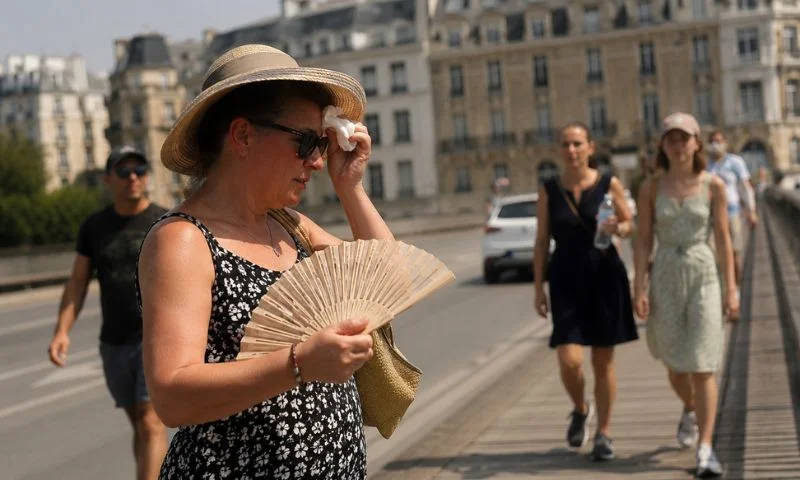
France recorded 2,025 excess deaths during the peak week of its record breaking June heatwave, according to new figures released by the country’s public health authority, as officials warned the final death toll could rise further once regional data becomes available. Public Health France said the country saw “an increase of 29.1 percent, corresponding to 2,025 additional deaths compared with the previous week” during the week beginning June 22. The agency added that the figure was probably “an underestimate” because authorities have not yet received complete data from all regions. The heatwave lasted around 11 days and pushed temperatures above 40 degrees Celsius across many parts of France. It became one of the earliest and most intense heat events ever recorded in the country. Health officials said the extreme temperatures placed enormous pressure on hospitals, emergency services and elderly care facilities. The Paris region suffered the biggest increase in mortality. Public Health France reported a 62 percent rise in deaths there during the week starting June 22. Authorities also recorded a similar spike in the Pays de la Loire region. Government faces criticism as heat deaths climb The rising death toll has intensified political pressure on Prime Minister Sebastien Lecornu’s government. Several opposition politicians accused authorities of failing to protect vulnerable people during the extreme heat. On Thursday, the Greens filed a no confidence motion against the government, arguing that France needs stronger measures to deal with rising temperatures. Health Minister Stephanie Rist urged caution while discussing the figures. “It will probably not be comparable,” she said on Friday, referring to the catastrophic 2003 heatwave that killed around 15,000 people, many of them elderly residents in nursing homes. Nicolas Revel, director general of the Paris public hospital system, also believes the final toll will remain below the 2003 disaster. He said he expected the number of deaths from the June heatwave to be lower than in 2003 but “probably” higher than last year’s heat episode, which claimed 5,700 lives. Climate experts warn Europe must prepare for more extreme heat Health officials stressed that France has improved its emergency response since the deadly 2003 disaster. Authorities activated heat alerts, opened cooling centres and issued repeated public health warnings during the June heatwave. Hospitals also expanded emergency capacity to handle rising numbers of patients suffering from heatstroke, dehydration and other heat related illnesses. Scientists say climate change continues to make European heatwaves more frequent, longer and more intense. France experienced several record breaking temperature days in June, including average national temperatures that exceeded previous records set in 2003 and 2019. More than 40 percent of mainland France recorded temperatures above 40 degrees Celsius during the event. Meteorologists have also warned that another spell of extreme heat could affect parts of France and neighbouring countries in the coming days. Public health officials continue to monitor mortality figures and expect updated assessments once complete regional data becomes available.

Experts Say the World Cup Is Being Played in Dangerous Heat
The extreme heat and humidity affecting large parts of the United States during the 2026 FIFA World Cup would have been “virtually impossible” without human driven climate change, a new scientific study has found. The research, released on Friday by the World Weather Attribution (WWA) group, says climate change has dramatically increased the severity of the current heat wave across the central and eastern United States and southern Canada. “On America’s 250th birthday, our study gives a clear reality check,” said Theodore Keeping, an extreme weather and wildfire researcher at Imperial College London who co-authored the study. “The climate the country has today is fundamentally different to the one it had when the Founding Fathers signed the Declaration of Independence.” The findings come as the United States celebrates Independence Day and hosts several FIFA World Cup matches under dangerous weather conditions. Scientists said a strong “heat dome” has trapped hot, humid air over a vast region. Heat domes occur naturally. However, climate change now makes them much more intense. Many cities have recorded temperatures above 100 degrees Fahrenheit, or 38 degrees Celsius. High humidity has made the heat feel even more dangerous. Researchers say climate change made the event far more likely Instead of using air temperature alone, researchers measured heat stress through Wet Bulb Globe Temperature, or WBGT. The index combines temperature, humidity, wind and sunlight to measure health risks. The team compared today’s climate with a world that had no human caused warming. Researchers said greenhouse gas emissions have already increased global temperatures by about 1.4 degrees Celsius since the pre industrial era. The results showed a dramatic difference. Without climate change, forecast WBGT levels would have been almost impossible. Scientists estimated such conditions would appear only once every 5,000 years. Even today, researchers estimate the event happens only once every 200 years. They also noted uncertainty because of the event’s exceptional intensity. The team also tested whether the developing El Nino influenced the heat wave. Instead, El Nino produced a slight cooling effect across northeastern North America. Researchers concluded it did not drive the extreme weather. Player safety concerns grow ahead of key World Cup matches The study has renewed concerns about player and fan safety during the tournament. The July 4 World Cup match between France and Paraguay in Philadelphia could begin with WBGT levels above 82 degrees Fahrenheit. FIFPRO, the global players’ union, says organisers should delay matches when heat stress reaches unsafe levels for players and spectators. FIFA has already introduced mandatory cooling breaks during matches. Officials have also increased access to drinking water and shaded areas at stadiums. Climate experts, however, say those steps alone will not solve the growing problem. Earlier WWA research found climate change has increased the number of World Cup matches likely to face dangerous heat compared with the 1994 tournament in the United States. Scientists estimated that 26 matches could reach WBGT levels of at least 26 degrees Celsius. Several games may exceed the 28 degree threshold where FIFPRO recommends postponements. Researchers say future tournaments will face similar risks unless countries reduce greenhouse gas emissions and sports bodies strengthen heat safety measures.

From Loralai to London: Pakistani Olive Oil Wins Gold Medal
A Pakistani premium olive oil brand has earned global recognition after winning a gold medal at the London International Olive Oil Competition 2026, marking another milestone for the country’s growing olive industry. The award winning brand, founded by Mohammad Hassan Tareen, produces extra virgin olive oil from olives grown in Loralai, Balochistan. The company aims to establish Pakistan among the world’s recognised producers of premium olive oil. Tareen described the achievement as more than a personal success. He said the award also reflects the growing potential of Pakistan’s olive sector. He explained that the London International Olive Oil Competition ranks among the world’s leading olive oil contests. Producers from dozens of countries submit their products for evaluation each year. According to Tareen, around 1,200 to 1,300 olive oil brands participated in this year’s competition. “The judges come from all over the world. They taste the olive oil and then separate it category wise, deciding which oil falls in the gold, silver or bronze category. They do not disclose all the details of how many brands are from each country, but when you win, they inform you about the category you fall in.” The competition evaluates entries through blind tasting by an international panel of judges before selecting gold, silver and bronze winners. Pakistan’s olive industry gains momentum Tareen said Pakistan’s olive industry remains at a developing stage but continues to make steady progress. “A lot of development is taking place in olive cultivation, including at the government level. Olive trees are being provided and many trees have already been planted. Pakistan has also become a permanent member of the International Olive Council, which is an important development.” He added that the government continues supporting farmers by supplying internationally recognised olive varieties. Pakistan officially joined the International Olive Council as a full member in 2026. Officials expect the membership to improve research, technology transfer, quality standards and international market access for Pakistani olive producers. The country’s olive cultivation programme has expanded rapidly over the past decade. Government initiatives have encouraged farmers to plant olive orchards, particularly in Balochistan, Khyber Pakhtunkhwa and Potohar, where climate conditions closely resemble traditional Mediterranean olive growing regions. International success boosts Pakistan’s image Industry experts believe international awards help strengthen confidence in Pakistan’s agricultural exports. They also demonstrate that locally produced extra virgin olive oil can compete with established global brands. The London International Olive Oil Competition attracts producers from major olive oil producing countries. Winning a gold medal places Pakistani olive oil among internationally recognised premium products. The latest achievement also highlights the increasing quality of olives grown in Loralai, an area emerging as one of Pakistan’s leading olive producing regions. With continued government support, expanding olive plantations and growing international recognition, industry leaders believe Pakistan has the potential to become an important player in the global extra virgin olive oil market over the coming years.

PlayStation to End Game Discs From 2028 as Sony Moves Fully to Digital
Sony has announced that all new PlayStation games released from January 2028 will no longer come on physical discs, marking one of the biggest changes in the gaming industry’s history as digital distribution becomes the company’s primary sales model. Instead, gamers will buy new titles through the PlayStation Store or from retail stores that sell digital download codes. Sony confirmed the change in an official announcement, saying it reflects the way most customers now purchase and play games. The company said games already released, or scheduled to launch before January 2028, will continue to receive physical disc editions. Sony explained the decision by saying, “As consumer preferences and the broader entertainment industry continue to shift away from physical discs to digital.” It added, “This is a natural direction for Sony Interactive Entertainment to adapt to consumer trends as the general preference for digital media significantly outpaces physical discs.” Digital future sparks concern among gamers The announcement comes only days after Rockstar Games confirmed that the highly anticipated Grand Theft Auto VI will also launch without a traditional game disc, adding further momentum to the industry’s shift toward digital releases. However, many players and gaming experts have criticized Sony’s decision. They argue that digital only games remove important consumer rights such as lending, reselling or trading purchased titles. Gaming journalist Vikki Blake described the move as a “body blow to consumer rights.” “It’s of huge concern for game conservation and a massive problem for gamers with lower disposable incomes who rely on part-exchanging or loaning games from friends to keep up with the AAA price tags,” she said. She also recalled Sony’s famous PlayStation 4 advertisement that promoted physical game sharing. “Just one console cycle ago, Sony made a tongue-in-cheek advert about how easy it is to share games on PS4 as a dig at competitor, Xbox. It’s not funny anymore, is it?” Christopher Dring, editor of The Game Business, also expressed surprise. “We still see millions and millions of PlayStation games sold as physical goods,” he said. “It’s a significant business and there are lots of players that prefer to buy this way. It’s tough news for retail.” Retailers question ownership of digital games Independent retailer Lootbox Gaming also criticized the decision. The company called it “an attack on not only gamers and collectors, but also developers, publishers, distributors and retailers around the globe.” A spokesperson added, “Essentially, this is an attack on anyone who cares about video games or cares about the right to own your purchases.” Sony also faces criticism over digital ownership after confirming that more than 500 films and television shows purchased through the PlayStation Store will disappear from users’ libraries following the end of its licensing agreement with StudioCanal. The company said affected content will become unavailable from September 1. The company has not responded to questions about whether it plans to introduce a system that would allow players to transfer ownership of digital games in the future. Meanwhile, Sony reported that digital downloads already accounted for about 80 percent of its full game software sales during fiscal 2025, highlighting how rapidly consumer buying habits continue to evolve.
