

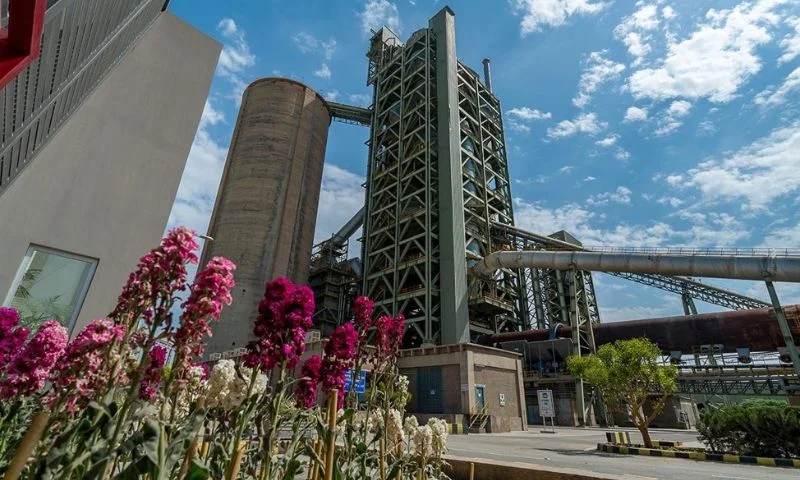
Dubai Islamic Bank Pakistan (DIB Pakistan) has successfully completed a USD 101 million Shariah compliant financing facility for D.G. Khan Cement Company Limited, enabling the acquisition of a majority stake in Rafhan Maize Products Company Limited from US based Ingredion Incorporated. Announced in Karachi on July 7, the transaction marks one of the largest recent Islamic acquisition financing deals in Pakistan. DIB structured the financing as a USD 101 million Commodity Murabaha Facility, allowing the Nishat Group to complete the strategic acquisition. The bank served as the Sole Mandated Lead Advisor, Shariah Advisor, Arranger and Financier for the landmark transaction. The financing highlights DIB Group’s growing role in Pakistan’s investment banking sector. It also reflects the increasing use of Islamic finance structures for large corporate mergers and acquisitions. The transaction strengthens DIB’s position as a leading provider of complex Shariah compliant financing solutions for major Pakistani companies. DIB Highlights Islamic Investment Banking Strength DIB said the successful completion of the deal demonstrates the strength of its international Islamic banking platform, backed by deep local market expertise and institutional capabilities. Speaking on the occasion, Muhammad Ali Gulfaraz, CEO DIB Pakistan, said, “This milestone represents another significant achievement for DIB’s Investment Banking team and further demonstrates our ability to deliver bespoke strategic financing solutions that support clients in executing transformational transactions while remaining fully compliant with the principles of Islamic finance.” The transaction also reflects DIB’s continued focus on supporting large scale corporate financing in Pakistan through tailored Islamic banking products. Commodity Murabaha remains one of the most widely used Shariah compliant financing structures for corporate acquisitions because it provides businesses with access to funding while complying with Islamic finance principles. DG Khan Cement is one of Pakistan’s largest cement manufacturers and forms part of the Nishat Group, one of the country’s leading business conglomerates with interests spanning cement, textiles, banking, insurance, power generation and agriculture. Earlier this year, DG Khan Cement confirmed its intention to acquire a controlling stake in Rafhan Maize Products as part of the group’s strategic diversification plans. Advisors Played Key Role in Landmark Deal DIB credited the successful execution of the transaction to close coordination between the bank, DG Khan Cement and buy side M&A advisor Dada Partners. Mohsin Tayebaly & Co. acted as Pakistani law legal counsel, while Hogan Lovells served as English law legal counsel. The bank described the financing as another major achievement for its investment banking division. It added that the deal demonstrates DIB’s ability to deliver unique strategic solutions for corporate clients in Pakistan. DIB also thanked DG Khan Cement’s management and acknowledged the trust placed in the bank by the Nishat Group throughout the transaction. According to the bank, that cooperation proved instrumental in managing the complexities of a transaction of this size. DIB concluded by wishing the Nishat Group success in making the acquisition a strategic milestone for its future growth.
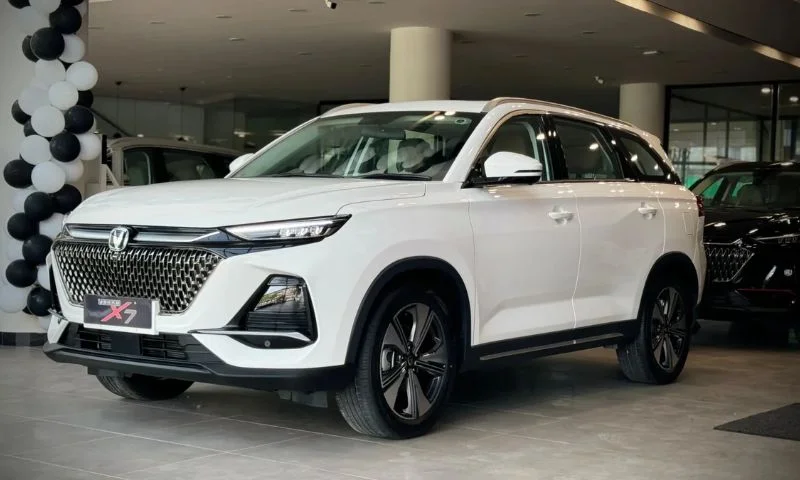
Pakistan’s Best-Selling SUV Oshan X7 Just Got Much Cheaper
Pakistan’s auto market has received a major boost as Changan Pakistan announced its biggest promotional offer yet for the popular Oshan X7 SUV. Customers can now save up to Rs. 850,000 on all FutureSense variants. The company has also lowered the starting price to Rs. 8,099,000 for a limited time. The campaign celebrates Changan’s latest milestone in Pakistan. The company described itself as “Pakistan’s #1 Chinese automotive brand” while announcing the offer. It said, “Book the Oshan X7, Pakistan’s highest-selling 7-seater SUV and enjoy savings of up to Rs. 850,000 across all FutureSense variants. Starting from Rs. 8,099,000. Terms & Conditions apply.”* The announcement comes as competition in Pakistan’s SUV market continues to grow. Chinese automakers have expanded their presence in recent years by offering feature-rich vehicles at competitive prices. Major Savings on FutureSense Variants The latest campaign gives buyers substantial discounts on every FutureSense variant of the Oshan X7. The company hopes the offer will attract families looking for a premium seven-seater SUV at a lower price. The revised promotional price now starts from Rs. 8,099,000. Changan says the offer remains available for a limited period and is subject to applicable terms and conditions. The Oshan X7 has become one of the company’s best-selling models in Pakistan. It features a 1.5-litre turbocharged petrol engine paired with a seven-speed dual-clutch automatic transmission. The engine produces 300 Nm of torque. Depending on the variant, buyers can choose five-seat or seven-seat configurations. The SUV also offers adaptive cruise control, a panoramic sunroof, a 360-degree camera, multiple airbags and advanced driver assistance systems. These features have helped the vehicle build a strong position in Pakistan’s growing SUV segment. Competition in SUV Segment Heats Up Industry experts believe the new campaign reflects tougher competition among vehicle manufacturers. Automakers continue to introduce discounts and special promotions to attract buyers despite challenging market conditions. The Oshan X7 competes with several established SUVs in Pakistan, including models from Kia, Hyundai, MG, Haval and Chery. Buyers increasingly compare technology, safety features and overall value before making a purchase. The latest promotion could strengthen Changan’s position in the family SUV market. The significant price reduction makes the Oshan X7 more attractive for customers seeking premium features without paying higher prices. Interested buyers can visit authorized Changan dealerships to learn more about the available variants, promotional pricing and booking process. They should also review the complete terms and conditions before placing an order.
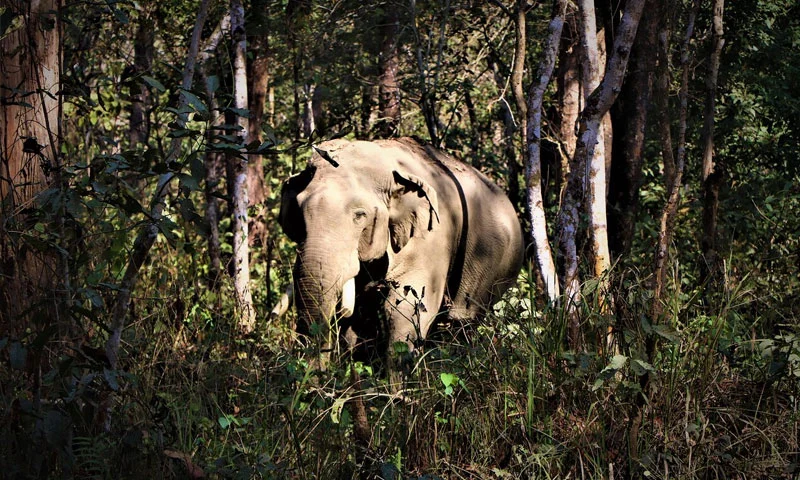
Same Elephant Kills Four Family Members Over 14 Years
A Nepalese family that moved to escape a notorious wild elephant has suffered another devastating tragedy. Authorities say the same animal found them more than a decade later and killed two more relatives. The latest attack took place in Jagatpur, near Chitwan National Park. A wild elephant entered a home late Saturday night and killed 25-year-old Ashika Bote and her four-year-old son, Bharat Bote. The elephant, known as Dhurbe, has allegedly killed at least 25 people over the past two decades. The tragedy marks the second time the same family has lost loved ones to Dhurbe. In 2012, Shanichara Bote’s parents, Budhiram and Jharali, died after the elephant attacked them near Baruwa Bazaar in Madi. Fearing more attacks, Shanichara sold his property. He crossed the Rapti River and moved his family to Jagatpur, hoping the distance would protect them. Speaking to the Kathmandu Post, Shanichara described the family’s heartbreak. “We originally lived at Dropatinagar in the Madi area, but the constant terror of wild elephants forced us to sell what we had and migrate to Jagatpur,” he said. “We believed that moving across the major rivers would keep us safe. But after all these years, the exact same elephant found us again, raided our home, and took my daughter-in-law and my little grandson. There is nowhere left for us to run.” Dhurbe linked to at least 25 deaths Wildlife officials describe Dhurbe as one of Nepal’s most dangerous elephants. The aggressive male has wandered around Chitwan National Park for years. It frequently enters nearby villages in search of food. Authorities fitted the elephant with a satellite tracking collar to monitor its movements and reduce future attacks. A conservation official at Chitwan National Park said, “We have been utilising a satellite tracking collar to monitor the movements of this highly aggressive male elephant.” “Prior to this tragic incident, Dhurbe had officially claimed 23 human lives. With these two latest casualties in Jagatpur, the confirmed number of fatalities attributed to this single elephant has now risen to 25.” The elephant has become so notorious that it even has its own Wikipedia page documenting years of attacks. Human wildlife conflict remains a growing challenge Experts say Dhurbe’s behaviour reflects the growing conflict between people and wildlife across Nepal. Male elephants often leave or are driven away from their maternal herds as they mature. Many begin living alone. They frequently enter farmland and villages as shrinking forests overlap with expanding human settlements. Wild elephant attacks occur regularly in Nepal and India. However, conservationists say Shanichara Bote’s case is exceptionally rare. The same elephant allegedly killed four members of one family despite their relocation 14 years earlier. The latest tragedy has renewed calls for stronger safety measures around Chitwan National Park. Experts want better tracking systems, improved early warning networks and stronger protection for nearby communities. They also say balancing wildlife conservation with public safety remains one of Nepal’s biggest environmental challenges.

‘I’d Love to Play 90 Minutes Like Messi’: Djokovic’s Viral Response
Two of the greatest athletes of their generation reminded the world why age remains just a number as Novak Djokovic and Lionel Messi produced remarkable performances within hours of each other on Tuesday. Messi inspired Argentina to a dramatic 3-2 comeback victory over Egypt in the FIFA World Cup Round of 16 in Atlanta. Hours later, Djokovic survived the longest Wimbledon quarterfinal in tournament history, defeating Canada’s Felix Auger-Aliassime in a marathon lasting five hours and 15 minutes to book another semifinal appearance. Both athletes are now 39 years old and continue to compete at the highest level in their respective sports. During his post-match press conference at Wimbledon, Djokovic was asked about Messi’s heroic display and the coincidence of two sporting legends producing memorable performances on the same evening. The Serbian responded with a humorous remark that quickly captured global attention. “It would be nice to play 90 minutes like him.” The comment drew laughter from reporters, but it also highlighted the unique physical demands faced by elite athletes competing deep into their careers. Djokovic praises Messi’s longevity Djokovic’s remark reflected more than simple humor. Unlike football, where matches generally finish after 90 minutes plus stoppage time, Grand Slam tennis has no time limit. Matches continue until a player wins the required number of sets. His quarterfinal against Auger-Aliassime demanded constant movement, extended rallies and intense concentration over more than five hours on Centre Court. By contrast, Messi has mastered a different approach to longevity. The Argentina captain often conserves energy by walking for periods before accelerating into dangerous spaces with perfect timing. His intelligence, positioning and decision-making have become even more important as his career has progressed. Against Egypt, Messi helped lead Argentina back from a two-goal deficit. He scored once and provided an assist as the defending champions secured a dramatic victory and advanced to the World Cup quarterfinals. Djokovic, meanwhile, relied on experience, tactical adjustments and mental resilience to overcome an opponent 14 years younger than him. The seven-time Wimbledon champion has repeatedly shown his ability to outlast younger rivals through discipline, endurance and exceptional court awareness. Two legends continue setting the standard Tuesday’s performances reinforced the enduring greatness of both athletes. Messi has already established himself as the leading scorer in World Cup history and continues to chase another international title with Argentina. Djokovic remains one of tennis’ most decorated players and continues pursuing more Grand Slam success at Wimbledon. Their achievements come during an era when sports science, nutrition and recovery have helped extend elite careers. However, experts consistently point to their discipline, preparation and competitive mindset as the biggest reasons for their continued success. Neither player has anything left to prove after careers filled with records and championships. Still, both continue delivering decisive performances on the biggest stages. Messi guided Argentina through another tense World Cup knockout match. Djokovic survived one of the toughest tests of this year’s Wimbledon. Their victories offered another reminder that elite performance depends on much more than youth. Whether competing inside football’s fixed 90 minutes or tennis’ unpredictable marathon matches, Messi and Djokovic continue to redefine sporting longevity and inspire a new generation of athletes.

Microsoft Announces 4,800 Layoffs. Here’s What Employees Get
Microsoft has announced another major round of layoffs, saying it will cut around 4,800 employees, or about 2 percent of its global workforce, as the company restructures operations while continuing to invest heavily in artificial intelligence. The latest cuts form part of a broader cost reduction strategy and include significant changes within Microsoft’s Xbox gaming division. The company joins other technology giants such as Amazon and Meta, which have also reduced headcount this year as AI spending continues to rise. According to a Business Insider report, affected employees in the United States will receive a severance package that includes up to 39 weeks of base salary, depending on their length of service and seniority. The company will first provide a minimum of 60 days of base pay, during which employees will remain on Microsoft’s payroll before their employment officially ends. Microsoft details severance benefits Beyond the initial 60-day period, severance payments will vary based on employees’ internal job levels and years of service. Employees at internal levels 64 and below will receive one week of base pay for every six months of service. Those at levels 65 to 67 will receive two weeks of base pay for every six months worked. Executives at level 68 and above fall under a separate severance program. Microsoft is also extending additional benefits to many departing employees. Workers at level 67 and below will continue receiving stock vesting for either six or 12 months, depending on their tenure. The company will also cover six months of health insurance and allow employees to continue their medical coverage through COBRA for up to another 12 months. Industry analysts describe the package as one of the more competitive severance offerings among major technology companies, even as firms continue reducing workforces to offset rising AI infrastructure costs. AI investment reshapes Microsoft’s business The layoffs come during a challenging period for Microsoft. Its shares fell nearly 23 percent during the first half of 2026, marking the company’s weakest first half performance since 2022. Reuters reported that Microsoft has regularly adjusted staffing levels near the end of its fiscal year as it prepares budgets for the following year. Earlier this year, Microsoft also offered voluntary buyouts to roughly 7 percent of its US workforce, representing about 9,000 employees. Despite the job reductions, Microsoft’s cloud business continues to benefit from strong demand for AI services. Azure remains one of the company’s fastest-growing businesses after years as the exclusive cloud provider for OpenAI’s models. However, Microsoft has sharply increased spending on AI infrastructure and data centers. Earlier this year, it projected $190 billion in capital spending for 2026, far above market expectations. Those investments have increased pressure on cash flow even as AI revenue continues to expand. Microsoft is expected to report its latest quarterly financial results later this month. Investors will closely watch whether continued AI growth offsets rising infrastructure costs and ongoing restructuring across several business divisions.
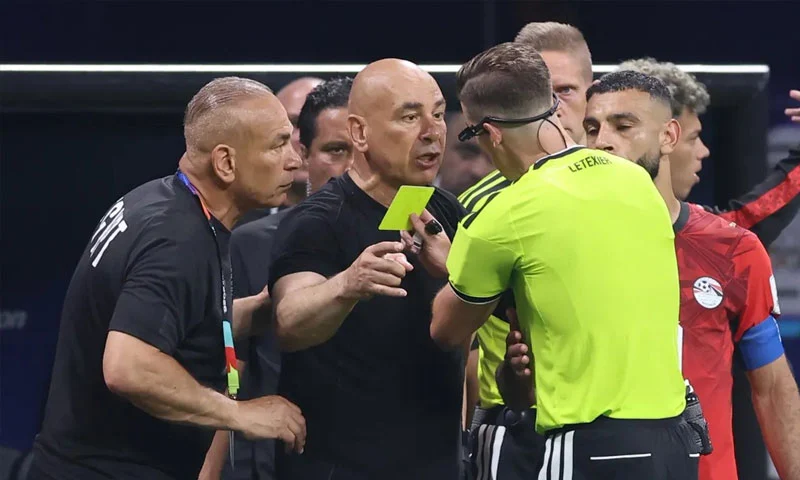
‘They Wanted Messi’: Egypt Coach Questions Argentina Victory
Egypt head coach Hossam Hassan has claimed his team’s dramatic 3-2 defeat to Argentina in the FIFA World Cup Round of 16 was influenced by “marketing support” designed to keep the defending champions and Lionel Messi in the tournament. Argentina staged a remarkable comeback after trailing by two goals to secure victory through a stoppage time winner from Enzo Fernandez, ending Egypt’s historic World Cup campaign in heartbreaking fashion. Speaking after the match, Hassan strongly criticised French referee Francois Letexier and questioned the fairness of several key decisions. “We suffered an unjust defeat,” Hassan told reporters. “There is support for the world champions from every direction – marketing support. They wanted the previous world champions to stay in the tournament. They wanted Messi to stay.” The Egyptian coach insisted his players deserved a different outcome after matching and, in his view, outperforming the reigning champions. “We were better than the world champions in everything, but there were factors on and off the pitch that affected the result,” he said. Egypt questions controversial refereeing decisions Hassan expanded on his criticism during an interview with BeIN Sports, suggesting the officials may have faced pressure because of Argentina’s status and Messi’s global appeal. “Perhaps they wanted to keep the world champions in the competition. Perhaps they wanted Messi to stay in the running,” he said. “In football, there are sometimes external factors that go beyond the technical aspects. The world champions received support at every level.” His comments came after Egypt protested several refereeing decisions, including a disallowed goal following a VAR review and appeals for a late penalty that were rejected. Egypt’s bench and players reacted angrily after the final whistle, with coaching staff confronting match officials before being restrained. Forward Mostafa Zico also questioned the officiating. “The referee was unfair and wasted the efforts of an entire nation,” Zico said. “From the beginning of the match, he was against us. The tournament is already directed.” Zico later apologised to Egyptian supporters, saying the squad had hoped to deliver a memorable victory for the country. Argentina survives as Egypt exits with pride Despite the controversy, Argentina completed one of the tournament’s most dramatic comebacks. Cristian Romero started the revival before Lionel Messi scored the equaliser. Enzo Fernandez then headed home the winning goal deep into stoppage time to send the defending champions into the quarterfinals. The result kept Argentina’s title defence alive while ending Egypt’s impressive World Cup journey. The Pharaohs had produced one of their strongest performances on football’s biggest stage and came within minutes of eliminating the defending champions. Neither FIFA nor the match officials immediately responded to Hassan’s allegations. No evidence has been presented publicly to support claims that the result was influenced by factors beyond the match itself. Hassan later said he would not watch the remainder of the tournament, maintaining that his side had suffered an injustice after coming so close to producing one of the biggest upsets in World Cup history.
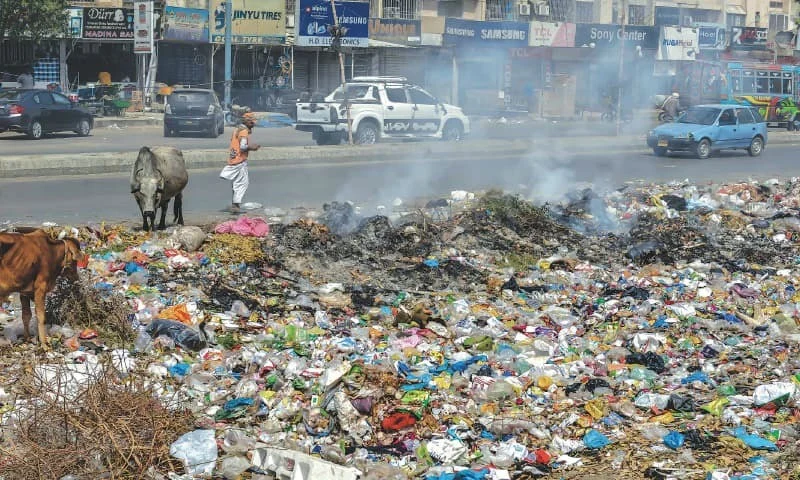
Karachi Ranked Among World’s Least Liveable Cities Again
Karachi has been ranked among the world’s least liveable cities in the Economist Intelligence Unit’s (EIU) Global Liveability Index 2026, placing 170th out of 173 cities evaluated worldwide. Only Dhaka, Tripoli and Damascus ranked below Pakistan’s largest city. War affected Tehran ranked 164th, while Kyiv placed 166th, both performing slightly better than Karachi. The EIU’s annual Global Liveability Index assesses living conditions in 173 cities using 30 indicators grouped into five categories: stability, healthcare, culture and environment, education, and infrastructure. The index serves as one of the world’s most widely referenced measures of urban quality of life and resilience. According to the EIU, large metropolitan areas often lose points because of congestion, crime and pressure on public services. Karachi received an overall score of 43 out of 100, tying with Algiers. Its category scores reflected challenges across several sectors. The city scored 20 for stability, 54 for healthcare, 36 for culture and environment, 75 for education, and 52 for infrastructure. Education remained Karachi’s strongest-performing category, while stability received the lowest score. Regional cities also lose ground The latest rankings also highlighted the impact of regional conflicts on Middle Eastern cities. Following the recent US-Iran conflict, several Gulf cities slipped in the rankings. Muscat recorded the sharpest decline, falling 14 places to 123rd after Iranian drone strikes disrupted regional stability. Doha dropped seven places to 108th, while Dubai and Abu Dhabi each slipped four positions to 79th and 76th, respectively. The EIU noted that geopolitical tensions and security concerns affected stability scores across several cities in the region. The report evaluates not only public services but also how political stability, conflict, crime and environmental conditions influence everyday life. Western Europe once again emerged as the world’s most liveable region, benefiting from strong healthcare systems, quality infrastructure, stable governments and high educational standards. Copenhagen retains top position At the top of the 2026 rankings, Copenhagen retained its position as the world’s most liveable city for the second consecutive year. Vienna ranked second, followed by Melbourne in third place. Other cities in the top ten included Sydney, Zurich, Geneva, Osaka, Adelaide, Vancouver and Tokyo. Vancouver remained North America’s only representative in the top ten, while Tokyo was the only megacity to secure a place among the world’s most liveable cities. The EIU said Copenhagen maintained its lead through consistently strong performances across stability, education and infrastructure. Karachi’s latest ranking underscores the scale of the city’s urban challenges, including security concerns, traffic congestion, healthcare gaps and infrastructure pressures. Despite improvements in education, the report suggests substantial investment and long-term reforms will be necessary to improve the city’s overall liveability in future editions of the index.
