

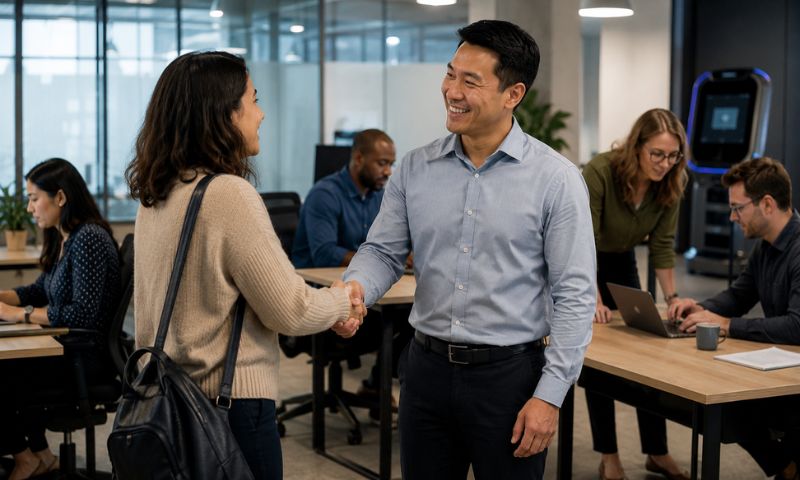
The artificial intelligence boom promised businesses faster operations, lower costs and widespread automation. However, some companies are now reversing course after discovering that AI systems often come with hidden expenses, reliability issues and limitations in handling complex tasks. Several businesses that reduced human staff to replace roles with AI are now rehiring employees to improve accuracy, customer satisfaction and decision-making. Around 32% of companies that downsized workers during AI adoption are reportedly rehiring for those same positions, according to industry data. Business leaders have cited problems including poor customer experiences, AI errors and the loss of valuable institutional knowledge. The shift highlights a growing realisation among companies that artificial intelligence works best as a support tool rather than a complete replacement for human expertise. Major Companies Reverse AI-Only Strategies Several well-known companies have faced challenges after rapidly adopting AI-based systems. Klarna, the Swedish fintech company, previously reduced its customer service workforce after introducing AI tools. The company replaced hundreds of customer support tasks with artificial intelligence but later faced criticism over unresolved customer complaints and difficulties handling complicated cases. Read More: Meet the AI Drone That Hunts and Kills Mosquitoes Mid-Air Following these issues, Klarna began increasing human involvement in customer service operations. Commonwealth Bank of Australia (CBA) also experienced problems after replacing 45 customer service workers with an AI voice bot. The system struggled with customer interactions, leading to unresolved calls and negative feedback. The bank later apologised and brought back human staff to improve service quality. IBM reduced parts of its human resources operations through automation. While AI successfully managed routine requests, the company found that sensitive employee issues, ethical concerns and complex decisions required human judgment. Technology companies including Google, Meta and Salesforce have also increased hiring for roles focused on managing, monitoring and improving their generative AI systems after earlier workforce reductions. Meanwhile, McDonald’s paused its AI-powered drive-thru ordering experiment after customers shared videos online showing incorrect orders. The fast-food chain eventually ended the pilot and returned to traditional human-supported operations. Ford Says AI Cannot Replace Experienced Engineers The automobile industry has also seen limits in AI adoption. Ford Motor has acknowledged that artificial intelligence and automation alone cannot replace experienced engineers when designing and building high-quality vehicles. The company has strengthened its engineering teams by hiring, rehiring and promoting around 350 experienced technical specialists. Ford said these experts are helping improve vehicle quality, mentor younger engineers and refine AI-powered quality systems. The move follows years of investment in automation and artificial intelligence aimed at improving manufacturing efficiency, identifying defects and speeding up vehicle development. Ford executives believe AI can support engineers but cannot replace years of practical experience and problem-solving skills developed through building real vehicles. Human Expertise Remains Critical in AI Era The recent shift does not signal an end to artificial intelligence adoption. Instead, companies are changing their approach by combining AI tools with human oversight. Businesses increasingly recognise that AI performs well in repetitive tasks, data processing and automation. However, human workers remain essential for creativity, judgment, customer relationships and handling unexpected situations. The experience of companies such as Klarna, CBA, IBM and Ford suggests that the future workplace may not be humans versus AI, but humans working alongside AI. As businesses continue investing billions into artificial intelligence, many are discovering that replacing people entirely may not deliver the efficiency and quality they originally expected.
Canva Offers Big Prize Money for PIA Rebranding
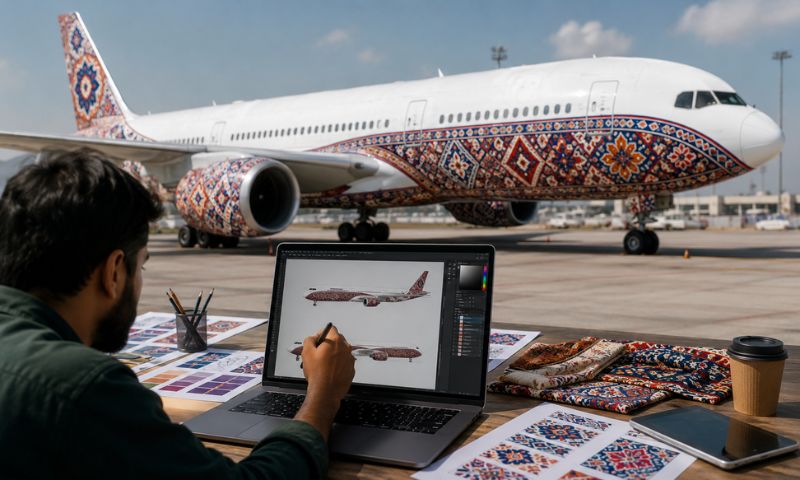
Canva has proposed organising and funding a nationwide competition to create a new identity for Pakistan International Airlines under its new ownership. Ahmed Iqbal, Canva’s general manager for the Middle East, North Africa, Afghanistan and Pakistan, announced the proposal in a LinkedIn post on Monday. He said Canva wanted to connect with PIA’s leadership to discuss the idea. The contest would invite Pakistanis to redesign the airline’s logo, brand guidelines and aircraft livery. It would also cover a marketing campaign for PIA’s relaunch. Iqbal presented the initiative as a chance to restore public confidence and involve citizens in rebuilding the national carrier’s image. “Designed by Pakistanis, for Pakistan,” he wrote, adding that Canva was ready to offer “big prize money” for the competition. Canva is a web-based platform for creating presentations, posters, social media graphics and other visual content. Its templates allow people to produce designs without advanced skills. Ajrak concepts highlight cultural possibilities Iqbal recalled PIA’s history as a regional aviation pioneer and said the airline was entering a new chapter in 2026. He argued that public participation could revive Pakistan’s design heritage and strengthen national pride. His post included two concepts showing PIA aircraft covered in rich Ajrak-inspired colours and patterns. A non-designer created the images using Canva and Affinity, according to Iqbal. “imagine what a whole country could do”, he wrote. Affinity is a professional creative suite that Canva acquired. It provides advanced tools for graphic design, photo editing and publishing. The proposal follows the transfer of PIA’s management control to an investor consortium led by Arif Habib Corporation. Pakistan’s Privatisation Commission completed the first financial closing in June after securing regulatory, commercial and financing approvals. The commission called the handover a major step in the government’s privatisation programme. PIA’s leadership had not publicly responded to Canva’s proposal when the idea was reported. Design debate focuses on cost and efficiency The Ajrak aircraft concepts prompted debate among LinkedIn users. Some questioned whether elaborate designs would create practical problems for the airline. One user argued that extra paint could increase aircraft weight and operating costs. Others said darker colours may absorb more heat and raise cooling requirements in hot conditions. Aviation guidance supports some of those concerns. Finland’s airport operator Finavia says white paint reduces heat and possible solar damage. It also notes that aircraft paint adds weight and can increase fuel use. The US Air Force previously changed a proposed dark blue design for the next Air Force One. A thermal study identified added heat concerns and the need for further qualification testing. Several users still welcomed Canva’s proposal. They said a national contest could support young designers and reflect Pakistan’s growing cultural revival. Others called for a balanced approach. They said any new PIA identity should celebrate indigenous art without compromising maintenance, cooling needs or lifecycle costs.
China to Help Build Pakistan’s Next Generation of Tech Talent
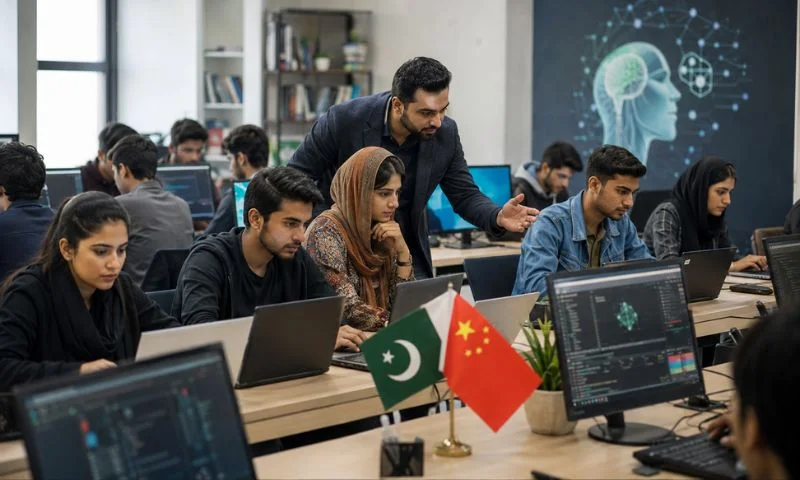
China will train up to 300,000 Pakistani youths in digital skills annually, Planning Minister Ahsan Iqbal has announced. He said the programme would strengthen Pakistan’s technology sector and expand its knowledge economy. Iqbal made the announcement during a discussion with Lahore Chamber of Commerce and Industry President Faheemur Rehman Saigol. The session took place at the 3rd LCCI IT Freelancing Awards 2026 late on Saturday night. “Pakistan has emerged as the fourth-largest freelancing country in the world and the talent and capabilities of its youth are playing a vital role in expanding the digital economy and boosting exports,” Iqbal said. He argued that large offices and heavy investment no longer guarantee success. Instead, knowledge, practical skills and access to technology have become the most valuable assets. Pakistani youths, he added, are serving global clients while earning valuable foreign exchange. Freelancers urged to embrace AI Saigol urged freelancers and IT professionals to adopt artificial intelligence and emerging technologies. He said this was essential for remaining competitive in fast-changing global markets. The LCCI president said public-private cooperation could turn Pakistan into a major regional digital economy hub. He called innovation, IT and the digital economy central pillars of the Uraan Pakistan vision. Local freelancers, he added, could help turn that vision into reality. Read More: PM Shehbaz Wants 100% Digital Remittances. Why It Matters The announcement comes as Pakistan’s technology exports reached a record $4.6 billion in fiscal year 2025-26. This represented annual growth of about 21 percent. June exports alone reached $416 million, according to State Bank data reported by Dawn. The government targets $10 billion in IT exports by fiscal year 2028-29 under Uraan Pakistan. Punjab promises payment reforms and AI investment Punjab Finance Minister Mian Mujtaba Shujaur Rehman praised LCCI for recognising talented Pakistani freelancers. He said freelancing had become a major economic pillar, generating millions of dollars in foreign exchange each year. “Pakistani freelancers are, in fact, digital ambassadors of the country who are projecting a positive image of Pakistan on the global stage,” he said. Rehman said Punjab understands the need for internationally accepted payment systems and a strong digital financial ecosystem. The province is working with the federal government and Special Investment Facilitation Council to remove international payment barriers. Its objective is to provide freelancers with secure, fast and convenient channels for receiving earnings. He reiterated Punjab’s commitment to business-friendly policies, transparency and predictable economic measures. He also pledged support for digital services exports and other foreign exchange earners. According to Rehman, Punjab is investing in digital infrastructure, technology parks, IT zones and innovation hubs. These projects aim to create employment and entrepreneurial opportunities for young people. He said Punjab was the first province to launch large-scale AI initiatives. It now wants to become Pakistan’s centre for AI, innovation and digital entrepreneurship. The government’s vision extends beyond producing successful freelancers, he added. It also seeks to develop AI professionals, startup founders and global technology leaders.
Emirates unveils viral new headrest to transform economy travel
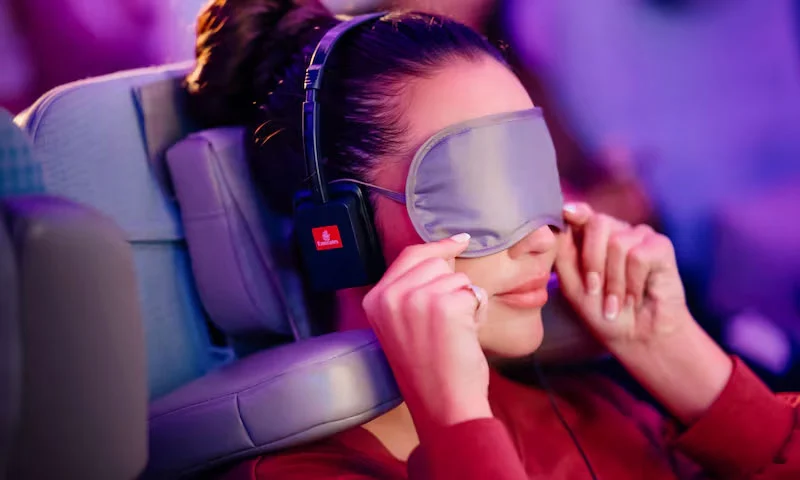
Emirates has officially unveiled its new Economy class headrest after the seat feature went viral online last month. The Dubai-based airline confirmed that the adjustable design will be introduced across much of its fleet as part of a major investment to improve comfort for long-haul passengers. The product, called the U-Dream Headrest, first attracted global attention in June after a video showing the unique seat design spread widely on social media. The footage showed passengers resting their heads between wing-like side supports designed to provide better support during sleep. Read More: Want to Travel More? This 9-to-5 Employee Shares Her Formula Emirates did not comment on the viral video at the time. However, the airline has now confirmed the technology and described it as a world-first innovation for Economy class travel. How Emirates’ U-Dream Headrest Works The U-Dream Headrest is part of Emirates’ Safran Seats Z400 Economy seat and features padded side wings that fold inward to support a passenger’s head and neck. The multiway adjustable leather headrest can move vertically and tilt according to different passenger heights and body types. Emirates said the design helps prevent the head from falling forward or sideways during sleep. طيران الإمارات أول ناقلة في العالم تستخدم مسند الرأس U-Dream فائق الحداثة في مقاعد الدرجة السياحية. ومن المقرر تركيبه في جميع مقاعد الدرجة السياحية في أسطول طيران الإمارات من طرازات الإيرباص A350، ومعظم طرازات الإيرباص A380 والبوينج 777.@emirates pic.twitter.com/sfYkLBHbp2 — Dubai Media Office (@DXBMediaOffice) July 20, 2026 The airline said the technology has been independently tested and certified by the European Union Aviation Safety Agency, making Emirates the first airline to introduce the system at a large scale. Emirates President Tim Clark said the innovation reflects the airline’s focus on improving the Economy class experience. “Emirates never rests on its laurels when it comes to customer experience and we have found a way to significantly improve the comfort for Economy class passengers, especially those travelling long-haul,” Clark said. “The U-Dream changes the game if the person wants to sleep by supporting the neck in full. No more neck pillows needed. It’s another innovation that shows our commitment to customers and cements our Economy class as the best.” Rollout Begins Across Emirates Fleet The U-Dream Headrest is already available on three Airbus A350 aircraft currently operating with Emirates. Installation is now underway across the airline’s A350 fleet, with all Emirates A350 aircraft expected to receive the upgrade by the end of the year. Read More: Flying Emirates Soon? You Could Receive These New Bulgari Gifts The airline will also install the headrest on all 270 Boeing 777X aircraft it has ordered. Starting in 2027, Emirates plans to retrofit the technology across most of its Airbus A380 and Boeing 777 aircraft. This expansion will bring the new seating feature to a large part of Emirates’ long-haul network. The airline said cabin crew members have received training to help passengers adjust and use the headrest when required. The leather material also allows crews to clean and sanitise the headrest after every flight. Emirates said passengers travelling on its A350 aircraft have already provided positive feedback about the additional support and improved sleeping experience. Part of Emirates’ Bigger Cabin Upgrade Plan The U-Dream Headrest is the latest addition to Emirates’ multi-billion-dollar fleet refurbishment programme. While airlines traditionally focus upgrades on First and Business class cabins, Emirates said the new Economy feature aims to provide premium-level comfort to more passengers. Read More: Air New Zealand Unveils First-Ever Economy Bunk Beds for Long Flights The airline has invested heavily in improving its aircraft interiors, including refreshed cabins, updated entertainment systems and redesigned seating options. With millions of passengers travelling on long-haul flights each year, Emirates believes small comfort improvements can significantly change the overall travel experience. The U-Dream Headrest represents the airline’s latest attempt to make Economy class journeys more comfortable while maintaining its reputation as one of the world’s leading international carriers.

Sarsabz Starts Independence Day Campaign With Exciting Prizes
Sarsabz, the flagship brand of Fatima Fertilizer, has launched “Dil Se Dekho Sarsabz Pakistan” ahead of Independence Day. The nationwide digital campaign asks Pakistanis to share authentic stories about the places they call home. Participants can create a short video showing what makes their hometown, village or city special. The campaign welcomes stories about local people, traditions, food, landmarks, landscapes and lesser-known attractions. Sarsabz says the initiative aims to highlight Pakistan’s cultural diversity and the resilience of communities across the country. It also seeks to show how different regional identities contribute to a shared national spirit. Every participant can present a different side of Pakistan. Together, the videos will highlight the people and places that shape the country’s identity. How Pakistanis Can Join the Campaign Entrants must upload their videos through public social media accounts before August 14. They must use the official Sarsabz Pakistan Challenge audio and add the hashtag #DilSeSarsabz. Participants must also tag Sarsabz’s official social media pages. The company will offer grand prizes for selected entries. It will also announce weekly winners and give them special prizes throughout the campaign. Organisers will assess entries for creativity, inspiration and their portrayal of Pakistan. Videos may feature cuisine, cultural practices, historic sites, natural beauty or hidden gems from any part of the country. Read More: easypaisa Introduces Digital Takaful Savings for Pakistanis The campaign invites participation from every province, city, town and village. Its central message argues that Pakistan’s diversity strengthens national unity rather than weakening it. The company says the nation’s most inspiring stories are those seen “Dil Se.” “Pakistan is a nation rich in stories waiting to be told. Through ‘Dil Se Dekho Sarsabz Pakistan’, we want to inspire every Pakistani to celebrate the places they proudly call home and showcase the beauty, diversity and resilience that define our country. Every city, town and village has something unique to offer, and this campaign provides a platform for people to share those stories with the nation. This Independence Day, we invite everyone to join us in celebrating a Pakistan that flourishes through the strength, pride and spirit of its people,” said Rabel Sadozai, Director Marketing & Sales, Fatima Fertilizer. Building on Previous Independence Day Initiative The initiative continues Sarsabz’s use of digital storytelling during Independence Day celebrations. In 2025, Fatima Fertilizer organised the “Dil Se Sarsabz” Milli Naghma competition. The company invited Pakistanis to share videos of patriotic songs on TikTok using the same hashtag. That campaign attracted hundreds of digital entries from across the country. Organisers shortlisted 10 finalists for a live performance before a jury. The judges then selected the top three winners. Read More: Easypaisa and Binance Sign MoU to Explore Digital Finance Growth in Pakistan This year’s campaign shifts the focus from patriotic songs to personal stories about hometowns and communities. It gives participants more freedom to showcase Pakistan through local experiences and visual storytelling. Sarsabz maintains official digital platforms and identifies itself as a specialty fertilizer brand of Fatima Fertilizer. Through the latest campaign, the brand aims to connect its national presence with stories of people, places and local pride. Entries will remain open until August 14. Participants must follow all campaign rules to qualify for weekly and grand prizes.
Why Was AliExpress Fined €550 Million? The Full Story Explained
Alibaba’s AliExpress has received the largest penalty yet under the European Union’s Digital Services Act (DSA), after regulators fined the online marketplace €550 million ($629 million) for failing to properly tackle illegal, unsafe and counterfeit products on its platform. The European Commission announced the record fine on Monday, saying AliExpress failed to meet its obligations to assess and reduce risks linked to illegal goods being sold through its marketplace. The decision marks the third major enforcement action under the EU’s landmark digital regulation, which requires large online platforms to take stronger action against harmful and illegal content. Read More: Pakistan Moves to Bring Online Earnings Into Formal Tax System EU regulators began investigating AliExpress after charging the company in June last year with failing to comply with DSA requirements. The Commission said the platform did not effectively identify risks related to illegal products and did not take sufficient steps to prevent them from spreading. EU officials gave AliExpress until October 20 to propose corrective measures. The company could face additional penalties if regulators determine in December that the proposed actions do not meet DSA requirements. EU Warns of Risks to Consumers and Businesses EU technology chief Henna Virkkunen said the platform’s failures created risks for consumers and businesses that follow European rules. “This is very dangerous for consumers, unfair for companies which are complying with all our rules,” Virkkunen told reporters. She highlighted AliExpress’s large European user base, saying the platform had 193 million users in Europe last year, compared with 156 million for Shein and 130 million for Temu. “One in five Europeans say they shop once a month from Shein, Temu and AliExpress,” Virkkunen said. Read More: 82% of Pakistanis Use AI While Shopping Online, Visa Study Finds The European Commission said AliExpress allowed illegal products, including counterfeit goods, unsafe toys and dangerous cosmetics, to remain available on its platform for extended periods. Regulators also criticised the company’s recommendation and advertising systems, saying they contributed to the visibility of illegal products. They also said AliExpress relied too heavily on a single measurement system to evaluate whether its moderation efforts were effective. The Commission found that AliExpress’s brand authorisation system, which aims to prevent counterfeit sales, was ineffective and lacked enough staff. Officials said some sellers could bypass the system and continue offering fake products. AliExpress Plans Appeal Against Record Fine AliExpress rejected the EU’s findings and said it would appeal the penalty. “Today’s decision and disproportionate fine ignores our sound risk management framework and the significant, proactive enhancements we have made,” the company said in an email. The company added that it had worked with the European Commission to meet what it described as “evolving expectations.” The €550 million penalty is significantly higher than previous DSA fines. Elon Musk’s social media platform X received a €120 million fine in December last year, while Chinese shopping platform Temu was fined €200 million in May for similar regulatory breaches. Read More: The New Online Shopping Rule: Shoppers Want Speed, Clarity, and Zero Surprises The EU said the final penalty could have been higher, but regulators considered the relatively recent introduction of the Digital Services Act as a mitigating factor. Under the DSA, companies can face fines of up to 6% of their global annual turnover for serious violations. The decision comes as European regulators increase pressure on major online marketplaces over product safety, counterfeit goods and consumer protection. Shein is currently facing its own investigation, while Temu has already received a DSA penalty.
Pakistan Freelance Earnings Cross $3.2 Billion in Three Years
Pakistani freelancers earned more than $3.2 billion in foreign exchange during the past three fiscal years, highlighting their growing economic role. The sector continued to expand despite slow internet speeds, power outages and payment barriers. Official data showed earnings rising from $505 million in FY24 to $984 million in FY25. They then climbed to a record $1.76 billion in FY26. The latest annual figure marked a 78 percent increase from the previous year. Finance ministry adviser Khurram Schehzad said freelancers earned $164 million in June alone, up 69 percent from a year earlier. He described the sector as an important source of foreign exchange, high-value jobs, innovation and export diversification. IT and Non-IT Workers Post Sharp Growth State Bank of Pakistan data showed strong gains across both major freelance categories. IT freelancers generated more than $1.16 billion in FY26, compared with $779 million in FY25. That represented an increase of 49 percent, or $385 million. Non-IT freelancers recorded even faster growth. Their export earnings jumped to $592 million from $205 million a year earlier. The increase reached 188 percent, or $387 million. Read More: Pakistan’s Freelancers Shine Globally as Earnings Hit $856 Million With 50% Surge Industry estimates place Pakistan’s full-time and part-time freelance population at nearly three million. That would make it the world’s fourth-largest freelancing workforce. Separate estimates cited by the finance ministry put the total at between 2.5 million and three million. Pakistan Freelancers Association chairman Ibrahim Amin said the community supports key economic indicators through foreign exchange receipts and tax payments. He said freelance exports had overtaken several traditional sectors within only a few years. “Pakistani freelancers are not only improving their own livelihoods through talent and hard work, but are also contributing to the development of a more productive, skilled and digitally empowered workforce.” Skills and Banking Reforms Remain Crucial PAFLA President Dr Imran Batada called for wider digital training to prepare young Pakistanis for international freelancing platforms. He said stronger skills could reduce unemployment, ease poverty and raise export earnings. Batada urged experienced freelancers to build startups or registered companies. He also asked them to keep learning emerging technologies and other high-demand skills. He praised government tax measures and training programmes that support Pakistan’s digital economy. Read More: SBP Eases Forex Rules, Lets Freelancers Retain Up to $5,000 Monthly to Boost IT Exports The government has allowed eligible freelancers to hold foreign currency accounts and receive preferential tax treatment. State Bank rules also allow IT exporters and freelancers to retain up to 50 percent of export proceeds in special foreign currency accounts. The central bank simplified export documentation further in April 2026. Officials expect these measures to bring more earnings through formal banking channels. The Ministry of IT says its DigiSkills programme has delivered more than 3.36 million trainings. The programme offers free online courses to students, professionals and freelancers. PAFLA says Pakistan must expand such programmes while improving connectivity, electricity reliability and international payment access.

FIFA Reveals Stunning Numbers Behind World Cup 2026
The 2026 FIFA World Cup rewrote football history after setting new records for attendance, television audiences and digital engagement. The first 48 team tournament attracted millions of fans across the United States, Canada and Mexico and surpassed FIFA’s own expectations. FIFA President Gianni Infantino praised the success of the expanded tournament. He acknowledged that the larger format helped produce the record numbers. Speaking before the final weekend, Infantino said, “this is the largest World Cup in history by far, by many times, actually, welcoming 16 additional teams.” “But,” he added, “it has exceeded all expectations.” The tournament featured 104 matches, compared with 64 in Qatar in 2022. Before the final weekend, FIFA confirmed that more than 6.6 million fans had entered stadiums. After Spain beat Argentina 1 to 0 in extra time to win the title, media estimates placed total attendance at about 6.81 million. FIFA has not yet released the official final figure. The tournament also broke the previous attendance record of 3,587,538 spectators, set during the 1994 World Cup in the United States. Fans almost filled every seat throughout the competition. FIFA said stadiums operated at a record 99.7 percent capacity despite criticism over expensive ticket prices. Average attendance reached 65,351 spectators per match. The tournament crossed the five million spectator mark during the Round of 32 match between France and Sweden. TV Viewership and Online Engagement Hit New Highs FIFA also celebrated record television audiences around the world. “TV viewership records were shattered, both in the host countries and across the globe,” the governing body said. FIFA has not released detailed audience figures. However, US President Donald Trump claimed the tournament attracted “nearly six billion viewers.” Read More: Spain Rewrites Football History by Winning Both Men and Women FIFA Titles The previous record belonged to the 2022 World Cup final between Argentina and France. That match drew about 1.5 billion viewers worldwide. FIFA expects the 2026 final to surpass that figure once the official numbers become available. The tournament also dominated digital platforms. FIFA estimated that 5.2 billion people had engaged with the competition by the end of the Round of 16. That figure represents nearly two thirds of the world’s population. Fans interacted through television, websites, apps and social media. Record Revenue Strengthens Expansion Plans The tournament generated record commercial returns alongside its huge audiences. Before the event, FIFA projected revenue of more than €7 billion, or about $8 billion, for 2026. That represents a 56 percent increase compared with the 2022 World Cup. FIFA also expected television rights revenue to climb 34 percent to nearly $4 billion. Sponsorship income was forecast to rise by 21 percent. FIFA planned to spend $3.7 billion on the tournament. It allocated one quarter of that amount to participating national teams and clubs that released players. The governing body increased the total prize fund by 15 percent to $871 million in April. Spain collected $50 million after winning the title, while every participating nation received at least $12.5 million. Read More: Messi Effect? FIFA World Cup Final Tickets Break US Record The expanded tournament also revived discussion about another increase in participating teams. Earlier this summer, Infantino said, “we have had discussions about expanding to 64 teams” for the 2030 World Cup. The centenary tournament will take place in Spain, Portugal and Morocco, with opening matches in Paraguay, Uruguay and Argentina. He added, “this matter has been submitted to the FIFA Council.”
