

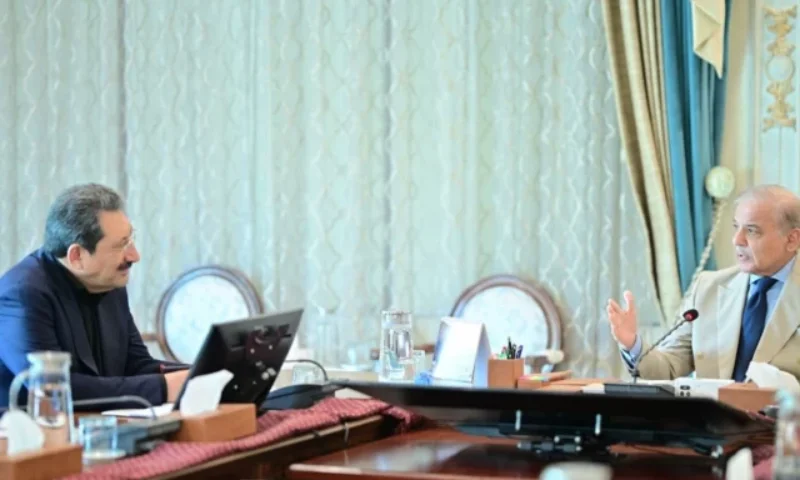
Pakistan and Iran have agreed to improve border facilities and keep commercial crossings open around the clock to increase bilateral trade. The agreement came during Prime Minister Shehbaz Sharif’s meeting with a six-member Iranian delegation in Islamabad on Wednesday. Iran’s Minister of Industry, Mine and Trade, Seyyed Mohammad Atabak, led the delegation. Both sides agreed to strengthen logistics, harmonise customs procedures and remove obstacles affecting cargo movement across their shared border. They also decided to improve facilities needed for uninterrupted commercial operations. “Pakistan views its relations with its esteemed neighbouring brotherly country, the Islamic Republic of Iran, with the highest regard,” Shehbaz said. اسلام آباد: 5 اگست 2026۔ وزیراعظم محمد شہباز شریف سے اسلامی جمہوریہ ایران کے وزیر صنعت، کان کنی و تجارت سید محمد اتابک کی سربراہی میں 6 رکنی وفد کی اسلام آباد میں ملاقات ہوئی. گفتگو کرتے ہوئے وزیرِ اعظم نے کہا کہ پاکستان اپنے بہترین ہمسایہ برادر ملک اسلامی جمہوریہ ایران کے ساتھ… pic.twitter.com/r1BNyYrAd2 — Prime Minister’s Office (@PakPMO) August 5, 2026 The measures form part of a broader effort to raise annual bilateral trade to $10 billion. Border Facilities and Customs Cooperation The prime minister said Pakistan would continue its “sincere efforts for peace in the region.” He also referred to his recent discussion with Iranian President Dr Masoud Pezeshkian. The two leaders discussed lasting regional peace and stronger bilateral relations, particularly in trade. Shehbaz expressed confidence that sustained work could help both countries achieve the $10 billion trade target. The target was set in 2025, when both governments agreed to increase trade from about $3.1 billion by 2028. He said wider trade in food and agricultural products would benefit both economies. Read More: $37.5 Billion Spent on Iran War as Trump Seeks $90 Billion More Pakistan traditionally exports rice, meat, textiles, fruit and surgical goods to Iran. Iranian exports have included chemicals, plastics, petroleum products, iron and steel. The two governments also agreed to expand mining cooperation. Their discussions focused on precious stone processing and value addition. Recent bilateral talks have covered border markets, electronic data exchange and faster cargo movement. Both sides also want stronger trade links through Karachi and Gwadar ports. Pakistan has declared Taftan Railway Station a customs clearance station. Officials have also discussed reviving the Islamabad, Tehran and Istanbul freight train service. Free Trade Agreement Talks Continue Atabak thanked Pakistan for the warm welcome and hospitality. He praised the Pakistani leadership and people for their diplomatic efforts to promote regional peace. The Iranian minister also thanked Pakistan for expressing solidarity with Iran. He said Tehran wanted to further expand economic and commercial relations with Islamabad. Atabak confirmed that technical-level negotiations on a bilateral free trade agreement were underway. A completed agreement could establish clearer tariff rules and improve market access for businesses in both countries. Read More: Iran-Backed Group Offers Millions for Trump’s Killing At the Joint Trade Committee meeting this week, Atabak described Pakistan as a long-term strategic trade partner. He also expressed interest in expanding Iranian trade through Karachi and Gwadar ports. Pakistan and Iran have already introduced several trade facilitation measures. Pakistan notified new transit routes, eased some land export requirements and expanded customs arrangements at border crossings. Financial restrictions on Iran still limit formal banking channels and remain a major obstacle to faster trade growth. Both governments have explored barter arrangements and border markets to support legal commerce. Shehbaz conveyed goodwill to Iran’s Supreme Leader and President Pezeshkian. The meeting ended with both sides pledging continued technical work on customs, logistics, mining and the proposed trade agreement.
HugoBank Gets SBP Approval to Begin Pilot Operations
HugoBank has received approval from the State Bank of Pakistan to begin pilot operations, moving the upcoming digital retail bank closer to a full public launch. The approval allows the Karachi-based bank to test its products, systems and operational readiness with a limited group of customers. HugoBank said the controlled phase would help assess security, regulatory compliance and customer experience before services reach the wider market. Business Recorder confirmed the approval on Wednesday, August 5, citing a statement from the bank. The development follows HugoBank’s in-principle approval in September 2023, when SBP selected it among five proposed digital retail banks. Limited Customer Testing Before Public Launch During the pilot, HugoBank will monitor how its technology and banking processes perform in daily use. It will also use customer feedback and operational findings to improve products before commercial operations begin. The bank said it wants to remove traditional banking complexities through a simple, customer-first digital platform. Its stated focus includes financial accessibility, convenience and long-term financial wellness for customers across Pakistan. “At HugoBank, we believe that true financial freedom begins with ease and convenience. Our goal is to be a trusted financial freedom and wellness partner for our customers, that combines the discipline of a world-class financial institution with the agility of modern technology. We are excited to demonstrate our commitment to expanding customers’ access to secure digital financial services any time and anywhere in the country,” said Asim Hasan, Chief Executive Officer of HugoBank. HugoBank said the pilot reflects a cautious market-entry strategy built around risk management and secure technological infrastructure. The bank plans to refine its services as it receives feedback from pilot users. Digital Bank Moves Closer to Commercial Operations SBP introduced its digital bank licensing framework in 2022 to promote financial inclusion, affordable financial services and technology-led competition. The regulator initially limited the programme to five digital bank licences. Under the framework, a bank must demonstrate operational readiness before receiving a restricted licence for pilot operations. The pilot must run for at least three months, while the restricted licence can remain valid for up to nine months. Commercial operations require separate SBP approval after the bank completes the pilot and meets regulatory conditions. Digital retail banks mainly serve individuals through electronic channels instead of traditional branch networks. SBP requires them to maintain minimum capital of Rs1.5 billion during the pilot stage. In a related development, the Securities and Exchange Commission of Pakistan approved a Rs1.5 billion equity injection for HugoBank. The funding will help it meet SBP’s minimum capital requirement. HugoBank’s sponsors include Singapore-based Atlas Consolidated, The Getz Group and Pakistan’s Muller & Phipps. The sponsors have committed around $60 million in capital and technology support. The bank said it aims to build a modern platform suited to Pakistan’s expanding digital economy. However, pilot approval does not yet amount to permission for unrestricted commercial operations.
Sindh to Cancel Vehicle Registrations Over Unpaid Tax
The Sindh Cabinet has approved major reforms to the province’s vehicle registration, taxation and insurance systems. Chief Minister Syed Murad Ali Shah chaired the meeting, which considered more than 20 agenda items. Provincial ministers, advisers, special assistants and senior government officials attended. Chief Secretary Asif Hyder Shah and Principal Secretary Agha Wasif Abbas were also present. The cabinet reviewed matters involving governance, public administration, infrastructure, education, healthcare, labour welfare and economic reforms. Its vehicle-related decisions introduce a formal process for removing destroyed and long-unused vehicles from government records. “The reforms aim to make the vehicle registration system more transparent and efficient while improving administrative oversight,” Shah said. Unpaid Tax Could Lead to Registration Cancellation The cabinet approved a new de-registration policy for destroyed, permanently unusable or decommissioned vehicles. Owners of such vehicles must submit a written declaration to the relevant authorities by September 30, 2026. Authorities will classify a vehicle as off-road if its owner meets two conditions. The owner must not have paid motor vehicle tax since July 2010 and must also fail to submit the required declaration. Officials will give affected owners 30 days to clear their outstanding dues. If they fail to pay, the Excise Department will suspend the vehicle’s registration. Continued non-payment for another 60 days will result in the cancellation of the registration. The policy aims to separate active vehicles from those that no longer operate. Read More: Budget 2026-27: Why Punjab and Sindh Agreed to Major Spending Cuts The Sindh Excise Department already offers online services for vehicle registration, verification and motor vehicle tax calculations. The cabinet also approved relief for licensed motor dealers. Dealers may keep vehicles purchased for resale without immediate registration for six months. They may seek two further extensions of three months each. However, the total holding period cannot exceed 12 months. Dealers must maintain a valid motor dealer licence during this period. They must also pay a reporting fee of Rs100 for each vehicle. Insurance to Remain Valid After Vehicle Sale The cabinet also revised rules governing Motor Third Party Insurance after a vehicle changes ownership. An existing third-party insurance policy will remain valid until its expiry, even after the vehicle transfers to a new owner. The buyer will not need to purchase another policy immediately after completing the transfer. Officials said the change would prevent duplicate costs and simplify vehicle sales. Sindh made third-party liability insurance mandatory earlier in 2026. The law links valid coverage with vehicle registration, ownership transfers and annual tax payments. Motorcycles and other two-wheelers remain exempt. Read More: Sindh Announces Key Dates for Matric and Intermediate Results The amended law provides no-fault compensation of Rs700,000 for death. It also offers up to Rs500,000 for several forms of permanent disability. Active third-party policies in Sindh increased from 11,200 in March to 165,064 by the end of June 2026, according to SECP figures. Officials said the latest reform had received in-principle support from the SECP, Central Depository Company and Insurance Association of Pakistan. “The measures will improve public convenience, strengthen transparency and streamline the province’s vehicle registration system,” the chief minister said.

Want to Study in the UK for Free? Applications Are Now Open
The United Kingdom has opened applications for three fully funded programmes for Pakistani students, academics, professionals and entrepreneurs. The opportunities include Chevening Scholarships, the Chevening Oxford Centre for Islamic Studies Fellowship and the Commonwealth Startup Fellowship. “The programmes are designed to help participants access world-class education, develop innovative ideas and build international professional networks,” the British High Commission said. British High Commissioner Jane Marriott urged talented Pakistanis to apply for the programmes. “Pakistan has no shortage of talent, and these programmes help outstanding Pakistanis develop the skills, networks and ideas needed to lead institutions, grow businesses and tackle some of the world’s biggest challenges.” Chevening Applications Close in October Chevening Scholarships offer fully funded one-year master’s degree programmes at eligible universities across the UK. Candidates must demonstrate leadership potential, influence and a clear plan to create positive change. The 2027-28 application window opened on August 4, 2026, at 11:00 UTC. It will close on October 6 at the same time. Applicants must select three eligible UK university courses. They must also secure an unconditional offer from at least one course by July 8, 2027. Eligibility rules require applicants to hold an undergraduate degree and have 2,800 hours of post-graduation work experience. Selected scholars must return to their home country for at least two years after completing their award. Read More: Oxford Offers Fully Funded MBA Scholarship to Pakistan Applicants The scholarship covers tuition fees, economy flights, visa application costs and a monthly living stipend. It also provides arrival and departure allowances. The five-month OCIS Fellowship supports mid-career academics and professionals conducting independent research at the Oxford Centre for Islamic Studies. Pakistani applicants need a postgraduate qualification or equivalent experience. They must also have at least five years of relevant professional or academic research experience. The fellowship covers living expenses, return economy airfare and research-related allowances. Applications will close on October 6, 2026. Applicants Warned Against AI-Written Answers Marriott advised applicants to base their submissions on personal achievements, ideas and ambitions. She also warned them against submitting answers produced by artificial intelligence. “Applicants found to have used AI-generated responses risk disqualification,” she added. Chevening’s official rules strictly prohibit applicants from using AI software to generate answers. The programme uses tools to identify plagiarism, fraud and AI-generated submissions. Chevening also states that applications are free. It does not endorse agents or third parties that charge applicants for assistance. The Commonwealth Startup Fellowship targets founders of registered businesses with at least 12 months of operations. Their startups must show paying customers, commercial progress and potential for expansion. Pakistan is among the eligible countries. Read More: Japan Announces MEXT Teachers Training Scholarship 2026 for Pakistani Educators The six-month programme begins on November 16. It includes online learning, a boot camp in Accra and a capstone week in London. Funding covers approved travel, accommodation, catering, visa costs and up to £2,000 in equity-free business support. According to the commission, startup fellowship applications opened on August 3 and will remain open until September 1. More than 2,000 Chevening alumni in Pakistan work across government, academia, business, media and civil society. Chevening’s global network now includes 22 current or former heads of state or government.
Faisalabad Opens First Public E-Bike Battery Swapping Station
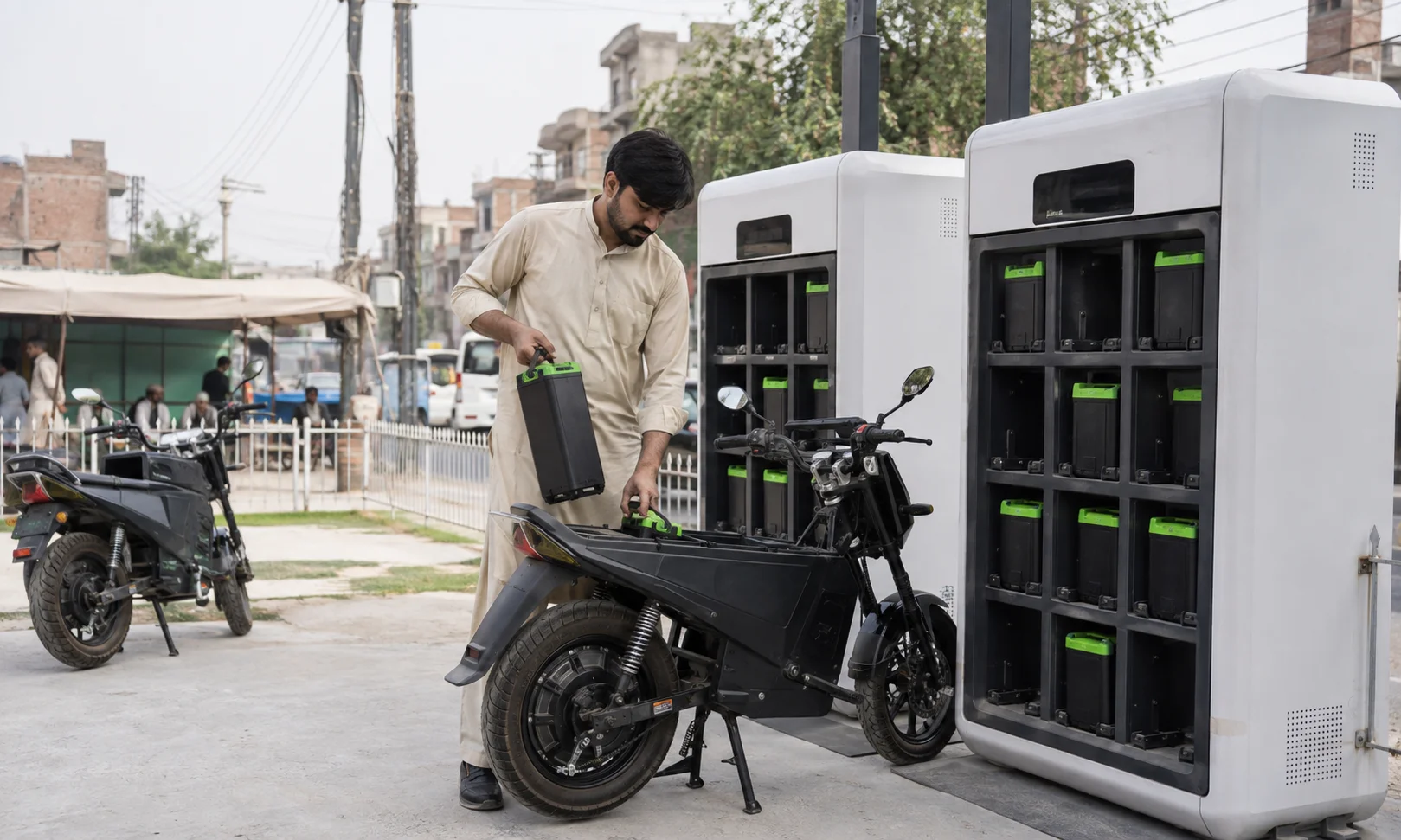
Faisalabad has launched its first public-sector battery swapping station for electric bikes, giving riders a faster alternative to conventional charging. The pilot facility can replace a depleted battery with a fully charged unit in about one minute. Divisional Commissioner Dr Imran Hamid Sheikh inaugurated the project under the Punjab government’s cleaner transport drive. Officials presented it as a step towards affordable and environmentally friendly urban mobility. The opening ceremony included E-Swap General Manager Eugene Qi, infrastructure in-charge Muhammad Moazzam and Faisalabad Development Authority Director General Muhammad Asif Chaudhry. Additional Commissioners Tanveer Murtaza and Afzal Tarar also attended. Municipal Corporation Chief Officer Usman Ghani and Faisalabad Urban Transport Society Administrator Rahat Ali joined them. Pilot Starts With Two Cabinets and Five Bikes The initial setup has two battery swapping cabinets with space to charge 24 batteries. It also includes five electric motorcycles for riders using the pilot service. “The basic objective of the project was to reduce air pollution and provide citizens with an advanced, economical and environment-friendly mode of transportation,” Dr Sheikh said. Read More: Govt cuts banks from E-bike scheme after 91% loan rejections City authorities plan to install 50 swapping cabinets across Faisalabad by December 2026. The expansion could create a wider network for commuters, delivery workers and other riders who travel long distances each day. Battery swapping removes the need to leave a motorcycle connected to a charger for several hours. Instead, a rider places the discharged battery in a cabinet and receives a charged replacement. Officials demonstrated the process during the inauguration. Users to Register Through E-Swap App Riders will access electric bikes, batteries and swapping stations through a subscription model. They must download the E-Swap application from the Google Play Store or Apple App Store. Registration will require identity card information and a residential address. The company will verify each application before activating access. Approved users will pay subscriptions through Easypaisa, JazzCash or banking applications. “Providing citizens a reliable, efficient and accessible battery swapping network was a priority of the administration,” Dr Sheikh said. Read More: Punjab Launches Interest-Free E-Bike Scheme for Teachers Officials have not disclosed the subscription fee, battery capacity, motorcycle range or list of compatible models. These details will determine whether privately owned electric bikes can use the network or whether access will remain limited to approved vehicles. The Faisalabad launch comes as a wider battery-swapping programme prepares to expand across Punjab. A Mitigation Action Facility project plans 137 stations and 9,614 swappable electric three-wheelers across Faisalabad, Lahore and Multan over five years. It also proposes solar-powered charging and financing support for private investors. For high-mileage riders, the local pilot could reduce downtime and make electric motorcycles more practical. Its long-term success will depend on affordable subscriptions, common battery standards, station reliability and a steady supply of charged batteries.

New HercShirt Claims to Stay Fresh for a Full Month
An American clothing company has launched a T-shirt that it says can remain odour-free for more than a month of daily wear. HercLéon introduced the HercShirt V5.0 through a Kickstarter campaign in July. The Minneapolis-based company describes it as its most advanced smell-resistant shirt yet. Its campaign promotes a simple promise: “Travel for a day, week or month, with just one shirt that smells great, always!” The top model costs $79 and claims to stay fresh for at least 30 days between washes. However, the campaign presents that figure as a company claim. The materials reviewed for this report do not provide published independent test results confirming a full month of odour-free daily wear. Seven Ingredients Built Into the Fabric HercLéon says the Max shirt contains seven odour-fighting elements. They include copper, silver, zinc, gold, volcanic ash and two proprietary ingredients that remain secret. The company says manufacturers weave these elements into the fabric instead of applying them as a surface treatment. It argues that this approach helps the odour-control properties survive repeated wear and washing. According to HercLéon, copper limits bacteria linked to body odour, while silver targets other microbes. Zinc aims to neutralise sharp sulphur compounds associated with heavy sweating. The company says volcanic ash absorbs moisture and external smells through its porous structure. It describes gold as a supporting element that helps the wider system perform consistently. HercLéon calls its material platform HercFiber. Its website says different versions can combine metals or other compounds with a base material for specific products. The company previously released earlier HercShirt models, along with smell-resistant underwear, socks and bedding. Its website currently sells HercShirt 3.0 products made with copper-infused material. Three Versions Offer Different Wear Claims The V5.0 campaign offers three versions at different prices. The $39 Budget model uses one active element and promises more than three days of heavy use. A $69 Standard version contains four active elements. HercLéon says it can remain fresh for more than 14 days without washing. The $79 Max model uses all seven ingredients and carries the headline 30-day claim. The company also says one shirt could last longer than seven conventional T-shirts because it needs fewer wash cycles. Men’s sizes range from small to 4XL, while women’s sizes run from small to 2XL. The first shirts will come in matte black. HercLéon plans to add navy blue, burgundy and dark green versions later. The company expects deliveries to begin in early November 2026, although crowdfunding schedules can change before shipment. The product targets travellers, minimalists and people hoping to reduce laundry. Its real test will come after customers use it through hot weather, heavy sweating and repeated daily wear.
Pakistan Approves Central Portal for Police Clearance Certificates
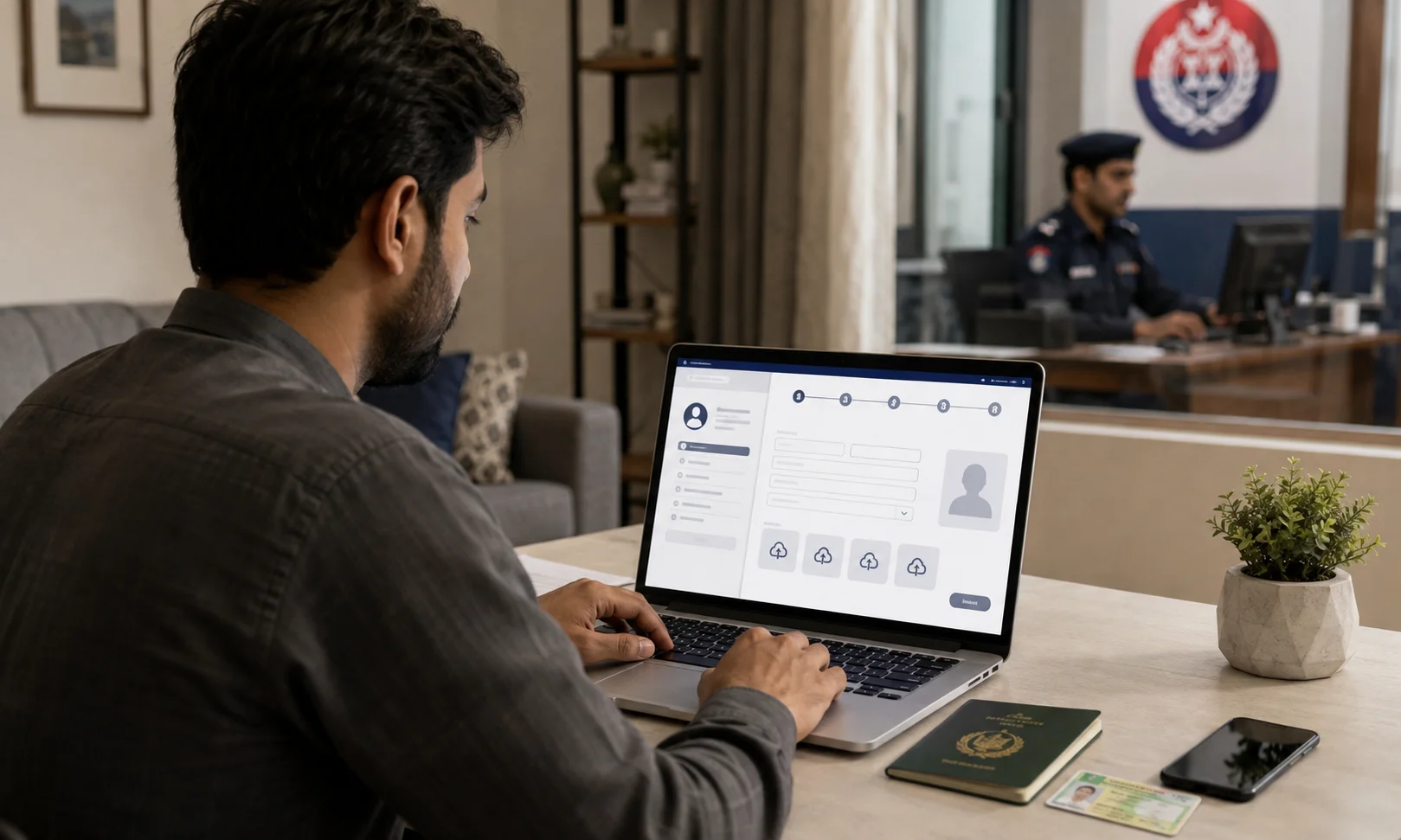
The federal government has approved, in principle, a uniform online system for Police Character Certificates across Pakistan. Citizens will eventually apply for and obtain certificates from home through a central National Police Bureau platform. Interior Minister Mohsin Naqvi approved the plan during a meeting at the National Police Bureau in Islamabad. “Police Clearance Certificates will now be issued through the National Police Bureau,” Naqvi said. He added that officials had streamlined, accelerated and fully digitised the earlier process. The reform aims to remove repeated visits, paperwork and different procedures across jurisdictions. One Portal to Replace Fragmented Procedures Police Character Certificates often support visa, immigration, employment, education and overseas residency applications. Applicants currently deal with the police authority responsible for their present or previous address. Several regions already offer separate digital services. Punjab’s Police Khidmat Markaz portal lists character certificates, online tracking and document verification. Sindh Police operates an online portal for Special Branch character verification. Khyber Pakhtunkhwa runs a Police Clearance System with account registration and certificate verification. Islamabad Police also provides an online character certificate option. Read More: Tumbler Ridge Tragedy: Police Identify Teen as Shooter The federal model seeks to provide one standard route regardless of province or district. However, the government has not announced a launch date, fees or a processing timeline. The National Police Bureau will take the central role under the approved framework. Its public guidance currently says it issues Computerized Police Clearance Certificates for Pakistani nationals connected with Spain. That process still requires a district police certificate and supporting documents. The nationwide system would greatly expand the bureau’s existing public service. Driving Permits Included in Wider Reform Naqvi also ordered officials to develop a uniform system for International Driving Permits across Pakistan. Provinces and local licensing authorities currently follow their own arrangements. He said standard systems for both documents would make travel procedures easier for Pakistanis going abroad. “Transforming National Police Bureau into an active and dynamic institution is one of our top priorities,” he said. The initiative could particularly help applicants who have lived in more than one district or province. Existing NPB rules for Spain require certificates covering each relevant address and jurisdiction. Read More: Murree Traffic Police Launch Free Vehicle Recovery Service for Tourists, Residents A connected national platform could reduce duplication, though officials have not explained how police databases will be integrated. The approval remains an in-principle decision, so practical rules will follow before nationwide access begins. Authorities must define verification standards, data-sharing arrangements, payment methods and delivery procedures. The government has not clarified whether users will receive digital certificates, printed copies, or both. Details about overseas applications and authorised representatives also remain pending. Naqvi said the reform would simplify a process many citizens face before travelling abroad. Its success will depend on secure verification, provincial cooperation and reliable access for people with limited digital facilities.

Arshad Nadeem Joins Star-Studded Lausanne Javelin Lineup
Pakistan’s Olympic champion Arshad Nadeem has secured a place in the men’s javelin field for the Lausanne Diamond League on August 21. The competition will take place at Lausanne’s Stade Olympique de la Pontaise. It will bring Nadeem back into elite international action after his disappointing Commonwealth Games title defence in Glasgow. The Wanda Diamond League confirmed the high-profile contest on August 4. It said, “The three biggest stars in South Asian athletics will go head to head” in Lausanne. Olympic Champions Head Strong Entry List Nadeem will compete against India’s Neeraj Chopra and Sri Lanka’s Rumesh Tharanga Pathirage. Grenada’s two-time world champion Anderson Peters also appears on the entry list. The field includes Curtis Thompson of the United States, Jakub Vadlejch of Czechia and Germany’s Julian Weber. Former Olympic champions Keshorn Walcott of Trinidad and Tobago and Thomas Röhler of Germany will also compete. Switzerland’s Simon Wieland completes the 10-man lineup. Pathirage enters the meeting as the 2026 world leader. He threw 92.62 metres at the Rome Diamond League in June, moving to eighth on the world all-time list. He then won Commonwealth Games gold in Glasgow with 89.75 metres. Read More: What Went Wrong for Arshad Nadeem in Glasgow? Chopra took silver in Glasgow with 85.83 metres, while India’s Yashvir Singh claimed bronze with a personal best of 85.41 metres. Their performances underlined the strength of the South Asian javelin contingent. Nadeem remains the Asian record holder after producing 92.97 metres at the Paris Olympics in 2024. That throw earned Pakistan its first Olympic athletics gold and placed him ahead of Chopra. Nadeem Targets Response After Glasgow Setback The 29-year-old will arrive in Lausanne seeking a strong recovery from his ninth-place finish in the 12-man Commonwealth Games final. Nadeem began his title defence with a foul. He recorded 77.41 metres in the second round but remained outside the leading positions. His third effort reached only 75.39 metres, leaving him ninth and ending his medal challenge after three attempts. The result contrasted sharply with his triumph at the Birmingham Commonwealth Games in 2022. Nadeem won that title with a Games record of 90.18 metres. Lausanne now offers an immediate chance to rebuild momentum against several of the world’s leading throwers. Athletissima will stage its 51st edition on August 21, with the men’s javelin among the main programme events. Read More: Arshad Nadeem Qualifies for Glasgow 2026 Javelin Final The meeting is the 12th stop of the 2026 Diamond League season. The campaign began in Shanghai and will conclude with the two-day final in Brussels on September 4 and 5. A strong performance would help Nadeem restore confidence after Glasgow. It would also add another chapter to his rivalry with Chopra, while testing him against Pathirage’s exceptional 2026 form.
Why Pakistan Wants to Replace Two Gas Utilities With Five
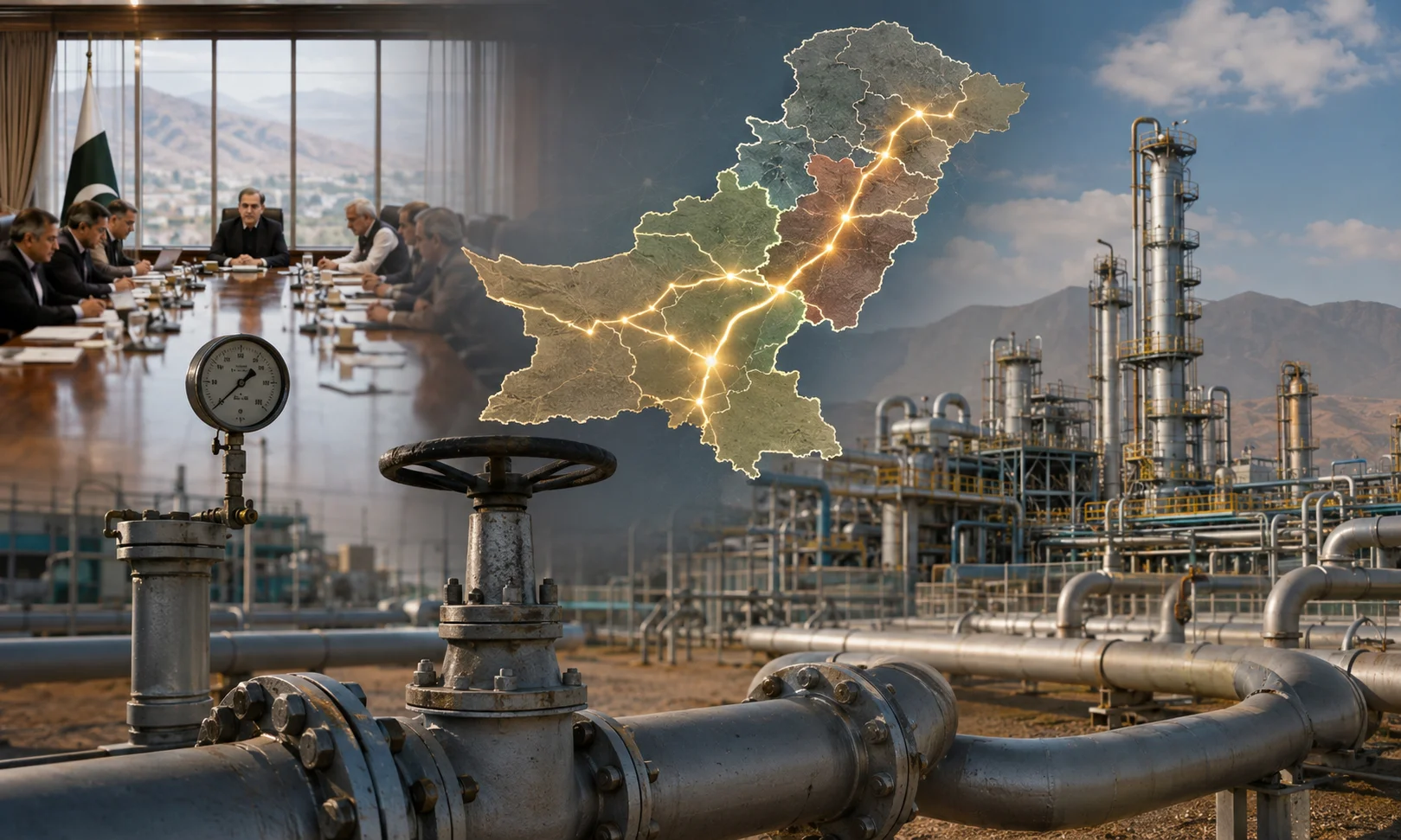
The government is finalising a plan to split Pakistan’s two gas utilities into five smaller companies. It would create one transmission company and four provincial distribution firms. Petroleum Minister Ali Pervaiz Malik reviewed the roadmap on Tuesday with World Bank Country Director for Pakistan Bolormaa Amgaabazar. SNGPL, SSGCL and OGRA officials also attended. “The reform framework also proposes the restructuring and unbundling of the Sui companies by separating their transmission, distribution and energy businesses, while creating greater opportunities for private sector participation throughout the gas value chain,” an official statement said. Government Seeks Approval by End of August The Petroleum Division wants to fast-track the process and place the final roadmap before the prime minister by the end of August 2026. “The meeting reviewed and endorsed the strategic direction of Pakistan’s gas sector reforms,” the statement said. “Following the prime minister’s approval, the Petroleum Division will initiate phased implementation of the reform programme in consultation with all stakeholders to ensure a smooth and sustainable transition to a modern, competitive and financially viable gas sector,” it added. The division plans to appoint a transaction adviser immediately. The adviser would design the separation of SNGPL and SSGCL into five entities. Read More: HBL Backs Mari Energies Project in Pakistan to Turn Polluting Gas into LNG The World Bank may finance the advisory work. Another option would require both utilities to share the cost and recover it through consumer tariffs. However, the companies and their shareholders oppose both the breakup and any requirement to fund it. Under the proposal, a National Gas Transmission Company would take over the transmission networks and businesses of both utilities. It would operate as a common carrier, similar to the National Grid Company in the power sector. The company would not buy or sell gas. It would transport locally produced gas and imported LNG, while charging wheeling fees to suppliers and buyers. Sources said major business groups were interested in the transmission business through privatisation. Viability, Pricing and Provincial Concerns The four distribution companies would operate within provincial boundaries. Officials would shape them around population, network density, gas demand, workload, supervision and operational efficiency. The proposal faces difficult pricing questions. Pakistan applies uniform national gas prices, although system losses differ sharply across provinces. Sources said Balochistan records the highest losses, followed by Khyber Pakhtunkhwa, Sindh and Punjab. Read More: Pakistan Restricts Gas to Factories as Middle East War Disrupts Energy Flow The plan therefore requires a weighted average sale price equalisation mechanism, or another pricing formula. The official roadmap also calls for targeted subsidies, a revised protected customer category and movement towards a single market-clearing price. KPMG and OGRA opposed a similar model in 2020 on financial and technical viability grounds. They urged consultations with provinces, shareholders and other stakeholders before any breakup. Experts also warned that distribution companies could become loss-making while the transmission company remained profitable. The earlier plan was shelved. Opposition remains to appointing an adviser or splitting the utilities before provinces are consulted and the Council of Common Interests considers the agreed mechanism.
