

Jeff Dean, Google’s chief scientist and one of its earliest employees, has left after nearly 27 years to launch an AI startup with three colleagues. Dean joined Google in 1999 as roughly its 30th employee. In a farewell message posted Wednesday, he recalled watching the company grow from about 25 workers to more than 190,000 employees. “It has been an absolute pleasure to work with you and to help build some of the most widely used and impactful products of all time,” Dean wrote in an excerpt from his email to colleagues. Discovery Loop Targets Scientific Research Dean will lead Discovery Loop alongside Sanjay Ghemawat, Oriol Vinyals and Quoc Le. All four founders held senior engineering or AI roles at Google. The Palo Alto startup will use AI to automate scientific and engineering experiments. Its systems aim to propose experiments, run them, analyse results and repeat the process at scale. The founders plan to test the approach first on machine learning. They later hope to apply it to chip design, biology, drug discovery and materials research. Read More: Google Is Free for You, So Who Actually Pays the Bill? Discovery Loop has launched as a public benefit corporation. Khosla Ventures and Radical Ventures co-led its funding, while Alphabet also invested. Google will provide cloud computing capacity during the startup’s first year. Both companies also plan to collaborate on machine learning systems. Dean helped create major parts of Google’s search and distributed computing systems with Ghemawat. His work also covered Google Brain, TensorFlow and Gemini. Google Reshuffles AI Leadership Dean’s departure formed part of a wider overhaul at Google’s AI division. Demis Hassabis will leave daily management of Google DeepMind and become its chairman and Alphabet’s chief scientist. Hassabis said the role would let him focus on artificial general intelligence, research and AI’s impact on society. He will also spend more time at Isomorphic Labs, the AI drug discovery company he leads. DeepMind technology chief Koray Kavukcuoglu will assume day-to-day responsibility. He will serve as senior vice president and continue as Alphabet’s chief AI architect. Kavukcuoglu will oversee Google’s frontier models and products, including Gemini. The changes come as Google faces competition from OpenAI, Anthropic and open-source developers. Departure Marks End of an Era Dean co-founded Google Brain in 2011. He became Google’s chief scientist when the company merged Brain with DeepMind in 2023. His exit follows other senior departures. Reuters reported that Noam Shazeer left for OpenAI in June, while Nobel laureate John Jumper joined Anthropic. Alphabet shares fell about 4 percent after the changes became public. Investors are watching Google as it raises AI spending and prepares new Gemini releases. Google chief executive Sundar Pichai praised Dean and Ghemawat for driving changes from early search infrastructure to modern neural networks. Google’s investment in Discovery Loop also shows that the relationship remains cooperative. Dean now faces the challenge of turning an ambitious research idea into a working platform.
Bank of Punjab Clears Key Hurdle for Overseas Expansion
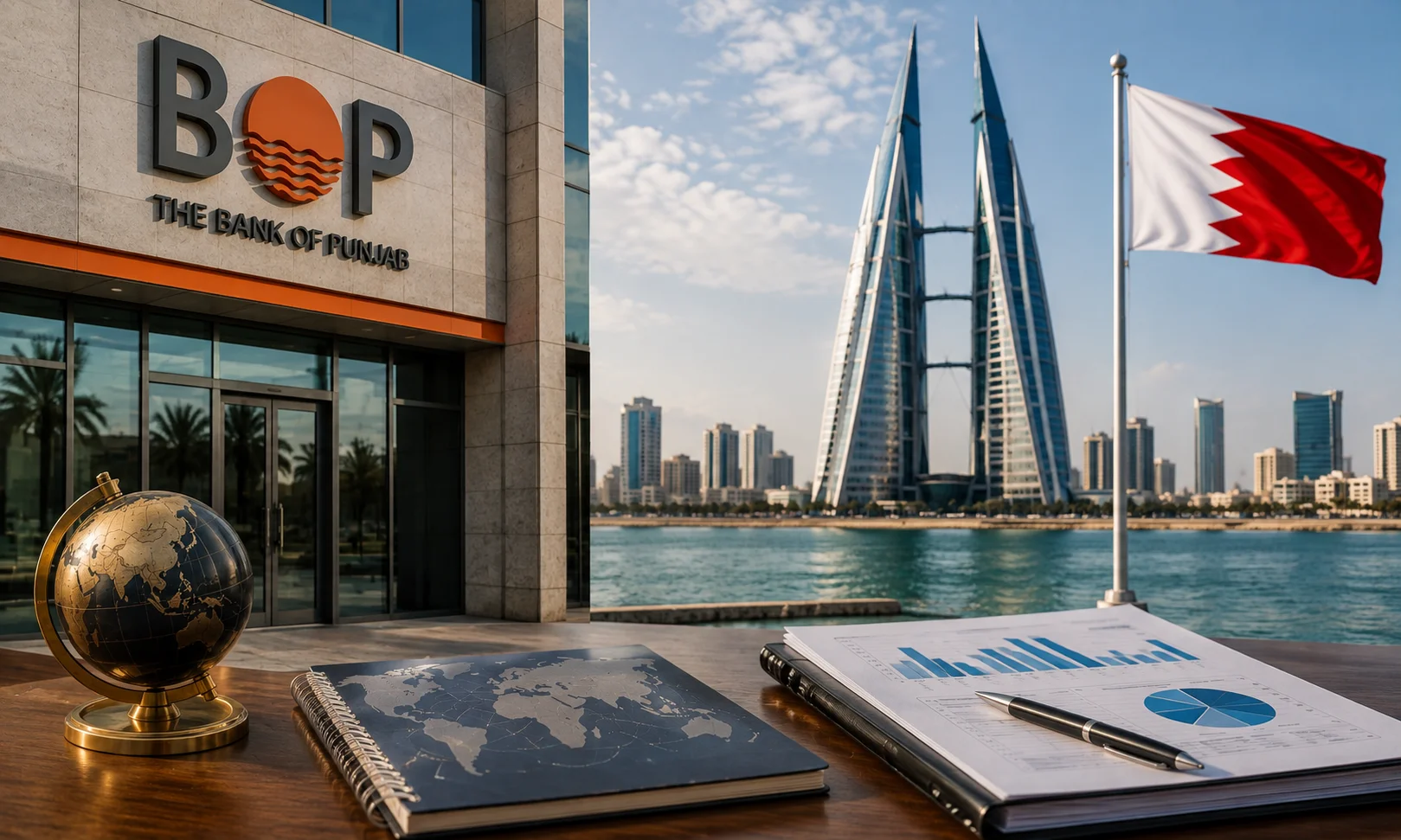
The State Bank of Pakistan has granted the Bank of Punjab in-principle approval to establish an Overseas Wholesale Banking Unit in Bahrain. The decision advances BOP’s international expansion plan, but the proposed operation cannot begin business yet. SBP Clears First Regulatory Stage BOP disclosed the approval to the Pakistan Stock Exchange on August 6. It said the SBP issued its approval through a letter dated August 5, 2026. The bank must still obtain every required clearance in Pakistan and Bahrain. It must also meet all laws, rules and conditions imposed by the regulators. BOP said the unit would start operations only after two further steps. It needs a No Objection Certificate from the Central Bank of Bahrain. It must also secure the required banking licence from the SBP. Read More: HugoBank Gets SBP Approval to Begin Pilot Operations “The Bank shall keep the Exchange informed of any further material developments,” BOP said in its regulatory filing. The approval follows a plan first announced in July 2024. BOP’s board approved a Wholesale Banking Unit in Bahrain and a representative office in the United Arab Emirates. The earlier notice said directors “have approved the business plan to establish a WBU in the Kingdom of Bahrain.” Both projects remained subject to regulatory consent. The August 2026 disclosure addressed only the Bahrain unit. It provided no fresh update on the proposed UAE office. Wholesale Unit Targets Large Clients A wholesale banking unit serves large organisations rather than ordinary retail customers. Its clients may include corporations, financial institutions, government bodies and major commercial groups. Such units can support trade finance, corporate lending, treasury services and cross-border payments. BOP has not disclosed the unit’s capital, staffing, launch date or planned products. Read More: Bank Alfalah Posts Major Profit Growth in First Half of 2026 The expansion would give BOP an operational banking presence in Bahrain after regulators complete licensing. It could help the bank serve Pakistani businesses involved in Gulf trade and investment. The Punjab government holds a majority shareholding in BOP. PSX data shows the bank earned Rs15.94 billion after tax in 2025. Profit after tax reached Rs4.77 billion in the first quarter of 2026. Bahrain Approval Still Required Bahrain hosts an established Gulf financial market. Central Bank of Bahrain data lists 54 wholesale banks and 83 banks overall. The banking system held assets of $254.5 billion at the end of 2025. Financial corporations contributed 17.2 percent to Bahrain’s constant-price gross domestic product in 2024. The CBB acts as the kingdom’s sole financial regulator and licenses conventional and Islamic banks. The SBP approval marks an important step, not the final launch. BOP must complete the CBB process, receive the required NOC and satisfy both regulators. Until those approvals arrive, the Bahrain unit cannot accept business or begin operations. BOP said it would report further material developments to the PSX under disclosure rules.
Motorway Travellers Alerted After PFA Seals Hardee’s Branch
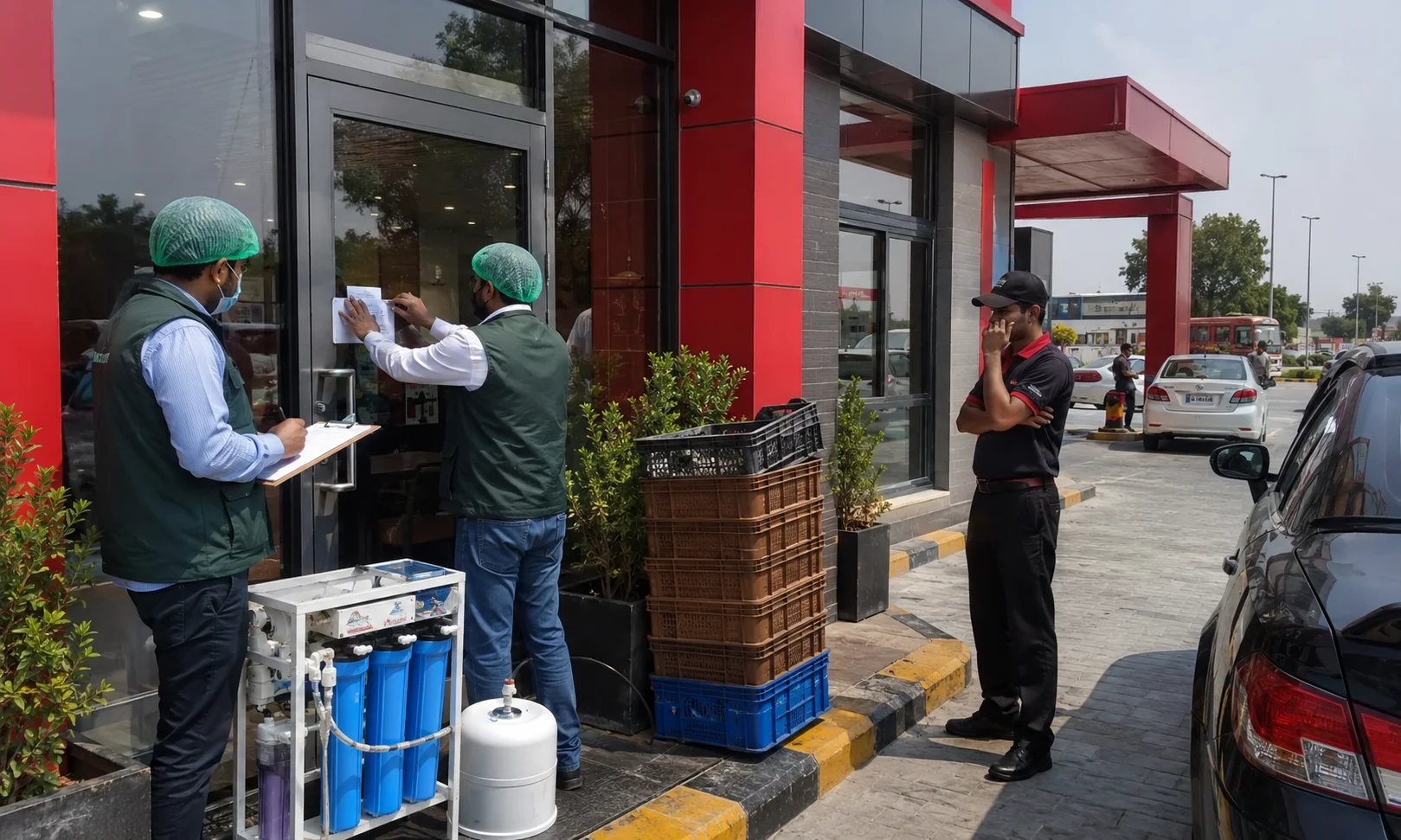
The Punjab Food Authority has sealed a newly opened Hardee’s outlet at the Sukheki Motorway Service Area after a surprise inspection uncovered serious food safety violations. The action took place under Punjab Chief Minister Maryam Nawaz’s “Safe Food” initiative. The drive targets restaurants and other food businesses that fail to meet required health and hygiene standards. Inspectors Find Unsafe Water and Rotten Vegetables PFA inspectors said the restaurant used completely unfiltered water through an unhygienic and non-compliant reverse osmosis system. They warned that unsafe water can create major risks during food preparation, cleaning and beverage service. The inspection team also recovered rotten vegetables from the kitchen. Officials found other food materials stored under improper conditions. They also discovered sauces and condiments without date labels. Read More: FBR’s New Taftan Decision Could Unlock Billions in Pakistan-Iran Trade Punjab’s food rules require date markings on sauces and several other packaged food products. The rules also require storage instructions when storage conditions affect a product’s safety or shelf life. Inspectors recorded poor sanitation in the kitchen and storage areas. PFA officials described the outlet’s overall hygiene conditions as unsatisfactory and ordered immediate corrective measures. Outlet Closed Until Deficiencies Are Removed The authority sealed the Hardee’s branch immediately and imposed what officials described as a heavy fine. The available reports did not disclose the exact amount. Authorities said the outlet would remain closed until management corrected every identified deficiency. These include problems involving water filtration, food storage, sanitation and general kitchen hygiene. PFA will conduct another inspection before allowing the restaurant to resume operations. The outlet must secure official clearance after demonstrating full compliance with food safety requirements. “Protecting consumers remains its highest priority,” the authority said. It also warned that strict enforcement would continue against businesses violating provincial food regulations. The authority urged restaurant operators to maintain clean food preparation areas. It also called for safe storage, properly dated ingredients and compliant filtration systems. Motorway Restaurants Face Closer Scrutiny The Sukheki outlet operates at the North Service Area on the M-2 motorway between Lahore and Islamabad. Hardee’s Pakistan promoted the new branch as part of its expansion along major travel routes earlier in 2026. The closure carries added significance because motorway service areas serve large numbers of travellers each day. Customers often have limited food choices during long journeys, which increases the importance of consistent safety checks. PFA has previously conducted inspection drives at motorway and highway service areas. The authority says such campaigns aim to improve food quality and protect travellers from unsafe meals and contaminated water. Read More: Pakistan Brings Back 120 km/h Speed Limit for Cars on Motorways The case also highlights the operational risks facing food chains that expand quickly. New outlets must meet the same water, storage, labelling and hygiene standards as established branches before serving customers. PFA said it would continue checking restaurants and other food businesses across Punjab. It warned that violators could face fines, temporary closures and further enforcement action until they meet the required standards.

Google Is Free for You, So Who Actually Pays the Bill?
Google lets people search, navigate, watch YouTube, use Gmail and run Android devices without paying directly. Yet Alphabet generated $119.8 billion in the quarter ended June 30, 2026, up 24 percent. Across 91 days, that equals about $1.32 billion daily, $54.9 million hourly and more than $915,000 every minute. Search Advertising Remains the Main Engine Advertising generated $81.63 billion, or about 68 percent of quarterly revenue. Google Search and related advertisements contributed $63.27 billion. YouTube advertising added $11.06 billion, while Google’s advertising network brought in $7.3 billion. Search is valuable because queries can reveal what users need or may soon buy. Someone searching for “Dubai hotel deals,” “mortgage rates” or “best running shoes” shows clear commercial intent. Businesses pay for a chance to appear beside those searches. Advertisers often pay when users click, although campaigns can also target views, purchases, registrations or calls. The highest bidder does not automatically secure the top position. Google says its auction considers the bid, advertisement quality, landing-page experience, device, location and search context. Read More: Google Gemini Now Creates Word, Excel and LaTeX Files Instantly Search and other advertising revenue rose 17 percent and supplied nearly 53 percent of Alphabet’s total revenue. “Our popular AI features are driving Search query growth,” chief executive Sundar Pichai said. Google allows advertisements above, below or within AI Overviews. Its advertising products also support newer search experiences such as AI Mode. YouTube, Android and Subscriptions Add Revenue YouTube earns from advertisements shown before, during and beside videos. It shares eligible advertising income with creators through the YouTube Partner Programme. YouTube advertising revenue increased 13 percent during the quarter. Pichai said more than 1.7 billion unique viewers watched videos related to the 2026 FIFA World Cup. YouTube also charges Premium subscribers for advertisement-free viewing, offline downloads and background playback. Android extends Google’s services across mobile devices. The Android Open Source Project remains freely available, but Google Mobile Services requires a separate licence. Google Play charges service fees on eligible paid apps, subscriptions and in-app digital purchases. Alphabet’s subscriptions, platforms and devices division generated $12.91 billion, up 15 percent. It includes subscriptions, Google Play-related income and hardware sales. Cloud Growth Reduces Reliance on Ads Google Cloud revenue jumped 82 percent to $24.77 billion. Companies pay for computing, storage, cybersecurity, workplace software and artificial intelligence tools. Google says it sells advertising space and tools, not users’ personal information. Depending on settings, it may use search activity, YouTube history, approximate location and device signals to personalise advertisements. The company says it does not share names or email addresses with advertisers unless users request it. It also says Gmail, Drive and Photos content does not support advertising personalisation. Read More: Google Slashes YouTube Premium Price by 50% for Eligible Users Alphabet recorded $16.18 billion in traffic-acquisition costs. These payments compensate partners that direct users to Google or display its advertising. Google’s consumer services appear free because other customers pay the bill. Advertisers buy audience access, subscribers purchase features, developers use its marketplace and organisations buy cloud technology.
Air India Hires Aviation Veteran Once Considered for PIA’s Top Job
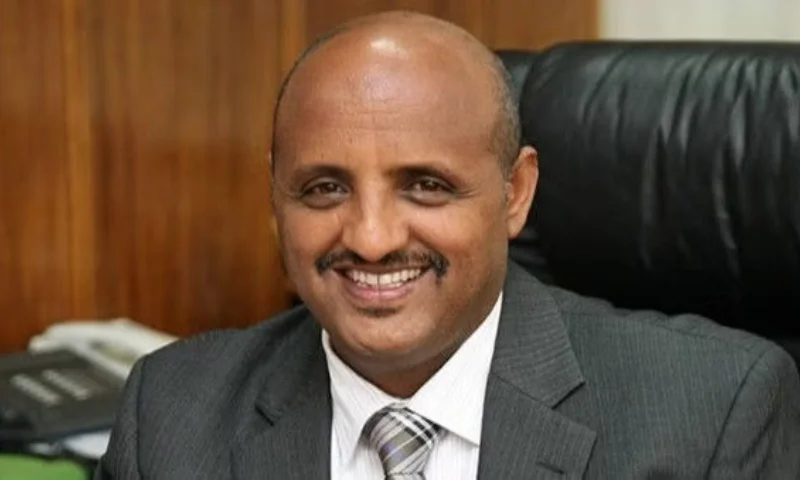
Air India has appointed aviation veteran Tewolde Gebremariam as chief executive officer and managing director, ending speculation linking him with Pakistan International Airlines. Air India announced the decision on August 5 after its board completed a global search for Campbell Wilson’s successor. The board unanimously backed Tewolde for its next phase. “On behalf of the Board, I am delighted to welcome Tewolde to Air India,” Tata Sons and Air India Chairman N. Chandrasekaran said. Tewolde called the appointment “a profound honour” and said Air India carried “an incredible legacy.” He promised operational reliability, Indian hospitality and long-term growth. Air India has not announced his joining date. Wilson, who resigned in April, will leave on September 30. Aviation Record Behind Appointment Tewolde led Ethiopian Airlines from 2011 until his early retirement in 2022. He transformed it into Africa’s largest carrier and strengthened Addis Ababa as a global aviation hub. Ethiopian Airlines said annual turnover rose from $1 billion to $4.5 billion during his tenure. Its fleet grew from 33 aircraft to 130. Pre-pandemic passenger numbers increased from three million to 12 million. He also directed more than $700 million in infrastructure investment. The programme covered cargo facilities, maintenance hangars, aviation training, flight simulators and a major hotel. Air India wants that turnaround experience as it advances its restructuring under Tata Group ownership. Tata regained control of the airline in January 2022. Read More: Canva Offers Big Prize Money for PIA Rebranding The group integrated Vistara and now runs Air India and Air India Express. Its fleet passed 300 aircraft, while the network expanded to more than 100 destinations. Air India ordered 470 Airbus and Boeing aircraft in 2023, then added 100 Airbus jets in 2024. That took announced orders to 570 aircraft. Another 30-plane Boeing order in January 2026 lifted total commitments to about 600. Independent aviation analyst John Strickland said: “It takes someone with a particular set of skills and experience to navigate such a complex situation.” Conflicting Reports About PIA Tewolde’s Air India appointment follows several Pakistani reports connecting him with PIA’s top position after privatization. ProPakistani first reported that PIA had shortlisted him. It later said the airline had selected him, subject to security clearances. Arab News also cited two unnamed officials who said PIA had chosen him. However, PIA and its new owners never formally announced the appointment. ProPakistani’s latest report cited sources who said officials considered Tewolde but never approached him. Read More: Pakistan Takes Big Step To Buy 16 New Boeing Jets for PIA The conflicting accounts do not establish that he rejected PIA or directly “chose” Air India over it. Air India, however, confirmed that its board conducted a formal search and appointed him unanimously. Tewolde now inherits an airline facing heavy losses, regulatory scrutiny and an ambitious expansion programme. Air India expects him to turn years of integration and investment into safer operations, better service and sustainable profitability.

Ronaldo and Georgina Wedding This Weekend? What We Know
Cristiano Ronaldo and Georgina Rodriguez could reportedly marry in Madeira on Saturday, August 8, but neither has officially confirmed the ceremony. Several reports have named Funchal Cathedral as the proposed venue. They claim celebrations would later move to the five-star Savoy Palace Hotel, where two floors and bars may be reserved. Neither the cathedral nor the hotel has confirmed those arrangements. Portuguese outlet Plataforma reported that the claims still rely entirely on international media reports. Madeira would carry strong personal meaning for Ronaldo. The Portugal and Al Nassr star was born in Funchal and spent his childhood on the island. Madeira also hosts the CR7 Museum, while the local airport carries his name. The couple confirmed their engagement in August 2025 after nearly a decade together. Rodriguez posted a photograph of her diamond ring and wrote: “Sí, quiero. En esta y en todas mis vidas.” The Associated Press reported that Ronaldo and Rodriguez met in Madrid in 2016. They have two daughters together, while Rodriguez also helps raise Ronaldo’s three other children. Viral Guest List Has No Verification Ronaldo and Rodriguez have not released an official guest list. However, an unverified post on X sparked widespread discussion by naming sports and entertainment figures. The claimed invitees included Rio Ferdinand, Erling Haaland, Lamine Yamal, Vin Diesel, Piers Morgan, Ronaldo’s Al Nassr teammates, Rodrygo, Rihanna, Vinicius Junior, Kylian Mbappe, Jennifer Lopez, Khabib Nurmagomedov, IShowSpeed, Drake and Travis Scott. Read More: Ronaldo Breaks New Ground in World Cup History at 41 Fans also noticed that Lionel Messi did not appear on the viral list. That omission triggered online debate, although neither Ronaldo nor Messi has commented on a possible invitation. A recent fact-check found no credible evidence that Khabib or other names circulating online had received invitations. Reports suggest the event, should it proceed, would mainly involve the couple’s five children, immediate family and close friends. Menu Reports Point to Madeiran Cuisine Portuguese media have also speculated about the wedding menu. Reports suggest guests could receive traditional Madeiran dishes, locally sourced seafood and gourmet food prepared by prominent chefs. No menu has been released, and no chef or catering company has confirmed involvement. Claims about a lavish reception therefore remain part of the wider unverified reporting. Ronaldo discussed the timing in a 2025 interview with Piers Morgan. “Not yet. We plan to do it after the World Cup with the trophy!” he said, while explaining that Rodriguez preferred private celebrations. Read More: 10 Games Without A Goal: Ronaldo Faces Growing Questions The 2026 World Cup has now ended, which has helped fuel the latest speculation. Still, the couple’s public accounts carried no wedding confirmation as of August 6. For now, the engagement is confirmed. However, the August 8 ceremony, Madeira venues, celebrity guests and reported menu remain unverified. Any firm conclusion will depend on an announcement from Ronaldo, Rodriguez or the named venues.

Pakistan End Away Test Losing Streak as Babar Creates History
Babar Azam created several records as Pakistan defeated the West Indies by eight wickets at Queen’s Park Oval. The victory levelled the two-Test series 1-1 and ended Pakistan’s eight-match losing run in away Tests. Babar shared the Player of the Series award with West Indies all-rounder Justin Greaves. The Pakistan captain scored 192 runs across four innings. His tally included 22 and an unbeaten 58 in the first Test, followed by 88 and 24 not out in Port of Spain. The award marked Babar’s first Player of the Series honour in Test cricket. It also took his overall tally across formats to 10. That put him level with Imran Khan and Wasim Akram for the most such awards by a Pakistan player. Imran collected eight awards in Tests and two in ODIs. Wasim won seven in Tests and three in ODIs. Babar’s collection now includes one Test award, four in ODIs and five in T20Is. Waqar Younis follows with nine. Captaincy Record Strengthens The result gave Babar his ninth away Test victory in 12 matches as Pakistan captain. His away win-loss ratio now stands at 3.00. That is the best among captains who have led in at least 12 away Tests, moving him ahead of Australia’s Steve Waugh. Read More: Pakistan Set Unwanted Away Test Record After West Indies Loss Pakistan had lost the opening Test by 90 runs at the Brian Lara Cricket Academy. The defeat extended their record away losing streak to eight matches. However, Babar’s side answered strongly and secured Pakistan’s first overseas Test win since July 2023. “You are always satisfied when you win,” Babar said after the match. He also praised the team for executing its batting and bowling plans under pressure. Abdullah and Sajid Power Comeback West Indies scored 344 in their first innings, but Pakistan replied with 387. Abdullah Shafique led the response with an unbeaten 160, while Babar contributed 88 from 147 balls. Their partnership helped Pakistan earn a crucial 43-run advantage. “This comeback match felt like a debut for me,” Abdullah said after receiving the Player of the Match award. His innings also made him Pakistan’s first batter since 1977 to score more than 150 in a Test innings in the West Indies. Read More: Babar Azam Joins Elite List After Stunning PSL Final Victory Sajid Khan led the bowling attack. The off-spinner claimed four wickets in each innings and finished with eight in the match. Debutant left-arm spinner Ali Usman supported him as Pakistan dismissed West Indies for 117 in their second innings. Pakistan needed 75 runs to win. They lost Imam-ul-Haq and Azan Awais before Babar and Abdullah completed the chase. Babar sealed the victory with consecutive sixes off Jomel Warrican as Pakistan reached 77 for two. The result marked the third consecutive 1-1 Test series between the teams. Pakistan will next face England in a three-Test series starting at Headingley on August 19.

Toyota and Hyundai Investigated Over How They Use Driver Data
Australia’s privacy regulator is investigating Toyota and Hyundai over concerns about how their connected vehicles collect, share and retain customer data. The Office of the Australian Information Commissioner has confirmed commissioner-initiated investigations into connected cars. Consumer group CHOICE reported on July 29 that the OAIC is examining Toyota and Hyundai. In April, the regulator identified both companies in written answers to parliamentary questions. Privacy Commissioner Carly Kind had earlier told a Senate hearing that two Asian manufacturers faced inquiries. She did not name them at the time. What Regulators Are Investigating CHOICE said the Toyota and Hyundai privacy probe covers three main areas. Regulators will assess whether the companies collect more personal information than their vehicle services require. They will also examine whether the automakers disclose driving data for marketing or other secondary purposes without valid customer consent. The third issue concerns data retention. Investigators will consider whether Toyota and Hyundai destroy or de-identify information that they no longer need. The OAIC usually aims to complete investigations within 18 months, although complex cases may take longer. Read More: Toyota Pakistan Gives Buyers Fee-Free Cancellation Option Earlier CHOICE research found that Toyota’s connected systems can collect vehicle location, speed, braking patterns, fuel levels and customer contact details. Toyota Australia’s current terms say vehicles use a factory-installed communication module for connected services. Some models allow customers to manage their data-sharing preferences. CHOICE ranked Hyundai among the brands with greater privacy concerns. It said Hyundai collected and shared voice-recognition data with Cerence, a third-party artificial intelligence provider. Hyundai previously said it shared the information in an aggregated and non-identifying form. Toyota and Hyundai Respond Toyota declined to comment while the OAIC investigation continues. Hyundai also said it does not discuss ongoing regulatory matters. “Hyundai takes privacy and data protection seriously,” a company spokesperson said. Hyundai Australia’s privacy policy says its services may collect historical locations, speed, braking, acceleration, cornering and vehicle diagnostics. Bluelink collects data when customers use connected services. The investigation has not established that either company breached Australian law. The OAIC will determine whether their practices comply with the Privacy Act and Australian Privacy Principles. Why Pakistani Drivers Should Pay Attention The inquiry also matters for Pakistan. Toyota Indus and Hyundai Nishat sell models including the Corolla, Yaris, Corolla Cross, Tucson, Elantra and Sonata. Connected vehicle services are expanding locally. The MyHyundai Pakistan app lets Elantra and Tucson owners track real-time vehicle locations. Users can also schedule maintenance, view service histories and access warranty records. Toyota Indus operates an online maintenance history portal that collects customer and vehicle information. Toyota Connect Pakistan also gathers contact details and may share information with partners involved in providing its services. Read More: Hyundai Pakistan Introduces Zero-Markup Plan for Sonata Hybrid Aftermarket GPS trackers can also transmit live location, speed and route information through third-party servers. Pakistani drivers commonly use these systems for vehicle security. Pakistan still lacks a comprehensive enacted personal data protection law. The Ministry of IT lists the Personal Data Protection Bill 2023 as a draft. The Senate says the committee neither passed nor rejected that version, so it stands withdrawn. Pakistani motorists should review app permissions, privacy notices and tracker contracts. They should also ask who can access their location data, how long companies keep it and whether users can request deletion.

How SIFC Unlocked a $200 Million Mining Project in Khuzdar
The Special Investment Facilitation Council has cleared long-running lease hurdles, unlocking a $200 million Khuzdar mining investment in the Barite-Lead-Zinc Project. The project had remained on the SIFC agenda since December 2023. Officials worked with the parties to resolve lease-related issues that had delayed implementation. “Through SIFC’s facilitation, long-pending lease-related issues were successfully resolved, enabling the project to move forward,” the council said. The breakthrough allows work to advance on a major base-metal development. It also supports the government’s effort to remove investment bottlenecks in Pakistan’s mineral sector. Project Economics and Ownership The project sits at Gunga, about 16 kilometres from Khuzdar in Balochistan. It will produce high-grade barite, lead and zinc concentrates for domestic and export markets. Bolan Mining Enterprises is developing the scheme as a joint venture between Pakistan Petroleum Limited and the Government of Balochistan. Both partners hold equal stakes, while PPL serves as operator and carries a 50 percent working interest. PPL records place the indicated resource at more than 69 million tonnes. SIFC expects the mine to operate for 34 years and generate annual revenue of $150 million to $230 million. Read More: Pakistan Invites Chinese Companies to Pakistan Minerals Investment Forum 2026 Those earnings could increase Pakistan’s mineral exports and bring foreign exchange into the economy. The development could also create jobs, support local businesses and expand economic activity in Khuzdar. BME has worked in Balochistan since 1974 and already runs barite mining and grinding operations near Khuzdar. PPL says the venture meets almost 90 percent of Pakistan’s barite demand from the oil and gas exploration industry. The company also exports much of its barite output to Gulf markets. This production base may help the BLZ project connect with established mining, processing and export operations. Implementation and Wider Impact PPL and BME reached a major milestone at the Pakistan Minerals Investment Forum in Islamabad in April 2025. They signed an operational agreement with the Balochistan government, formally opening the implementation phase. Before that agreement, BME had completed extensive drilling and feasibility work. PPL says the exploration programme included about 10,000 metres of resource drilling at 27 locations. A German consultant, DMT Consulting GmbH, prepared the bankable feasibility work. Balochistan granted a lead-zinc mining lease in 2021 after the studies confirmed the deposit’s economic potential. Read More: Saudi-Pakistan Ties Deepen: Inside Pakistan’s Big Plan at the Future Minerals Forum in Riyadh SIFC said the project’s progress showed the government’s commitment to an investor-friendly environment. It said authorities would continue removing regulatory barriers and facilitating strategic investments in mineral development. “This achievement underscores SIFC’s pivotal role in unlocking Pakistan’s untapped mining potential, strengthening investor confidence, and supporting sustainable economic growth through high-impact mineral sector investments,” the council said. The project now faces the challenge of converting agreements into construction, production and measurable benefits for local communities. Its success will depend on timely execution, responsible mining practices and transparent sharing of economic gains in Balochistan.
