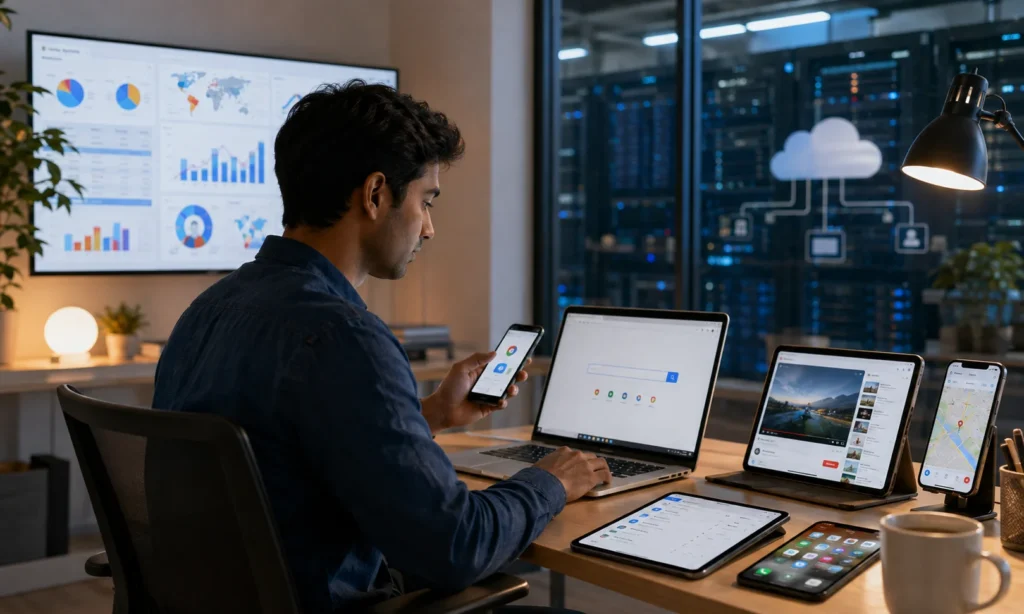
Google lets people search, navigate, watch YouTube, use Gmail and run Android devices without paying directly. Yet Alphabet generated $119.8 billion in the quarter ended June 30, 2026, up 24 percent. Across 91 days, that equals about $1.32 billion daily, $54.9 million hourly and more than $915,000 every minute.
Search Advertising Remains the Main Engine
Advertising generated $81.63 billion, or about 68 percent of quarterly revenue. Google Search and related advertisements contributed $63.27 billion. YouTube advertising added $11.06 billion, while Google’s advertising network brought in $7.3 billion.
Search is valuable because queries can reveal what users need or may soon buy. Someone searching for “Dubai hotel deals,” “mortgage rates” or “best running shoes” shows clear commercial intent. Businesses pay for a chance to appear beside those searches.
Advertisers often pay when users click, although campaigns can also target views, purchases, registrations or calls. The highest bidder does not automatically secure the top position. Google says its auction considers the bid, advertisement quality, landing-page experience, device, location and search context.
Read More: Google Gemini Now Creates Word, Excel and LaTeX Files Instantly
Search and other advertising revenue rose 17 percent and supplied nearly 53 percent of Alphabet’s total revenue. “Our popular AI features are driving Search query growth,” chief executive Sundar Pichai said.
Google allows advertisements above, below or within AI Overviews. Its advertising products also support newer search experiences such as AI Mode.
YouTube, Android and Subscriptions Add Revenue
YouTube earns from advertisements shown before, during and beside videos. It shares eligible advertising income with creators through the YouTube Partner Programme. YouTube advertising revenue increased 13 percent during the quarter.
Pichai said more than 1.7 billion unique viewers watched videos related to the 2026 FIFA World Cup. YouTube also charges Premium subscribers for advertisement-free viewing, offline downloads and background playback.
Android extends Google’s services across mobile devices. The Android Open Source Project remains freely available, but Google Mobile Services requires a separate licence. Google Play charges service fees on eligible paid apps, subscriptions and in-app digital purchases.
Alphabet’s subscriptions, platforms and devices division generated $12.91 billion, up 15 percent. It includes subscriptions, Google Play-related income and hardware sales.
Cloud Growth Reduces Reliance on Ads
Google Cloud revenue jumped 82 percent to $24.77 billion. Companies pay for computing, storage, cybersecurity, workplace software and artificial intelligence tools.
Google says it sells advertising space and tools, not users’ personal information. Depending on settings, it may use search activity, YouTube history, approximate location and device signals to personalise advertisements.
The company says it does not share names or email addresses with advertisers unless users request it. It also says Gmail, Drive and Photos content does not support advertising personalisation.
Read More: Google Slashes YouTube Premium Price by 50% for Eligible Users
Alphabet recorded $16.18 billion in traffic-acquisition costs. These payments compensate partners that direct users to Google or display its advertising.
Google’s consumer services appear free because other customers pay the bill. Advertisers buy audience access, subscribers purchase features, developers use its marketplace and organisations buy cloud technology.