
Australia’s privacy regulator is investigating Toyota and Hyundai over concerns about how their connected vehicles collect, share and retain customer data.
The Office of the Australian Information Commissioner has confirmed commissioner-initiated investigations into connected cars. Consumer group CHOICE reported on July 29 that the OAIC is examining Toyota and Hyundai. In April, the regulator identified both companies in written answers to parliamentary questions.
Privacy Commissioner Carly Kind had earlier told a Senate hearing that two Asian manufacturers faced inquiries. She did not name them at the time.
What Regulators Are Investigating
CHOICE said the Toyota and Hyundai privacy probe covers three main areas. Regulators will assess whether the companies collect more personal information than their vehicle services require.
They will also examine whether the automakers disclose driving data for marketing or other secondary purposes without valid customer consent.
The third issue concerns data retention. Investigators will consider whether Toyota and Hyundai destroy or de-identify information that they no longer need. The OAIC usually aims to complete investigations within 18 months, although complex cases may take longer.
Read More: Toyota Pakistan Gives Buyers Fee-Free Cancellation Option
Earlier CHOICE research found that Toyota’s connected systems can collect vehicle location, speed, braking patterns, fuel levels and customer contact details. Toyota Australia’s current terms say vehicles use a factory-installed communication module for connected services. Some models allow customers to manage their data-sharing preferences.
CHOICE ranked Hyundai among the brands with greater privacy concerns. It said Hyundai collected and shared voice-recognition data with Cerence, a third-party artificial intelligence provider. Hyundai previously said it shared the information in an aggregated and non-identifying form.
Toyota and Hyundai Respond
Toyota declined to comment while the OAIC investigation continues. Hyundai also said it does not discuss ongoing regulatory matters.
“Hyundai takes privacy and data protection seriously,” a company spokesperson said.
Hyundai Australia’s privacy policy says its services may collect historical locations, speed, braking, acceleration, cornering and vehicle diagnostics. Bluelink collects data when customers use connected services.
The investigation has not established that either company breached Australian law. The OAIC will determine whether their practices comply with the Privacy Act and Australian Privacy Principles.
Why Pakistani Drivers Should Pay Attention
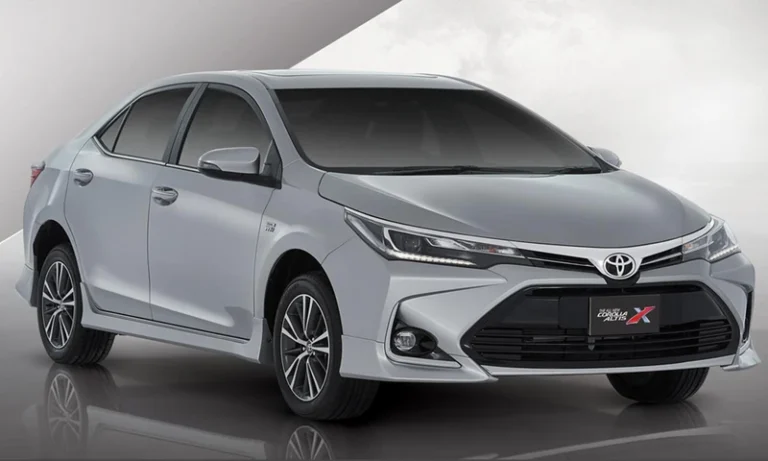
The inquiry also matters for Pakistan. Toyota Indus and Hyundai Nishat sell models including the Corolla, Yaris, Corolla Cross, Tucson, Elantra and Sonata.
Connected vehicle services are expanding locally. The MyHyundai Pakistan app lets Elantra and Tucson owners track real-time vehicle locations. Users can also schedule maintenance, view service histories and access warranty records.
Toyota Indus operates an online maintenance history portal that collects customer and vehicle information. Toyota Connect Pakistan also gathers contact details and may share information with partners involved in providing its services.
Read More: Hyundai Pakistan Introduces Zero-Markup Plan for Sonata Hybrid
Aftermarket GPS trackers can also transmit live location, speed and route information through third-party servers. Pakistani drivers commonly use these systems for vehicle security.
Pakistan still lacks a comprehensive enacted personal data protection law. The Ministry of IT lists the Personal Data Protection Bill 2023 as a draft. The Senate says the committee neither passed nor rejected that version, so it stands withdrawn.
Pakistani motorists should review app permissions, privacy notices and tracker contracts. They should also ask who can access their location data, how long companies keep it and whether users can request deletion.