

Moody’s Ratings upgraded Pakistan’s sovereign credit rating to B3 from Caa1 on Monday, marking another improvement in the country’s credit profile. The global ratings agency kept Pakistan’s outlook at “stable”. It cited stronger external finances, improving fiscal metrics and falling domestic financing costs. Moody’s said Pakistan’s foreign exchange reserves have steadily increased amid continued macroeconomic stabilisation. Read More: Pakistan Banking Awards 2026: Meezan Bank Wins Top Honour “The upgrade to B3 reflects our expectations that improvements in governance will allow the government to sustain the recent improvements in the country’s external position and strengthen fiscal metrics,” Moody’s said. The agency also pointed to cheaper domestic borrowing and an improved budget position. “Lower domestic financing costs amid monetary easing and an improved fiscal position” have driven a “material improvement” in Pakistan’s debt affordability, Moody’s said. It added that Pakistan’s strengthening credit profile shows “greater resilience to external shocks than in previous cycles,” including the ongoing Middle East conflict. Pakistan’s reserves strengthen Pakistan has spent recent years rebuilding its foreign exchange buffers after facing severe financial pressure. Moody’s said reserves reached around $17 billion by the end of July 2026. That compares with about $14 billion a year earlier. The current level covers nearly three months of imports. Latest State Bank of Pakistan data puts its own liquid foreign exchange reserves at $17.08 billion as of August 13. Commercial banks held another $5.42 billion. Read More: Al Baraka CEO Among Forbes Middle East Top 100 CEOs 2026 Moody’s said Pakistan’s External Vulnerability Indicator also improved sharply. The measure fell to about 145% in 2026 from 230% in 2025. The ratings agency linked the progress partly to continued implementation of reforms backed by the International Monetary Fund. Pakistan’s lower financing costs have also reduced pressure on government revenues. Interest payments consumed about 35% of government revenue in fiscal 2026, according to Moody’s. That was down from 49% in fiscal 2025. “We expect the recent improvement in Pakistan’s debt affordability to be durable, underpinned by sustained macroeconomic stability,” Moody’s said. However, the agency also sounded a note of caution. Moody’s said Pakistan’s credit profile “remains vulnerable” because of fragile external finances, weak debt affordability and a relatively narrow revenue base. Large external financing requirements also remain a challenge. Even after the upgrade, Pakistan remains in speculative-grade territory. Bloomberg noted that its risk assessment has improved from very high to high. Argentina, Nigeria and Kyrgyzstan also carry B3 sovereign ratings from Moody’s, although their respective outlooks differ. Pakistan returns to international debt markets Pakistan has also started regaining access to global capital markets. In April, the country returned to the Eurobond market after more than four years. It raised $750 million through a three-year private placement. Pakistan followed that move in May with its first yuan-denominated Panda bond in China’s onshore market. The government raised CNY 1.75 billion, roughly $250 million to $258 million, through the three-year bond. It carried a coupon of 2.5%. Investor demand exceeded the issue size by more than five times. Read More: HBFCL Back on the Privatisation List as Govt Seeks Better Offer The Asian Development Bank and Asian Infrastructure Investment Bank provided credit support for the transaction. The Moody’s announcement came after Pakistan’s stock market had closed on Monday. Pakistan’s dollar bonds gained following the decision. Bloomberg data showed the bond maturing in 2051 posted its strongest gain since August 20. The Moody’s decision also follows an upgrade by S&P Global Ratings last month. On July 22, S&P raised Pakistan’s long-term sovereign rating to B from B-. It maintained a stable outlook. S&P cited stronger institutional capacity, growing foreign exchange reserves and faster fiscal consolidation. It also pointed to reforms aimed at expanding government revenues. PM Shehbaz welcomes ‘global confidence’ Prime Minister Shehbaz Sharif welcomed Moody’s decision and praised the government’s economic team. He particularly commended Deputy Prime Minister and Foreign Minister Ishaq Dar and Chief of Defence Forces and Army Chief Field Marshal Asim Munir for their efforts. Shehbaz said the rating improvement reflected growing international confidence in the government’s economic policies and reforms. The prime minister also welcomed recognition from international financial institutions and global rating agencies. He said the government had taken effective steps to stabilise the economy and strengthen Pakistan’s external position. “Global confidence in Pakistan is increasing as a result of continued efforts and reforms,” he said. Shehbaz pledged to accelerate reforms and put the economy on a more sustainable path. He said the government wanted to make Pakistan stronger and more self-reliant. Moody’s expects Pakistan’s reserves to rise further if the country maintains progress under the IMF programme. The agency projects reserves of about $19 billion to $20 billion by the end of fiscal 2027. It expects them to reach $20 billion to $21 billion in fiscal 2028. Still, Moody’s stressed that continued reforms will remain critical. Pakistan must maintain access to official financing while managing large external obligations and exposure to global shocks.
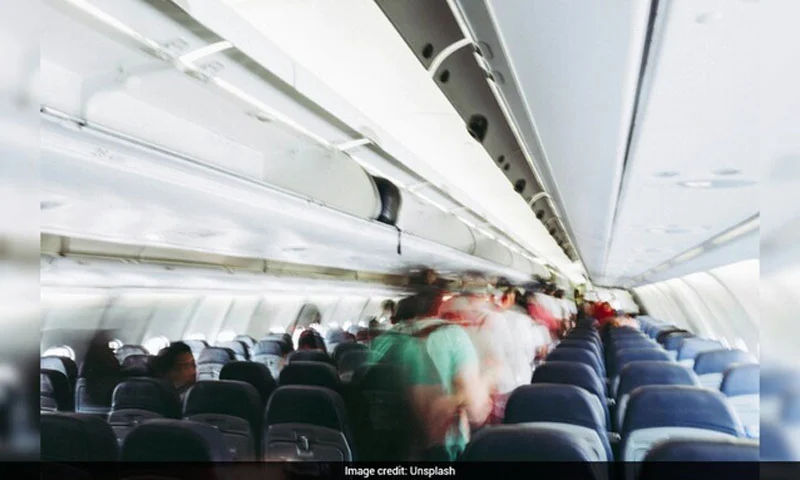
Laptop Catches Fire Mid-Flight, Leaving Passenger Burned
A passenger’s laptop caught fire aboard an American Airlines flight from Atlanta to Dallas, filling the cabin with smoke and causing burn injuries. The incident has renewed concerns about lithium-ion batteries on aircraft. These batteries power laptops, smartphones, tablets and power banks. American Airlines Flight 2398 was approaching Dallas Fort Worth International Airport on August 21 when the laptop began smoking and caught fire. The aircraft had 133 people on board. Read More: World’s Safest Airlines 2026: Full List of Top 25 Full-Service and Budget Carriers The incident highlights a risk that often receives less attention than power bank fires. Laptops use similar lithium-ion battery technology and can suffer the same dangerous failures. Laptop catches fire as flight approaches Dallas “Cabin fire in the back of the airplane,” the pilot told air traffic controllers as flight attendants responded to the emergency. Cabin crew quickly contained the burning laptop inside a thermal containment bag. The aircraft then landed safely at Dallas Fort Worth at around 6:55 p.m. local time. Emergency teams met the aircraft when it reached the gate. Airport staff treated one passenger and released the person at the scene. The pilot initially told air traffic control that several passengers may have suffered burns while people tried to deal with the laptop. CBS News reported that passengers near the device experienced heavy smoke inside the cabin. The Federal Aviation Administration is investigating the incident. It was not the first laptop-related emergency involving American Airlines. Read More: Flight Attendant Reveals Why You Should Never Wear Shorts on a Plane In July 2024, a laptop inside a passenger’s bag began smoking during boarding at San Francisco International Airport. American Airlines evacuated Flight 2045, which was preparing to fly to Miami. Passengers left through emergency slides and the jet bridge. Three people reported minor injuries, and one passenger required hospital treatment. Why lithium batteries can suddenly catch fire Lithium-ion batteries store substantial energy inside a small space. That makes them useful for portable electronics but also creates a potential fire risk. A process called thermal runaway can trigger a serious battery fire. Thermal runaway begins when a battery generates heat faster than it can release it. Rising temperatures can then trigger additional chemical reactions and produce even more heat. The battery may eventually swell, release smoke, ignite or rupture. The FAA says damage, overheating, water exposure, overcharging and improper packing can trigger thermal runaway. Manufacturing defects can also cause the process without warning. Read More: PIA’s Paris Flight Discount: Best Time to Save on Your Ticket in 2026 Passengers should watch for unusual heat, swelling, smoke or burning. The FAA advises travellers to alert cabin crew immediately if a battery-powered device shows any of these signs. Flight crews receive training to recognise and respond to lithium battery fires inside aircraft cabins. A swollen laptop battery or bulging laptop case therefore deserves immediate attention, especially before air travel. What passengers should know before flying FAA rules treat spare lithium batteries differently from batteries installed inside laptops and other electronic devices. Passengers must keep spare lithium batteries, portable chargers and power banks in carry-on baggage. They cannot place them in checked baggage. If an airline moves a cabin bag into the cargo hold at the gate, passengers must remove power banks and spare batteries first. Keeping these batteries in the cabin allows passengers and crew to detect overheating, smoke or fire quickly. Travellers must also protect spare battery terminals from short circuits. The FAA recommends original packaging, tape over exposed terminals, or individual protective bags or cases. Laptops, smartphones and tablets face different rules because their batteries sit inside the devices. Read More: Japan Airlines Tests Humanoid Robots to Take Over Cargo Jobs at Tokyo Airport The FAA allows such devices in checked baggage, but recommends carrying them in the cabin. Passengers who check them must switch them completely off. They must also protect the devices from damage and accidental activation. Battery capacity also matters. Most ordinary laptops, phones and tablets contain rechargeable lithium-ion batteries of 100 watt-hours or less. US aviation rules allow batteries up to 100 Wh on passenger aircraft. Batteries between 101 Wh and 160 Wh require airline approval. Rules also limit passengers to two spare batteries within that larger range. Batteries above 160 Wh generally cannot travel on passenger aircraft. Individual airlines can impose tighter restrictions, so travellers should check their carrier’s policy before departure. Passengers should never bring a damaged or recalled battery that could generate dangerous heat or sparks. The FAA says such batteries cannot travel unless someone removes the defective battery or otherwise makes the device safe. That guidance includes laptops with swollen batteries, visible damage, unusual heat or distorted cases. If a laptop begins overheating or smoking during a flight, passengers should alert the cabin crew immediately. They should not wait for the device to cool or attempt to fight a developing battery fire themselves. The American Airlines incident shows why lithium battery safety extends beyond power banks. For air travellers, the same warning applies to nearly every rechargeable device in their bag. A laptop, tablet or smartphone can also become a serious cabin fire hazard when its lithium-ion battery fails.
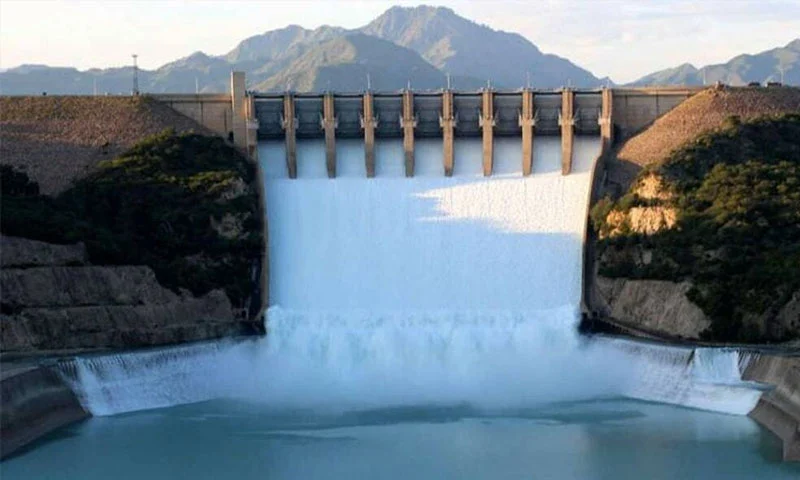
Tarbela Project Cost Soars From Rs82 Billion to Rs316 Billion
The cost of Pakistan’s Tarbela 5th Extension Hydropower Project has surged to about Rs316 billion after ECNEC approved a major revision, despite concerns over project management and previous structural failures. The Executive Committee of the National Economic Council approved a 282 percent upward revision in the project cost. The original estimate stood at about Rs82 billion. The latest approval adds roughly Rs234 billion to the bill. Read More: $5bn Neelum-Jhelum hydropower project to stay offline until 2028 Deputy Prime Minister Ishaq Dar chaired the ECNEC meeting. The committee approved 16 development projects with a combined estimated cost of Rs1.15 trillion. Around Rs320 billion of that amount represents additional costs linked to delays and price escalation. Cofferdam Failure Raised Serious Questions The Tarbela project has faced delays, cost pressures and questions over oversight. Planning Minister Ahsan Iqbal had earlier “expressed serious concerns over the project’s management, transparency, and oversight mechanisms,” according to the Planning Commission. An official inquiry also examined the collapse of the project’s downstream cofferdam. Investigators concluded that the failure was “not caused by flood but by change in design from roller-compacted concrete to rock-fill dam”. The inquiry also identified inadequate supervision and delayed administrative action. It linked those failures to structural damage, project delays and financial losses. A separate government inquiry held the contractor, consultant and WAPDA responsible for the collapse. It also found that river flows remained within historical levels rather than reaching exceptional flood conditions. Read More: Scientists Create Solar Device That Turns Desert Air Into Drinking Water The Finance Ministry had sought justification for the cost escalation before ECNEC approval. It also asked WAPDA to explain the repayment mechanism because international lenders are financing the project. The World Bank and Asian Infrastructure Investment Bank are providing $390 million and $300 million respectively. The project will add 1,530 megawatts through three 510MW generating units at Tarbela Dam. ECNEC Approves Rs1.15 Trillion Development Package ECNEC also cleared several major transport, water and social development schemes. The committee approved the Lahore-Sahiwal-Bahawalnagar Motorway at Rs407 billion. It retained the original 295-kilometre alignment. The first 18.5-kilometre section from Lahore Ring Road to Raja Jang Interchange will cost Rs49 billion. The 48-kilometre Khwazakhela-Besham Expressway received approval at Rs116.6 billion. ECNEC also cleared a Rs29 billion road connecting Gilgit-Baltistan with Azad Kashmir. The Rathoa Haryam Bridge received approval at Rs10.8 billion. Its original estimate stood at only Rs1.4 billion. Read More: New Saudi Water Rules Could Cost Violators Up to SR200,000 Meanwhile, Lahore’s wastewater treatment project received Rs56.6 billion. A poverty alleviation programme covering 10 districts of southern Punjab secured Rs29.7 billion. ECNEC also approved Rs10.6 billion for the Fulbright scholarship programme, which aims to support 816 scholarships. The approvals underline the growing financial burden caused by delays and revised costs across major public projects. Tarbela 5 remains one of the most closely watched because of its scale, foreign financing and importance to Pakistan’s future electricity supply.
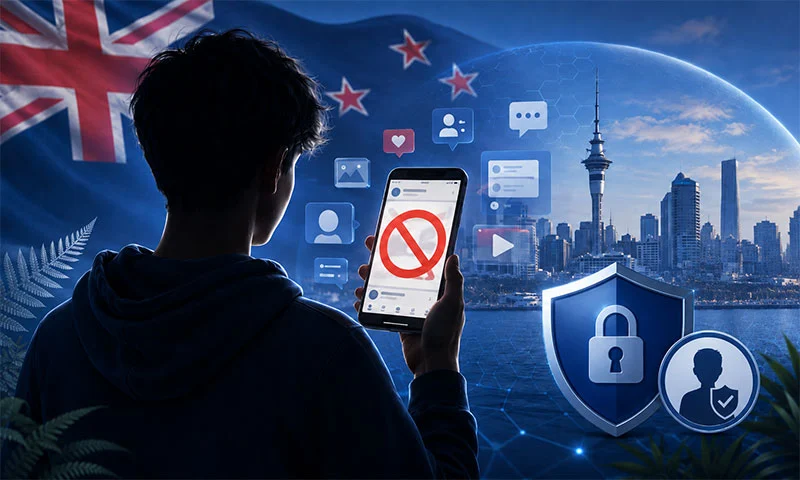
Instagram, TikTok and Facebook Face New Rules in New Zealand
New Zealand has introduced legislation to stop children under the age of 16 from using social media platforms. The move follows similar action by Australia and other countries that want to limit young users’ access to platforms such as Instagram and TikTok. Prime Minister Christopher Luxon said the government wants to protect children from online risks. “We simply cannot accept the harm being done to a generation of New Zealand children,” Luxon said. He said many teenagers spend several hours daily on social media. Read More: The End of Social Media for Under-16s? UK Unveils Tough Plan “One in three children aged between 13 and 17 are now spending at least five hours on social media a day,” he said. Luxon said social media exposes young people to harmful content and addictive technology. “Social media is exposing them to harmful content, addictive technology and pressures they are not equipped to deal with, and it’s affecting their family life, mental health, sleep and education,” he added. Platforms Could Face Heavy Fines The proposed law would require companies to verify users’ ages before allowing access. Platforms including Instagram, TikTok, Snapchat and Facebook would need to take “reasonable steps” to confirm users are over 16. Companies could use existing account details, facial age estimation, digital identity services and official identification documents for verification. The government has proposed strict penalties for companies that fail to follow the rules. Technology firms could face fines of up to 10 percent of their global revenue. The bill would also require platforms to assess risks linked to their services. They would need to explain how they are reducing those risks for young users. Read More: Which Countries Are Banning Social Media for Children? The Growing List Education Minister Erica Stanford said the legislation places responsibility on social media companies. “The Bill places legal obligations on platforms,” Stanford said. She added that the law would not punish children, parents or caregivers. Political Support Remains Uncertain The bill faces challenges before it can become law. New Zealand’s coalition partners, ACT Party and NZ First, have raised objections. NZ First said it could not support the proposal. The party described Australia’s similar law as a “colossal failure”. ACT said teenagers could easily find ways around the restrictions. Read More: $16,000 Robot ‘Beggar’ Asks Humans for Money in Viral Video The opposition Labour Party has also asked for more details before deciding its position. Labour spokesperson Reuben Davidson said the party wants answers about age verification and affected platforms. “We take this legislation very seriously,” Davidson said. “The safety of young people in Aotearoa New Zealand is at stake and the risks they face in increasingly complex online environments are significant,” he added. New Zealand Follows Australia’s Move Australia became the first country to ban social media access for children under 16 in December. The Australian law targets platforms including Facebook, Instagram and TikTok. It aims to reduce online bullying, harmful content and exposure to addictive algorithms. However, researchers have questioned whether such restrictions will significantly reduce teenagers’ social media use. A peer-reviewed Australian study published in June found limited evidence that teenagers had moved away from social media after the ban. Read More: Survey Shows Public Support for 5% Tax on Social Media Creators New Zealand’s government will now seek parliamentary approval for the legislation. The proposal places the country among a growing group of nations debating stricter online protections for children.
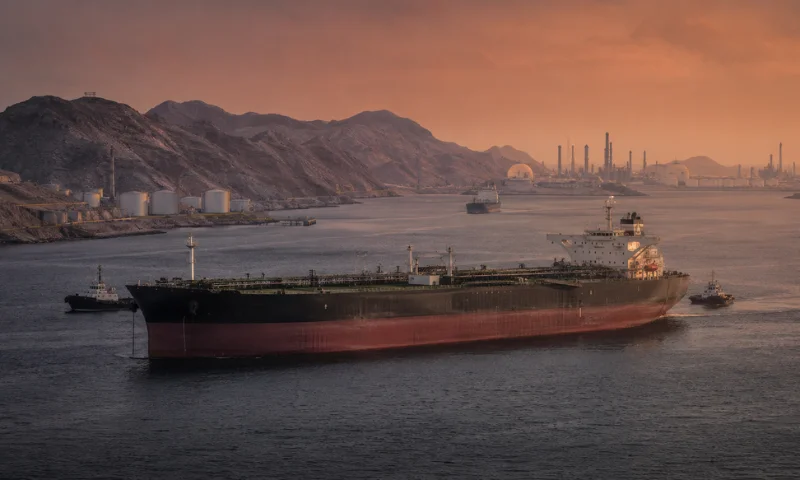
Iran Threatens Gulf Oil Shutdown as US Plans ‘Economic D-Day’
The United States has promised what it calls the largest financial offensive ever assembled against an adversary. Iran has responded by threatening to stop all oil exports from the Gulf. US Treasury Secretary Scott Bessent plans to announce the new sanctions at 1 p.m. EDT, or 1700 GMT, on Monday. The measures will target Iran’s trade partners and countries that maintain economic or financial ties with Tehran. “At dawn begins an economic D-Day, the single greatest financial offensive ever marshalled against an adversary,” Bessent wrote in a Financial Times opinion piece on Sunday. Bessent did not disclose the specific measures. However, he warned “fearful nations” against pursuing “appeasement” by continuing business with Iran. Read More: Pakistan and Iran Agree to Keep Border Trade Open 24 Hours “They would do well to consider the consequences of sustaining it,” he wrote. Iran has faced near-continuous US economic sanctions since the 1979 Islamic Revolution. Its economy entered the conflict with high inflation, a weakening currency, energy shortages and deep structural problems. The six-month conflict has added damaged infrastructure, disrupted trade, falling production and major reconstruction costs. Further sanctions could increase public hardship and fuel renewed unrest. Iran threatens Gulf oil exports Mohsen Rezaei, secretary of Iran’s Supreme National Security Council, warned that Tehran could block oil exports across the region. “If the economic war continues, not a single drop of oil will be exported, neither through the Strait of Hormuz nor from anywhere in the Persian Gulf,” Rezaei wrote on social media. “Iran will regard any country’s participation in or support for America’s economic war against the Iranian people as an act of war.” The threat has raised fresh concerns about global energy supplies. Iran still possesses enough missile and drone capacity to threaten Gulf countries and oil tankers. Read More: $37.5 Billion Spent on Iran War as Trump Seeks $90 Billion More Shipping through the Strait of Hormuz has already slowed to a near standstill, putting pressure on global fuel prices. The waterway carries a significant share of the world’s traded oil. Bessent has urged China to cooperate with Washington. He noted that China has historically received half of its oil imports from the Gulf region. A Chinese Embassy spokesperson said “sanctions and pressure do not help resolve the problem” and called for diplomacy. Pakistan pushes for diplomatic solution The United States and Israel began strikes on February 28. The attacks damaged Iran’s conventional military capacity and killed Supreme Leader Ayatollah Ali Khamenei. Thousands have died, mainly in Iran and Lebanon, while millions have faced displacement. The US has reported 18 military deaths and more than 750 wounded personnel. Washington and Tehran have avoided direct strikes for weeks, but meaningful peace talks remain stalled. Their last official face-to-face talks took place in Switzerland in June. Qatar, Pakistan and Turkiye have tried to revive diplomacy. Iran said Pakistan’s army chief, Field Marshal Asim Munir, would visit Tehran on Monday. Read More: Iran-Backed Group Offers Millions for Trump’s Killing Iranian Foreign Ministry spokesperson Esmaeil Baghaei said the visit would support regional peace and security. A Pakistani government source said Munir would discuss recent developments, including the new US sanctions threat. The conflict has also left Iran’s nuclear programme under uncertainty. Washington and Israel say they aim to eliminate Tehran’s nuclear capability, while Iran insists its programme serves peaceful purposes.
