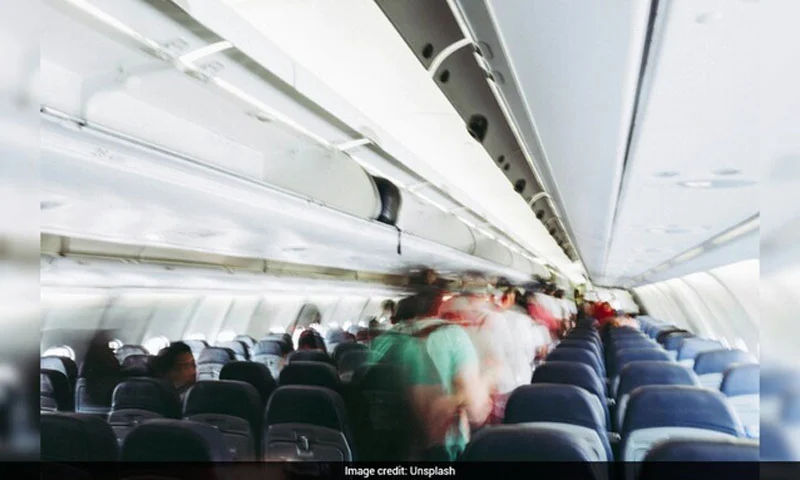
A passenger’s laptop caught fire aboard an American Airlines flight from Atlanta to Dallas, filling the cabin with smoke and causing burn injuries.
The incident has renewed concerns about lithium-ion batteries on aircraft. These batteries power laptops, smartphones, tablets and power banks.
American Airlines Flight 2398 was approaching Dallas Fort Worth International Airport on August 21 when the laptop began smoking and caught fire. The aircraft had 133 people on board.
Read More: World’s Safest Airlines 2026: Full List of Top 25 Full-Service and Budget Carriers
The incident highlights a risk that often receives less attention than power bank fires. Laptops use similar lithium-ion battery technology and can suffer the same dangerous failures.
Laptop catches fire as flight approaches Dallas
“Cabin fire in the back of the airplane,” the pilot told air traffic controllers as flight attendants responded to the emergency.
Cabin crew quickly contained the burning laptop inside a thermal containment bag. The aircraft then landed safely at Dallas Fort Worth at around 6:55 p.m. local time.
Emergency teams met the aircraft when it reached the gate. Airport staff treated one passenger and released the person at the scene.
The pilot initially told air traffic control that several passengers may have suffered burns while people tried to deal with the laptop. CBS News reported that passengers near the device experienced heavy smoke inside the cabin.
The Federal Aviation Administration is investigating the incident.
It was not the first laptop-related emergency involving American Airlines.
Read More: Flight Attendant Reveals Why You Should Never Wear Shorts on a Plane
In July 2024, a laptop inside a passenger’s bag began smoking during boarding at San Francisco International Airport. American Airlines evacuated Flight 2045, which was preparing to fly to Miami.
Passengers left through emergency slides and the jet bridge. Three people reported minor injuries, and one passenger required hospital treatment.
Why lithium batteries can suddenly catch fire
Lithium-ion batteries store substantial energy inside a small space. That makes them useful for portable electronics but also creates a potential fire risk.
A process called thermal runaway can trigger a serious battery fire.
Thermal runaway begins when a battery generates heat faster than it can release it. Rising temperatures can then trigger additional chemical reactions and produce even more heat.
The battery may eventually swell, release smoke, ignite or rupture.
The FAA says damage, overheating, water exposure, overcharging and improper packing can trigger thermal runaway. Manufacturing defects can also cause the process without warning.
Read More: PIA’s Paris Flight Discount: Best Time to Save on Your Ticket in 2026
Passengers should watch for unusual heat, swelling, smoke or burning. The FAA advises travellers to alert cabin crew immediately if a battery-powered device shows any of these signs.
Flight crews receive training to recognise and respond to lithium battery fires inside aircraft cabins.
A swollen laptop battery or bulging laptop case therefore deserves immediate attention, especially before air travel.
What passengers should know before flying
FAA rules treat spare lithium batteries differently from batteries installed inside laptops and other electronic devices.
Passengers must keep spare lithium batteries, portable chargers and power banks in carry-on baggage. They cannot place them in checked baggage.
If an airline moves a cabin bag into the cargo hold at the gate, passengers must remove power banks and spare batteries first.
Keeping these batteries in the cabin allows passengers and crew to detect overheating, smoke or fire quickly.
Travellers must also protect spare battery terminals from short circuits. The FAA recommends original packaging, tape over exposed terminals, or individual protective bags or cases.
Laptops, smartphones and tablets face different rules because their batteries sit inside the devices.
Read More: Japan Airlines Tests Humanoid Robots to Take Over Cargo Jobs at Tokyo Airport
The FAA allows such devices in checked baggage, but recommends carrying them in the cabin. Passengers who check them must switch them completely off. They must also protect the devices from damage and accidental activation.
Battery capacity also matters.
Most ordinary laptops, phones and tablets contain rechargeable lithium-ion batteries of 100 watt-hours or less. US aviation rules allow batteries up to 100 Wh on passenger aircraft.
Batteries between 101 Wh and 160 Wh require airline approval. Rules also limit passengers to two spare batteries within that larger range. Batteries above 160 Wh generally cannot travel on passenger aircraft.
Individual airlines can impose tighter restrictions, so travellers should check their carrier’s policy before departure.
Passengers should never bring a damaged or recalled battery that could generate dangerous heat or sparks. The FAA says such batteries cannot travel unless someone removes the defective battery or otherwise makes the device safe.
That guidance includes laptops with swollen batteries, visible damage, unusual heat or distorted cases.
If a laptop begins overheating or smoking during a flight, passengers should alert the cabin crew immediately. They should not wait for the device to cool or attempt to fight a developing battery fire themselves.
The American Airlines incident shows why lithium battery safety extends beyond power banks.
For air travellers, the same warning applies to nearly every rechargeable device in their bag. A laptop, tablet or smartphone can also become a serious cabin fire hazard when its lithium-ion battery fails.