

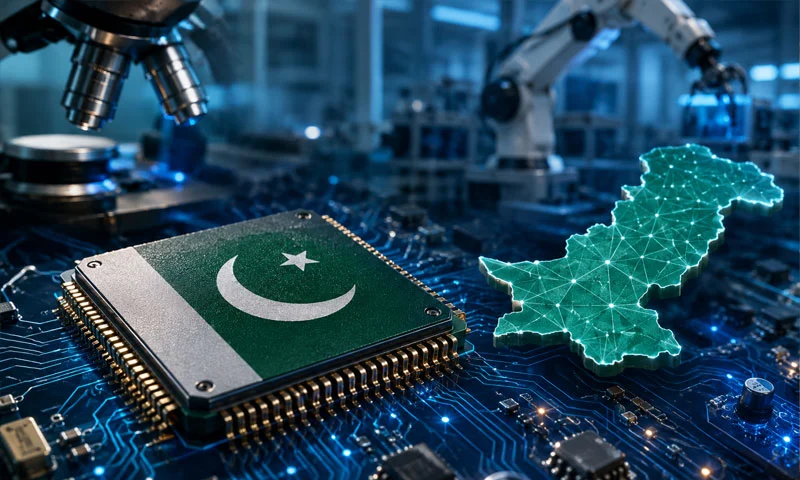
Pakistan has completed the institutional framework for its national semiconductor education clusters after NED University joined the government-backed Semiconductor Education & Research Cluster programme. Federal IT and Telecommunication Minister Shaza Fatima Khawaja witnessed the signing of an agreement between the Pakistan Software Export Board and NED University of Engineering & Technology in Karachi. The agreement formally makes NED the Lead University for the South Region under the Semiconductor Education & Research Cluster, or SERC. NUST will lead the North Region, while ESUPAK-UET Lahore will represent the Central Region. With the NED agreement, the government has now completed institutional agreements for all three regional clusters under the National Semiconductor Human Resource Development Program, also known as INSPIRE. The government achieved the milestone within the programme’s first year. Pakistan Targets 7,200 Semiconductor Professionals by 2030 Shaza Fatima said the agreement marked an important step in Pakistan’s effort to build a competitive semiconductor ecosystem. The current SERC intake will train 270 students across the three regions. The government has set a broader target of developing more than 7,200 semiconductor professionals by 2030. “Under INSPIRE, we are not just training students, we are laying the foundation for Pakistan to become a competitive player in the global semiconductor value chain,” the minister said. The Ministry of IT and Telecommunication has allocated major resources to the semiconductor programme. In April, the ministry said the National Semiconductor HR Development Programme carries an approved budget of Rs4.844 billion. PSEB is executing the initiative as part of Prime Minister Shehbaz Sharif’s technology and skills agenda. The programme aims to create a pipeline of engineers with skills required by the global chip industry. Earlier this year, PSEB also supported an upskilling programme involving GIKI and NED University. The programme focuses on areas including digital design and verification. The government has also expanded semiconductor training through other universities. In July, the IT ministry announced the completion of a 10-month IC Design and Verification programme at FAST-NUCES Islamabad. Thirty engineers received training in advanced integrated circuit design, VLSI verification and System-on-Chip technologies. NED University has separately highlighted its work with PSEB, UIT University and SSUET under INSPIRE as part of Pakistan’s semiconductor development effort. Sindh Governor Syed Muhammad Nehal Hashmi said the latest agreement reinforced the government’s commitment to a knowledge-based economy. He expressed confidence that the partnership would prepare Pakistani youth for opportunities in the global semiconductor industry. With all three SERC clusters established, INSPIRE will now move into full-scale implementation. Shaza Fatima Discusses Fintech Growth in Karachi During her Karachi visit, Shaza Fatima also met Sindh Governor Nehal Hashmi at Governor House. The minister and governor attended the Fintech Roundtable 2026, which brought together policymakers and leading figures from Pakistan’s financial technology sector. Discussions focused on digital financial services, fintech growth and policy priorities needed to strengthen the ecosystem. The roundtable formed part of a wider government push to accelerate digitalisation and improve access to capital for technology companies. At the event, Shaza Fatima announced a $10 million fund under the second phase of the Pakistan Startup Fund. She said the government wants to expand available startup financing to between $25 million and $50 million. The government is holding discussions with institutions including the World Bank, International Finance Corporation and Asian Development Bank. “We have almost finalised our conversation with the World Bank. IFC is pitching in. We’re also talking to ADB,” she said. The minister also linked digitalisation with the government’s effort to bring more economic activity into the formal sector. She said federal government-to-government payments had already moved fully to digital channels. Shaza Fatima also highlighted progress in digital payments under the Benazir Income Support Programme. Around 825,000 women have created digital wallets, according to her briefing at the roundtable. Semiconductor Push Moves Into Implementation Stage The NED agreement gives the government’s semiconductor programme a regional structure covering northern, central and southern Pakistan. Authorities hope the model will connect universities, researchers and industry with global semiconductor opportunities. Pakistan currently has limited participation in the international semiconductor value chain. The government wants to build expertise in areas such as chip design, verification and other high-value engineering services. The Ministry of IT has described semiconductor technologies as central to modern innovation and economic growth. It sees skilled human capital as Pakistan’s most practical entry point into the global industry. The next phase will focus on training students through the three SERC clusters and expanding the talent pool toward the 7,200-professional target. The government expects the programme to create new high-value career opportunities while supporting Pakistan’s wider digital economy ambitions.

Punjab’s AI Push Gets Major Boost From Huawei Partnership
Punjab and Huawei have agreed to broaden cooperation on artificial intelligence, cloud systems, digital infrastructure and technology training. Chief Minister Maryam Nawaz Sharif met senior Huawei officials during her visit to China. Company representatives warmly welcomed her delegation, while she invited Huawei to invest in Nawaz Sharif IT City. The talks covered smart public services, smart cities and command centres. They also addressed healthcare, education, agriculture and manufacturing. Huawei Training Plan Targets Punjab Youth The two sides agreed to train 1,000 young people from Punjab as Huawei master trainers. Huawei will separately provide AI training to 300 women trainers. Officials also reviewed a proposal for an Artificial Intelligence Delivery Unit in Punjab. The Express Tribune reported a sovereign centre and six other data centres at Nawaz Sharif IT City. APP and Dawn described six centres in total, including a sovereign facility. The participants also agreed to appoint a focal person for coordination between Huawei and the Pakistani government. Their roadmap covers AI, cloud technology, infrastructure, talent development and smart public services. Maryam described AI advancement as a provincial priority. She said Punjab ranked among Pakistan and South Asia’s most active regions for technology adoption. “Talent development and inclusive access to technology are key pillars of Punjab’s strategy,” she said. The chief minister said Punjab would develop cloud computing, digital infrastructure and locally developed AI models. She added that partnerships with global technology companies could produce a more innovative and citizen-focused province. OneMap to Power Punjab Data Lake At the Big Data Industry Expo 2026, Maryam announced Punjab’s first dedicated data centre, called the Punjab Data Lake. She also invited Chinese technology companies, investors and infrastructure leaders to invest in the province. A state-level common data engine called OneMap will sit at the system’s centre. It will combine more than 12 terabytes of geospatial data from 31 departments and over 6,000 datasets. “OneMap can help in planning, resolving land-related disputes and promoting more informed urban development,” Maryam said. The government is also linking OneMap with the Punjab Socio-Economic Registry. Officials say that connection should help departments identify citizens’ needs and target public resources more accurately. Wider AI and Digital Governance Push The latest talks fit Punjab’s broader AI Vision 2029. The province has created an AI Office and plans to use artificial intelligence across governance and service delivery. Officials told Huawei that Punjab already uses AI in Safe Cities, agriculture and traffic management. They also outlined its application in healthcare, education and infrastructure. Punjab’s 2026-27 budget set aside Rs14.6 billion for One Map @ Punjab. It also proposed Rs2 billion for provincial AI infrastructure. A senior Huawei executive said the company would keep working with Punjab on digital transformation and sustainable development. However, the announcements did not specify Huawei’s investment value, project deadlines, procurement terms or safeguards for data access. Those details will determine how quickly the proposed systems move from planning to operation.
Trump Secures Majority Control of Vast Venezuelan Oilfields
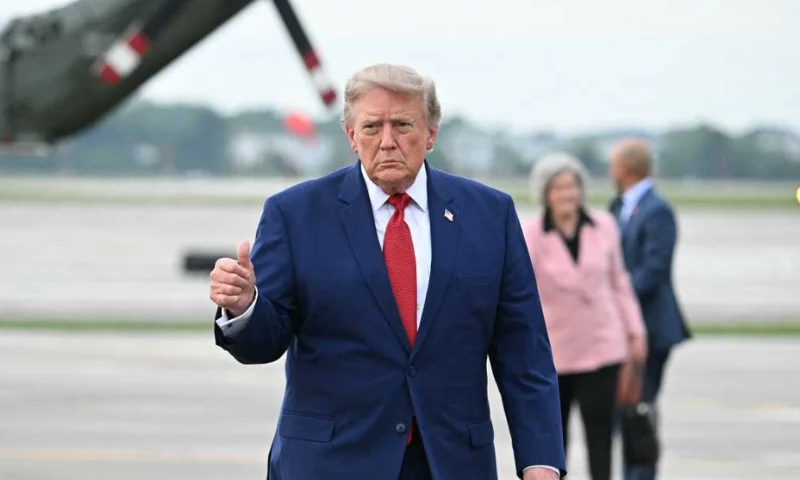
US President Donald Trump said Washington had secured majority control of more than 65 billion barrels of Venezuelan oil through an agreement with Caracas. The volume represents about one-fifth of Venezuela’s proven reserves. Trump said American companies would revive production and send more crude to US refineries, potentially easing fuel prices. Venezuela holds about 303 billion barrels, the world’s largest proven reserves. However, years of underinvestment, sanctions and mismanagement have limited production to about 1.25 million barrels per day. Trump announces unprecedented oil agreement “At my direction, Secretary of State Marco Rubio, and Secretary of War Pete Hegseth, working closely with Highly Respected Interim President of Venezuela, Delcy Rodriguez, and, through a partnership with private business, have secured majority US control of more than 65 BILLION BARRELS of proven Oil Reserves in Venezuela, at no cost to the American Taxpayer,” Trump wrote on Truth Social. Trump did not name the companies or explain Washington’s control mechanism. Reuters located the fields in the Orinoco Belt and Lake Maracaibo. The announcement followed weeks of talks over long-term access and guaranteed US crude supplies. Venezuelan officials plan to award exploration and production rights next week. AP cited an unnamed US official saying a new company would receive 100-year development rights. Washington would obtain 55 percent of its output and buy crude at cost. https://t.co/cs57vy5Bvu pic.twitter.com/E63R8Hm3Sj — Rapid Response 47 (@RapidResponse47) August 29, 2026 Venezuela expects $100 billion investment Rubio said the deal would secure low-cost US oil, lower gasoline prices, attract nearly $100 billion, create thousands of high-paying jobs and rebuild Venezuela’s economy. Interim President Delcy Rodriguez said the agreement would develop 17 strategic fields and generate $209 billion in Venezuelan tax revenue. “These investments will contribute not only to the recovery and modernization of our industry, but also to our country’s economic growth, the energy security of our hemisphere, and greater balance in international markets,” Rodriguez said. Legal and investment questions remain Analysts said the unpublished agreement left major legal and financial questions unanswered. Reuters said officials considered leases and auctions to US producers. However, Venezuela’s constitution and hydrocarbons law reserve core oil activities for the state. David Goldwyn, president of Goldwyn Global Strategies, said there was “no precedent for having the US government enter into a lease to operate oil fields”. “It is hard to see how this kind of arrangement would accelerate investment at any material scale,” he said. Goldwyn cited political uncertainty, power shortages, restricted export capacity and government control. Venezuela’s heavy crude also requires expensive infrastructure for production, transport and refining. Therefore, the agreement may not reduce fuel prices quickly. The deal follows Washington’s capture of President Nicolas Maduro in January. Venezuela nationalised oil in the 1970s around PDVSA. Hugo Chavez later forced state-led ventures and expropriated ExxonMobil and ConocoPhillips projects. The announcement comes before November’s US midterm elections. Gasoline averaged about $4.09 per gallon on Friday. The Strategic Petroleum Reserve had fallen to 289.7 million barrels, its lowest level since 1982.
