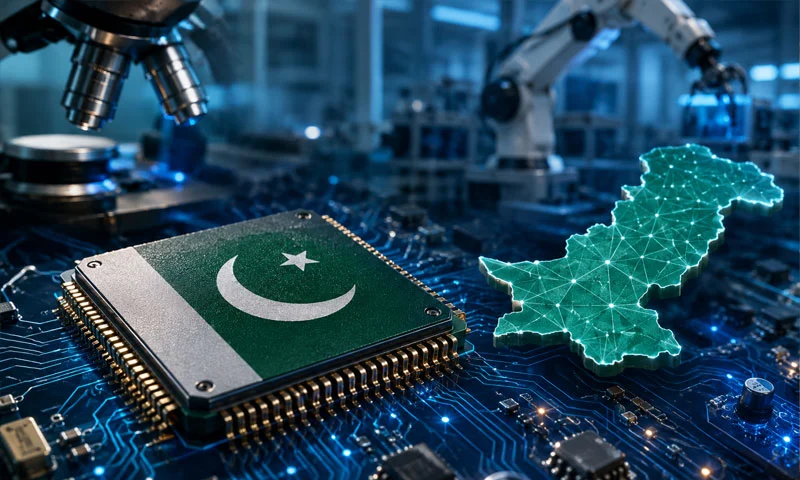
Pakistan has completed the institutional framework for its national semiconductor education clusters after NED University joined the government-backed Semiconductor Education & Research Cluster programme.
Federal IT and Telecommunication Minister Shaza Fatima Khawaja witnessed the signing of an agreement between the Pakistan Software Export Board and NED University of Engineering & Technology in Karachi.
The agreement formally makes NED the Lead University for the South Region under the Semiconductor Education & Research Cluster, or SERC.
NUST will lead the North Region, while ESUPAK-UET Lahore will represent the Central Region.
With the NED agreement, the government has now completed institutional agreements for all three regional clusters under the National Semiconductor Human Resource Development Program, also known as INSPIRE. The government achieved the milestone within the programme’s first year.
Pakistan Targets 7,200 Semiconductor Professionals by 2030
Shaza Fatima said the agreement marked an important step in Pakistan’s effort to build a competitive semiconductor ecosystem.
The current SERC intake will train 270 students across the three regions. The government has set a broader target of developing more than 7,200 semiconductor professionals by 2030.
“Under INSPIRE, we are not just training students, we are laying the foundation for Pakistan to become a competitive player in the global semiconductor value chain,” the minister said.
The Ministry of IT and Telecommunication has allocated major resources to the semiconductor programme.
In April, the ministry said the National Semiconductor HR Development Programme carries an approved budget of Rs4.844 billion. PSEB is executing the initiative as part of Prime Minister Shehbaz Sharif’s technology and skills agenda.
The programme aims to create a pipeline of engineers with skills required by the global chip industry.
Earlier this year, PSEB also supported an upskilling programme involving GIKI and NED University. The programme focuses on areas including digital design and verification.
The government has also expanded semiconductor training through other universities.
In July, the IT ministry announced the completion of a 10-month IC Design and Verification programme at FAST-NUCES Islamabad. Thirty engineers received training in advanced integrated circuit design, VLSI verification and System-on-Chip technologies.
NED University has separately highlighted its work with PSEB, UIT University and SSUET under INSPIRE as part of Pakistan’s semiconductor development effort.
Sindh Governor Syed Muhammad Nehal Hashmi said the latest agreement reinforced the government’s commitment to a knowledge-based economy.
He expressed confidence that the partnership would prepare Pakistani youth for opportunities in the global semiconductor industry.
With all three SERC clusters established, INSPIRE will now move into full-scale implementation.
Shaza Fatima Discusses Fintech Growth in Karachi
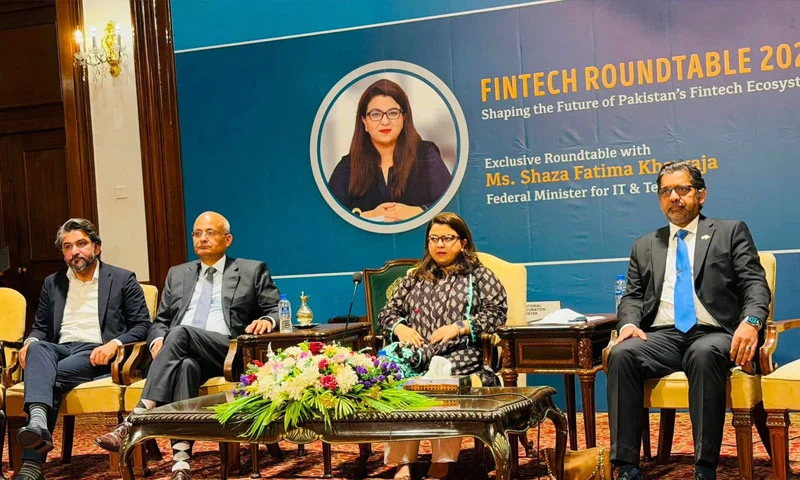
During her Karachi visit, Shaza Fatima also met Sindh Governor Nehal Hashmi at Governor House.
The minister and governor attended the Fintech Roundtable 2026, which brought together policymakers and leading figures from Pakistan’s financial technology sector.
Discussions focused on digital financial services, fintech growth and policy priorities needed to strengthen the ecosystem.
The roundtable formed part of a wider government push to accelerate digitalisation and improve access to capital for technology companies.
At the event, Shaza Fatima announced a $10 million fund under the second phase of the Pakistan Startup Fund. She said the government wants to expand available startup financing to between $25 million and $50 million.
The government is holding discussions with institutions including the World Bank, International Finance Corporation and Asian Development Bank.
“We have almost finalised our conversation with the World Bank. IFC is pitching in. We’re also talking to ADB,” she said.
The minister also linked digitalisation with the government’s effort to bring more economic activity into the formal sector.
She said federal government-to-government payments had already moved fully to digital channels.
Shaza Fatima also highlighted progress in digital payments under the Benazir Income Support Programme. Around 825,000 women have created digital wallets, according to her briefing at the roundtable.
Semiconductor Push Moves Into Implementation Stage
The NED agreement gives the government’s semiconductor programme a regional structure covering northern, central and southern Pakistan.
Authorities hope the model will connect universities, researchers and industry with global semiconductor opportunities.
Pakistan currently has limited participation in the international semiconductor value chain. The government wants to build expertise in areas such as chip design, verification and other high-value engineering services.
The Ministry of IT has described semiconductor technologies as central to modern innovation and economic growth. It sees skilled human capital as Pakistan’s most practical entry point into the global industry.
The next phase will focus on training students through the three SERC clusters and expanding the talent pool toward the 7,200-professional target.
The government expects the programme to create new high-value career opportunities while supporting Pakistan’s wider digital economy ambitions.