


OpenAI CEO Sam Altman says the water footprint of artificial intelligence has been overstated as opposition to new data centres grows. Speaking on the Sources Podcast with Alex Heath, Altman rejected claims that one ChatGPT query consumes water equal to a six-hour shower. He cautioned that he was recalling his calculation from memory and might be wrong. “For every 38,000 ChatGPT queries, that is the same amount of water that is used in the production of a single almond in California,” Altman said. A widely cited estimate places the water requirement for one almond at about 1.1 gallons. However, experts say limited industry data makes Altman’s comparison difficult to verify. Altman points to modern cooling systems Altman acknowledged that older data centres relied heavily on evaporative cooling. He argued that operators have since adopted technologies that sharply reduce direct water consumption. “Like if you look at a modern very large data center, it uses the equivalent amount of water as an office building in terms of, you know, people like running the sinks and the toilets and whatever,” he said. “So, that has been a robust meme and difficult to disprove, but I don’t think it holds up to any scrutiny.” A Virginia legislative review partly supports that argument. It found that most data centres used as much water as, or less than, an average large office building. However, a small number of facilities consumed substantially more. Microsoft introduced a closed-loop design in 2024 that uses no water for cooling during operation. The company says each centre could avoid more than 125 million litres of annual water use. Its Wisconsin AI site expects yearly water consumption similar to a typical restaurant. Nvidia has promoted liquid-cooling technology that can cut cooling-water use by up to 100 percent. Amazon says its US data centres consume 0.075 percent of the water Americans use on lawns and gardens. Research produces sharply different estimates A 2023 academic study estimated that training GPT-3 consumed about 700,000 litres, or 185,000 gallons, directly at Microsoft’s US facilities. Its broader estimate reached 5.4 million litres after including water linked to electricity generation. The researchers also estimated 500 millilitres of water for every 10 to 50 medium-length responses. Actual consumption changes with location, weather, cooling technology and workload. Altman offered another estimate in 2025. He said an average ChatGPT query used 0.000085 gallons, or roughly 0.32 millilitres. That rate would equal about 13,000 queries per 1.1-gallon almond, rather than 38,000. Public concern has not disappeared. One Georgia data centre reportedly consumed 29 million gallons over 15 months. Residents near another project alleged that construction turned their well water muddy. Experts told CalMatters that companies disclose too little operational data to confirm universal per-query estimates. AI agents may further increase demand because they process far more tokens than ordinary chatbot exchanges.
Canada Food Import Probe Widens After India Raid
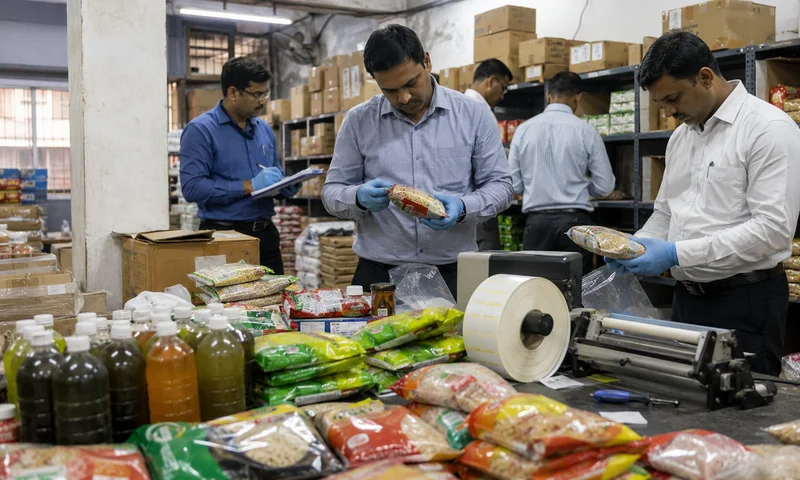
The Canadian Food Inspection Agency is assessing whether an illegal relabelling operation in India poses a risk to Canadian food imports. Indian authorities raided a warehouse in Turbhe, on Mumbai’s outskirts, on August 25. They seized goods worth nearly $80,000. Officers also found chemicals, flavouring agents and printing machines that operators allegedly used to alter expiry dates and nutrition information. The seized stock included products from PepsiCo, Nestlé, Coca-Cola and Unilever. Authorities have not accused those companies of wrongdoing. Investigators have instead focused on rogue exporters who operated through the warehouse. The agency “is monitoring the situation to determine whether it presents any risk to imports into Canada. At this time, the CFIA has no information indicating that products associated with this operation entered Canada,” the regulator said. Canadian-style label raises concern A photographer at the raid saw a PepsiCo Kurkure packet carrying a fake nutrition label in English and French. Its design resembled the format Canada prescribes for packaged food. Canadian rules generally require mandatory information on consumer prepackaged foods in both official languages. The CFIA also requires labels to remain accurate, truthful and not misleading under its labelling rules. “The Canadian Food Inspection Agency takes food fraud, including false date markings, inaccurate nutrition information, and misleading origin claims seriously,” the regulator said. The agency became the first foreign regulator to respond publicly to the Mumbai case. It can order product removal and impose monetary penalties when imported food breaks Canadian rules. It may also suspend an importer’s licence. Nineteen exporters face scrutiny Indian officials said the products had expired or were approaching their expiry dates. They linked the warehouse operators to 19 little-known export companies, but have not identified the intended destination countries. The raid formed part of an unusually broad food-safety campaign across India. Federal and state authorities have increased checks on hygiene and other safety violations. In some cases, officials have issued instant suspension orders. PepsiCo said it had no commercial engagement with the export companies that reports identified. It also said it did not endorse unauthorised exports. “Our snack food products manufactured in India are meant for sale in India, unless otherwise specifically authorised by us to be exported,” the company said. India’s commerce ministry did not immediately respond to a request for comment. Maharashtra Food and Drug Administration Commissioner Tukaram Mundhe led the warehouse operation. “We have written to concerned authorities about our findings, who will investigate details of the exporters involved,” he said. The CFIA says Canadian law prohibits the sale of food through false, misleading or deceptive claims. Its latest food fraud report says inspectors use surveillance, sampling and laboratory testing to detect violations. The agency can escalate enforcement when businesses fail to comply.

New UK Visa Rules Are Coming: What Applicants Must Know
Britain will change immigration rules for students, workers, families and settlement applicants from October 2026. The Home Office presented HC 584 to Parliament on September 3. Most measures start October 8. Religion routes begin October 29, student funds November 30 and EUSS biometric permit changes December 9. Erasmus+ routes expanded ahead of 2027 return The UK and EU agreed Britain’s 2027 Erasmus+ association in December 2025. They amended their Trade and Cooperation Agreement protocol in April 2026. The rules define youth workers, job shadowing, participative observation, skills competitions and traineeships. Visitors may study at state-funded schools and academies for up to six months. Permitted activities include training, courses, workshops, debates and sports coaching. Traineeships may last up to 30 days. Read More: Up to 200,000 US Visas Could Be Revoked Under New Policy Applicants must prove genuine participation. Under-18s may need consent from parents or guardians and their home institution. Student and Child Student rules will cover Erasmus+ courses without approved qualifications, including some at RQF Level 2. Licensed state-funded schools may sponsor participants. Placements may exceed normal course limits and begin under newly licensed sponsors. Erasmus+ will join the Government Authorised Exchange scheme. Around 60,000 participants entered Britain in 2019. Officials expect more after programme expansion and pent-up demand. New protection and settlement provisions Skilled Workers whom the Home Office identifies as modern slavery victims may work for any employer during their remaining permission. The domestic abuse route will include adult dependent children whose sponsor relationship ended because of abuse. The Home Office expects 163 to 447 additional grants annually. Some pre-settled EUSS holders may remain where removing status would be disproportionate. First-time joining family members will get three months from their latest legal entry after December 31, 2020. Previously rejected applicants who entered without an EUSS family permit must justify a late application or re-enter with a permit. BRPs will no longer prove identity because almost all expired by December 31, 2024. The Ayoola judgment lets qualifying children retain pre-settled status through education and later seek settlement. Primary carers and their under-18 dependants may also qualify. The EUSS travel permit and closed administrative review route will disappear. Status holders can instead link new passports online from abroad. Eligible Hong Kong BN(O) children may settle with qualifying parents without completing five years’ residence. Student finances and other routes change From November 30, student maintenance funds will rise alongside 2026/27 home-student loans. The accommodation offset will change, but the memorandum gives no new amount. Religion-route rules will revise finances for unpaid applicants and exempt religious-order members from the non-pastoral duties test. They will remove ministers’ maximum stay and replace religious-worker advertising with an affiliation test. Read More: Visa and Mastercard May Face New Challenge From PayPak Other changes cover bail absconders, fee-waiver application dates and one biometrics enrolment period. Families in the Family Returns Process may raise human-rights claims without a formal application, fee or prescribed form. The rules remove the defunct Ofgem exchange scheme and outdated Tier 1 Investor and Entrepreneur provisions. They also delete Start-up provisions for new main applicants while retaining access for dependants. Visitor rules will clarify training, rehearsals and entertainment support. Officials will align BN(O) terms, fix Long Residence inconsistencies and add an under-18 Child Relative test.
Up to 1,500 Cranes Could Be Captured Under KP’s New Quota
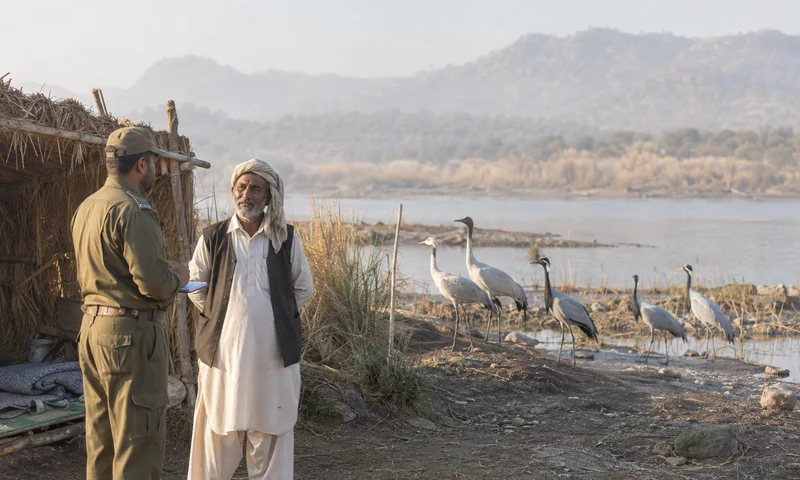
The Khyber Pakhtunkhwa Wildlife Department has opened the province’s 2026 live crane capture season under quotas, permit fees and strict movement controls. The season runs from September 1 to October 15. The department has authorised up to 100 camps across selected districts, with each camp allowed to capture no more than 15 live cranes. Only Common Cranes and Demoiselle Cranes fall within the permit system. Hunters and camp operators cannot hunt or capture any other bird species during the season. Capture banned in protected locations The notification imposes a complete ban on crane hunting and capture along the Kurram River and within designated refuges in Lakki Marwat and Zarmilan. Authorities have set both camp allocations and capture quotas at zero in those areas. Officials will issue permits only to residents of authorised districts. Permit holders must rely on traditional capture practices. The rules prohibit electronic equipment, firearms and nets, and violations can trigger enforcement action. Read More: Pelicans’ Eyes Stitched Shut in Shocking Wildlife Smuggling Case The conditions aim to regulate a practice with deep roots in parts of southern KP while protecting migratory birds from uncontrolled capture. Both permitted species travel through Pakistan along regional migration routes. Research has documented significant pressure on these birds. A 2021 study covering Bannu, Lakki Marwat and Karak found 93 hunting camps during earlier surveys. Researchers concluded that hunting and capture had a significant effect on local crane conservation. Strict controls on movement and ownership Camp operators may transport captured cranes only between 6am and midnight. Moving the birds between midnight and 6am remains prohibited. At the close of the season, operators must dismantle every camp and register all captured cranes. The department will prohibit further movement after October 15 and confiscate birds found in violation. Each camp permit costs Rs15,000. Owners must also pay an annual fee of Rs400 for every crane in their possession. The notification sets the official value of a Demoiselle Crane at Rs7,000 and a Common Crane at Rs13,000. It bans the use of captured cranes for any commercial purpose. Five-year blacklist for violations Anyone who breaks the rules faces cancellation of their licence and a five-year blacklist. Authorities can also take action against camp leaders when hunters linked to their camps engage in illegal capture. Wildlife officials warned that violations “will not be tolerated under any circumstances.” The controls come amid wider concern about threats along Pakistan’s Indus Flyway. A 2026 study in the journal Waterbirds recorded 212 Common and Demoiselle cranes killed or captured in Punjab’s Bhakkar district between September 2023 and March 2024. Read More: The Wildest Insurance Scam: Rolls-Royce ‘Bear Attack’ Turns Out to Be Human in Disguise Researchers linked 61% of those cases to household consumption. Live capture for illegal trade and domestication accounted for 29%, while recreational hunting made up 10%. The same study recorded about a 75% decline in wetland area across Bhakkar between 2000 and 2024. Its authors called for stronger anti-poaching enforcement, wetland restoration and measures to reduce collisions with power lines.

Only 5% of Pakistanis Use Ride-Hailing Apps, but Why So Few?
Only 5% of Pakistanis use ride-hailing services, far below the estimated global rate of about 20%, an industry executive has said. The gap points to substantial room for growth in Pakistan’s digital mobility market. Yet poor internet access in some areas, limited digital literacy and cultural barriers continue to restrict adoption beyond major cities. Digital food delivery remains even less common. Online platforms account for under 1% of Pakistan’s food sales, according to industry representatives who discussed the sector’s prospects during a panel session. Pakistan offers major growth opportunity Wael Ibrahim, inDrive’s regional director for the Middle East, described Pakistan as a market with strong business potential. He also announced that the company planned further investment in the country. Ibrahim said ride-hailing penetration stood at only 5% in Pakistan, compared with roughly 20% worldwide. The difference makes Pakistan one of the most promising expansion markets for app-based transport companies. Read More: From Saving Money to AI: Inside foodpanda’s New Rider Academy inDrive currently operates in 30 Pakistani cities, giving it a broader footprint than rivals such as Yango and Bykea. The company offers city rides alongside intercity and delivery services through its app. However, expansion into smaller cities and towns faces several obstacles. Many potential users lack the digital skills needed to book and manage rides through mobile applications. Some areas still have limited internet availability, while cultural factors can also shape whether people feel comfortable using app-based transport. Connectivity grows but usage barriers remain Pakistan has expanded its telecommunications network, but subscriber numbers do not automatically translate into regular use of digital services. The Pakistan Economic Survey 2025-26 recorded 161 million broadband subscriptions by March 2026. Broadband penetration reached 64.2%, while total telecom subscriptions climbed to 207.2 million. Despite that growth, the World Bank has identified a wide digital usage gap in Pakistan. Its 2026 analysis found a 44 percentage-point difference between men and women in internet use. It linked exclusion to affordability, lower digital literacy, safety concerns, privacy risks and social norms. These issues help explain why transport platforms may struggle to convert network coverage into active customers, particularly among women and people outside large urban centres. Research from Oxford Economics also indicates that pricing flexibility can improve access in emerging markets. In a 2026 study conducted with inDrive, 59% of Pakistani riders said fare negotiation allowed them to take more trips. About 54% of surveyed Pakistani drivers reported the same effect. Food delivery reaches vulnerable families Foodpanda Director Shariq Mustafa said digital platforms generated less than 1% of food sales in Pakistan. However, he said they still had a significant effect on the livelihoods of vulnerable families. Read More: Why foodpanda Built a Premium Rest Space for Delivery Riders Delivery platforms support income opportunities for riders while helping restaurants and home-based food businesses reach customers. The low share of online food sales also shows how much of the market remains offline. Industry executives see that gap as a commercial opportunity. Wider internet availability, improved digital literacy and stronger consumer trust could determine how quickly ride-hailing and food delivery services expand across Pakistan.

How Dubai Plans to Use AI to Speed Up Property Approvals
Dubai Land Department has launched its Initial Registration platform, creating one digital journey for project registration, property transactions and escrow account management. The initiative also aims to reinforce Dubai’s status as a global property investment hub. The launch supports a UAE government framework that Sheikh Mohammed bin Rashid Al Maktoum announced. He serves as Vice President and Prime Minister of the UAE and Ruler of Dubai. The framework seeks to move 50% of government sectors, services and operations to autonomous, self-executing Agentic AI models within two years. AI reduces paperwork and speeds approvals DLD unveiled the platform at Grand Hyatt Dubai before its acting director general, chief executives and public and private sector representatives. Officials then presented and discussed its features. The platform links developers, DLD and banks managing escrow accounts. It reduces repeated data entry and document submissions. Developers also gain an integrated view of projects and property portfolios. Its AI can read Emirates IDs, passports and sales contracts, extract key details and fill fields automatically. Standard registration transactions that meet business rules can qualify for approval as soon as users submit them. A short series of questions guides each user to the correct procedure. Users can also add missing details without closing the transaction, avoiding a fresh application over minor omissions. Eng. Abdullah Ahmed Al Shehi, CEO of the Real Estate Regulatory Agency at DLD, said: “The launch of the ‘Initial Registration’ platform represents an investment in the real estate sector’s efficiency and readiness for its next phase of growth. As the market expands and its needs evolve, we continue to develop a digital ecosystem that enables developers to manage their projects and complete transactions more effectively, combining faster service delivery with accurate data and effective oversight. By deploying artificial intelligence and strengthening integration among stakeholders, we are enhancing the ease of doing business and reinforcing transparency and governance, building investor confidence and supporting Dubai’s long-term competitiveness.” Project 360 strengthens oversight The platform’s Project 360 feature combines unit status, escrow accounts, financial data and project records in one view. Early warning indicators can flag challenges and support timely intervention. Connected systems can reuse data, reducing differences between sales, escrow and ownership records. Clearer stages and responsibilities should also improve coordination among developers, banks and DLD. Developers can manage several companies and projects through one account. Defined permissions and separate submission and review roles help organise workflows and reinforce internal oversight. Platform supports Dubai’s 2033 strategy DLD introduced the system and trained users in phases before the full rollout. It aims to raise first-time application acceptance, reduce follow-up enquiries, limit manual entry and accelerate transaction completion. DLD reported 60,303 transactions worth AED252 billion in the first quarter of 2026. Transaction value rose 31% from a year earlier, while volume increased 6%. Initial Registration supports the Dubai Real Estate Strategy 2033 and Dubai Economic Agenda D33. The property strategy targets a 70% increase in transactions and an AED1 trillion market value by 2033. It also seeks to expand Dubai’s real estate portfolios to AED20 billion.
