

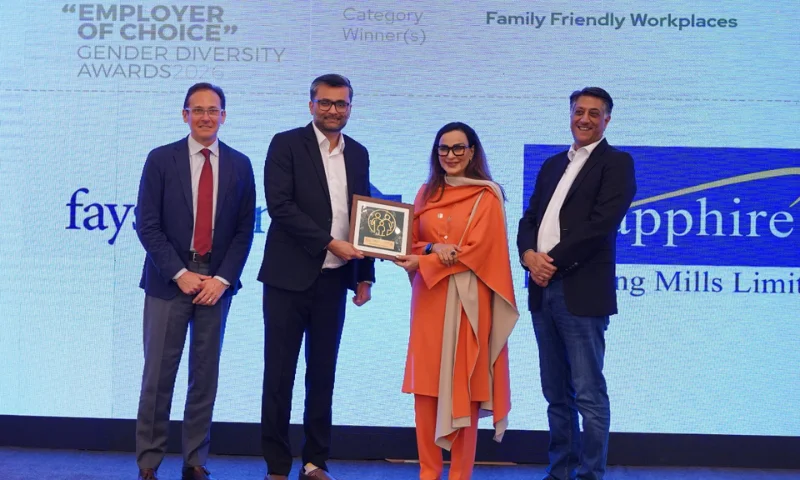
Faysal Bank Limited has won the Employer of Choice Gender Diversity Award 2026 in the Family-Friendly Workplace category. The International Finance Corporation and Pakistan Business Council organised the awards to recognise progress on workplace diversity and gender equality. Senator Sherry Rehman presented the honour to Faysal Bank. The award recognises the bank’s efforts to support employee well-being, inclusion, equity and work-life balance. It also highlights policies that help employees manage different stages of their personal and professional lives. The PBC-IFC awards programme evaluates how companies integrate gender diversity into workplace policies and daily practices. Its framework also considers whether employers disclose their progress and provide evidence of implemented measures. The organisers use a Gender Diversity and Disclosure Scorecard to assess participating companies. PBC and IFC update the scorecard each year to reflect new workplace practices and lessons from earlier award cycles. More than 70 companies have participated during the programme’s first four cycles, according to the Pakistan Business Council. Faysal Bank links recognition to CARE value Faysal Bank President and CEO Yousaf Hussain described the award as recognition of the bank’s people-focused workplace strategy. “With CARE being one of our core Islamic values, we at Faysal Bank strongly believe that a thriving organization begins with a workplace where people feel valued, supported and empowered. This recognition reflects our commitment to fostering an environment where our colleagues can grow professionally while maintaining a healthy work-life balance. We remain committed to strengthening our people-centric practices and fostering an inclusive workplace where all colleagues have the opportunity to thrive, including women and persons with disabilities, where every individual can contribute, grow and succeed with peace of mind, Insha’Allah.” The statement places employee care at the centre of the bank’s workplace culture. It also connects inclusion with professional growth, personal well-being and equal access to opportunities. Faysal Bank has separately highlighted programmes for women’s professional development and workplace inclusion. Its initiatives include the Amal Women Leadership Development Programme and activities supporting employees with disabilities. The bank says its employees remain central to its growth and institutional success. It plans to continue improving the overall employee experience across its operations. Award highlights family-friendly workplace policies The Family-Friendly Workplace category focuses attention on policies that help employees balance professional duties with responsibilities outside work. Such measures can include flexible working arrangements, maternity and parental support, childcare assistance and return-to-work programmes. Safe workplaces and fair career development also play an important role in retaining women. IFC and PBC have worked together since 2017 to advance women’s employment in Pakistan. Their awards encourage companies to set diversity targets and publicly report progress. Faysal Bank said it would continue strengthening its workplace practices after receiving the 2026 honour. It also aims to support higher diversity and inclusion standards across Pakistan’s financial services sector.
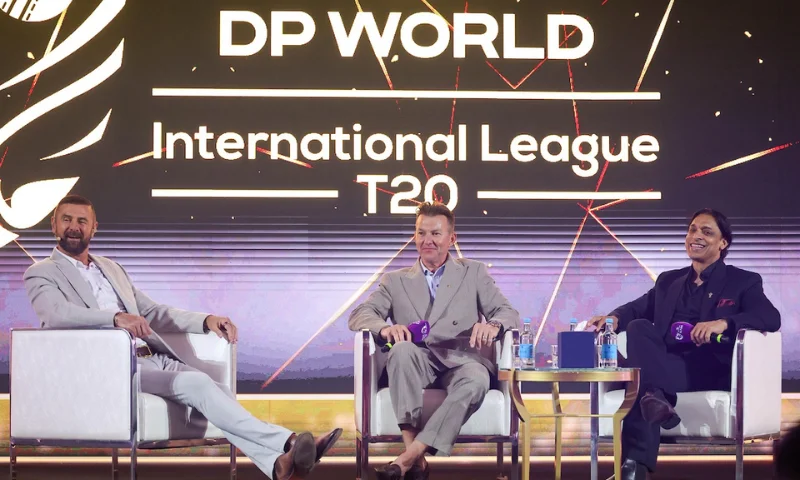
DP World ILT20 Season 5 Launches With Brett Lee, Shoaib Akhtar
The DP World International League T20 launched Season 5 at a glittering Dubai event on Wednesday night. Fast-bowling greats Brett Lee and Shoaib Akhtar led the star attractions. The six-team tournament will stage 34 matches across the UAE in November and December 2026. Teams will complete their squads through the Season 5 Player Auction on Thursday, October 1. Player registration remains open through the league’s online portal until Saturday, September 12. The league also unveiled a new brand identity during the ceremony. Cricket legends revisit a high-speed era Former New Zealand international Simon Doull hosted Lee and Akhtar for a panel discussion. The pair discussed ILT20’s growing influence on UAE and regional cricket. They also revisited their playing careers and recalled an era they shaped with blistering pace. Celebrity mentalist Karan Singh Magic added a spell-binding performance to the evening. ILT20 Chairman Khalid Al Zarooni and League Commissioner Mubashshir Usmani addressed the competition’s rapid growth. They highlighted its role in expanding cricket across the Gulf. “What began as a dream has grown into one of the world’s leading cricket leagues, bringing together top players and major franchises, while helping grow cricket in the UAE, the region and beyond,” Al Zarooni said. “I would like to thank our stakeholders, franchise owners, commercial and strategic partners for their continued support, with a special acknowledgement to DP World and Zee Network, as well as our strategic cricket partners Kuwait Cricket, the Saudi Arabia Cricket Federation, the Afghanistan Cricket Board and Cricket Ireland. We are also delighted to welcome SPORTFIVE as a new commercial partner and look forward to another successful season.” Doull also led a discussion on the game’s changing regional and global landscape. It brought together representatives from cricket, government, sport and business. Read More: How Pakistan Won the 2009 World T20: Shahid Afridi’s Untold Memories The panel featured Usmani, who also serves as an ICC Board Director and Emirates Cricket Board General Secretary. Other speakers included DP World GCC digital technology chief operating officer Dr Mohamed Abu Hamra and Dubai Sports Council sports events director Eisa Sharif. Zee Entertainment Enterprises Deputy CEO and CFO Mukund Galgali joined SPORTFIVE Middle East and South Asia President Venu Nair. Bisleri Global Sales and Marketing Director Tushar Malhotra completed the panel. Auction and three UAE venues take centre stage Season 5 will visit Zayed Cricket Stadium in Abu Dhabi, Dubai International Stadium and Sharjah Cricket Stadium. Desert Vipers enter the competition as defending champions after securing their first title in Season 4. The previous champions reflect the league’s competitive spread. Gulf Giants won Season 1, MI Emirates claimed Season 2 and Dubai Capitals took Season 3. The October 1 auction will provide the next major staging point. Franchises will use it to fill their remaining squad positions before the tournament begins in November.

European Film Festival Pakistan Returns to Three Cities
The fifth European Film Festival will return to Pakistan this weekend with screenings and cultural activities in Islamabad, Sialkot and Jamshoro near Hyderabad. The festival will bring European and Pakistani cinema together with live performances, interactive installations and programmes for families and filmmakers. The European Union is presenting the festival, while Olomopolo Media has curated the programme. Organisers aim to use cinema to encourage cultural exchange, dialogue and shared experiences. Islamabad hosts opening weekend The 2026 edition will open at the Pakistan National Council of the Arts in Islamabad on September 12 and 13. The programme includes European feature films, documentaries and experimental short films. Organisers will also screen a curated selection of Pakistani shorts, giving local filmmakers space alongside European productions. Activities will extend beyond traditional film screenings. Audiences can attend a stand-up comedy and improv showcase during the Islamabad programme. Read More: Susan Sarandon Palestine Support Still Costs Her Film Roles A dedicated children’s segment will feature a family-friendly European film. Storytelling and music sessions will accompany the screening to create an engaging experience for younger visitors. The festival targets young people, families, film enthusiasts, diplomats and members of Pakistan’s film industry. Organisers say the varied programme will allow different audiences to participate in the cultural event. Festival travels to Sialkot and Sindh After Islamabad, the festival will travel to Sialkot for events on September 16 and 17. Government College Women University and GRID by BLCK will host the Sialkot programme. The tour will then move to Jamshoro and Hyderabad for its final events on September 29 and 30. SABS University of Art, Design and Heritages will host the closing programme. A live musical performance will form part of the final celebrations. The travelling format has remained central to the European Film Festival since its Pakistan debut in 2021. Previous editions have reached audiences in Gilgit, Quetta, Peshawar, Gujrat, Faisalabad, Multan, Lahore, Karachi and Islamabad. The organisers have used the tour to take international cinema and cultural conversations beyond the country’s largest metropolitan centres. Interactive experiences expand festival programme This year’s immersive installations will include the EUFF-Pakistan Express, designed as a train experience. Visitors will also have access to a Wall of Fame, Human Slot Game, Reading Nook and Kids’ Corner. Organisers said these activities will remain an integral part of the festival rather than serving only as additions to film screenings. Read More: Netflix’s latest decision sparks debate among filmmakers The festival will also introduce a Filmmakers’ Mixer as part of its new Industry Program. The session will create space for filmmakers and other creative professionals to meet, exchange ideas and discuss their work. Through its combination of European and Pakistani films, performances and installations, the festival seeks to expand how audiences experience cinema. It also aims to connect cultures through storytelling and create spaces for collective participation. The organisers have positioned the event as both a film showcase and a public cultural programme.

How Visa and Mastercard Want to Make AI Shopping Safer
Visa, Mastercard and Ant International have launched an initiative to create common standards for identifying and verifying artificial intelligence agents that make purchases for consumers. The companies said they had started collaborating on a Know-Your-Agent interoperability framework. It aims to help payment networks recognise trusted AI agents across different digital environments. The effort comes as agentic commerce moves beyond product recommendations. AI systems can now search for items, compare options and complete transactions under instructions from users. Common identity standard for AI agents The proposed framework would allow card networks, digital wallets, AI agent platforms and online marketplaces to identify trusted agents across separate payment ecosystems. Each participating organisation would retain control of its own approval procedures and risk-management systems. However, common standards could provide a shared method for checking an agent’s identity, authority and transaction intent. The partners said greater interoperability could reduce the cost and complexity of integrating new agentic services. It could also improve trust and risk visibility across participating networks. The companies have not disclosed when the framework will become operational. They also have not announced which banks, digital wallets, merchants or AI platforms will join initial testing. Existing payment protocols form foundation The initiative will build on tools that Visa, Mastercard and Ant International have already developed for AI-led payments. These include Visa’s Trusted Agent Protocol, Mastercard Verifiable Intent and Ant International’s Agentic Mobile Protocol. Visa’s protocol focuses on helping merchants distinguish legitimate shopping agents from malicious automated traffic. Mastercard’s system seeks to verify that an agent is acting according to a consumer’s instructions. Ant International’s protocol supports interactions between AI agents, merchants and mobile payment services. Combining elements from these systems could reduce fragmentation as financial companies develop their own agentic commerce products. The need for verification has grown alongside concerns about unauthorised purchases, fraudulent agents and uncertainty over liability when automated systems make mistakes. BuildFin.ai to host industry collaboration Visa, Mastercard and Ant International will collaborate through BuildFin.ai, a platform convened by the Monetary Authority of Singapore. The platform brings financial institutions, technology providers and researchers together to develop artificial intelligence solutions for financial services. The Know-Your-Agent effort reflects a wider global push to establish safeguards before AI agents handle large volumes of consumer payments. India’s payments authority is also developing a registry to verify AI agents that conduct transactions through the Unified Payments Interface, Reuters reported. China’s payments industry has issued guidelines covering agent identification, security and risk controls. Agentic payment systems may initially focus on routine, low-value purchases such as groceries. They could later execute more complex instructions, including buying products when prices fall below limits set by users. The three payment companies said their shared framework could accelerate the launch of trusted agentic services while allowing participants to preserve their own security standards.
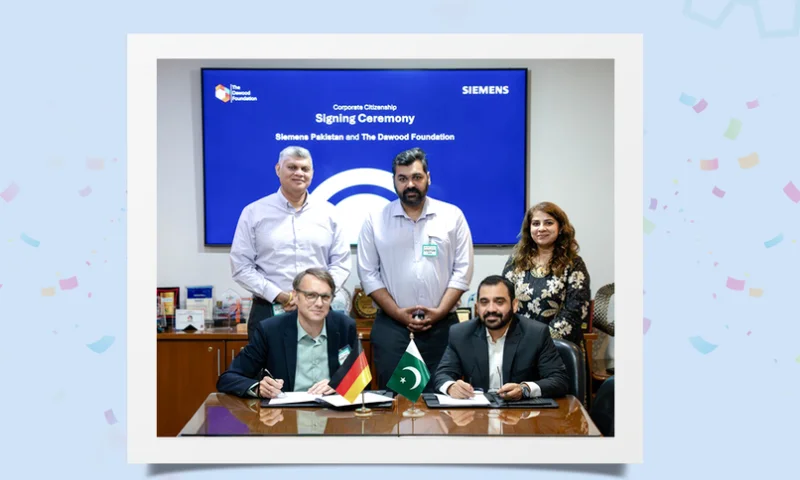
Siemens and Dawood Foundation Back Underprivileged Children
The Dawood Foundation and Siemens Pakistan have signed an agreement to expand access to practical science education for children from underserved communities. Under the partnership, Siemens Pakistan has contributed Rs1 million to support educational visits to The Dawood Foundation’s MagnifiScience Centre in Karachi. The initiative aims to bring children from different social and economic backgrounds into an interactive learning environment. It will allow them to explore scientific ideas through exhibits, experiments and practical activities. Rs1 million contribution supports inclusive learning The Dawood Foundation announced the collaboration through its official social media channels. It said the funding would help reduce barriers that prevent many children from accessing specialised science facilities. “This collaboration will help make hands-on science experiences more accessible to children from diverse backgrounds. We thank Siemens Pakistan for supporting inclusive learning and investing in the future of our youth.” The organisations did not disclose the number of children who will visit under the programme. They also did not announce a timeline for the sponsored visits. However, the contribution strengthens TDF’s existing efforts to give underprivileged children access to informal science education. The foundation runs programmes that sponsor visits and help cover practical costs linked to participation. Its public outreach also encourages individuals and companies to support children who may otherwise never visit a modern science centre. MagnifiScience Centre promotes practical education TDF describes the MagnifiScience Centre as Pakistan’s first contemporary and interactive science centre. The Karachi facility spans four floors and contains more than 300 exhibits. The exhibits complement school curricula and help visitors understand how scientific concepts connect with everyday life. They cover several disciplines and encourage children to observe, question, experiment and solve problems. The centre also seeks to bridge the gap between classroom teaching and practical science. Its approach promotes scientific literacy, critical thinking and curiosity through experiential learning. TDF says the centre welcomes people of all ages, backgrounds and abilities. This inclusive model remains particularly important in Pakistan, where access to museums and informal STEM learning spaces often depends on household income and location. Corporate support expands access to STEM The partnership reflects growing interest in using corporate funding to improve access to science, technology, engineering and mathematics education. For children from low-income households, admission fees and transport costs can make educational visits difficult. Sponsored programmes can give schools and community groups a chance to include practical learning in their activities. The Dawood Foundation said Siemens Pakistan’s support represents an investment in young people and inclusive education. The collaboration also aligns with the centre’s guiding belief that science learning should remain open to everyone, regardless of background or financial circumstances. By supporting visits rather than limiting assistance to physical equipment, the programme will place children directly inside an environment built for discovery.
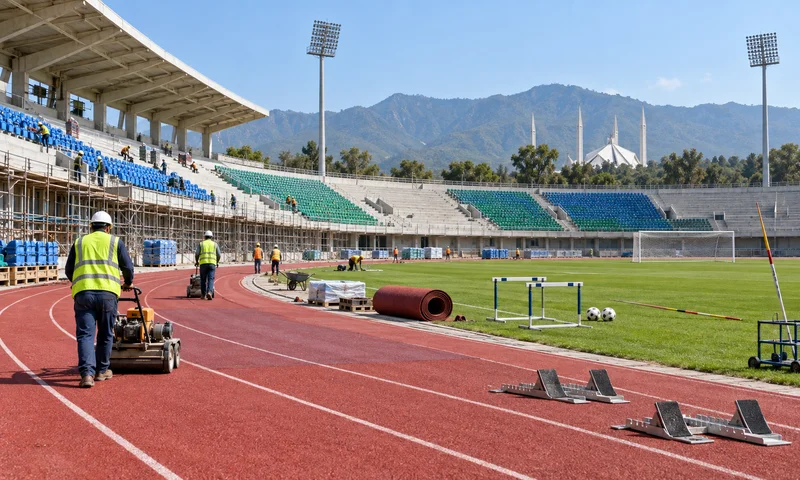
CDWP Clears Rs5.7 Billion for SAF Games Venues in Pakistan
The Central Development Working Party (CDWP) has approved a Rs5.7 billion package to upgrade sports infrastructure for the upcoming South Asian Games in Pakistan. Federal Minister for Planning, Development and Special Initiatives Ahsan Iqbal chaired the CDWP meeting. The forum examined and reviewed the proposed projects before approving the package. Officials described the decision as a major step towards the smooth and successful hosting of the regional multi-sport competition. Pakistan Sports Complex set for major upgrades The development package includes extensive improvements at the Pakistan Sports Complex in Islamabad. It also covers sports facilities in other host cities, although the government has not released a project-by-project cost breakdown. Officials said the work would improve the quality, functionality and operational readiness of venues for athletes, officials and visiting teams. The Pakistan Sports Complex includes Jinnah Stadium and several indoor and outdoor facilities. Pakistan is preparing to host the 14th edition of the South Asian Games in 2027. The country previously staged the regional event in Islamabad in 1989 and 2004. The 13th South Asian Games took place in Kathmandu and Pokhara, Nepal, in December 2019. IPC calls approval a major achievement Secretary Inter Provincial Coordination Mohyuddin Ahmad Wani welcomed the CDWP decision. He thanked the prime minister and Planning Commission for supporting the effort to strengthen Pakistan’s sports infrastructure. Wani said the investment would help Pakistan stage the Games efficiently while creating a lasting legacy for national athletes. “The approval of the Rs. 5.7 billion infrastructure package is a major step forward for the successful hosting of the SAF Games. InshaAllah, the comprehensive upgradation of the Pakistan Sports Complex and other sports facilities across the country will ensure that our athletes and visiting teams are provided with quality facilities. These upgraded venues will also continue to benefit Pakistani sport long after the Games.” The secretary said the Ministry of Inter Provincial Coordination would coordinate with the Planning Commission and all relevant stakeholders. Focus shifts to timely completion The government now faces the task of completing the approved projects before athletes and officials arrive in Pakistan. The IPC Ministry said implementation would follow the technical and operational requirements of the South Asian Games. It also pledged close monitoring to keep construction and renovation work on schedule. Timely completion will remain crucial because the programme involves venues in Islamabad and other cities. Delays could affect test events, athlete training and final preparations. The investment comes as Pakistan seeks to improve ageing public sports facilities and provide better environments for elite athletes. Officials expect the upgraded venues to continue hosting national camps, domestic championships and international competitions after the Games. The CDWP approval allows the responsible agencies to move towards implementation. Authorities have not yet disclosed individual completion dates, procurement schedules or the allocation for each venue.

Infertility Among Women Over 35 Has Risen Sharply Since 1990
Falling birth rates have intensified concerns about population ageing, labour shortages and pressure on social security systems worldwide. The United Nations estimates the global fertility rate at 2.25 births per woman, about one child fewer than in 1990. More than half of all countries now record fertility below the replacement level of 2.1 births per woman. Medical infertility and demographic fertility rates remain distinct issues. However, delayed parenthood and worsening reproductive health may contribute to both trends. Infertility Rises Among Women Over 35 A new study led by Yuanyuan Du of Chongqing Medical University examined infertility among women aged 35 to 49. Researchers analysed data from 204 countries and territories between 1990 and 2023. The study found that age-standardised infertility prevalence in this group rose by around 15% over that period. About 53.6 million women aged 35 to 49 experienced infertility in 2023. The World Health Organization estimates that one in six people of reproductive age experience infertility during their lifetime. The condition can result from female, male or unexplained factors. Read More: Why Singapore Is Paying Families $55,000 for Every Child The demographic debate has also attracted public figures. Elon Musk warned in 2021 that “if people stop having children, civilization will crumble.” Low birth rates can accelerate population ageing and reduce the future workforce. Infertility may also affect women’s careers, lifetime earnings and participation in the labour market. Cost, Careers and Motherhood Debate A Swiss Life survey of more than 3,000 people identified several reasons for avoiding or delaying parenthood. Respondents cited limited desire for children, financial costs, time pressures, career conflicts and fears about the world’s future. Swiss author Nicole Althaus questioned the social change, writing: “The birth rate keeps falling and falling…How on earth did it come to this?” Althaus argued that some strands of feminism created a more negative image of motherhood. She called this “arguably the saddest chapter in the history of emancipation.” Read More: Pakistan Could Become World’s 4th Most Populous Country in 5 Years Her argument remains contested and represents one interpretation of a complex demographic shift. Economic insecurity, housing costs, childcare shortages and changing personal priorities also influence family decisions. Althaus traced part of the debate to Simone de Beauvoir. The French philosopher described motherhood as the “enslavement of women by their own species” in her 1949 book The Second Sex. Pollution and Climate Risks to Fertility Researchers also warn that climate change and pollutants may harm reproductive health. Extreme heat, wildfire smoke, air pollution and endocrine-disrupting chemicals can affect hormonal signalling and reproductive organs. Scientists have detected microplastics and nanoplastics in placentas, amniotic fluid and ovarian follicular fluid. Laboratory evidence suggests these particles may damage granulosa cells, which support developing eggs. Heavy metals, pesticides, PFAS, bisphenols and phthalates may also interfere with ovarian function, implantation and egg quality. Air pollutants have links with menstrual irregularities, poorer embryo quality and reduced chances of conception. Researchers say folic acid, vitamin D, iodide, omega-3 fatty acids and antioxidants may help under some circumstances. However, evidence varies, and supplements cannot replace medical assessment or policies that restrict toxic chemicals.
How Blocks of Ice Became a Lifeline in Pakistan’s 50C Heat
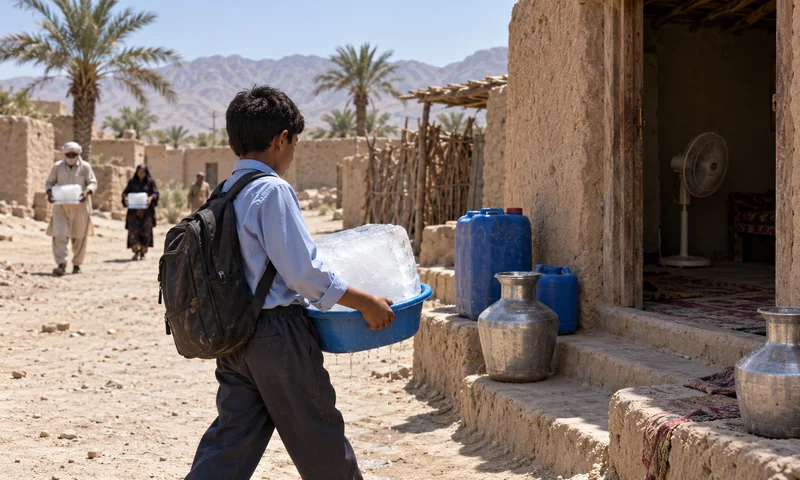
Families in Balochistan are relying on daily ice blocks to survive temperatures approaching 50C as electricity shortages leave refrigerators and fans useless. Nasirabad lies about 40 kilometres from Turbat in Kech district. Most residents live in poorly ventilated mud houses and receive electricity for roughly three hours daily. Weak voltage often prevents refrigerators from working. Many families also cannot afford solar panels or batteries. Children queue for ice before school Residents carrying buckets, sacks and plastic containers queue outside the town’s only ice factory each morning. Twelve-year-old Taimoor collects ice before school because his pregnant mother fears the journey could threaten her pregnancy after two miscarriages. “If I do not bring the ice, how will we endure the heat at home?” he said. “And how will we drink water that feels as though it is boiling?” Taimoor leaves some ice at home and carries a small portion to school. Read More: Balochistan govt, NBP launch subsidized electric scooter scheme for students, women The Pakistan Meteorological Department warned in May that Turbat and nearby areas could experience temperatures between 46C and 50C. Its August outlook predicted very hot and dry conditions across Balochistan. Ice factory becomes town’s cooling centre Mohammad Haider’s father established Nasirabad’s ice factory in 1992. Workers open it around 7am and usually sell all 400 blocks made overnight within two hours. Most customers cool drinking water, but shortages send some home empty-handed. “It saddens me when people cannot get ice before it runs out,” Haider said. “They then have to spend the entire day drinking warm water.” Haider gives residents free cold water outside the factory in the evening. Scarcity has created informal reselling. Residents sometimes buy a piece for 40 rupees and later sell it for 80 rupees. Sixty-six-year-old widow Raj Bibi cannot afford ice or solar equipment. She carries water bottles to a neighbour with a solar-powered refrigerator and collects them in the evening. “The day passes in heat and suffocation,” she said. “There is no electricity to run a fan, and I cannot afford solar panels.” Climate risks expose deep inequality Even households with solar panels remain vulnerable because many cannot afford batteries. Without stored power at night, residents often carry bedding outdoors and sleep beneath the sky. The World Meteorological Organization says Asia is warming nearly twice as fast as the global average. It confirmed that the 11 years through 2025 ranked as the hottest on record globally. Pakistan ranked 147th in the 2024 Notre Dame Global Adaptation Initiative index. The ranking reflects high climate vulnerability and limited readiness. Read More: Pakistan Olive Cultivation Targets $4 Billion Import Bill Authorities have heatwave plans and advise hydration, reduced sun exposure and livestock protection. However, residents say they see little support. Farmers must still work in orchards, while women cook over wood fires because Nasirabad lacks gas. Families instead depend on shared refrigerators, limited solar power and one factory producing 400 ice blocks each night.

Apple Launches iPhone Duo, but Is It Worth the $1,999 Price?
Apple has unveiled its first foldable smartphone, the iPhone Duo, alongside the iPhone 18 Pro series, new Apple Watches and upgraded AirPods. The product showcase on Wednesday marked John Ternus’ first Apple event as chief executive. It also revealed his strategy for navigating the artificial intelligence era. Apple enters foldable phone race The passport-shaped iPhone Duo represents Apple’s biggest iPhone redesign in years. It opens into a 7.6-inch display and carries a 5.4-inch outer screen. Users can keep two apps open simultaneously on the larger display. Apple also added a custom hinge, titanium body and support for Apple Pencil. Touch ID sits inside the side button. Apple described the Duo as its thinnest iPhone when opened, although the folded device remains thicker than some Chinese rivals. Read More: Apple’s New CEO John Ternus Gets a $58 Million Pay Package Apple’s A20 Pro chip powers the Duo. The company built the chip on a 2-nanometer process and paired it with vapor-chamber cooling. Apple says the combination improves on-device AI, graphics performance, battery efficiency and heat management. The phone also carries Apple’s latest C2 modem. Reuters reported that the battery supports 24 hours of mixed dual-screen use. It can reach a 50% charge in about 20 minutes. Prices start at $1,999, around $100 above the Samsung Galaxy Z Fold8 and Google Pixel 11 Pro Fold at comparable base storage. Duo offers storage of up to 2 terabytes, more than its main foldable rivals. Pre-orders start October 16, followed by sales on October 23. iPhone 18 Pro prices rise as Apple expands AI Apple raised Pro prices by $100 amid higher memory chip costs. The iPhone 18 Pro starts at $1,199, while the Pro Max begins at $1,299. Both phones use the A20 Pro chip and feature a 48-megapixel main camera. A variable aperture responds to lighting while giving photographers greater control over depth of field and low-light shots. Apple also introduced Apple Reference Image, a standard designed to authenticate photographs. Support for SynthID will help identify images created or altered using AI. Neither feature will reach the European Union or China. Read More: Apple and Samsung Want You to Stop Owning Your Phone Ternus called the iPhone an “intelligent personal hub” and made privacy central to Apple’s AI pitch. Apple Intelligence handles tasks on the device whenever possible. Private Cloud Compute protects information when a task requires more computing power. The upgraded Siri will work with more than 300,000 apps at launch, including third-party applications. New watches and AirPods broaden Apple lineup Apple Watch Series 12 and Ultra 4 feature the S11 chip and a redesigned health-sensing system. Prices start at $399 and $799, respectively. Features include a Readiness score, more frequent heart-rate monitoring and AI-powered health insights. Apple also added Live Rewind and Siri Recap audio tools. New AirPods start at $129 and bring active noise cancellation to Apple’s entry-level earbuds for the first time. A $149 model adds wireless charging and swipe-based volume controls on the stem. Apple shares closed 0.3% lower at $315.34 after the presentation.
Trump Promises Every American $5,000 if Republicans Win
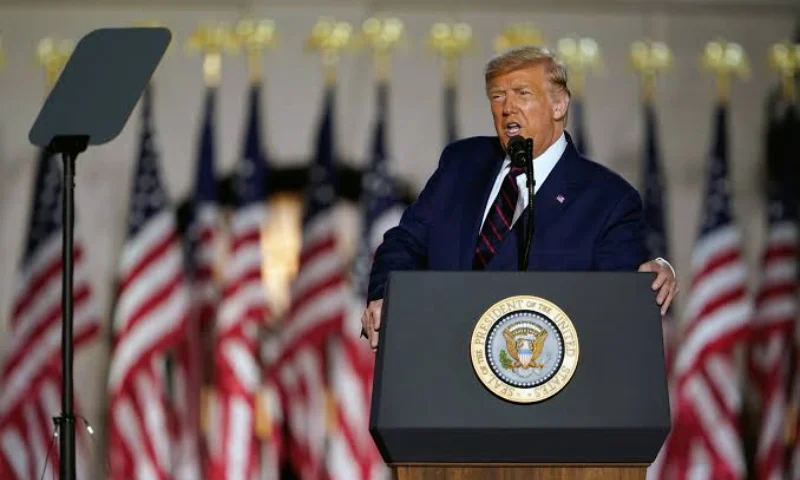
US President Donald Trump has promised a $5,000 “Trump dividend” to every American adult if Republicans retain control of Congress in November’s midterm elections. Trump announced the plan on Wednesday during the Republican Party’s first midterm convention in Dallas. However, he offered no detailed funding or implementation mechanism. The United States has about 270 million adults. Paying each of them $5,000 would cost approximately $1.35 trillion. Such a programme would likely require congressional approval. Vice President JD Vance later indicated that wealthy Americans might not qualify. He also suggested that tariff revenue could help finance the payments. Trump said recipients would have to spend the money inside the United States. He presented the proposal as a dividend from what he described as America’s strong economic performance. Trump puts himself at centre of midterm campaign Trump spoke for one hour and 45 minutes, claiming he had completed “the greatest two years in the history of the presidency.” “We hand America’s future to the radical left Democrats, and our nation will spend the next decade just getting back on its feet,” Trump said. “Vote Republicans, and we will leave the world in our dust for generations to come.” He also urged voters to treat the November 3 congressional elections as a referendum on his presidency. Read More:Trump Suggests Renaming Strait of Hormuz as Trump Strait “I’m asking you to pretend that I’m on the ballot,” he said. The two-day convention highlights how closely Republican electoral prospects remain tied to Trump. Republican National Committee Chairman Joe Gruters informally called the event “Trumpapalooza.” Trump promised multiple visits to battleground states during the eight weeks before Election Day. However, some vulnerable Republicans skipped the convention, including Representatives Tom Barrett, Senator Dan Sullivan and Senator Susan Collins. At least 16 candidates involved in competitive congressional races were scheduled to speak. They included Texas Attorney General Ken Paxton and Ohio Senator Jon Husted. Trump claimed the 21,000-seat arena was packed, although several upper sections remained largely empty during his address. Iran war and living costs shadow convention Republican speakers repeatedly portrayed Democrats as “socialists” and “communists.” Senator Tim Scott called them “dangerous, radical and weird.” However, voters have expressed greater concern about the cost of living and the Iran war. Trump defended the decision to attack Tehran, saying the action aimed to stop Iran from developing a nuclear weapon. The conflict has continued for more than six months, while Iran denies seeking nuclear weapons. Analysts also say its nuclear programme has not been eliminated. Trump predicted the conflict would end shortly after the elections. Read More: Trump Secures Majority Control of Vast Venezuelan Oilfields “I think war is going to end immediately after the election because they can’t hold out any longer. They’re desperate to try and affect the election,” he told reporters. He also said oil prices would decline after the war ended. The convention featured a surprise recorded appearance by Democratic Senator John Fetterman. He introduced Republican Senator Dave McCormick as his “great friend” and pledged cooperation with Trump to protect Pennsylvania’s steel industry. Republicans risk losing at least one chamber of Congress as Trump’s approval ratings fall and Democratic voter enthusiasm increases.
