


Pakistan will make its first mixed martial arts appearance at the Asian Games when MMA debuts at Aichi-Nagoya 2026 in Japan. The Pakistan Mixed Martial Arts Federation has confirmed representation in three key roles. Asim Khan will compete as an athlete, Abu Huraira will officiate as a referee, and Dilawar Khan Sanan will serve as team official. MMA Joins Asian Games Programme The Olympic Council of Asia added mixed martial arts to the 2026 Asian Games programme in April 2025. The full-contact sport combines techniques from striking, wrestling and grappling disciplines. MMA will feature six medal events and sit within the contact-sports category alongside ju-jitsu and kurash. This will mark the sport’s first appearance at Asia’s biggest multi-sport competition. The 20th Asian Games will run from September 19 to October 4 across Aichi Prefecture and Nagoya. Japan previously hosted the continental event in Tokyo in 1958 and Hiroshima in 1994. More than 17,000 athletes and officials have registered for the Games, according to organisers. MMA competitions will take place at the Inae Sports Center in Nagoya, which will also stage wrestling. Pakistan Secures Athlete and Referee Representation PMMAF said Asim Khan will become Pakistan’s first MMA athlete to compete at the Asian Games. His selection gives the country a direct presence in the sport’s inaugural medal programme. The Asian Mixed Martial Arts Association selected Abu Huraira as an International Technical Official and referee. PMMAF described him as Pakistan’s top-ranked and highly experienced MMA referee. His appointment places a Pakistani official among those responsible for applying competition rules and overseeing bouts at the continental event. The federation called it international recognition of Pakistan’s refereeing standards and technical capability. Dilawar Khan Sanan will accompany the delegation as the Pakistan MMA team official. His role will involve supporting the athlete and coordinating the team’s participation during the Games. Federation Hails New Era for Pakistan MMA PMMAF President Zulfiqar Ali congratulated all three representatives, with particular praise for Huraira’s appointment. “The inclusion of MMA in the Asian Games and Pakistan’s representation as both athlete and official is a historic achievement for Pakistani mixed martial arts. This honor will open new avenues for Pakistan’s young MMA athletes and officials,” Ali said. He also offered his best wishes and prayed for the success of Huraira, Khan and Sanan in Japan. The federation appealed to Pakistanis to offer special prayers for the delegation’s success, performance and ability to bring honour to the country. MMA’s inclusion gives Pakistani fighters access to a major multi-sport stage beyond traditional professional promotions. It may also strengthen pathways for athlete development, international officiating and federation-level cooperation across Asia. It also represents an important step for the federation’s long-term international ambitions. For Pakistan, the presence of an athlete, international referee and team official signals a broader breakthrough. PMMAF said the country’s MMA journey has now entered a new and historic era.
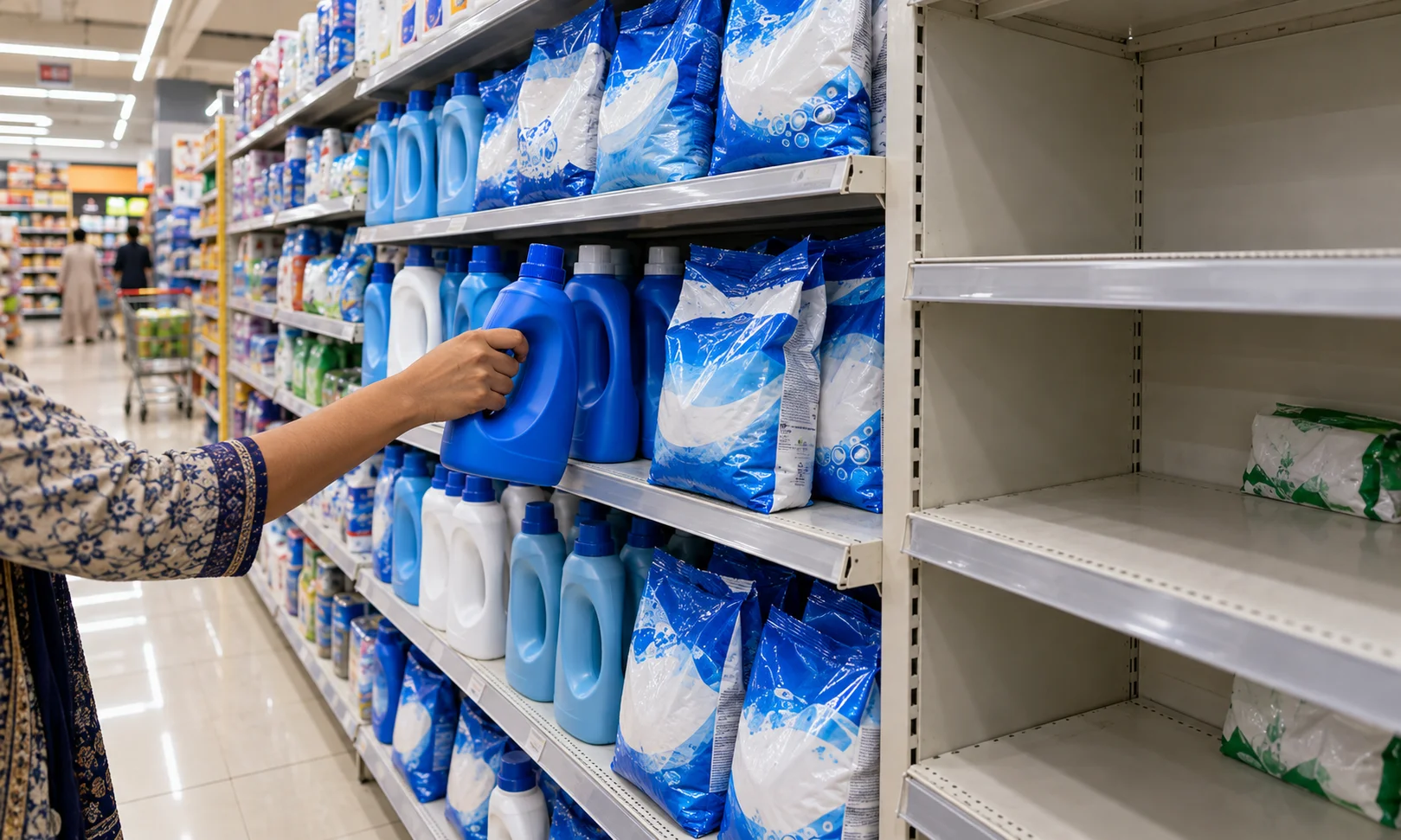
Unilever Says It Is Already Ahead of Target After P&G’s Exit
Unilever Pakistan says it is ahead of internal targets to capture demand left by Procter & Gamble’s withdrawal. Home Care head Ammad Danish said three to four organised players are pursuing the share, but withheld volume and revenue figures. Competition for P&G’s Former Market “I think this is very unfortunate that P&G had to leave. I’m a firm believer in competition; it keeps you on your toes,” Danish said. He argued that international competition promotes “fair play”. Local companies, he said, “don’t always play by the rules when it comes to taxation, formulation, pricing,” making competition tougher. “We are ahead of track, and I think that’s a great place to be in. We will continue that next year,” he said. Danish also warned of lost public revenue. “We all went for the pie that P&G vacated.” “If organised players don’t operate, it’s bad for the government, because there’s a certain amount of taxation income that goes out.” P&G announced its exit in October 2025 under global restructuring. Reuters said third-party distributors would continue serving Pakistan. Home Care Business Returns to Growth Unilever’s Home Care division, including Surf Excel and Vim, endured a three-to-four-year “lull period” before growing competitively for 24 to 36 months. “Competitive growth means market-beating growth.” He credited restructuring into four focused units and a change in priorities. “We put the consumer back at the heart, not the P&L [profit and loss],” he said. This strategy supported Surf Excel Whites and Surf Excel Liquid. Powder detergents still dominate 99% of Pakistan’s fabric-care market, but liquids are growing rapidly. “We’re practically doubling every few quarters driven by consumer demand.” Danish said broader participation remains essential because “multiple companies spoke about the benefits. The same needs to happen for liquids. If one player promotes liquids, it won’t accelerate conversion,” he said. Supply Chain and AI Strategy “The powder market [detergent] is heavily dependent on raw materials from the Middle East. All players in Pakistan were impacted. There were local shortages where raw material wasn’t coming in,” Danish said. “This is where a multinational’s strength shows. With presence across markets, our vendor negotiation ability is stronger. We sustained that pressure better, and that’s become our strength in growth,” he added. Unilever uses AI for planning, insights, content and performance management. “From ideation to execution, what took 3 weeks now takes 3 days. Man-hours saved are impeccable,” he said. “We’re moving a lot of testing to digital. It’s 95%+ accurate. That saves cost and time, so decisions are faster and we can invest more back into the consumer,” Danish added. His five-year ambition is “to become the biggest home care business in Pakistan,” overtaking Colgate-Palmolive. “It’s an exciting time. If we keep the consumer at the centre and use tools like AI to enable our people, not replace them, I think home care has a very strong future in Pakistan.”

NAZA Gaza Documentary Gets 25-Minute Venice Ovation
An Israeli documentary investigating the military’s use of artificial intelligence in Gaza received a 25-minute standing ovation at the Venice Film Festival. Israeli filmmakers Yuval Abraham and Rachel Szor directed the 80-minute NAZA. They shared the 2025 best documentary Oscar for No Other Land with Palestinian filmmakers Basel Adra and Hamdan Ballal. Testimony Reveals AI-Assisted Targeting The film follows a nearly three-year investigation and features 24 Israeli military and intelligence insiders. The filmmakers concealed their identities by digitally altering their faces and voices. Interviews took place at night on Tel Aviv rooftops. “We are letting the soldiers and the officers speak about what they did,” Abraham told AFP. “The goal was very simple: we wanted to hear, in as much detail as possible, how the systems of killing in Gaza looked, how they operated,” he added. Read More: BBC Rejected This Gaza Documentary and It Just Won a BAFTA The title refers to a Hebrew intelligence euphemism for the number of civilians expected to die in an air strike. Witnesses describe “Lavender”, an AI-assisted system that reportedly analysed phone calls, movements and interactions to select targets. “It was done on a mass scale, like a factory,” one interviewee says. Another says the process is “like a video game, because everything is done remotely” and calls it “insanely fun”. Film Alleges Systemic Civilian Harm Participants discuss destroyed homes, disregard for humanitarian law and a “general atmosphere” of “hatred” toward Palestinians. “There can be no denying what intelligence personnel knew”, military sources say. They “witnessed with their own eyes and ears that the homes they were ‘incriminating’ were filled with families”. Abraham urged Western governments to pressure Israel through sanctions. “Those of us inside Israel and Palestine trying to fight for change need it. You are weakening the people inside who are supporting human rights and a political solution by refusing to act,” he said. Writing in +972 Magazine, the directors said civilian deaths were “not a ‘tragic byproduct’ of a war against Hamas… but a premeditated, calculated, and intentional act”. Israel says it tries to prevent civilian casualties and accuses Hamas of operating in residential areas. Its military acknowledges using AI but says humans authorize strikes. Documentary Competes for Golden Lion Screen International called NAZA an “urgent, gut-punch”. The Hollywood Reporter said it provoked “outrage… indignity as well. Most certainly disgust, on a profound level, for the current Israeli regime”. The Guardian and British producer Jim Wilson produced the film, while Jonathan Glazer served as executive producer. Wilson and Glazer previously worked on the Oscar-winning The Zone of Interest. NAZA is the festival’s only documentary competing for the Golden Lion. Last year, The Voice of Hind Rajab received a 23-minute ovation and won Venice’s second prize. Read More: Ms Rachel Cites UN Report, Demands Answers Over Gaza Children’s Deaths Gaza’s Health Ministry says Israel’s campaign has killed about 73,500 Palestinians and wounded 174,500 since October 2023. Israel launched it after Hamas-led attacks killed about 1,200 people and took 251 hostages. Israel continues to bar foreign journalists from independently entering Gaza, except on tightly controlled visits with its military.
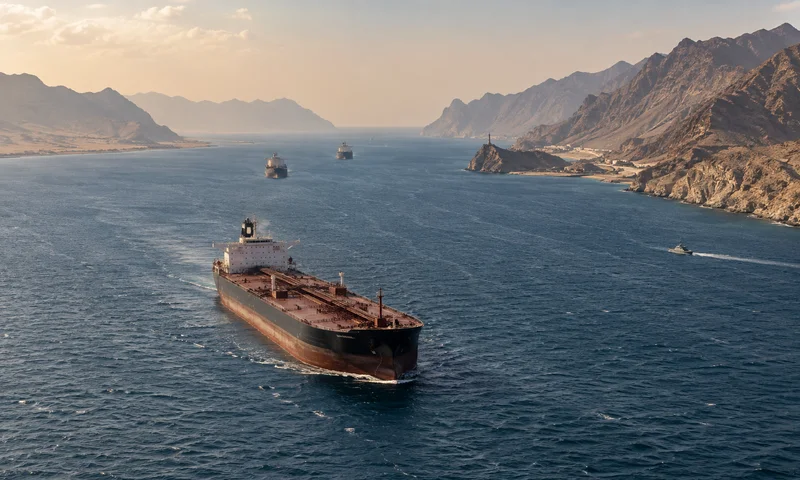
Global Oil Route at Risk as Houthis Move Closer to Bab al-Mandab
Yemen’s Iran-aligned Houthis are moving closer to the Bab al-Mandab Strait, raising fears of fresh disruption to global oil supplies and maritime trade. The group launched a major ground assault around the strategic waterway and reportedly captured the coastal city of Mokha. The advance comes as fighting with Saudi-backed forces intensifies across western Yemen. Hundreds of people have reportedly died in the clashes. The Houthis and Saudi Arabia have also exchanged strikes, further threatening one of the world’s busiest shipping corridors. Why Bab al-Mandab Matters Bab al-Mandab means “Gate of Tears” in Arabic, a name linked to the strait’s history of shipwrecks. It connects the Red Sea with the Gulf of Aden and Indian Ocean. The waterway stretches about 100 kilometres and narrows to only 30 kilometres at its tightest point. It separates Yemen from Djibouti and Eritrea. Read More: Iran Threatens Gulf Oil Shutdown as US Plans ‘Economic D-Day’ Tankers and cargo vessels use the route to reach the Mediterranean through the Suez Canal. This route shortens journeys between Asia, Europe and North America by thousands of kilometres. Traffic has remained weak since Houthi attacks disrupted Red Sea shipping during the Gaza conflict. IMF PortWatch data showed transits falling from 26,895 ships in 2023 to 14,498 in 2024. The figure dropped further to 14,070 in 2025. Average traffic between January and August 2026 stood at 40.8 vessels per day. That was only slightly more than half the pre-crisis level. Saudi Oil Shipments Face Growing Threat Bab al-Mandab carried about 12 percent of global oil shipments in 2023, according to the US Energy Information Administration. Its importance grew after Iran restricted traffic through the Strait of Hormuz. Saudi Arabia responded by increasing crude exports from its Red Sea port of Yanbu. Shipments averaged around 3.8 million barrels per day between March and July, according to Kpler estimates. That volume was about five times the pre-war level. It also equalled roughly 4.5 percent of the crude processed by refineries worldwide in 2025. However, Saudi shipments fell to 1.5 million barrels per day in August after the Houthis resumed attacks in July. Preliminary Kpler data placed exports at 2.44 million barrels per day during September’s first nine days. Andreas Krieg, a security expert at King’s College London, said the “biggest danger is not necessarily physical closure of Bab al-Mandab but persistent uncertainty”. “I would expect prolonged instability to suppress traffic through Suez and impose significant costs on Egypt, while adding time and expense to Europe-Asia trade,” he said. Houthi Gains Could Reshape Regional Conflict The wider Middle East war began on February 28 when the United States and Israel attacked Iran. Tehran retaliated with strikes across the region. Fighting in Yemen resumed in July after an Iranian aircraft landed despite Saudi control of Yemeni airspace. Saudi-backed forces struck the airport, helping unravel the 2022 truce. Read More: $37.5 Billion Spent on Iran War as Trump Seeks $90 Billion More The Houthis then declared a maritime blockade of Saudi Arabia and attacked its tankers and territory. Their advance toward Bab al-Mandab could now increase Iran’s ability to pressure Gulf energy exports. Krieg said Houthi gains would provide “extraordinary strategic leverage”. “Controlling the coast would strengthen Houthi maritime coercion, but the ability to impose risk on shipping already exists without territorial control of the strait,” he added.
