


Apple TV subscriptions reportedly appear on some Pakistani accounts for around Rs200 a month, but users still cannot play videos. TechJuice reported the development, saying the offer includes Family Sharing and a free trial. However, the report does not establish a complete commercial launch, and Apple’s official availability information still limits local access. The distinction matters for anyone considering subscribing. An active subscription or payment confirmation does not necessarily mean the streaming catalogue will work in Pakistan. Subscription appears active, streaming does not According to TechJuice, some users successfully subscribed through Pakistani Apple accounts. They reportedly received confirmation showing the monthly price and renewal details. Their account settings also displayed an active subscription. The reported offer allows sharing with up to five other people and includes an initial free month. Read More: Apple Launches iPhone Duo, but Is It Worth the $1,999 Price? Access nevertheless remains inconsistent. TechJuice said some users could browse the catalogue through a VPN, but videos would not play despite an active subscription. Others reportedly could not find Pakistan in the country selection menu, preventing them from completing registration. These accounts suggest that subscription processing and content access are not operating together consistently. They do not confirm when streaming will become available nationwide. What Apple officially lists for Pakistan Apple’s country-by-country media services page currently lists the Apple TV app in Pakistan for “Synced videos only”. It does not list an Apple TV streaming subscription under Pakistan. By contrast, the same page explicitly lists subscriptions for supported markets. Apple also explains that media availability and app features vary by country or region. Its published guidance therefore does not currently confirm the full streaming access suggested by the subscription reports. The Apple TV app and the paid streaming service serve different functions. Having access to the app does not automatically provide access to Apple’s subscription catalogue. The reported Rs200 price should consequently remain a reported account-level offer, rather than a confirmed nationwide launch price. Family Sharing and trial terms need checking Apple’s general subscription guidance allows eligible customers to share Apple TV with up to five family members through Family Sharing. The company also supports viewing through compatible devices using the Apple TV app. However, those general features do not override restrictions in individual markets. For Pakistani customers, the unresolved issue is whether a subscription provides working video access. The reported free trial does not settle that question. Read More: Apple and Samsung Want You to Stop Owning Your Phone Users who already see an active subscription can review its renewal date and billing terms in their account settings. They should also check whether playback works before assuming the service is fully available. The reports raise the possibility of a future rollout, but that remains unconfirmed. Neither successful billing nor catalogue browsing establishes that Apple has completed a Pakistan launch.

ONIC Reassures Subscribers as PTA Questions Its Operating Structure
ONIC has assured customers that its services remain uninterrupted, following reports of regulatory action concerning its operating structure. The digital telecom brand said customers could continue using its services. It also reaffirmed its commitment to connectivity, customer support and service standards. “ONIC would like to reassure its customers that there is no disruption to its services, and customers can continue to use uninterrupted services.” “We remain fully committed to serving our customers and maintaining the highest standards of connectivity, service and support.” “Our customers remain our top priority, and we appreciate their continued trust and confidence in ONIC.” Assurance focuses on existing customers The statement addresses service continuity but does not detail how ONIC will respond to the reported regulatory directions. ONIC’s official website identifies it as a digital brand of Pak Telecom Mobile Limited (PTML), which also operates Ufone. Business Recorder reported on September 15 that the Pakistan Telecommunication Authority had ordered PTML to halt ONIC’s commercial operations immediately. The reported restrictions cover new sales, activations, SIM and eSIM issuance, subscriptions and marketing. However, the report said PTA allowed three months from receipt of the order to migrate existing ONIC customers to PTML. That period aims to protect subscribers from disruption. The reported migration window applies exclusively to existing customers. It does not authorise continued commercial operations or new customer acquisition. ONIC’s assurance therefore concerns continued connectivity. It does not establish that PTA has withdrawn or suspended its directions. Why PTA questioned the arrangement According to Business Recorder, PTA concluded that ONIC’s structure falls within the Mobile Virtual Network Operator framework. PTML had argued that ONIC was its own digital brand, operating through an outsourced services arrangement. The company maintained that subscribers, spectrum, numbering and regulatory responsibility remained with PTML. The regulator reportedly found that ONIC’s operations went beyond a conventional brand arrangement. Its findings cited customised packages, separate billing and customer-management systems, and dedicated digital support platforms. PTA also identified significant commercial and customer-facing responsibilities handled by another entity, DTMS. These included marketing, customer acquisition, identity-verification processes, SIM logistics and customer services. The report said PTA also raised concerns about subscriber information, data security, service quality and business continuity. Two routes to regulatory compliance The reported decision gives PTML two options. It can restructure ONIC as an unambiguous PTML product within its existing mobile network licence. This would require removing features that make it an independently operated MVNO proposition. Alternatively, the relevant company must obtain an MVNO licence to retain that structure. PTA also reportedly required a compliance report within seven working days of receiving the order. ONIC’s media statement did not identify its preferred route or announce migration arrangements. It also gave no details about potential changes to customer accounts, packages or SIMs. Its immediate message to subscribers remains that services continue without disruption.

Cadbury Is Moving it’s Key Ingredient Production to Malaysia
Mondelez International has shortened its Cadbury ingredient supply chain by at least two months after opening a $22 million facility in Malaysia. The Shah Alam facility opened on Friday, September 11. It produces chocolate crumb, an ingredient that contributes to Cadbury chocolate’s taste and texture. Local production replaces imports from Australia and South Africa. The investment brings a key manufacturing input closer to Mondelez’s Southeast Asian operations. “Producing it directly in Shah Alam removes at least two months from our supply-chain lead time,” Nitin Binnani told CNBC. Binnani, Mondelez’s vice president of integrated supply chain for Southeast Asia, said the facility would lower import and transportation costs. It will also support expected volume growth across the region in the coming years. Malaysia hub also supports Pakistan Shah Alam serves as Mondelez’s sole Cadbury manufacturing hub for Southeast Asia. It produces more than 130 chocolate varieties and around 100 million bars annually, according to Binnani. The company is also exporting crumb to Pakistan to help address supply disruptions from interrupted shipping channels, he said. Read More: Mondelēz Pakistan Wins Two Gold and Three Black Dragons That gives the Malaysian operation a role beyond supplying its immediate regional market. For Pakistan, the shipments provide an alternative ingredient source while shipping disruptions affect supplies. The change concerns ingredient sourcing and delivery times. The supplied report did not announce any reduction in retail chocolate prices. Southeast Asia’s expanding role Mondelez sees further growth opportunities in Southeast Asia’s snacking market. Its factories across the region already serve both domestic consumers and overseas customers. “Our Cikarang plant in Indonesia, for example, supplies products to nearly 40 countries including Australia and Japan, while Thailand operates as an export-oriented hub for gum and candy,” Binnani said. The Malaysian investment adds ingredient production to that regional network. It also reduces the time needed to bring crumb into the Shah Alam operation. The expansion follows a turbulent period for chocolate manufacturers. Cocoa prices have eased after a record-breaking rally over the past two years, CNBC reported. Adverse weather and poor harvests fuelled that surge, increasing costs for producers. Mondelez’s investment addresses a separate pressure: the cost and time involved in transporting ingredients across borders. Cargill expands chocolate ingredient capacity Other American businesses are also expanding chocolate-related production in Malaysia. Cargill announced a new specialty fats production line at its Port Klang edible oil facility on March 31. Its expanded capabilities include cocoa butter equivalents and low-trans cocoa butter replacers. Read More: This Chocolate Is So Thin, It Melts Before You Can Bite It The facility also supplies specialty fats for bakery, dairy, frying and filling applications. Cargill said the investment would help manufacturers develop products suited to different consumer and market needs. Chicago-based Mondelez owns Oreo, Ritz, Cadbury and Sour Patch Kids. Formerly Kraft Foods, it adopted the Mondelez International name in 2012 after separating its North American grocery business.
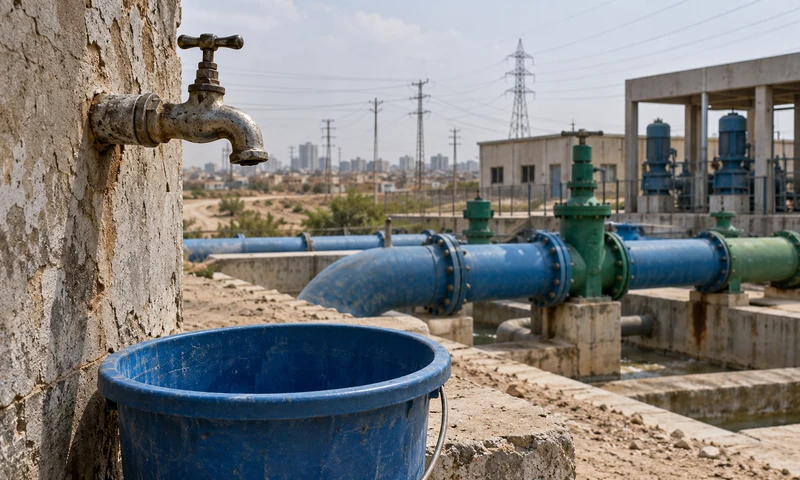
Dhabeji Outage: KE, KWSC Clash Over Karachi Water Disruption
A power fault at the Dhabeji pumping complex disrupted Karachi’s water supply, prompting conflicting accounts from K-Electric and the Karachi Water and Sewerage Corporation (KWSC). Both utilities acknowledged the disruption but disagreed over which organisation’s cables suffered damage and how the incident began. The dispute centres on electrical infrastructure serving a key facility in the city’s water supply network. K-Electric said a fire in bushes near the pumping complex damaged KWSC cables. The company said it immediately dispatched emergency teams to address the fault. According to its spokesperson, a separate fault later developed in an underground cable. However, electricity supply to 20 of the complex’s 22 pumping motors remained operational, the spokesperson said. K-Electric said its teams carried out emergency repairs and restored the affected connection within the shortest possible time. Its account did not specify the duration of the interruption. KWSC challenges K-Electric’s account KWSC rejected the explanation and accused K-Electric of trying to shift responsibility for the incident. A water corporation spokesperson said the fire occurred in K-Electric’s cable. The resulting electricity disruption affected pumping operations and water supplies to several parts of Karachi, the spokesperson added. KWSC said K-Electric’s statement created a “wrong impression” by linking the incident to the water corporation’s infrastructure. Read More: New Power Plan Approved as Pakistanis Face Possible Tariff Increase The competing explanations leave responsibility for the damaged cable unresolved in the reported accounts. They also provide no agreed assessment of the disruption’s full impact on water deliveries. K-Electric’s statement that most motors retained power does not establish how much water reached consumers during the incident. The supplied report gives neither a neighbourhood-by-neighbourhood breakdown nor a confirmed figure for the volume of water lost. Infrastructure upgrade proposal awaits response K-Electric also said it had shared an advisory plan with KWSC around three months earlier. The proposal aimed to strengthen the corporation’s electrical infrastructure and reduce the risk of similar incidents. The company said it still awaited KWSC’s final response. Implementing the plan would improve infrastructure reliability and significantly reduce future faults, it added. KWSC’s response, as reported, challenged responsibility for the fire but did not address the proposed upgrade plan. The incident comes amid a broader effort to improve Karachi’s water and sewerage services. The Sindh government’s Karachi Water and Sewerage Services Improvement Project identifies infrastructure rehabilitation and stronger utility operations as priorities. Read More: K-Electric Reports Steady Gains in 2025 as Karachi’s Power Demand Hits New Highs Its published programme includes replacing ageing water lines, rehabilitating sewer networks and improving KWSC’s financial and operational capacity. It also aims to reduce losses, lower running costs and expand services in underserved settlements. Those wider reforms provide context for the concerns over Dhabeji’s reliability. The immediate dispute concerns responsibility for the cable damage, while K-Electric’s pending proposal raises a separate question about preventive upgrades. For Karachi residents, the episode highlights how faults affecting a major pumping facility can interrupt water supplies across multiple areas.

Former KFC Chief Sabir Sami Makes His Next Move at Chipotle
Chipotle Mexican Grill has appointed Pakistani-origin executive and former KFC chief Sabir Sami to its board of directors, effective immediately. The American fast-casual restaurant chain announced the appointment on Monday, September 14. Sami brings decades of experience managing consumer businesses and restaurant operations across international markets. His appointment expands Chipotle’s board to 11 directors, including 10 independent members. It comes as the company pushes into new markets, including Asia. “Sabir Sami brings more than 30 years of global consumer and restaurant industry experience, including 16 years at Yum! Brands Inc., he held a series of senior leadership roles across KFC, Taco Bell and Habit Burger & Grill,” Chipotle said in the statement quoted by Business Recorder. From Karachi to global restaurant leadership Sami holds an MBA from the University of Karachi. He served as KFC’s chief executive from January 2022 to February 2025. He oversaw the brand’s global strategy and performance, reporting directly to the chief executive of parent company Yum! Brands. Previously, Sami served as KFC’s chief operating officer and managing director of KFC Asia. He led global operations while overseeing Thailand, India, Central Asia and Greater Asia. Read More: Papa Johns Says Goodbye to Pakistan, But What Does It Mean? His earlier responsibilities also covered KFC’s Middle East, North Africa, Pakistan and Turkey markets. Before joining Yum! Brands in 2009, he held leadership positions at Procter & Gamble, Coca-Cola and Reckitt Benckiser. Chipotle’s announcement also identifies him as a director of Sami Advisory, the consulting firm he founded in August 2025. He additionally serves on Save the Children Canada’s board. International experience takes centre stage “I’m thrilled to join Chipotle’s Board at such an exciting time for the company,” Sami said. “With an iconic brand and global fanfare, Chipotle has an immense opportunity to bring its craveable menu to more guests around the world. I look forward to helping the company realise its significant potential.” Chipotle chairman Scott Maw highlighted Sami’s experience overseeing restaurant businesses across different markets. Read More: End of an Era: Yum Brands Sells Pizza Hut in $2.7 Billion Deal “Sabir brings deep restaurant operating expertise and a proven track record leading brands across international markets,” Maw said. “That experience will be invaluable as we scale Chipotle with intention, strengthen our operations and expand access to our brand around the world.” Appointment follows Asia debut Chipotle had more than 4,200 restaurants as of June 30, 2026. Its footprint covered the United States, Canada, Britain, France, Germany and the Middle East. The company says it uniquely owns and operates every restaurant in its US, Canadian and European network among chains its size. On September 2, Chipotle announced its first Asian restaurant in Seoul, partnering with Sangmidang Holdings. It plans two further South Korean locations by year-end and its first Singapore restaurant in 2027.

How Satellites Will Help HBL Microfinance Bank Assess Farm Loans
HBL Microfinance Bank and SUPARCO are expanding satellite-enabled agricultural financing across Punjab. The partners announced the province-wide rollout on September 14. Their Climate-Smart Agri-Financing initiative moves beyond its pilot phase. Implementation has already begun. Punjab’s central role in Pakistan’s agriculture makes it a key market. The programme combines satellite analysis with the bank’s field network. It also draws on its agricultural lending expertise. Satellite data will help assess land use and crop conditions. Broader crop monitoring will support lending decisions. The partners aim to strengthen the bank’s agricultural portfolio against climate risks. Satellite intelligence guides lending HBL Microfinance Bank President and CEO Amir Khan said: “Pakistan’s farmers are at the frontline of climate change, facing increasingly unpredictable weather, water stress and other risks that directly impact their livelihoods and our country’s food security. Our collaboration with SUPARCO allows us to bring the power of satellite intelligence into agricultural financing, helping us better understand conditions on the ground and enabling financing decisions that are more informed, timely and aligned with farmers’ realities. We see this partnership as a model for how technology, finance and national institutions can come together to address some of the most pressing challenges facing Pakistan’s agricultural sector.” The expansion builds on SUPARCO’s established work in agriculture. Its wider satellite applications also cover environmental monitoring and disaster management. The partnership applies this expertise to farm lending. Remote analysis will complement on-ground assessments. Monitoring will continue after loan disbursement. Climate risks and farm-level assessment SUPARCO’s Zafar Iqbal outlined the technology supporting the initiative. He serves as Member, Space Application & Research Wing. “SUPARCO brings decades of experience in agricultural monitoring through satellite technology, supported by 35 years of spatial data archives and analytical outputs. Building on this expertise, SUPARCO has developed and trained machine learning and deep learning (ML/DL) models that generate accurate and reliable agricultural insights through a Geo-AI enabled computational platform. This capability, complemented by SUPARCO’s Space4Climate initiative, which provides probabilistic risk assessments for major climate-related hazards, including floods, droughts and hailstorms, enables the integration of agricultural and climate-risk intelligence into the agri-lending process. By bringing together these capabilities, SUPARCO has developed an analytical engine to support HBL MfB’s agri-lending system through more informed lending decisions, farm-level risk assessment and post-loan monitoring. Furthermore, SUPARCO will facilitate public access to agricultural intelligence through the Space4Climate portal, supporting wider awareness and greater resilience across the agricultural sector of Pakistan.” The partners emphasised better information and responsible financing. They also highlighted stronger agronomic assessments. Public access to agricultural intelligence forms another planned component. The announcement did not specify a lending target. It gave no district-wise rollout schedule. It also omitted loan pricing and eligibility details. No farmer enrolment figure accompanied the expansion announcement.

O/A Level Paper Leak: No Evidence it Originated in Pakistan
Investigators found no evidence that the O/A Level paper leaks originated in Pakistan, a parliamentary committee heard on Monday. The briefing suggested a possible overseas source, while highlighting limits on tracing foreign servers. Acting chairman Anjum Aqeel Khan chaired the National Assembly Standing Committee on Federal Education and Professional Training meeting. Members heard that the National Cyber Crime Investigation Agency (NCCIA) “found no evidence to establish that the leakage had originated from Pakistan.” However, NCCIA lacks direct access to servers abroad. This restricts its ability to independently trace the source, location and method of alleged leaks through overseas servers. The finding does not establish which country the leaks came from. Cambridge exam investigation The government ordered an inquiry in May following concerns from parents and students about alleged Cambridge examination paper leaks. It directed NCCIA to coordinate with Cambridge Assessment International Education. Read More: Baitussalam Student Scores a Perfect 200 in Cambridge O Level Mathematics Separately, Cambridge confirmed that someone had prematurely shared AS Level Mathematics Paper 12 (9709), taken on April 29, 2026. On May 7, it cancelled the affected paper and scheduled a free replacement for June 9. Cambridge said the incident affected several regions, including Pakistan, and that it was working with law-enforcement authorities. Lawmakers demand action against campus drugs The committee also expressed grave concern over reports of drug use and supply in educational institutions. Members demanded immediate, coordinated action to identify suppliers and keep criminal elements away from campuses. They urged coordination between the Anti-Narcotics Force, police, Higher Education Commission and Federal Directorate of Education. Read More: Cambridge Announces O Level, IGCSE Results 2026 in Pakistan Lawmakers sought verified figures showing the number and nature of cases, official action, coordination arrangements, and penalties or punishments imposed. They stressed that safe, drug-free institutions require clear responsibilities, effective monitoring and strict enforcement. Committees and policies alone would not deliver results without implementation and visible action against suppliers. Officials said higher education institutions had established Anti-Drug and Tobacco Committees to monitor student drug and tobacco use. Members called for stronger links with police and regulators to ensure timely reporting, investigation and enforcement. Skills training and dyslexia support The committee urged the National Vocational and Technical Training Commission to make its programmes more focused on employment outcomes. Members highlighted changing international labour demand, particularly in the Middle East. They called for continuous assessments of emerging skills needs and training aligned with overseas employment opportunities. The Federal Board of Intermediate and Secondary Education reported new examination support for students with dyslexia, following subcommittee recommendations. These measures include extra time and help reading question papers. Lawmakers also sought regular psychological support and trained remedial teachers to identify learning difficulties early and assist students in classrooms. A member highlighted Punjab Assembly legislation on dyslexia and urged a comprehensive, consistent approach. The Inter Boards Coordination Commission said it would consult all examination boards to promote uniform support measures nationwide.
