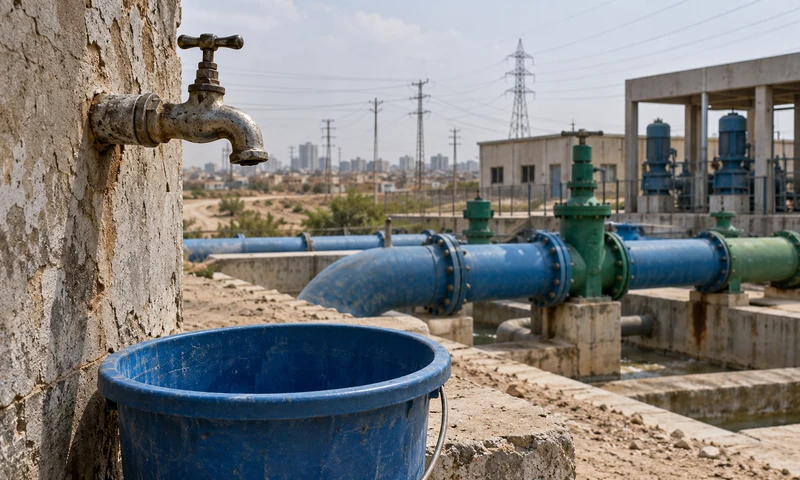
A power fault at the Dhabeji pumping complex disrupted Karachi’s water supply, prompting conflicting accounts from K-Electric and the Karachi Water and Sewerage Corporation (KWSC).
Both utilities acknowledged the disruption but disagreed over which organisation’s cables suffered damage and how the incident began. The dispute centres on electrical infrastructure serving a key facility in the city’s water supply network.
K-Electric said a fire in bushes near the pumping complex damaged KWSC cables. The company said it immediately dispatched emergency teams to address the fault.
According to its spokesperson, a separate fault later developed in an underground cable. However, electricity supply to 20 of the complex’s 22 pumping motors remained operational, the spokesperson said.
K-Electric said its teams carried out emergency repairs and restored the affected connection within the shortest possible time. Its account did not specify the duration of the interruption.
KWSC challenges K-Electric’s account
KWSC rejected the explanation and accused K-Electric of trying to shift responsibility for the incident.
A water corporation spokesperson said the fire occurred in K-Electric’s cable. The resulting electricity disruption affected pumping operations and water supplies to several parts of Karachi, the spokesperson added.
KWSC said K-Electric’s statement created a “wrong impression” by linking the incident to the water corporation’s infrastructure.
Read More: New Power Plan Approved as Pakistanis Face Possible Tariff Increase
The competing explanations leave responsibility for the damaged cable unresolved in the reported accounts. They also provide no agreed assessment of the disruption’s full impact on water deliveries.
K-Electric’s statement that most motors retained power does not establish how much water reached consumers during the incident. The supplied report gives neither a neighbourhood-by-neighbourhood breakdown nor a confirmed figure for the volume of water lost.
Infrastructure upgrade proposal awaits response
K-Electric also said it had shared an advisory plan with KWSC around three months earlier. The proposal aimed to strengthen the corporation’s electrical infrastructure and reduce the risk of similar incidents.
The company said it still awaited KWSC’s final response. Implementing the plan would improve infrastructure reliability and significantly reduce future faults, it added.
KWSC’s response, as reported, challenged responsibility for the fire but did not address the proposed upgrade plan.
The incident comes amid a broader effort to improve Karachi’s water and sewerage services. The Sindh government’s Karachi Water and Sewerage Services Improvement Project identifies infrastructure rehabilitation and stronger utility operations as priorities.
Read More: K-Electric Reports Steady Gains in 2025 as Karachi’s Power Demand Hits New Highs
Its published programme includes replacing ageing water lines, rehabilitating sewer networks and improving KWSC’s financial and operational capacity. It also aims to reduce losses, lower running costs and expand services in underserved settlements.
Those wider reforms provide context for the concerns over Dhabeji’s reliability. The immediate dispute concerns responsibility for the cable damage, while K-Electric’s pending proposal raises a separate question about preventive upgrades.
For Karachi residents, the episode highlights how faults affecting a major pumping facility can interrupt water supplies across multiple areas.