

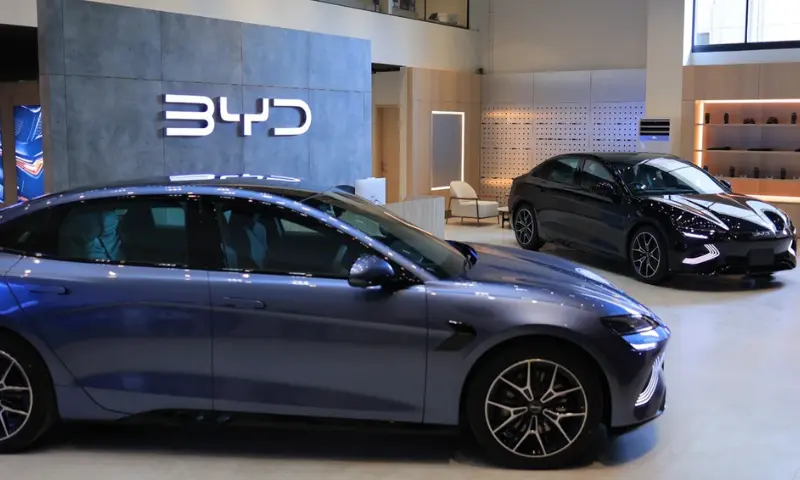
BYD has reached 10,000 vehicles on Pakistani roads, its local partner Mega Motor Company announced on September 25 in Karachi. MMC described the achievement as Pakistan’s fastest expansion by a new-entrant New Energy Vehicle brand. The milestone comes ahead of local assembly. The company attributed the growth to strong demand and increasing confidence in electrified transport. Pakistan’s NEV market remains at an early stage. BYD expands Pakistan lineup to five models BYD entered the market with the Atto 3 and Seal. Its portfolio now comprises five models. The additions include the Atto 2, Sealion 7 and Shark 6. MMC described the Atto 2 as Pakistan’s top-selling EV. It identified the Shark 6 as the country’s first plug-in hybrid pickup. The expanded range serves different vehicle segments and customer requirements. MMC said demand across those segments supported the 10,000-vehicle milestone. The announcement did not provide a model-by-model sales breakdown. MMC prepares dedicated NEV assembly plant “The significance of 10,000 vehicles goes well beyond the number itself. It reflects the progress MMC has made in building the foundations for new energy mobility in Pakistan,” said Aly Khan, CEO of Mega Motor Company. “From the outset, our focus has been on building for the long term, establishing the capabilities, infrastructure and market presence needed to support this transition at scale. We are pleased to have BYD as our partner and to have worked closely together at every step to bring this vision to life. As we move towards the next step in our journey, MMC is preparing to launch Pakistan’s first and largest NEV assembly facility, marking a new chapter in our commitment to the future of mobility in Pakistan.” Reuters reported in July 2025 that construction near Karachi had begun that April. The planned initial capacity was 25,000 vehicles annually across two shifts. That earlier plan envisaged imported parts alongside some locally manufactured non-electric components. MMC’s latest announcement did not give a firm production start date. BYD signals further expansion in Pakistan “Pakistan has quickly become an important market in BYD’s global journey, and the trust consumers have shown in our brand is particularly significant to us,” said Liu Xueliang. He is BYD’s vice president and general manager of its Asia Pacific Auto Sales Division. “Every BYD owner who has chosen to embrace new energy technology reinforces our commitment to this market. We are working closely with MMC to ensure the right mix of products is available to Pakistani consumers at the right time, supporting a seamless customer experience throughout their new energy journey. We will continue bringing BYD’s world-class technology and innovation to Pakistan and expanding our presence in the market as consumer needs evolve.” MMC says the upcoming facility will focus exclusively on NEVs. It describes the plant as Pakistan’s largest dedicated facility of its kind. Local assembly would move the partnership beyond selling imported vehicles. The company presents that transition as its next major milestone.

PTCL and Mercantile to Offer iPhone 18 Pro Series With Two-Year Warranty in Pakistan
Pakistan Telecommunication Company Limited (PTCL) will offer the iPhone 18 Pro series with a two-year warranty, protection plan and complimentary connectivity benefits. PTCL announced the partnership with Mercantile, Apple’s authorised distributor in Pakistan, on September 25 in Islamabad. Sales will begin with the official launch at five PTCL Service Centers across Islamabad, Lahore and Karachi. The arrangement combines device purchases, after-sales support and home connectivity through PTCL’s retail network. Customers will also have multiple payment options. Buyers will receive one year of Apple warranty coverage, followed by an additional year from Mercantile. The package also includes a separate 12-month protection plan. Mercantile’s official product pages list a standard 12-month Apple warranty, making the additional year a distinct part of this offer. PTCL said customers would receive complimentary connectivity benefits with their purchases. However, its announcement did not specify their duration, broadband speeds or monetary value. The release also omitted device prices, participating branch addresses and detailed payment arrangements. It did not outline the protection plan’s exclusions or claims process. PTCL operates 194 Service Centers and Joint Shops across 96 cities. The initial iPhone 18 Pro rollout will cover five service centres within that broader network. The company aims to grow its consumer device and electronics business alongside its core connectivity services. It said the initiative would make premium technology more accessible while combining devices with high-speed internet. Amad Khan, Chief Marketing Officer, PTCL, said, “Our ambition is to make the PTCL Service Centre experience more relevant to the way customers live and connect today. The availability of the iPhone 18 Pro series through our partnership with Mercantile brings together a premium device, trusted after-sales support and PTCL connectivity in one proposition. It is another step in evolving our retail network beyond connectivity and into a broader destination for technology and digital services.” Nauman Durrani, CEO, Mercantile Pakistan, said, “We are pleased to partner with PTCL in bringing the iPhone 18 Pro series to customers through its established retail network. The partnership combines Mercantile’s role as an Apple Authorized Distributor and Apple Authorized Service Provider with PTCL’s extensive customer reach, providing customers with access to genuine Apple devices, official warranty coverage and after-sales support.” Mercantile says it has operated in Pakistan since 2019, following its appointment as an authorised Apple distributor. PTCL said the offer builds on its earlier iPhone 17 series launch. That rollout generated the highest device sales volumes its service-centre channel had recorded, although the company provided no unit figures. Customers can pair their new handset with PTCL fixed broadband or Flash Fiber services through the same retail visit. Flash Fiber is PTCL’s fibre-to-the-home broadband service. The arrangement allows customers to discuss device purchases and home internet requirements at one location.

Islamabad Agreement Returns to Focus as Xi Meets Trump
Chinese President Xi Jinping told US President Donald Trump that Beijing supports restoring a June agreement to end the Iran war. The deal also sought to reopen the Strait of Hormuz, a crucial route for global energy shipments. Xi raised the issue during their White House meeting on Thursday, September 24, according to China’s state news agency Xinhua. He backed a return to the Islamabad Memorandum of Understanding, which Pakistan and Qatar helped mediate in June. His remarks renewed Beijing’s push for negotiations as diplomatic efforts continued alongside severe disruption to Gulf shipping. China urges comprehensive US-Iran agreement Xi urged Washington and Tehran to resolve their differences through talks as soon as possible, Xinhua reported. He said China favoured respect for every country’s sovereignty and security. Beijing had worked to reduce tensions and encouraged the parties to maintain negotiations, he added. The Chinese president also called for a comprehensive settlement covering the nuclear issue and other outstanding disputes. Xinhua’s account outlined China’s position but did not announce a renewed US-Iran agreement or a timetable for implementing one. The appeal followed Chinese Foreign Minister Wang Yi’s September 16 meeting with Iranian Foreign Minister Abbas Araghchi in Beijing. Wang urged both sides to exercise restraint and rebuild negotiations around their existing understandings. He also pressed for safe shipping and warned against further conflict spreading into Yemen and the Red Sea. Islamabad agreement returns to focus The June memorandum aimed to halt the war and restore passage through Hormuz while allowing further negotiations. However, the understanding failed to produce a lasting settlement. During his Beijing visit, Araghchi accused Washington of violating it less than three weeks after signing. Iran has continued to signal conditional support for diplomacy. A senior Iranian official told Reuters on September 22 that Tehran could reopen Hormuz within seven days. That would require Washington to ease military pressure and lift its blockade of Iranian ports, the official said. Tehran submitted its proposal through mediators on September 16. Its delegation at the UN General Assembly had authority to pursue renewed diplomacy. “The UN General Assembly is a golden opportunity for the US to return to diplomacy”, the official told Reuters. Hormuz shipping remains sharply reduced Fresh shipping figures underline the disruption facing energy markets as leaders discuss restoring the agreement. Preliminary tracking data showed nine vessel transits through Hormuz on Thursday, down from 14 a day earlier, Reuters reported. Eight ships exited the waterway, while one entered. The latest count also fell below the 10-day average of 18 transits. Before the war began on February 28, approximately 125 large commercial vessels used the strait daily. The route carried roughly one-fifth of global daily crude oil and liquefied natural gas supplies. The tracking figures may exclude ships operating with their transponders switched off. China, a major buyer of Iranian oil, has repeatedly called for normal navigation. Xi’s intervention placed that demand alongside Beijing’s support for a negotiated peace.
Sazgar Expands Electric Vehicle Lineup With BAIC’s ARCFOX Brand
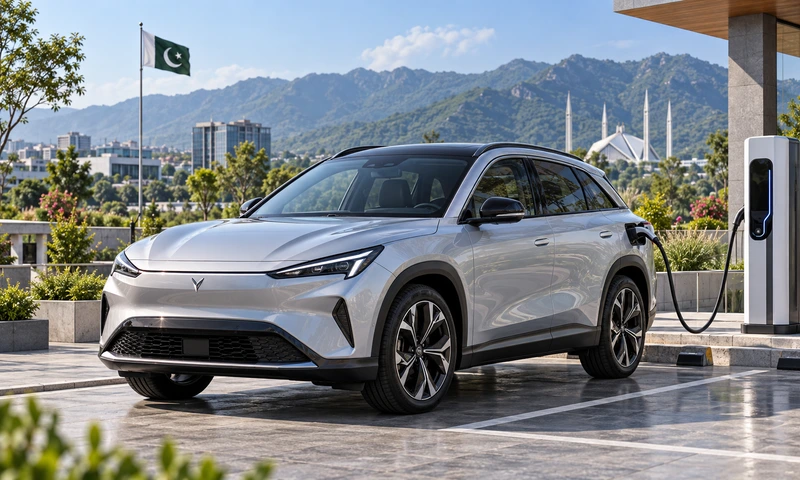
Sazgar Engineering Works Limited plans to introduce ARCFOX electric vehicles in Pakistan, adding BAIC Group’s premium brand to its portfolio. The automaker announced the move through a Pakistan Stock Exchange filing on Friday, September 25. The planned introduction extends Sazgar’s relationship with China’s BAIC and follows its expansion into hybrid and plug-in hybrid vehicles. “We are pleased to inform you that Sazgar Engineering Works Limited (“the Company”) intends to introduce ARCFOX New Energy Vehicles (NEVs) in Pakistan, further expanding its New Energy Vehicle (NEV) portfolio,” the company said in a notice. The announcement establishes Sazgar’s intention to bring the brand to Pakistan. However, the details quoted in the filing do not identify models, prices or a launch date. ARCFOX brings Magna and Huawei partnerships Sazgar highlighted ARCFOX’s positioning and international engineering links as key features of the brand. “ARCFOX is BAIC Group’s high-end intelligent electric vehicle brand; it brings together premium design and advanced technology, with engineering and technology collaborations involving Magna and Huawei,” it added. Those partnerships already have a production history in China. Magna’s corporate records show that its Chinese manufacturing joint venture launched the ARCFOX Alpha-T in 2020. Read More:Systems, Sazgar and Murree Brewery Join Forbes Asia’s Elite 200 The Alpha-T marked Magna’s first complete-vehicle assembly operation outside Europe. Its 2021 annual report also records the Alpha-S launch through its manufacturing joint venture with BAIC’s electric vehicle business. Huawei, meanwhile, describes the ARCFOX Alpha S·HI as a vehicle developed through its partnership with the automaker. That model uses Huawei’s advanced driving technology and lidar sensors to detect its surroundings. These examples explain the collaborations mentioned in Sazgar’s announcement. They do not establish which technologies or vehicles the company will offer Pakistani buyers. Sazgar expands beyond its original businesses Sazgar began operations as a private limited company in Pakistan in 1991 and became a public limited company in 1994. Its principal activities cover manufacturing and selling automobiles, automotive parts and accessories, alongside household electronic appliances. The company operates manufacturing plants in Lahore. Its wider product portfolio includes auto rickshaws, tractor wheel rims and home appliances. Sazgar subsequently moved into four-wheelers, including SUVs, broadening its business beyond its earlier manufacturing lines. The company introduced a BAIC-branded four-wheeler in 2022. By 2023, it had started SUV production and introduced HAVAL hybrid electric vehicles locally, including its first locally assembled hybrid. ARCFOX follows HAVAL plug-in hybrid launch Sazgar launched its locally assembled HAVAL H6 1.5L plug-in hybrid electric vehicle on August 16, 2025. That launch used completely knocked-down, or CKD, assembly. The ARCFOX announcement now signals another step in the company’s expansion across electrified vehicle categories. Read More: Pakistan Auto Market Gets New Hybrid Option as Sazgar Opens TANK-500 Bookings For prospective buyers, several practical details remain outstanding. The quoted disclosure provides no battery capacities, driving ranges, charging specifications or delivery schedule. It also does not specify whether Sazgar will initially import complete vehicles or assemble ARCFOX models locally. Those details will determine the eventual offering in Pakistan.
Attacks Near Makkah Put Pakistan-Saudi-Turkiye Defence Pact in Focus
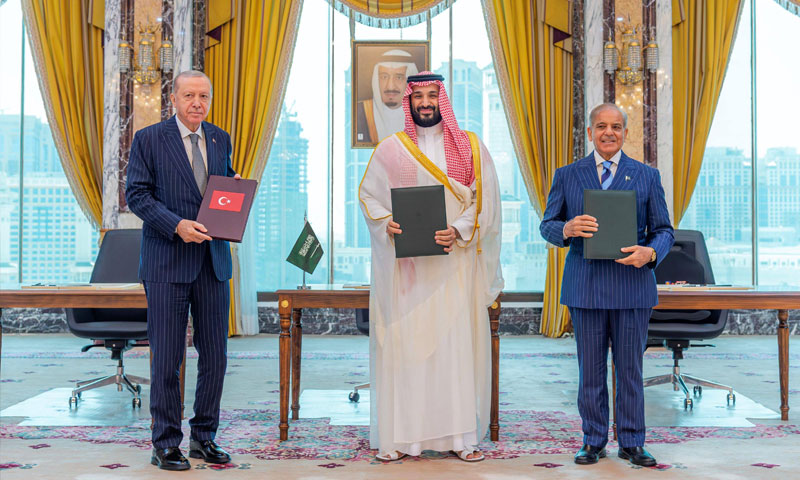
Pakistan, Saudi Arabia and Turkiye plan an urgent military chiefs’ meeting to discuss supporting Riyadh against escalating Houthi attacks. The move comes under their Makkah Joint Defence Agreement as Iran distances itself from the Yemeni group. The Houthis claimed dozens of missile and drone launches against Saudi targets on Thursday. Saudi authorities reported intercepting six ballistic missiles. Emergency alerts covered Makkah, Jeddah and Yanbu, the kingdom’s main Red Sea oil port. The group has also attacked Yemen’s Saudi-backed government, disrupting oil flows from the world’s largest energy exporter. Saudi Arabia’s highest religious authority urged soldiers to prepare to sacrifice their lives until the Houthis lose power. Defence pact faces escalating attacks The three countries’ foreign ministers condemned attacks targeting Makkah and civilian sites, affirming Riyadh’s right to defend itself. Read More: Trump Hails Pakistan-Saudi-Turkiye Defence Pact as ‘Bold Step’ “The ministers also discussed arrangements for holding an urgent meeting of the chiefs of staff of the three countries to discuss ways to support Saudi Arabia under the Makkah Joint Defence Agreement, which stipulates that an attack against any one of the parties constitutes an attack against all parties,” the Saudi statement said. The countries signed the agreement on August 7. Turkish Foreign Minister Hakan Fidan said on September 19 that Ankara could help meet Saudi military needs. Iran outlines Hormuz proposal “The Houthis are responsible for their own actions,” Iranian President Masoud Pezeshkian told Fox News’ “Special Report with Bret Baier”. He spoke Thursday, a day after addressing the UN General Assembly. Qatar mediated diplomatic efforts in New York during a pause in US-Iran fighting. Iranian Foreign Minister Abbas Araqchi outlined a proposal requiring fighting to end across all fronts, including Lebanon, within seven days. Washington would lift its blockade of Iranian ports, release frozen Iranian funds and waive oil sanctions. “The Strait of Hormuz will be reopened on the last day,” Araqchi said. Talks covering Iran’s nuclear programme and other issues would follow. An Iranian official said that Tehran was reviewing Washington’s response. Oil routes and sanctions deepen pressure The war began with US-Israeli strikes on Iran in February under President Donald Trump. It has killed thousands, disrupted energy supplies and raised oil prices. Direct US-Iran combat has largely paused, but Hezbollah continues fighting Israel in Lebanon while the Houthis advance in Yemen. Houthi attacks have disrupted Red Sea shipping. Iran has restricted Hormuz tanker traffic, which carried 20% of global oil exports before the war. Iran-backed Iraqi militias temporarily disabled Saudi Arabia’s East-West Pipeline. Read More: Pakistan, Saudi Arabia and Turkiye Sign Historic Defence Pact Experts dispute Tehran’s control over the Houthis. However, Yemeni government, Iranian and regional sources told Reuters that Revolutionary Guards directly guided their coastal advance. Washington has expanded secondary sanctions targeting foreign companies trading with Iranian firms. The UAE and Oman barred Iranian airlines Thursday following new US sanctions. Sustained flight restrictions could deepen Iran’s isolation and economic crisis alongside the port blockade. “We are living in an open-air prison,” a retired Tehran teacher told Reuters anonymously by text.
