


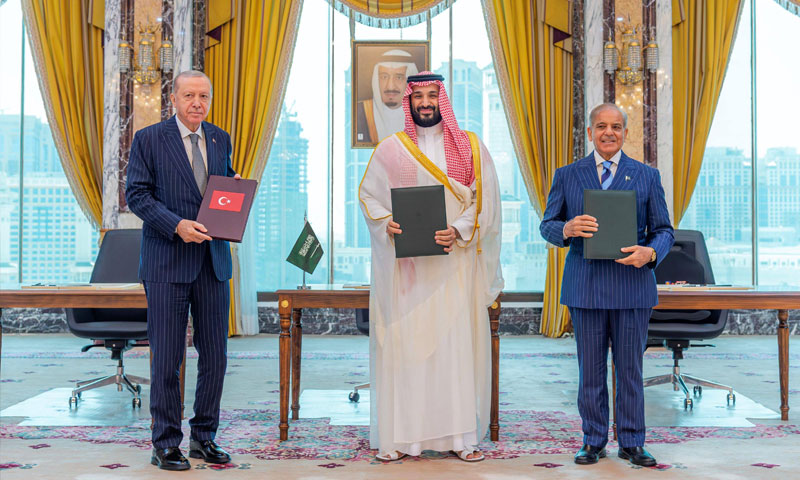
Pakistan, Saudi Arabia and Turkiye plan an urgent military chiefs’ meeting to discuss supporting Riyadh against escalating Houthi attacks. The move comes under their Makkah Joint Defence Agreement as Iran distances itself from the Yemeni group.
The Houthis claimed dozens of missile and drone launches against Saudi targets on Thursday. Saudi authorities reported intercepting six ballistic missiles. Emergency alerts covered Makkah, Jeddah and Yanbu, the kingdom’s main Red Sea oil port.
The group has also attacked Yemen’s Saudi-backed government, disrupting oil flows from the world’s largest energy exporter. Saudi Arabia’s highest religious authority urged soldiers to prepare to sacrifice their lives until the Houthis lose power.
Defence pact faces escalating attacks
The three countries’ foreign ministers condemned attacks targeting Makkah and civilian sites, affirming Riyadh’s right to defend itself.
Read More: Trump Hails Pakistan-Saudi-Turkiye Defence Pact as ‘Bold Step’
“The ministers also discussed arrangements for holding an urgent meeting of the chiefs of staff of the three countries to discuss ways to support Saudi Arabia under the Makkah Joint Defence Agreement, which stipulates that an attack against any one of the parties constitutes an attack against all parties,” the Saudi statement said.
The countries signed the agreement on August 7. Turkish Foreign Minister Hakan Fidan said on September 19 that Ankara could help meet Saudi military needs.
Iran outlines Hormuz proposal
“The Houthis are responsible for their own actions,” Iranian President Masoud Pezeshkian told Fox News’ “Special Report with Bret Baier”.
He spoke Thursday, a day after addressing the UN General Assembly. Qatar mediated diplomatic efforts in New York during a pause in US-Iran fighting.
Iranian Foreign Minister Abbas Araqchi outlined a proposal requiring fighting to end across all fronts, including Lebanon, within seven days. Washington would lift its blockade of Iranian ports, release frozen Iranian funds and waive oil sanctions.
“The Strait of Hormuz will be reopened on the last day,” Araqchi said. Talks covering Iran’s nuclear programme and other issues would follow.
An Iranian official said that Tehran was reviewing Washington’s response.
Oil routes and sanctions deepen pressure
The war began with US-Israeli strikes on Iran in February under President Donald Trump. It has killed thousands, disrupted energy supplies and raised oil prices.
Direct US-Iran combat has largely paused, but Hezbollah continues fighting Israel in Lebanon while the Houthis advance in Yemen.
Houthi attacks have disrupted Red Sea shipping. Iran has restricted Hormuz tanker traffic, which carried 20% of global oil exports before the war. Iran-backed Iraqi militias temporarily disabled Saudi Arabia’s East-West Pipeline.
Read More: Pakistan, Saudi Arabia and Turkiye Sign Historic Defence Pact
Experts dispute Tehran’s control over the Houthis. However, Yemeni government, Iranian and regional sources told Reuters that Revolutionary Guards directly guided their coastal advance.
Washington has expanded secondary sanctions targeting foreign companies trading with Iranian firms. The UAE and Oman barred Iranian airlines Thursday following new US sanctions.
Sustained flight restrictions could deepen Iran’s isolation and economic crisis alongside the port blockade.
“We are living in an open-air prison,” a retired Tehran teacher told Reuters anonymously by text.

























