

Tesla unveiled its redesigned Roadster on Thursday, October 15, showing the electric supercar briefly take flight during a demonstration in Texas. The vehicle drove upside-down on a huge curved ramp, flipped into the air and hovered briefly before landing safely. Tesla staged the event at SpaceX’s rocket development and testing facility in McGregor, near Waco. “Well, it worked,” Tesla chief executive Elon Musk said after the landing. “Flying cars are real,” added Lars Moravy, Tesla’s vice president of vehicle engineering. In another demonstration, the Roadster flipped over a line of Tesla vehicles, floating above the Cybertruck before returning to the ground. The display revived attention around a project Tesla first announced in 2017. The company originally promised deliveries in 2020, but repeated delays have kept customers waiting. How the Tesla Roadster takes flight Moravy said SpaceX thrusters enable the car’s airborne manoeuvres. According to his explanation, the Roadster uses 10 thrusters connected to 600 litres of compressed air. The system allows the vehicle to lift and rotate in midair. Tesla also used a suction system to keep the car attached to the ramp during its upside-down run. “More compressed gas on board = more flight time,” Tesla explained in an X post. Read More: Nine Years After Its First Reveal, Tesla Roadster Returns on October 1 The demonstration showed short airborne movements and controlled landings. It did not establish the vehicle as a substitute for conventional aircraft or demonstrate sustained flight over long distances. Tesla’s website also limits its flight-related feature claim to the Rocket trim, which it says will not reach every region. The page identifies other advertised specifications as applying to the optional Thrust upgrade. Acceleration claims accompany aerial display Tesla said the Roadster could accelerate from zero to 60mph, approximately 97km/h, in about one second. Reporting from the event put the company’s claim at under one second. Moravy also cited a top speed exceeding 230mph, or roughly 370km/h. These remain company performance claims rather than independently verified production-car results. Turns out the future does have flying cars https://t.co/6fexPp6SXI — Elon Musk (@elonmusk) October 16, 2026 The combination of rapid acceleration and airborne stunts made the reveal a showcase for Tesla’s collaboration with SpaceX. However, the distinction between demonstration hardware and the eventual customer specification remains important. Tesla’s own website separates the Thrust and Rocket configurations instead of promising identical capabilities across the range. When will the Roadster go on sale? Musk now targets production in 2028, extending the wait well beyond Tesla’s original delivery promise. The company did not announce final vehicle prices at the unveiling. That timetable represents a production target, rather than confirmation that customers will receive vehicles on a specific date. Read More: Tesla Hits 10 Million EVs as Global Auto Race Intensifies The new model follows Tesla’s original Roadster, the vehicle that launched the company’s electric sports-car business. For prospective buyers, the Texas event answered whether Tesla could demonstrate a briefly airborne Roadster. Final pricing, delivery schedules and the availability of each configuration remain central questions before the car reaches customers.
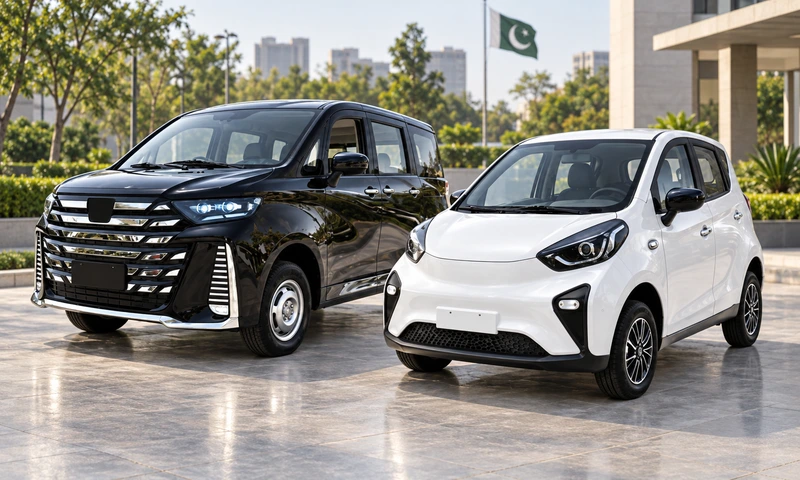
Nora NEO and Metro: Pakistan Prices, Range and Features
Nora is preparing to introduce the NEO and Metro electric vehicles in Pakistan, targeting urban commuters with a claimed range of up to 300 kilometres. Both models belong to the L7 quadricycle category and share their main powertrain specifications. However, they differ in exterior design, equipment, wheelbase, ground clearance and tyre sizes. Reports place their expected prices below Rs3 million, or Rs30 lakh. Nora has yet to announce exact prices, while its website continues to list both models as coming soon. Shared battery, range and charging specifications The published specifications pair a 23.1kWh lithium iron phosphate battery with a 4kW electric motor in both vehicles. Each model uses rear-wheel drive and a 72-volt electrical system. Nora claims a driving range of 250 to 300 kilometres on a single charge. The listed maximum speed is 70km/h, while charging takes approximately six to eight hours. Read More: Two New Nora EVs Promise Up to 300km Range Under Rs30 Lakh These figures position the vehicles primarily around urban commuting. The range remains a manufacturer claim rather than an independently verified road-test result. The launch reports list seating capacity at four for both models. However, Nora’s Metro product page lists five occupants, creating a discrepancy that requires clarification before buyers finalise their choice. Nora NEO offers touchscreen and four-wheel disc brakes The NEO combines a modern exterior with a nine-inch HD touchscreen and a multifunction steering wheel. Its convenience features include keyless entry and push-button start. The model also carries an electronic parking brake and disc brakes on all four wheels. Its wheelbase measures 2,300mm, while ground clearance stands at 180mm. Nora specifies 175/70 R13 tyres for the vehicle. Together, these details distinguish the NEO from the Metro despite their matching battery capacity, motor output and claimed driving range. The available specifications provide a clear picture of the NEO’s convenience equipment and braking hardware. However, they do not establish an independent assessment of crash protection or overall vehicle safety. Metro brings more clearance and larger tyres The Metro offers a different exterior design and equipment package. Its listed features include touchscreen infotainment, keyless entry, push-button start, power windows and a reversing camera. Nora’s product page additionally lists an HD Android touchscreen with Bluetooth connectivity, air conditioning, heating and a USB port. Read More: Kia Stonic Features Revealed: What Each Variant Offers The Metro has a 2,360mm wheelbase, making it 60mm longer between the axles than the NEO. Ground clearance reaches 210mm, a 30mm increase over its sibling. It also uses larger 195/70 R14 tyres. These differences give buyers distinct body and wheel specifications without changing the reported powertrain performance. For now, the reported sub-Rs3 million positioning remains an indication rather than a confirmed price list. Exact pricing and clarification of the Metro’s seating capacity remain important outstanding details ahead of purchase decisions.

FBR Extends 2026 Tax Return Deadline to October 31
The Federal Board of Revenue has extended Pakistan’s income tax return filing deadline for Tax Year 2026 to October 31. The decision gives eligible taxpayers another 16 days to submit their returns amid complaints about technical problems with its online filing system. The FBR announced the extension on Thursday, October 15, through Circular No. 04 of 2026-27. It applies to taxpayers whose original September 30 deadline had already moved to October 15. The authority had received 6.9 million returns by October 15. “This extension is being granted in view of the requests from various trade bodies and tax bar associations,” the regulator said. This marks the second extension during the current filing season. The FBR’s September 30 notification had granted the first additional fortnight following similar requests from business groups and tax practitioners. Read More: YouTube Tax Pakistan: FBR’s Rs195 Benchmark Explained Who qualifies for the extended deadline? The latest notification covers the same taxpayers who qualified for the earlier extension. It does not announce a blanket change to every taxpayer’s filing schedule. FBR’s published timetable normally sets September 30 as the filing deadline for individuals and associations of persons. Companies with a special tax year also fall under that date. The general deadline for other companies is December 31, according to the authority’s guidance. The October extension therefore concerns returns originally due on September 30. IRIS problems prompted demands for more time This year’s filing season has faced complaints about slowdowns, software bugs and submission failures on the IRIS portal. Some individuals struggled to complete filing because the system did not properly accept their returns. Business organisations argued that these problems left taxpayers with insufficient time to prepare and submit accurate information. Read More: FBR to Start Deducting 5% Tax From Social Media Revenue The Sialkot and Lahore chambers of commerce sought an extension until December 2. Both cited recurring technical interruptions and difficulties completing the required disclosures. Their concerns included updating immovable property details and providing bank account International Bank Account Numbers, or IBANs. The chambers said these tasks required time for verification and reconciliation. Sialkot’s chamber also raised concerns about minimum tax calculations for taxpayers earning income from multiple sources. It requested corrective measures and protection from penalties linked to system-related delays. How taxpayers can confirm successful filing Taxpayers can submit their returns through the official FBR IRIS portal. However, saving information in a draft does not complete the filing process. FBR’s guidance says successful submission requires the income tax return and applicable wealth statement to move from Draft to Completed Task. The authority also provides written instructions and video tutorials through its online knowledge base. These explain how to complete returns and wealth statements. For taxpayers affected by failed submissions, checking the completion status remains an important final step before the new October 31 deadline.
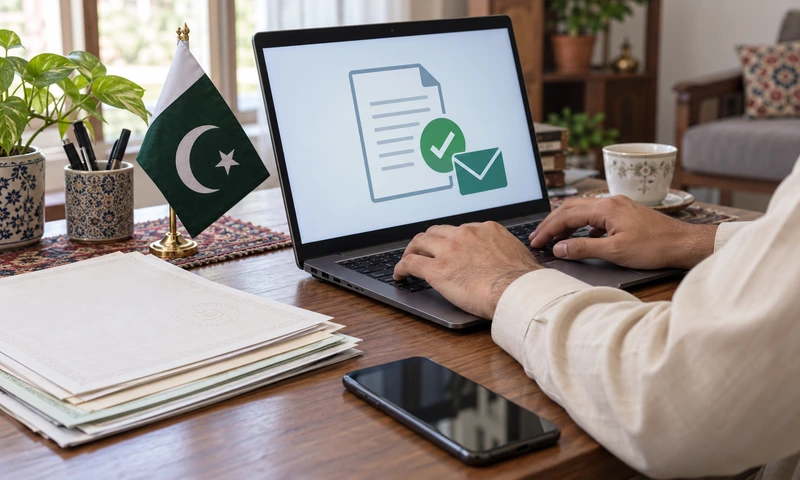
Pakistan Launches Online Document Attestation: Here’s How to Apply
Pakistan’s Ministry of Foreign Affairs (MOFA) has introduced a digital document attestation system, allowing citizens to apply online and receive certificates by email. The service aims to reduce repeated office visits, lengthy queues and travel costs. Applicants can submit documents remotely, complete verification and pay the required fees online before receiving an electronic attestation certificate. The system took effect on October 12, 2026. It covers the ministry’s Islamabad headquarters and liaison offices in Lahore, Karachi, Peshawar, Quetta and Gujrat. A ministry circular dated October 14 outlined the change, which applies to both general and apostille attestation services. However, officials may still require applicants to appear in person in exceptional cases. How online MOFA attestation works Applicants can access the service through the official MOFA attestation portal. The platform allows users to apply, manage and track their document attestation and apostille applications. Under the announced procedure, citizens submit their applications and documents online. Ministry officials then review the submissions, verify the documents and notify applicants of the outcome. Read More: Apna Ghar Goes Simpler: How to Apply Online for Housing Finance After the required processing, applicants can pay the prescribed fees online. The ministry then issues an electronic certificate and sends it to the applicant’s email address. This arrangement allows citizens to complete the routine process remotely, reducing the need to return to an office for collection. The ministry expects the service to save applicants time and effort while easing pressure on attestation counters. Coverage includes regional liaison offices The rollout extends beyond Islamabad, bringing the ministry’s regional liaison offices into the digital system. The circular also directs ministry officers to encourage electronic submissions. It identifies convenience, transparency and efficient service delivery as key objectives. Although remote processing is central to the initiative, the circular retains exceptions for cases requiring physical presence. Applicants should therefore follow any specific instructions they receive during verification. The change forms part of wider efforts to modernise public services through digital access. For citizens living far from ministry offices, fewer visits could also reduce transport expenses and time away from work. Document verification requirements remain important Applicants should check the relevant document requirements before submitting an online application. Moving the process online does not, by itself, remove existing requirements for prior verification. Read More: Wrong Traffic Fine? Punjab Introduces Online E-Challan Review The ministry’s published guidance requires Higher Education Commission attestation for university degrees. Educational certificates from intermediate and secondary education boards require countersignature from the Inter Boards Coordination Commission. IBCC separately requires verification by the issuing authority before applicants submit certificates, diplomas, marks sheets or result cards for its attestation. The ministry also provides an online service for checking Pakistani apostille certificates. Its verification page covers both paper and electronic certificates, providing a separate route to check an issued apostille.

Pakistan to Chair World Bank, IMF Boards in 2027
Pakistan will chair the World Bank Group and International Monetary Fund Boards of Governors in 2027, returning to the role after 74 years. The Ministry of Economic Affairs announced the nomination on Friday, October 16. Economic Affairs Minister Ahad Khan Cheema will assume the chairmanship, Pakistan’s first since 1953. “Federal Minister for Economic Affairs and Governor WBG for Pakistan, Ahad Khan Cheema, has been formally announced as the incoming Chair of the Boards of Governors of the World Bank Group (WBG) and the International Monetary Fund (IMF) for 2027,” the ministry said. The announcement came during the plenary session of the 2026 World Bank–IMF Annual Meetings in Bangkok. The meetings run from October 12 to 18, bringing together policymakers to discuss economic and development challenges. Pakistan outlines priorities for chairmanship The ministry said the appointment would give Pakistan an opportunity to contribute to international economic discussions and support cooperation among member countries. “The forthcoming chairmanship provides Pakistan an important opportunity to contribute to global economic and development deliberations and facilitate constructive dialogue among member countries at a critical juncture for the multilateral system,” the statement said. Read More: Pakistan, World Bank Agree to Accelerate Development Plan During his meetings, Cheema outlined Pakistan’s priorities for the role. These include strengthening developing countries’ voice and promoting effective, predictable development financing. He also stressed closer coordination among multilateral development institutions and greater mobilisation of private capital for sustainable, inclusive growth. Cheema reaffirmed Pakistan’s commitment to working with the World Bank, IMF and member countries. He pledged to encourage constructive dialogue and support a more responsive international development and financial system. Cheema discusses transition and institutional support Following the plenary, the World Bank Group Corporate Secretariat briefed Cheema on the chairmanship’s responsibilities. He also met Aradhana Kumar-Capoor, the World Bank Group’s vice president and corporate secretary. Their discussions covered institutional support and coordination during Pakistan’s term. Separately, Cheema met outgoing chair Carlos Carvallo Spalding, who also serves as governor of Paraguay’s central bank. Cheema congratulated Spalding on completing his tenure and praised his stewardship. They discussed the office’s responsibilities and priorities for the coming year. The exchange gave Pakistan’s incoming chair an opportunity to draw on Spalding’s experience before taking up the position. What the Boards of Governors do The Boards of Governors serve as the institutions’ highest decision-making bodies. They represent member countries and set the organisations’ broad direction. Each member country appoints a governor and an alternate governor. Governors typically hold senior government positions, including finance or development minister. Read More: World Bank in Crisis Aid Talks With 30–40 Countries as Energy Costs Rise The IMF’s governors retain authority over major institutional decisions, including quota increases, new memberships and amendments to its governing agreement. However, they delegate most powers to the Executive Board, which conducts the Fund’s day-to-day business. This distinction places Pakistan’s forthcoming chairmanship within the institutions’ governing framework, while executive bodies continue their operational responsibilities.