

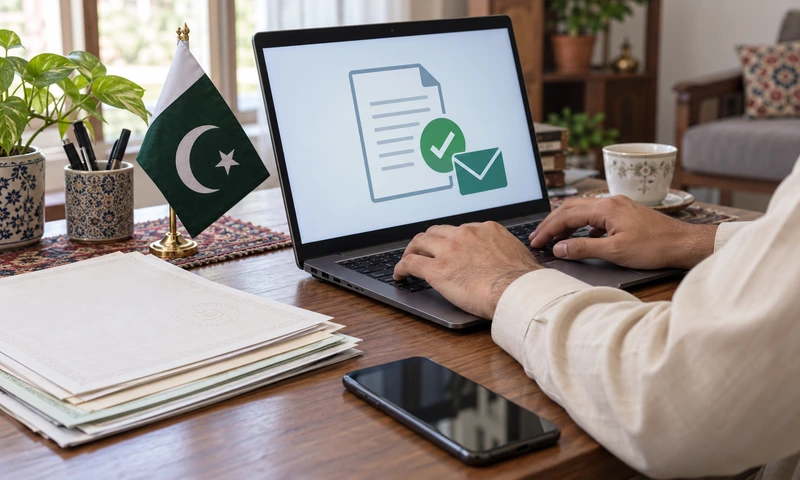
Pakistan’s Ministry of Foreign Affairs (MOFA) has introduced a digital document attestation system, allowing citizens to apply online and receive certificates by email.
The service aims to reduce repeated office visits, lengthy queues and travel costs. Applicants can submit documents remotely, complete verification and pay the required fees online before receiving an electronic attestation certificate.
The system took effect on October 12, 2026. It covers the ministry’s Islamabad headquarters and liaison offices in Lahore, Karachi, Peshawar, Quetta and Gujrat.
A ministry circular dated October 14 outlined the change, which applies to both general and apostille attestation services. However, officials may still require applicants to appear in person in exceptional cases.
How online MOFA attestation works
Applicants can access the service through the official MOFA attestation portal. The platform allows users to apply, manage and track their document attestation and apostille applications.
Under the announced procedure, citizens submit their applications and documents online. Ministry officials then review the submissions, verify the documents and notify applicants of the outcome.
Read More: Apna Ghar Goes Simpler: How to Apply Online for Housing Finance
After the required processing, applicants can pay the prescribed fees online. The ministry then issues an electronic certificate and sends it to the applicant’s email address.
This arrangement allows citizens to complete the routine process remotely, reducing the need to return to an office for collection.
The ministry expects the service to save applicants time and effort while easing pressure on attestation counters.
Coverage includes regional liaison offices
The rollout extends beyond Islamabad, bringing the ministry’s regional liaison offices into the digital system.
The circular also directs ministry officers to encourage electronic submissions. It identifies convenience, transparency and efficient service delivery as key objectives.
Although remote processing is central to the initiative, the circular retains exceptions for cases requiring physical presence. Applicants should therefore follow any specific instructions they receive during verification.
The change forms part of wider efforts to modernise public services through digital access. For citizens living far from ministry offices, fewer visits could also reduce transport expenses and time away from work.
Document verification requirements remain important
Applicants should check the relevant document requirements before submitting an online application. Moving the process online does not, by itself, remove existing requirements for prior verification.
Read More: Wrong Traffic Fine? Punjab Introduces Online E-Challan Review
The ministry’s published guidance requires Higher Education Commission attestation for university degrees. Educational certificates from intermediate and secondary education boards require countersignature from the Inter Boards Coordination Commission.
IBCC separately requires verification by the issuing authority before applicants submit certificates, diplomas, marks sheets or result cards for its attestation.
The ministry also provides an online service for checking Pakistani apostille certificates. Its verification page covers both paper and electronic certificates, providing a separate route to check an issued apostille.