


Pakistan secured two institutional leadership roles and explored a potential $1.5 billion financing arrangement at the IMF-World Bank Annual Meetings in Bangkok. The October 12–18 gathering brought together finance ministers, central bank governors, policymakers, investors and experts. Discussions covered sluggish growth, rising debt, Middle East conflict and artificial intelligence. Pakistan’s delegation promoted its economic reforms and recent macroeconomic stability while seeking broader financing options. Economic Affairs Minister Ahad Khan Cheema will chair the IMF and World Bank Group Boards of Governors in 2027. Pakistan last held the chairmanship in 1953. Read More: Apna Ghar Goes Simpler: How to Apply Online for Housing Finance The boards represent member countries and serve as the institutions’ highest decision-making bodies, setting their broad direction. “The forthcoming chairmanship provides Pakistan an important opportunity to contribute to global economic and development deliberations and facilitate constructive dialogue among member countries at a critical juncture for the multilateral system,” Pakistan’s Ministry of Economic Affairs said. Separately, Finance Minister Muhammad Aurangzeb assumed the chairmanship of the Borrowers’ Platform’s Governing Council on Pakistan’s behalf. The member state-led initiative helps developing countries exchange knowledge and coordinate on sovereign debt challenges. Pakistan’s priorities include stronger debt management, sharing reform experiences and exploring development-financing instruments. An official statement clarified that the platform would support technical cooperation and mutual learning, rather than collective bargaining or crisis management. Financing proposal targets $1.5 billion Pakistan discussed combining a World Bank policy-based guarantee with Multilateral Investment Guarantee Agency coverage to attract competitively priced financing. The potential target stands at approximately $1.5 billion. However, the proposal remains subject to the guarantee envelope, transaction structure and further approvals. Aurangzeb discussed the arrangement with Alvarez & Marsal. He favoured using an existing Development Policy Operation to avoid delays from negotiating a new framework. The delegation also engaged the IMF, World Bank, AIIB, JPMorgan, Citigroup, Islamic Development Bank, Moody’s and Fitch Ratings. These discussions focused on reforms, alternative financing and Pakistan’s engagement with international institutions and investors. War, debt and AI dominate discussions Globally, participants warned about energy-price shocks, sovereign debt and borrowing costs, particularly amid the US-Iran conflict. Member countries sought greater support for economies facing short-term financing pressures from war spillovers and expensive energy. “Escalating conflicts and trade tensions could further disrupt critical trade routes, exacerbate commodity price pressures, including in refined energy products, and worsen energy and food security,” said the statement issued by Saudi Finance Minister Mohammed Al-Jadaan, chair of the International Monetary and Financial Committee. Read More: Pakistan’s Microfinance Customers Could Soon Get PayPak Credit Cards IMF Managing Director Kristalina Georgieva highlighted both AI’s promise and wider economic anxieties. “Optimism from the resilience of the global economy, the promise of AI, the dynamism of Asia. But AI is also recognised to be a source of worry, and so are inflation, high levels of debt, wars, climate risks,” she said. Anthropic co-founder Jack Clark discussed the scale of possible AI-driven change. “I know, but it’s implied by the technology continuing to get better. And if GDP were to grow this much, then economic doctrine suggests that new industries and inventions would need to have been created to power such a major economic expansion.”
Pakistan Textile Profits Rise 11% Despite Flat Sales
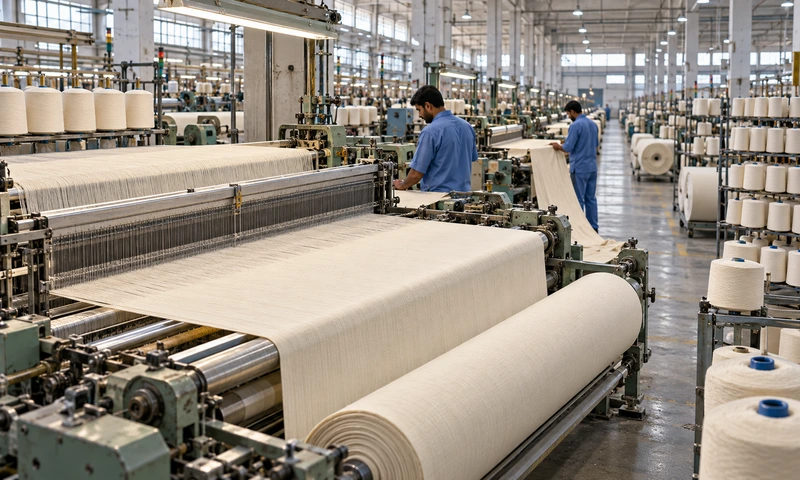
Pakistan’s 20 leading listed textile companies generated approximately $5 billion in sales during fiscal 2026, but lower borrowing costs and taxes drove profit growth. Combined revenue reached Rs1.40 trillion in the year ended June 30, down 0.3 per cent from the previous year. However, net income increased 11.4 per cent to approximately Rs52 billion, compared with Rs46.7 billion a year earlier. Topline Securities analyst Rabia Yousuf published the findings in an October 13 research report. The sample covers composite textile, spinning, weaving, woollen and apparel companies. Together, these businesses represent approximately 83 per cent of the market capitalisation of the selected listed textile sector. Their results highlight improved earnings despite limited growth in core manufacturing activity. Lower financing costs lift profits Finance costs fell 19.2 per cent to Rs54.5 billion, compared with Rs67.4 billion in FY2025. That decline saved the companies approximately Rs12.9 billion. Topline attributed the reduction primarily to lower financing rates and reduced borrowing under the Export Finance Scheme. The companies’ effective tax rate also declined to 33.2 per cent from 37.1 per cent. Topline linked this mainly to deferred tax liability reversals following changes in exporters’ future super tax treatment. Read More: Pakistan Textile Exports Face Sharp Fall, Exporters Warn These changes helped manufacturers retain more earnings even though sales barely moved. Meanwhile, gross profit slipped 0.2 per cent to Rs183.7 billion, against Rs184.1 billion a year earlier. The gross profit margin remained unchanged at 13.1 per cent. The figures suggest that cheaper financing and tax adjustments contributed more to the earnings improvement than stronger production margins. Interloop leads an uneven earnings recovery Company-level results showed significant differences across the sample. Interloop, Sapphire Textile Mills and Nishat Mills together contributed 48 per cent of total profits, according to Topline’s findings. Interloop’s consolidated profit rose 129 per cent to Rs12.7 billion. Its sales increased 5 per cent to Rs187.7 billion. Improved gross margins, lower finance costs and higher other income supported the company’s earnings. Read More: Pakistan Textile Profits Rise 11% to Rs51.9 Billion Sapphire Textile Mills recorded a 73 per cent increase in unconsolidated profit to Rs6.8 billion. However, its sales fell 13 per cent to Rs81.2 billion. Higher other income, cheaper financing and a lower effective tax rate helped offset that decline. Nishat Mills reported a different outcome. Its unconsolidated profit dropped 9 per cent to Rs5.5 billion, despite sales rising 2 per cent to Rs181.6 billion. Lower dividend income and weaker gross margins weighed on its results. Energy costs remain a challenge Topline expects lower financing costs and FY2027 budget measures to support textile profitability. Companies are also adopting renewable energy and cheaper energy sources to contain expenses. Nevertheless, high energy costs and intense international competition continue to constrain the industry. The findings describe the listed-company sample, rather than every textile manufacturer in Pakistan. They show financial relief supporting earnings, while stagnant sales and unchanged gross margins point to continuing pressure on the underlying business.

Toyota Arene Software Targets 50 Models by 2030
Toyota plans to deploy its Arene software platform across around 50 models and 10 million new vehicles annually by 2030. The expansion aims to let cars gain features and improvements long after owners leave the showroom. The world’s largest carmaker confirmed the targets on October 16. Chief Technology Officer Hiroki Nakajima outlined the plans at an investor briefing in Brussels, a Toyota spokesperson told Reuters. Toyota also intends to extend Arene to alliance partners’ vehicles as it moves towards 2035. The programme forms part of its broader shift towards software-defined vehicles. Cars that improve after purchase Software-defined vehicles allow manufacturers to update electronic functions throughout a car’s life, rather than fixing most capabilities at production. Over-the-air updates could improve infotainment, driver assistance and safety functions without requiring a dealership visit. However, available upgrades will still depend on each vehicle’s hardware and market specifications. Read More: Corolla Facelift Pakistan: Toyota Drops Outgoing Model The approach resembles smartphone updates, although vehicle software requires extensive testing because it can affect safety-critical functions. Toyota’s strategy places software development alongside its traditional strengths in engines, manufacturing and mechanical engineering. It follows a wider industry shift led by Tesla and several Chinese manufacturers. The transition could also create revenue beyond the initial vehicle sale. Potential options include paid feature upgrades and subscriptions, although the supplied report identifies no specific pricing plans. RAV4 provides the starting point Toyota introduced Arene in its latest-generation RAV4, which it unveiled in May 2025 before beginning its market rollout. Woven by Toyota, the group company behind Arene, describes it as a software development platform with three core packages. These cover development, testing and vehicle data. Its software development kit allows engineers to reuse components across different applications and models. This reduces the need to develop every function separately for each vehicle. In the new RAV4, Arene supports the multimedia system’s voice agent, centre display and Toyota Safety Sense technologies. Meanwhile, virtual testing tools let engineers assess driving scenarios and safety functions with less reliance on physical prototypes. The platform’s data infrastructure supports consent-based collection and analysis of driving information. Toyota can use those findings to refine features, support remote updates and improve future software. Wider ambitions beyond Toyota vehicles The longer-term strategy reportedly includes linking vehicles with homes and roadside infrastructure. Such connections could eventually support communication with buildings and systems that monitor pedestrians. However, those ambitions extend beyond the immediate goal of expanding Arene across Toyota’s vehicle range. Read More: Toyota and Hyundai Investigated Over How They Use Driver Data Australian buyers could eventually see models such as the RAV4, Corolla and HiLux gain additional software capabilities. It noted that specific Australian rollout plans remain unconfirmed. The announcement also provides no Pakistan-specific schedule or confirmation for locally assembled models. For buyers, the central change concerns how a vehicle evolves after purchase. Toyota aims to make software improvements an ongoing part of ownership, while expanding a common development platform across millions of cars.
Karachi Mangrove Loss Raises Flood and Erosion Risks
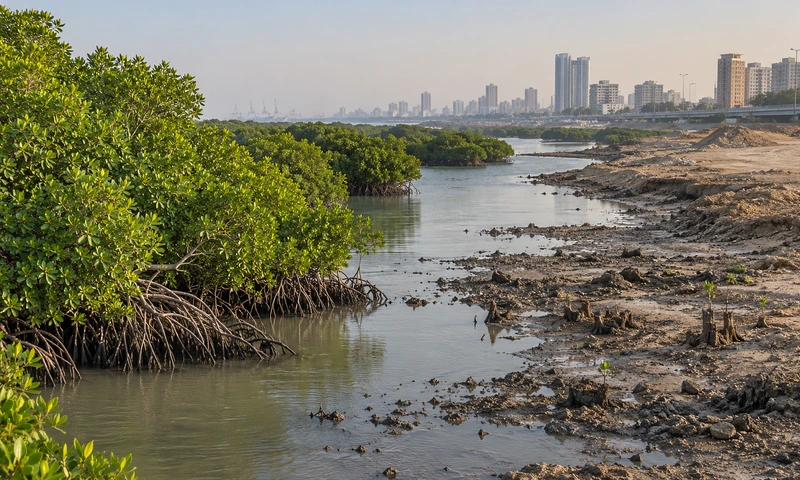
Mangrove clearance and land reclamation near Karachi’s Mai Kolachi Bypass are weakening natural coastal defences, Pakistan’s space agency has warned. Satellite images comparing 2000 and 2025 show urban plots and reclaimed land replacing mangrove forests and natural tidal creeks. The Space and Upper Atmosphere Research Commission (Suparco) linked these changes to growing climate risks for coastal communities. “This transformation reflects a transition from ecosystem-based coastal protection to hard, land-intensive development. Mangrove removal directly weakens the coastal system’s ability to respond to climate stress,” the agency said. Development disrupts natural coastal protection Suparco said mangroves regulate coastal temperatures, trap sediments and absorb atmospheric carbon. Their removal destroys an important blue-carbon reservoir and disrupts connections between waterways. These changes increase surface runoff and alter tidal flows, weakening the coast’s ability to cope with environmental pressures. Read More: Four DAP Fertilizer Vessels Berth at Karachi Port “Over time, this raises the likelihood of localised flooding, shoreline instability and long-term land subsidence. From a climate perspective, the conversion of mangrove wetlands into built-up land represents a loss of natural resilience at a time when sea-level rise and extreme weather events are accelerating,” it said. The agency noted that mangroves adapt and regenerate, strengthening their protective role over time. Replacing them with static infrastructure shifts climate risks directly onto urban property and residents. Calls for enforcement and restoration Climate policy specialist Mohammad Saleem Shaikh urged Pakistan to protect mangrove forests and natural tidal creeks. He warned that their destruction threatens coastal livelihoods, communities and economic stability. Shaikh said mangroves store carbon, reduce erosion, weaken storm surges and support fisheries and biodiversity. Their loss increases exposure to rising seas, cyclones and other climate threats, particularly around Karachi and the Indus Delta. He urged federal and Sindh authorities to strengthen environmental enforcement, prevent encroachment and require comprehensive environmental assessments for coastal projects. He also sought transparent satellite monitoring, community participation and scientifically planned restoration using native species. Governments should treat mangroves as natural climate infrastructure essential for disaster resilience and future generations, he said. Dawn reported that Senator Sherry Rehman, chairperson of the Senate Standing Committee on Climate Change, declined to comment. Karachi Mayor Murtaza Wahab did not respond to its messages. UNEP has previously highlighted Pakistan’s restoration efforts, including IUCN partnerships with the Pakistan Navy and a private terminal operator near Port Qasim. Shah Bandar records mangrove gains Meanwhile, Suparco’s Space4Climate assessment documents mangrove expansion in Shah Bandar, Sujawal, using imagery acquired between 2019 and 2026. Analysis of 19 Areas of Interest found a 115 per cent increase against a 2019 baseline of 116.46 hectares. The agency listed that increase as 134.77 hectares. Read More: Pakistan Food Security at Risk From Climate Stress Separately, it reported 151.24 hectares of newly established vegetation, approximately 6.5 per cent of the 2,321.8-hectare study area. Suparco expects the expansion to improve coastal protection, wildlife habitats, biodiversity and carbon storage while reducing shoreline erosion. The findings show contrasting changes across Sindh’s coast: restoration in Shah Bandar alongside wetland conversion near Mai Kolachi.
