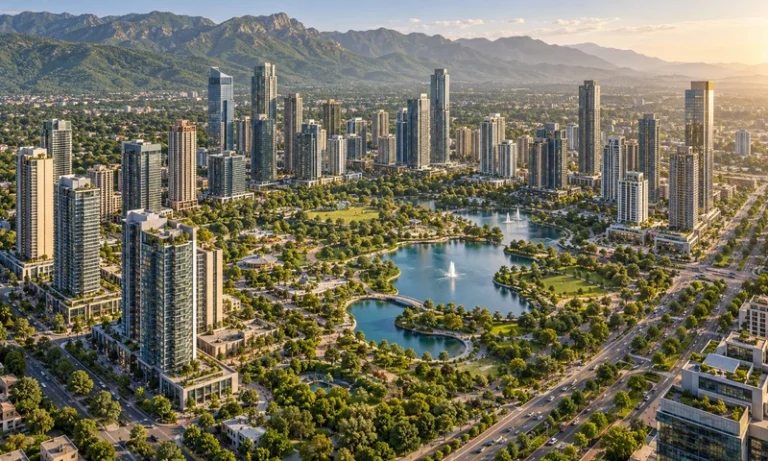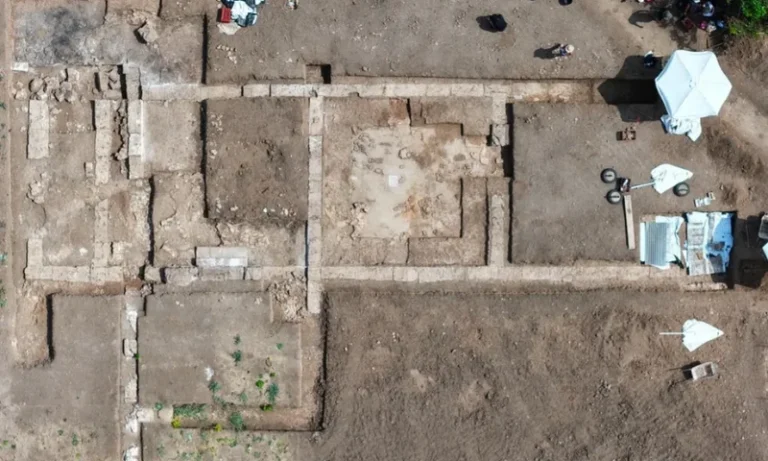
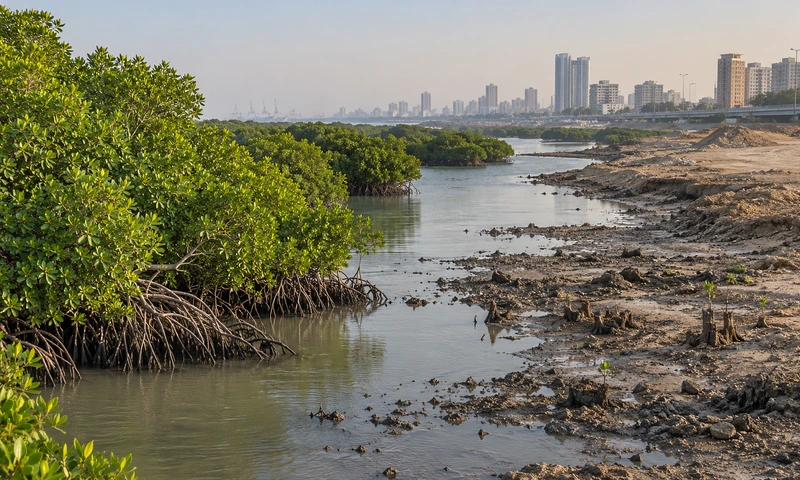
Mangrove clearance and land reclamation near Karachi’s Mai Kolachi Bypass are weakening natural coastal defences, Pakistan’s space agency has warned.
Satellite images comparing 2000 and 2025 show urban plots and reclaimed land replacing mangrove forests and natural tidal creeks. The Space and Upper Atmosphere Research Commission (Suparco) linked these changes to growing climate risks for coastal communities.
“This transformation reflects a transition from ecosystem-based coastal protection to hard, land-intensive development. Mangrove removal directly weakens the coastal system’s ability to respond to climate stress,” the agency said.
Development disrupts natural coastal protection
Suparco said mangroves regulate coastal temperatures, trap sediments and absorb atmospheric carbon. Their removal destroys an important blue-carbon reservoir and disrupts connections between waterways.
These changes increase surface runoff and alter tidal flows, weakening the coast’s ability to cope with environmental pressures.
Read More: Four DAP Fertilizer Vessels Berth at Karachi Port
“Over time, this raises the likelihood of localised flooding, shoreline instability and long-term land subsidence. From a climate perspective, the conversion of mangrove wetlands into built-up land represents a loss of natural resilience at a time when sea-level rise and extreme weather events are accelerating,” it said.
The agency noted that mangroves adapt and regenerate, strengthening their protective role over time. Replacing them with static infrastructure shifts climate risks directly onto urban property and residents.
Calls for enforcement and restoration
Climate policy specialist Mohammad Saleem Shaikh urged Pakistan to protect mangrove forests and natural tidal creeks. He warned that their destruction threatens coastal livelihoods, communities and economic stability.
Shaikh said mangroves store carbon, reduce erosion, weaken storm surges and support fisheries and biodiversity. Their loss increases exposure to rising seas, cyclones and other climate threats, particularly around Karachi and the Indus Delta.
He urged federal and Sindh authorities to strengthen environmental enforcement, prevent encroachment and require comprehensive environmental assessments for coastal projects.
He also sought transparent satellite monitoring, community participation and scientifically planned restoration using native species. Governments should treat mangroves as natural climate infrastructure essential for disaster resilience and future generations, he said.
Dawn reported that Senator Sherry Rehman, chairperson of the Senate Standing Committee on Climate Change, declined to comment. Karachi Mayor Murtaza Wahab did not respond to its messages.
UNEP has previously highlighted Pakistan’s restoration efforts, including IUCN partnerships with the Pakistan Navy and a private terminal operator near Port Qasim.
Shah Bandar records mangrove gains
Meanwhile, Suparco’s Space4Climate assessment documents mangrove expansion in Shah Bandar, Sujawal, using imagery acquired between 2019 and 2026.
Analysis of 19 Areas of Interest found a 115 per cent increase against a 2019 baseline of 116.46 hectares. The agency listed that increase as 134.77 hectares.
Read More: Pakistan Food Security at Risk From Climate Stress
Separately, it reported 151.24 hectares of newly established vegetation, approximately 6.5 per cent of the 2,321.8-hectare study area.
Suparco expects the expansion to improve coastal protection, wildlife habitats, biodiversity and carbon storage while reducing shoreline erosion. The findings show contrasting changes across Sindh’s coast: restoration in Shah Bandar alongside wetland conversion near Mai Kolachi.