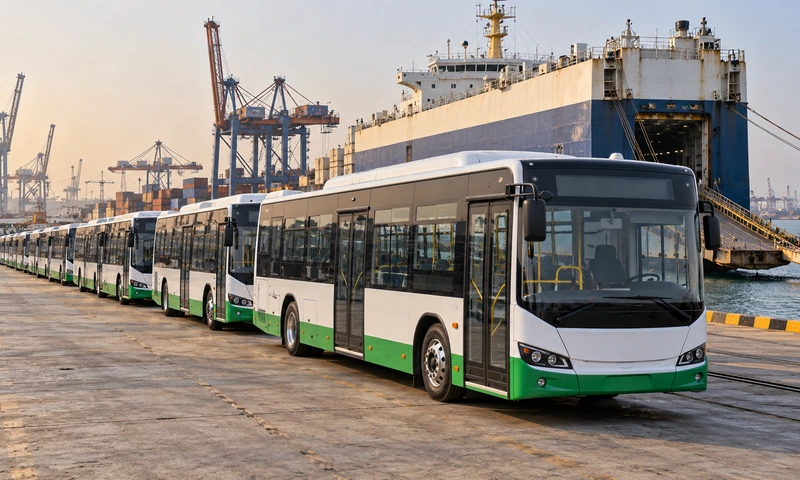
Karachi Port has received and discharged 179 electric buses from China, Karachi Port Trust KPT said in an announcement on October 21. The buses arrived from Yingkou aboard MV RUINING 6, which berthed at Karachi Gateway Terminal Multipurpose Limited (KGTML). The shipment’s consignee is Margalla Heavy Industries Limited, based in Taxila Cantt, Pakistan. KPT described the consignment as part of its role in facilitating modern transport imports and supporting Pakistan’s transition towards cleaner mobility. The port authority said the handling operation demonstrated its ability to accommodate different cargo requirements while maintaining trade flows. It also linked the shipment to the development of Pakistan’s transport infrastructure. Shipment arrives for Taxila-based company The announcement identifies the shipment’s origin, carrying vessel, receiving terminal and consignee. However, it does not specify which cities or transport operators will ultimately receive the buses. KPT also did not disclose the manufacturer, purchase value, passenger capacity, battery specifications or expected date of entry into service. Those details will determine how the consignment contributes to public transport operations once the vehicles leave the port. Margalla Heavy Industries lists electric buses among its products on its website. The company describes itself as a wholly owned subsidiary of Heavy Industries Taxila. Its Margalla Electric division focuses on electric buses and other new-energy mobility platforms for urban and intercity transport. The company’s broader activities include engineering, vehicle modernisation and industrial services. KGTML expands vehicle-handling role The latest bus shipment follows another electric-vehicle arrival at the same terminal earlier this year. On July 17, the federal government announced that MV Grande Shanghai had brought more than 2,000 electric vehicles to KGTML. Maritime Affairs Minister Muhammad Junaid Anwar Chaudhry described that consignment as Pakistan’s first roll-on/roll-off shipment of electric vehicles. The 220-metre vessel used a system that allows vehicles to drive directly aboard and ashore. According to the minister, this method reduces handling time and improves operational safety. That earlier operation provides context for KGTML’s growing vehicle-handling business. KPT’s latest announcement does not identify the unloading method used for the 179 buses aboard MV RUINING 6. Terminal investment supports diverse cargo KGTML operates under a 25-year concession agreement that AD Ports Group and Karachi Port Trust announced in February 2024. The arrangement covers bulk and general cargo operations at berths 11 to 17 on Karachi Port’s East Wharf. AD Ports Group holds the majority interest in the venture alongside UAE-based Kaheel Terminals. The concession assigns KGTML responsibility for developing, operating and managing those facilities. In February 2026, KGTML awarded AMCORP Engineering & Construction a civil works contract for the terminal’s first development phase. Noatum Ports, AD Ports Group’s international ports operating arm, announced the award. For the latest consignment, KPT reported successful arrival and discharge of all 179 buses. Its announcement covered port handling, with no onward delivery or passenger-service timetable provided.
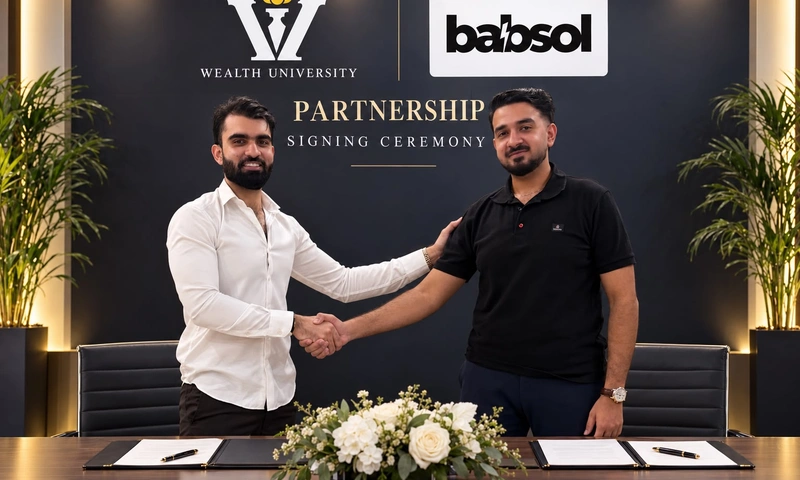
Wealth University Babsol Deal Targets $10m Revenue by 2027
Wealth University has signed a growth agreement with Babsol, targeting $10 million in cumulative qualifying revenue by December 31, 2027. The partnership could give Babsol a 40% ownership entitlement if the platform meets specified performance conditions. The Pakistan-based educational platform announced the arrangement on October 21. According to its press release, the companies signed the agreement on September 7, 2026. BABSOL (SMC-PRIVATE) LIMITED will contribute financial resources, technology expertise, digital marketing capabilities and business development connections. The partners aim to expand Wealth University’s reach across Pakistan and international markets. Revenue milestones determine equity eligibility The agreement links Babsol’s potential ownership to two revenue milestones. Babsol will become eligible to acquire a 20% stake once Wealth University generates $5 million in cumulative qualifying revenue. Its ownership entitlement will increase to 40% when that figure reaches $10 million. Both milestones carry a December 31, 2027 deadline. Verification and completion requirements also apply before Babsol can secure the corresponding ownership rights. The announced structure therefore makes revenue performance central to the partnership. The release does not announce an immediate equity transfer or say either milestone has already been achieved. It also does not disclose Wealth University’s current revenue, a valuation or the detailed definition of qualifying revenue. Funding targets technology and customer growth Babsol has committed to covering all commercially reasonable expenses under a growth plan that both parties approve. Planned spending will support educational technology, performance marketing, customer acquisition and operational infrastructure. The companies intend to use those investments to expand the platform’s offerings and attract more learners. Wealth University’s existing leadership will retain full responsibility for daily management and academic operations. “This partnership marks a significant step in Wealth University’s growth strategy,” said Muhammad Anas Ali, identified in the announcement as chief operating officer. “With Babsol’s resources and expertise, we are well-positioned to expand our educational offerings, enhance our technology, and reach a much broader audience as we work towards our $10 million revenue goal.” The announcement describes Babsol as a strategic growth and investment company specialising in technology, digital marketing and business development. Online courses provide expansion base Wealth University offers learning programmes, courses and memberships focused on wealth creation, entrepreneurship and financial literacy, according to the release. Its website currently lists free Shopify and YouTube automation courses alongside a paid artificial intelligence course. It also advertises live lectures, community discussions and tools that track learners’ progress. The platform says its learners span more than 50 countries. These figures represent the platform’s own claims. The companies describe the agreement as a milestone for Pakistan’s education technology sector. Their announced plan combines funding and commercial support with continued operational responsibility for Wealth University’s leadership. The next stated targets remain the two revenue thresholds, with verification and completion conditions governing Babsol’s eventual equity entitlement.
Pakistan Arrests Suspect in $126m US Postage Fraud Case
Pakistan’s cybercrime agency has arrested Faheem Akram over an alleged counterfeit postage operation that cost the US Postal Service more than $126 million. Officers detained the 33-year-old Khanewal resident in Lahore on Tuesday, October 20. The alleged losses equal approximately £94 million. The arrest followed a search involving raids across several parts of Pakistan, National Cyber Crime Investigation Agency official Atif Ameer said. A federal grand jury in Florida indicted Akram last month over his alleged operation of LabelsBank.com. How the alleged postage scheme worked US prosecutors say the website sold counterfeit shipping labels, typically for $2 each, regardless of a package’s weight, size or destination. According to Pakistani investigators, Akram allegedly operated the website from August 2023 until September 2026. The platform lacked authorisation to sell USPS products or services. Investigators found that more than 5,200 customers purchased over 5.1 million counterfeit shipping labels through the website. Prosecutors allege the labels allowed customers to send packages at prices substantially below legitimate postal charges. They say USPS consequently lost revenue and incurred shipping costs. The $126 million figure represents alleged postal-service losses, rather than the website’s sales proceeds. US authorities secured a court order to seize the domain and shut down the website alongside the indictment. “Our reach goes beyond our borders,” said Bladismir Rojo, inspector in charge of the US Postal Inspection Service’s Miami Division. Pakistani investigators trace bank accounts Earlier this month, the US Postal Inspection Service announced a reward of up to $100,000 for information leading to Akram’s arrest. Pakistan’s investigation also examined accounts allegedly used to receive and move money linked to the operation. Investigators identified 16 bank accounts, according to reporting by The News. Seven belonged to Akram, five to his brother and two to his wife. His sister and maternal aunt held one account each. The report said eight teams investigated the case across Punjab, Islamabad and Sindh. Officers conducted 35 raids and questioned 47 people during the search. They also examined call records, mobile-device tracking reports and footage from 120 cameras. Pakistani authorities registered a case and continued their investigation after the arrest. Charges carry potential prison terms The US Attorney’s Office for the Southern District of Florida announced the indictment on September 28. Akram faces one conspiracy count covering defrauding the United States and making and selling counterfeit postage stamps. Prosecutors also brought five counts of making and selling counterfeit postage stamp labels and four wire fraud counts. If convicted, he faces up to five years in prison on the conspiracy and counterfeit postage counts. Each wire fraud count carries a maximum 20-year prison term. The USPIS Miami Division is investigating the US case. Akram remains presumed innocent unless prosecutors prove the allegations in court. It remained unclear whether Pakistan would extradite him to the United States or prosecute him locally, according to Associated Press.
McCormick Plans 76.55% Unilever Pakistan Foods Acquisition
US food company McCormick & Company plans to acquire at least 76.55% of Unilever Pakistan Foods Limited and take control of the business. A regulatory announcement on Wednesday, October 21, outlined the proposed acquisition as part of a broader global transaction involving Unilever’s food operations. McCormick intends to acquire approximately 4.88 million shares through an agreement. A public offer will follow in accordance with Pakistan’s takeover regulations. Arif Habib Limited will serve as manager to the offer. “Acquirer intends to acquire at least 76.55% shareholding and control of the target company (Unilever Pakistan Foods Limited).” The announcement represents an intention to acquire the business, with regulatory approvals still required before the transaction can proceed. Pakistan acquisition linked to global merger The notice connects the proposed change in Pakistani ownership with the companies’ agreement signed earlier this year. “The intended acquisition forms part of the proposed combination of Unilever PLC’s global food business with McCormick & Company Inc. involving the acquisition by the acquirer of sole control of substantially all of Unilever PLC’s global food business, subject to agreed business exclusions, pursuant to a merger agreement dated 31 March 2026,” it said. The global agreement excludes Unilever’s food business in India and certain other operations. The companies announced a combined portfolio with approximately $20 billion in annual revenue, based on their 2025 figures. That portfolio would bring together brands including McCormick, Knorr, Hellmann’s, Cholula, Maille and Frank’s. Unilever’s announcement valued its participating food business at approximately $44.8 billion on an enterprise-value basis. Competition approval and public offer “The public offer will be subject to the receipt of all requisite regulatory approvals, including the approval of the Competition Commission of Pakistan,” the notice stated. Unilever Pakistan Foods has approximately 6.37 million issued ordinary shares, each carrying a face value of Rs10. Its shares closed at Rs25,352 on October 20, the trading day before the announcement. The 28-day weighted average price stood at Rs25,308 for September 23 through October 20, 2026. Those figures describe the company’s recent share trading. They should not be read as an announced acquisition or public-offer price. The proposed purchase would give McCormick a controlling interest in the listed Pakistani food company, subject to the transaction’s conditions. Sales rise while annual profit falls Unilever Pakistan Foods reported net sales of Rs40.57 billion in 2025, compared with Rs33.71 billion a year earlier. However, net profit declined to Rs5.95 billion from Rs6.98 billion. Founded in 1889, Maryland-headquartered McCormick manufactures and distributes spices, herbs, seasoning mixes and condiments across 150 countries. Its brands include McCormick, French’s, Frank’s RedHot and OLD BAY. In a July update, McCormick said it expected the proposed global combination to close by mid-2027. It also outlined plans for a secondary London listing and international headquarters in the Netherlands.

Al-Ghazi Tractors Profit Hits Rs1.66bn as Sales Rise 60%
Al-Ghazi Tractors Limited returned to profit in the nine months ended September 30, 2026, as tractor sales climbed 60% year-on-year. The company reported net earnings of Rs1.658 billion, reversing a Rs270 million loss in the corresponding period last year. The recovery represents a Rs1.928 billion positive swing in profitability. Earnings per share reached Rs28.61, compared with a loss per share of Rs4.65 during January–September 2025. Higher production and sales supported the turnaround, while revenue growth outpaced the increase in tractor volumes. Gross profit rose even faster, strengthening the company’s earnings performance. Tractor sales and production increase AGTL sold 6,587 tractors during the reporting period, compared with 4,126 units a year earlier. That represents an increase of 2,461 tractors, or approximately 60%. Production reached 6,967 units, up from 5,005 tractors in the first nine months of 2025. The company therefore manufactured 1,962 additional tractors, recording growth of approximately 39%. Operating revenue increased to Rs17.511 billion from Rs9.761 billion, a gain of approximately 79%. The improvement added Rs7.750 billion to revenue compared with the corresponding period. Gross profit climbed approximately 159% to Rs4.477 billion, against Rs1.729 billion a year earlier. The increase amounted to Rs2.748 billion. Based on those figures, AGTL’s gross profit margin widened to approximately 25.6% from 17.7%. This indicates that the company retained a larger share of revenue after covering production costs. Lower finance costs support earnings Additional financial results reported by Mettis Global show that finance costs fell approximately 95% to Rs11.39 million. The company incurred Rs247.64 million in finance costs during the comparable period. AGTL also recorded a Rs151.11 million reversal of expected credit losses, compared with a Rs129.86 million charge last year. Other income increased to Rs282.38 million from Rs114.74 million. Meanwhile, distribution expenses rose to Rs489.19 million, and administrative expenses reached approximately Rs1.53 billion. For the third quarter alone, the company earned Rs210.09 million, reversing a Rs225.59 million loss a year earlier. Quarterly earnings per share stood at Rs3.62, against a loss of Rs3.89. Management focuses on operational efficiency Chief Executive Officer Yasin Seker attributed the improvement to stronger activity and disciplined execution. “The nine-month performance reflects stronger operational momentum across the business and the impact of disciplined execution. While we remain mindful of the broader operating environment, our focus continues to be on serving our customers effectively, strengthening operational efficiency and building a business capable of delivering sustainable performance over the long term.” AGTL said it would maintain operational discipline, respond to customer needs and pursue sustainable growth amid an evolving business environment. The company forms part of the UAE-based Al-Futtaim Group. Its Dera Ghazi Khan plant manufactures New Holland tractors in collaboration with Case New Holland, according to its parent company.

“If Only There Were Royalties”: Sarmad Khoosat Reacts to Humsafar’s Spanish Release
Filmmaker Sarmad Khoosat has renewed calls for royalty payments after HUM TV announced a Spanish-language release of his drama Humsafar. The director shared the broadcaster’s announcement on his Instagram story on Tuesday, October 20. He added “If only there were royalties” alongside a blank-faced emoji. His brief response highlighted a longstanding concern in Pakistan’s entertainment industry: popular productions continue reaching new audiences without recurring payments to their creators. The Spanish dubbing announcement gives Humsafar another international outlet roughly 15 years after its original television run. However, Khoosat’s post focused on whether the people behind that success benefit financially when broadcasters reuse their work. Mahira Khan highlighted junior artists’ struggles Khoosat’s remarks follow an earlier intervention from Humsafar star Mahira Khan, who discussed royalties during film promotions in March. Appearing with Fahad Mustafa on Gup Shab With Vasay Chaudhry, Khan spoke about the difficulties facing supporting performers and technicians. The actors were promoting Aag Lagay Basti Main. Read More: After Kamli, Lali Brings Sarmad Khoosat Another DC Festival Win Khan explained that established stars such as herself and Mustafa could manage without recurring payments. Junior artists and other production workers often lacked that financial cushion. Her argument centred on the gap between broadcasters’ continuing earnings and the limited compensation available to those who helped create their programmes. She urged attention to workers whose contributions rarely bring the financial security enjoyed by leading performers. How Pakistan lost its royalty system Royalties, often called residuals in television, compensate eligible creative workers when programmes return to screens or enter additional distribution markets. Depending on contracts and industry arrangements, recipients can include actors, directors, writers, producers and other contributors. Some payment schedules decline with successive reruns before reaching a minimum recurring amount. Read More: Pakistan wants more space on Netflix and here’s why it matters Pakistan previously operated a royalty system through state broadcaster PTV. However, veteran performers told Dawn in 2021 that actors traded recurring payments for higher upfront fees during the early 1990s. Several later regretted that decision. The arrangement helped establish a payment model that private broadcasters subsequently followed. Actor Ali Kazmi also told Dawn that overseas productions regularly paid him royalties unless his contract specified a one-time buyout. He contrasted that experience with his Pakistani work. Naila Jaffery’s appeal brought national attention The debate gained particular urgency in 2021 when actor Naila Jaffery described financial difficulties while undergoing cancer treatment. Jaffery, who later died, explained that payments from repeat broadcasts could have helped cover her medical expenses. Her appeal brought the consequences of missing royalties into public discussion. The issue subsequently reached Parliament. In January 2022, a Senate committee asked PTV to explain why it had discontinued royalties. Committee chairman Faisal Javed urged the broadcaster to take steps towards payments and report on a proposed mechanism. That earlier intervention shows how long the demand has remained on the industry’s agenda. Khoosat’s latest post brings it back into focus through another overseas release.
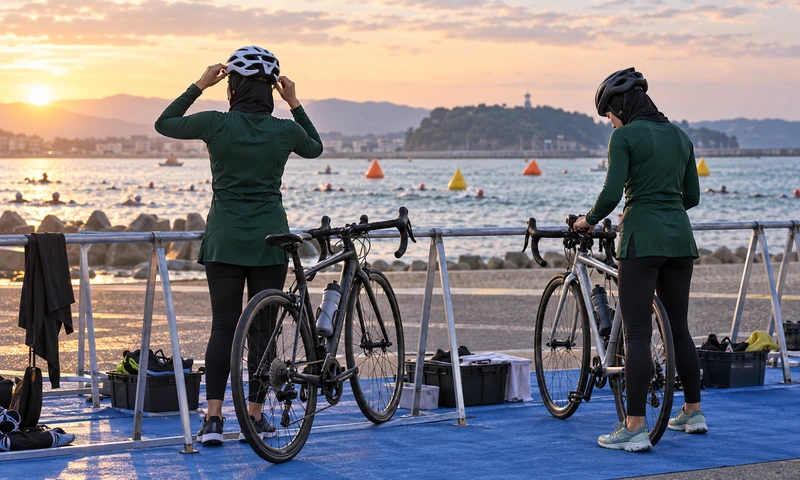
Pakistan Women Triathletes Make Historic Asian Games Debut
Pakistan’s first women triathletes at the Asian Games have highlighted equipment shortages and inadequate training support after their historic appearance in Japan. Sana Arif and Anisha Ali represented Pakistan at the 2026 Aichi-Nagoya Games alongside Ali Hassan, Mohid Sadiq Lone and Muhammad Mustaghis Noor. They returned without medals but highlighted the investment needed for future competitiveness. “If Pakistan wants competitive Asian Games athletes, they shouldn’t start receiving support six months before the event,” Sana told Dawn. From swimming lessons to the Asian Games Sana learnt swimming in 2021 before completing three Ironman 70.3 races, combining swimming, cycling and running over approximately 113 kilometres. Born in Kuwait, she grew up in Lahore before returning to Kuwait. During a Pakistan holiday, a friend alerted her to selection trials. Her swimming ability complemented her cycling and running, helping secure selection. The Pakistan Triathlon Federation called her a week later. She subsequently trained largely alone. The federation president regularly checked her progress and offered guidance, but no extensive national high-performance programme supported her preparation. Anisha, 26, comes from Hunza in Gilgit-Baltistan. Her national-level sporting experience includes judo, martial arts, rowing, boating, tug-of-war and fencing. She credited her mountainous upbringing with teaching her to embrace challenges. The Games’ individual sprint format involved a 750-metre swim, 20-kilometre cycle and five-kilometre run, according to organisers. It differed significantly from Sana’s longer-distance racing experience. Team support eased competition nerves The Pakistani athletes developed closer relationships after arriving in Japan. “We all knew who we were competing against,” Sana said. “Everyone was friendly, shared their experiences and supported wherever it was needed.” “Though we were the weaker team compared to others, none of us even for a second thought of giving up. We fought till the end.” Experienced international competitors also reassured her about the unfamiliar format. “They were there to calm me down and tell me that it was all okay,” she said. Sana described anxiety, stress and excitement surrounding the competition. She praised arrangements in Gamagori, where accommodation stood near the venue and beach, with island views and a garden running track. Organisers provided a dedicated table for Muslim athletes and vegan options. “The staff and people were great, and there was a lot of security too,” she said. Equipment and access remain barriers Sana said Pakistani competitors used rented bicycles and received unsuitable tri-suits made from inappropriate fabric. She called for proper equipment, funding and structured training. Anisha said more Pakistani women were entering sports. However, talented girls in remote and mountainous communities still lacked facilities, coaching, financial support and safe spaces. International representation could help them envision sporting careers. Despite criticism over results, Sana welcomed the encouragement. “People will always have something to say whether you win or lose,” she said. “No one understands your struggle, and that is okay.” “The amount of positivity I have received from everywhere is unexplainable.”
Nora EV Prices in Pakistan: E-30, NEO and Metro Revealed
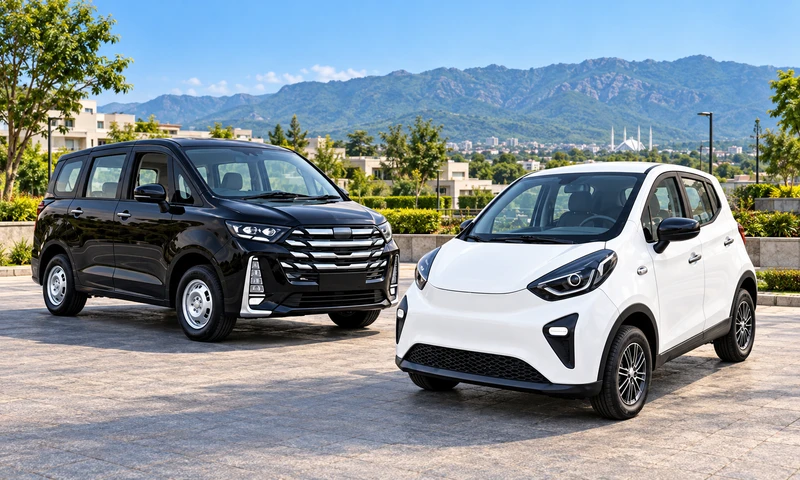
Nora EV has announced prices for six electric vehicle variants in Pakistan, ranging from Rs1,899,999 to Rs2,899,999. The revised list takes effect from October 20, 2026, covering four E-30 variants, the NEO Comfort and Metro Deluxe. However, buyers will pay more than the headline figures. The company’s circular describes provisional ex-Karachi warehouse prices, excluding GST, transportation, transit insurance and other applicable charges. Nora’s own website also lists its E-30 prices excluding GST. Nora EV prices and claimed driving ranges The E-30 ECO opens the range at Rs1,899,999, while the Metro Deluxe carries the highest listed price. Model and variant Price before GST LFP battery Claimed range E-30 ECO Rs1,899,999 9.1 kWh 120 km E-30 ECO REEV Rs2,049,999 9.1 kWh 250 km E-30 ECO+ Rs2,099,999 15.1 kWh 180 km E-30 ECO+ REEV Rs2,249,999 15.1 kWh 300 km NEO Comfort Rs2,499,999 23.1 kWh 280 km Metro Deluxe Rs2,899,999 23.1 kWh 250 km All four E-30 variants use a 4 kW motor and lithium iron phosphate batteries. The ECO and ECO REEV share a 9.1 kWh pack. The ECO+ versions increase battery capacity to 15.1 kWh. Read More: Nora NEO and Metro: Pakistan Prices, Range and Features Each REEV variant costs Rs150,000 more than its corresponding standard version. Their listed ranges reach 250 km and 300 km, respectively. These remain manufacturer claims rather than independently verified road-test results. The NEO Comfort pairs a 4 kW motor with a 23.1 kWh battery. Its listed range exceeds the Metro Deluxe’s by 30 km despite identical battery capacities. NEO and Metro equipment The supplied launch report lists rear-wheel drive, 72-volt electrical systems and charging times of six to eight hours for both models. The NEO includes a 9-inch HD touchscreen, keyless entry, push-button start and a multifunction steering wheel. It also offers an electronic parking brake and four-wheel disc brakes. Read More: Two New Nora EVs Promise Up to 300km Range Under Rs30 Lakh Metro equipment includes touchscreen infotainment, power windows, keyless entry, push-button start and a reversing camera. Some specifications differ across published material. The supplied report lists a 7 kW Metro motor and says both models accommodate four passengers. Nora’s official Metro page instead specifies a 4 kW motor and seating for five people. That page also advertises a broader 250–300 km range. Buyers therefore need confirmation of the delivered variant’s specifications. Booking terms and final prices A Rs500,000 booking amount per vehicle and a delivery window of 30–60 days after payment reaches Nora’s account. Customers must use the prescribed Provisional Booking Order form. Payment arrangements involve a pay order or demand draft favouring Nora EV Private Limited, with the balance payable before delivery. The circular provides for first-come, first-served processing. Prices remain provisional, and the rate applicable at invoicing determines the final vehicle price. Fiscal policy changes, tariffs and exchange-rate movements could affect that amount.
Pakistan US Trade Pact Talks Advance as Trade Hits $11.5bn
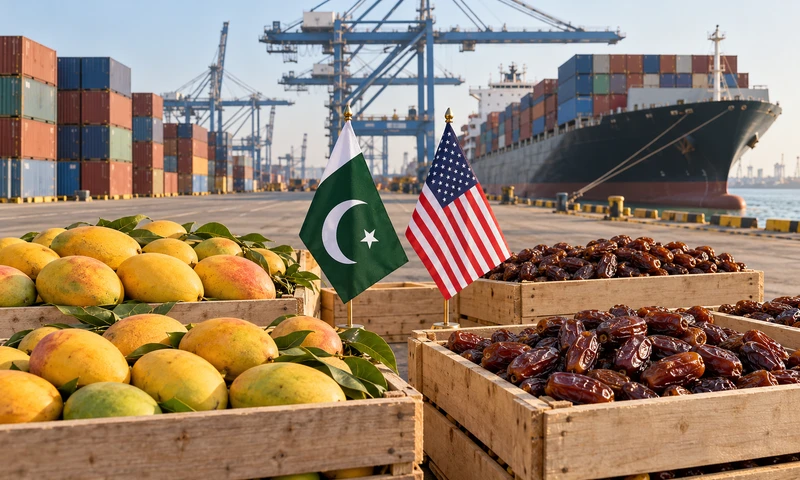
Pakistan and the United States are pursuing a revised trade agreement to widen market access and attract investment. Negotiators have advanced several provisions, although technical issues remain unresolved. The talks come as bilateral goods and services trade reached $11.5 billion in 2025, rising 14%, or $1.4 billion. Finance Minister Muhammad Aurangzeb has led negotiating rounds in Washington, alongside virtual discussions, Business Recorder reported, citing informed sources. Read More: US imposes new tariffs on 60 trade partners, including Pakistan Commerce Minister Jam Kamal Khan reviewed progress with US Chargé d’Affaires Natalie A. Baker in Islamabad on Tuesday, October 20. Prime Minister’s commerce coordinator Rana Ihsaan Afzal Khan, Commerce Secretary Jawad Paul and senior ministry officials attended. Paul said several important provisions had progressed substantially. Remaining technical points require discussions with the Office of the United States Trade Representative (USTR). Both sides committed to continuing negotiations. US goods exports rise sharply USTR figures show goods trade reached $8.5 billion in 2025. American exports to Pakistan climbed 48.4% to $3.1 billion, while imports from Pakistan increased 5.9% to $5.4 billion. The US goods deficit consequently narrowed 23.9%, or $719 million, to $2.3 billion. Services trade totalled $2.9 billion. US services exports rose 6.6% to $1.8 billion, while imports from Pakistan fell 1.7% to $1.1 billion. Washington’s services surplus increased 22% to $731 million. Mangoes, dates and agricultural investment Pakistan sought faster visits by US inspection teams for mango exports and progress on pending market access for dates. Paul said improved access would particularly benefit Balochistan’s growers and businesses. The American delegation offered to follow up with relevant authorities. Discussions also covered US cotton and soybean exports, competitive pricing, import financing and coordination with trade institutions and industry associations. Kamal invited investment in agriculture, livestock, modern machinery, food-processing technology, cold-chain infrastructure and improved farming practices. Baker supported closer links between American agricultural technology companies and Pakistani businesses. He also invited US participation in FoodAg 2026, scheduled for November 23–26 in Karachi. Pakistan’s foreign ministry identifies Karachi Expo Centre as the venue for the exhibition’s fourth edition. Balochistan investment and regional trade Kamal highlighted Balochistan’s dates and olive oil, seeking better processing, quality, packaging and export access for farmers, small businesses and women entrepreneurs. Both delegations explored mineral exploration, mining investment, technical cooperation, skills development and responsible resource development. US representatives expressed interest in expertise, investment and commercial partnerships. Kamal highlighted Hub’s proximity to Karachi and opportunities in manufacturing, industrial infrastructure and special economic zones. He welcomed existing American investors and encouraged further participation. Read More: Pakistan and Iran Agree to Keep Border Trade Open 24 Hours Paul raised disruptions to land routes linking Pakistan with Afghanistan and Central Asia. He stressed reliable connectivity, predictable trading arrangements and efficient logistics. Kamal linked deeper US ties and export diversification with competitiveness, resilience, a better business environment and sustainable growth. Baker reaffirmed interest in trade, agriculture, technology and investment. Both sides agreed to coordinate on negotiations, market access, institutional dialogue and business contacts, pursuing shared opportunities and mutual respect.