

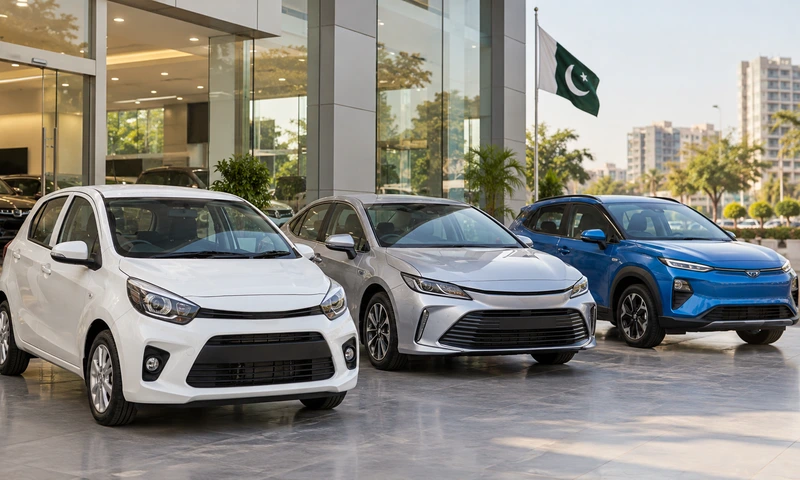
Pakistan’s proposed Auto Policy 2026-31 could lower prices across several vehicle categories, with plug-in hybrids and lower-value electric vehicles showing the largest potential reductions. However, preliminary industry estimates suggest the benefits would vary considerably. Range-extended electric vehicles could become more expensive under the proposed tax structure. According to the estimates reported by ProPakistani, conventional petrol cars could become approximately 8% to 10% cheaper. Hybrid electric vehicles, or HEVs, could see reductions of around 9%. Plug-in hybrid electric vehicles, known as PHEVs, could record price cuts exceeding 20%. Battery electric vehicles, or BEVs, with import values below $15,000 could become approximately 22% cheaper. Higher-priced BEVs could see reductions of around 8%. The $15,000 threshold refers to import value, rather than the vehicle’s final retail price in Pakistan. In contrast, range-extended electric vehicles, or REEVs, could become approximately 3% more expensive. These projections reflect preliminary calculations, rather than confirmed price announcements from manufacturers. Topline Securities said the latest draft retains a 1% general sales tax on BEVs. It proposes a 9% rate for PHEVs and 6% for REEVs. An earlier draft proposed a uniform 1% GST across all new energy vehicles. The previous policy applied rates ranging from 8.5% to 12.75% to PHEVs. The revisions therefore create different tax treatment within the new energy vehicle category. Buyers should also distinguish proposed sales tax rates from projected retail price changes, which reflect the wider policy package. The government additionally plans to reduce tariffs on localised completely knocked-down parts from 25% to 15% by fiscal year 2031. These duties apply to imported components in categories that Pakistan also produces locally. Topline warned that lower tariffs could hurt domestic auto-parts manufacturers. However, stronger competition could encourage vehicle assemblers to pass savings on to consumers. Local suppliers have already raised concerns about the direction of tariff reforms. In August, the Pakistan Association of Automotive Parts and Accessories Manufacturers sought higher duties on imported vehicles and localised parts. Business Recorder reported that the association also favoured minimal or zero duties on raw materials. It argued that the tariff structure should support localisation, investment, employment and export competitiveness. Separately, the Pakistan Automotive Manufacturers Association requested consultation on the draft before finalisation, according to an October 2 report. PAMA supported expanding exports but urged the government to prioritise incentives and a predictable policy framework. It warned against punitive measures linked to export targets. Meanwhile, expectations of cheaper vehicles could affect sales before any revised prices take effect. Prospective buyers may delay purchases while waiting for clarity on taxes and manufacturers’ pricing decisions. Such delays could slow demand and complicate inventory planning for automakers holding existing stock. For consumers, the estimates indicate possible savings rather than guaranteed discounts. Final prices will depend on the implemented policy and how much of any cost reduction manufacturers pass through.
Ufone, Telenor and PTA Hold Zero Trust Cybersecurity Workshop
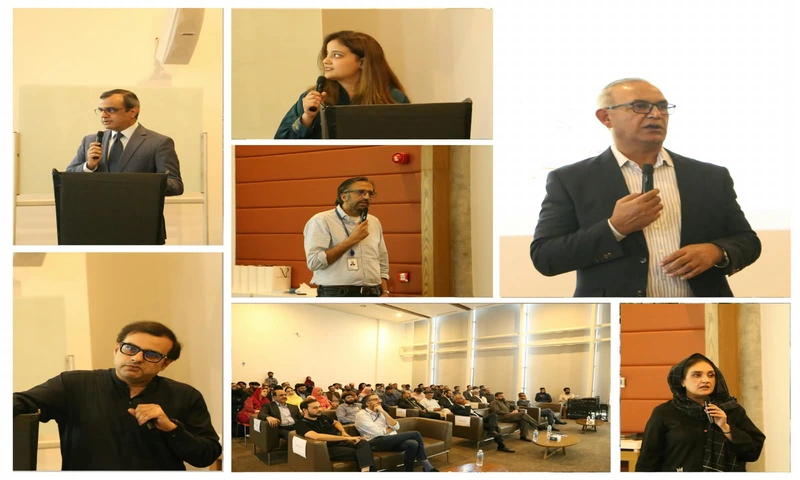
Ufone and Telenor Pakistan partnered with the Pakistan Telecommunication Authority to host a workshop on strengthening cybersecurity across increasingly interconnected telecom networks. The executive knowledge-sharing session, titled “Zero Trust in a Hyperconnected Telecom Environment”, took place at the operators’ headquarters, according to an October 22 statement. Regulator representatives, telecom industry leaders, cybersecurity professionals, academics and technical stakeholders from related sectors attended. Discussions focused on practical security measures as networks connect more users, systems, services and third-party organisations. Read More: Babar Azam’s ‘Lost Phone’ Helps Ufone Win at Dragons of Asia 2026 Experts highlighted the need to move beyond reliance on traditional perimeter-based security controls. They emphasised verifying access, improving access governance and managing privileged accounts to protect critical telecom infrastructure. Mukarram Khan, director general of PTA Cyber Vigilance, delivered the opening remarks. Technical sessions followed on evolving telecom threats, implementing Zero Trust and sustaining it as an ongoing security approach. The Ufone and Telenor Pakistan Cybersecurity Team led knowledge-sharing sessions demonstrating its expertise and delivery capabilities, the statement said. Industry and security expert Tauseef Aslam delivered keynote addresses, alongside contributions from other industry leaders and cybersecurity professionals. An audience question-and-answer session and interactive knowledge quiz followed the presentations. These activities gave participants opportunities to exchange perspectives and share practical experience. Speakers stressed that telecom cybersecurity requires cooperation among regulators, operators and the wider industry. They described Zero Trust as a continuing security process rather than a standalone product or one-time technology deployment. Read More: PTA Approves Ufone-Telenor Rebranding, But There Is a Catch That process involves verifying access, applying appropriate controls and adapting as networks, technologies and threats change. The approach aligns with guidance from the US National Institute of Standards and Technology, or NIST. Its Zero Trust Architecture publication says organisations should not automatically trust users or devices because of their location or ownership. In practice, a connection from inside an organisation’s network does not, by itself, establish that access is safe. NIST’s framework requires authentication and authorisation before establishing access to enterprise resources. Shan ul Haq, chief corporate affairs officer at Ufone and Telenor Pakistan, said collaboration would help strengthen the industry’s understanding. “As telecom networks become more interconnected, building trust into how users, devices and systems access services is increasingly important. Through this workshop, Ufone & Telenor Pakistan and PTA brought industry stakeholders together to exchange practical experience and strengthen our collective understanding of Zero Trust. Collaboration and continuous improvement are essential to building a more secure and resilient telecom ecosystem.” The operators reaffirmed their commitment to cybersecurity and secure, resilient telecom services. They also pledged constructive engagement with PTA and industry stakeholders to support uninterrupted connectivity and digital services. According to the statement, the exchange aimed to increase cybersecurity awareness and encourage informed industry dialogue. Its intended outcomes include stronger security practices, better access governance and more resilient interconnected telecom infrastructure. The workshop placed particular emphasis on maintaining those practices over time as the sector’s security requirements evolve.
Motion Sickness While Reading: Why Cars Make You Nauseous
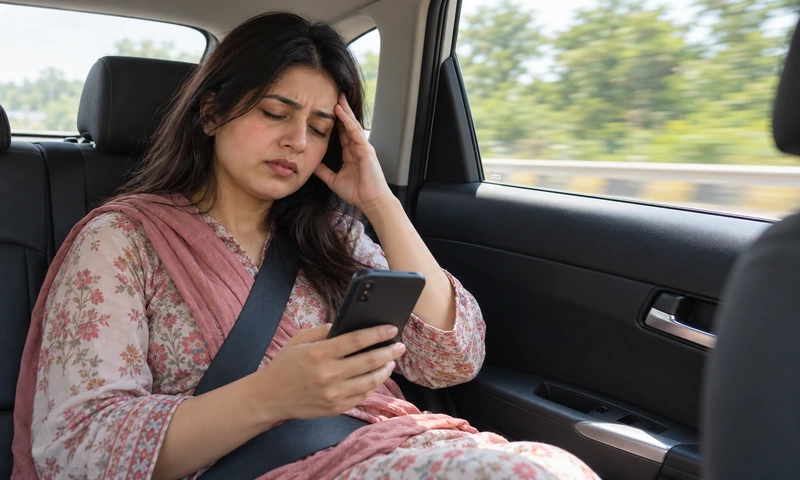
Reading a book or checking a phone during a car journey can trigger nausea, dizziness and sweating in some passengers. Conflicting signals from the eyes and inner ear help explain why, according to Dr Chaithanya Ravikumar, a physician at Koshys Hospital. Speaking to Hindustan Times, Dr Ravikumar said motion sickness develops when the brain receives mismatched information about movement. The eyes focus on a relatively stationary page or screen, while the inner ear detects the moving vehicle. “The inner ear contains specialised structures that detect changes in movement, direction and acceleration. When a person is travelling in a car, these structures continuously communicate movement-related information to the brain,” explained Dr Ravikumar. Reading creates the visual impression that the surroundings are stationary, despite the movement the balance system detects. This mismatch can activate pathways responsible for motion sickness, causing headache and sometimes vomiting alongside nausea and dizziness. The US Centers for Disease Control and Prevention also describes motion sickness as a disagreement between visual information and inner-ear sensations. Similar symptoms can occur on trains, boats, aircraft and amusement park rides. Susceptibility varies with age, genetic predisposition, migraine history and sensitivity to sensory conflicts, Dr Ravikumar said. Children aged two to twelve face a greater risk, although people of any age can experience symptoms. People with migraines may also experience motion-related nausea and dizziness more readily. Frequent acceleration, braking and turns can intensify symptoms by adding stimulation to the balance system. Reading in the back seat may worsen discomfort because passengers have a limited view of the road ahead. Poor ventilation, strong odours, anxiety, fatigue and dehydration can aggravate symptoms in susceptible travellers, the doctor added. “The simplest preventive measure is to avoid reading or looking at a phone while the vehicle is moving. Instead, looking outside at the horizon or at distant, relatively stable objects can help the brain reconcile visual information with the movement detected by the inner ear,” advised Dr Ravikumar. For adults, sitting in the front passenger seat may help. Children should remain in age-appropriate restraints and seating. Keeping the head relatively still, improving ventilation and taking breaks during longer journeys may also reduce discomfort. Britain’s NHS recommends fresh air, slow breathing and avoiding heavy meals, spicy foods and alcohol before or during travel. People with significant symptoms can consult a doctor about medication. Some treatments cause drowsiness and do not suit everyone. The CDC advises checking suitability and dosing with a healthcare professional, particularly for children. Motion sickness during reading is generally harmless and does not necessarily signal an underlying medical condition. However, symptoms outside travel require attention. “However, if dizziness or nausea occurs frequently even when the person is not travelling, persists after the journey, or is accompanied by severe headache, hearing changes, difficulty walking or other neurological symptoms, medical evaluation is advisable to rule out other causes,” highlighted Dr Ravikumar.

Karachi World Culture Festival 2026: Dates and Venues
Karachi Mayor Murtaza Wahab has pledged support for World Culture Festival 2026, saying the event will celebrate the city and welcome international artists. The Arts Council of Pakistan, Karachi, will organise the festival’s third edition from October 29 to November 22. Burns Garden will host the opening event, while Baradari at Polo Ground will accommodate some larger programmes. Wahab spoke to journalists at the Arts Council on Wednesday evening after inspecting both venues. He said art and culture played an important role in a healthy and dignified society. Read More: Karachi’s 25-Day World Culture Festival Promises Music, Theatre and More “I think the part that the Arts Council has played in putting the city of Karachi on the [world] cultural map must be praised and appreciated. Karachi last year hosted the event. Artists from all over the world came here to perform. It’s a matter of honour for any city if people from all across the globe come to it. It provides an opportunity to that particular city to showcase itself and to portray its positive image.” The mayor said the festivities would begin on October 29 and offer Karachi an opportunity to welcome visitors. “It’ll be a moment to celebrate our city. It’ll be a moment to welcome international artists to the city and let them know that Karachi is the city of peace, this province is the province of peace, this country is the country of peace. We will provide all support to the council. I myself will be here with my team alongside the council’s President Ahmed Shah.” Wahab also encouraged residents to celebrate the performances and visiting artists. “Let us focus on celebrating our city. Let us celebrate the art that will be happening. I congratulate in advance the council and all the artists who are coming to Karachi.” Responding to a question, he supported opening public spaces that previously remained closed. Read More: ‘Mera Lyari’ Brings Karachi’s Football Culture and Community Spirit to the Big Screen “With the help of the council, recently we held a big qawwali event at Burns Garden. This time around, we are arranging programmes at Burns Garden and Baradari. I want the visitors to the festival to see all the big public spaces and heritage properties in Karachi.” Earlier, Arts Council President Ahmed Shah said his team had coordinated with the Karachi Metropolitan Corporation for a month. “He [Wahab] is a very dynamic mayor. The festival is the biggest in the world. The province of Sindh has taken ownership of the event. The chief minister of Sindh takes personal interest in it. I wanted to thank the mayor for visiting the venues and extending his support. The opening event will take place at Burns Garden,” he said. The Arts Council’s official festival page confirms the dates and highlights music, dance and international cultural exchange. Organisers previously announced expected participation from around 150 countries, including more than 1,000 international artists and over 500 Pakistani performers.
Virginia Man Accused of Taping Wife to Chair to Watch Football
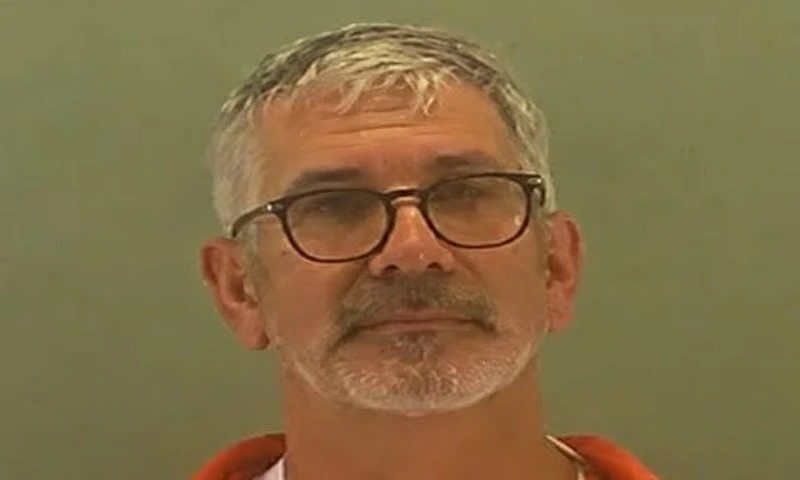
A 64-year-old Virginia man faces abduction and domestic assault charges after allegedly taping his wife to a basement chair to watch football. Terry Ward allegedly restrained his wife for between 30 and 45 minutes at their Richmond home. Police documented marks and tape residue around both her arms, according to a criminal complaint cited by WTVR CBS 6. Officers responded to the couple’s home near Byrd Park on Sunday night, October 11, the broadcaster reported. The complaint records the woman’s account and Ward’s alleged admission that he tied her to a chair and left her downstairs. WTVR attributed the reported football motive to sources who spoke with Virginia Statewide Incidents. Those sources said watching football upstairs was one reason for the alleged restraint. The available reporting does not identify the game or establish whether Ward was watching NFL or college football. It also does not provide a verified account of what preceded the alleged incident. Ward faces felony abduction and misdemeanour assault on a family member. His next reported court appearance is November 10. The accusations remain allegations, and the court has not determined his guilt. WTVR’s report does not include a response from Ward or a lawyer representing him. Virginia law generally classifies abduction of an adult as a Class 5 felony when no other punishment applies. The offence covers unlawful detention through force, intimidation or deception with an intent to deprive someone of personal liberty. The statute therefore extends beyond cases involving transportation from one location to another. Virginia separately classifies assault and battery against a family or household member as a Class 1 misdemeanour, subject to statutory exceptions. The reported football connection has attracted attention, but the criminal case centres on the alleged confinement and assault. Neither a sporting routine nor enthusiasm for a team establishes what happened inside the home. Gulf News placed the incident alongside broader discussion of football traditions and unusual pre-game habits. It cited Minnesota Vikings safety Harrison Smith’s practice of taking a shot of Tabasco sauce before games. An earlier ESPN report described that ritual as part of Smith’s meal before noon kickoffs. Such routines have no established connection to Ward’s case. Researchers have separately examined links between football results and reported domestic violence. A 2011 study by economists David Card and Gordon Dahl found increased reports following unexpected NFL losses. Their analysis associated those defeats with a 10% increase in at-home violence by men against wives and girlfriends. A 2026 reassessment found a considerably smaller effect overall, although some restricted samples still showed relationships. Those findings concern patterns across groups and cannot explain an individual allegation. Investigators have not publicly identified a game result as a factor in Ward’s case. For now, the central evidence described in local reporting remains the woman’s account, the marks officers observed and Ward’s alleged admission.
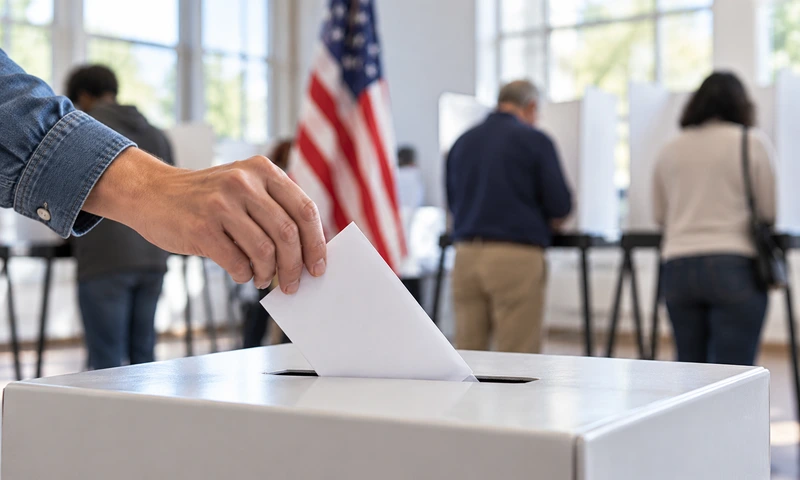
US Midterm Elections 2026: Key Races and Stakes for Trump
Americans vote on November 3 in the 2026 US midterm elections, with congressional control and President Donald Trump’s agenda at stake. Early voting has continued for weeks. Voters will elect all 435 House members, 35 senators and governors in 36 states. Nearly every state also holds legislative elections. The presidency is not on the ballot. However, results could force White House policy changes and shape candidates’ strategies for 2028. Republicans hold a 218-214 House majority, alongside two vacancies and one independent who caucuses with them. Democrats need four additional seats for control. Read More: Muslims in US Midterms Become Major Campaign Flashpoint Republicans lead the Senate 53-47, where Democrats also need a net gain of four. Ten contests could prove decisive, including Maine, Ohio, North Carolina, Iowa and Georgia. Turnout could exceed 100 million if participation resembles 2022, although midterms generally attract fewer voters than presidential elections. More than 155 million voted in 2024. Political advertising spending reached a record $3.8 billion by October 12, according to AdImpact. Senate races in Texas, Ohio and Michigan led spending. Campaign finance records cited by Reuters showed Elon Musk had spent approximately $366 million supporting Republicans. A September Reuters/Ipsos poll put Trump’s approval at a record-low 32%. Rising consumer prices threaten Republican support, while Democrats show stronger voting enthusiasm. Early voting trends could favour Democrats if they continue. Some Latino voters who supported Trump in 2024 also show frustration with economic conditions and immigration enforcement. Nevertheless, a Democratic landslide remains uncertain. Republican spending advantages, distrust of Democrats and moderate voters’ concerns about left-wing primary winners could limit Democratic gains. A Democratic House victory would likely make New York Representative Hakeem Jeffries speaker, the first Black American to hold that office. The speaker stands second in presidential succession after the vice president. Jeffries has promised investigations into “unprecedented levels of corruption” under Trump. His affordability priorities include healthcare, groceries, housing and energy. A Republican victory would preserve the party’s speakership, under Mike Johnson or a successful challenger. Republicans would likely pursue further tax cuts, defence spending increases and social safety-net reductions, extending Trump’s 2025 “One Big Beautiful Bill.” Key House contests include Republican Mike Lawler’s New York district, which Kamala Harris won in 2024. Democrats also target two Pennsylvania seats and one in New Jersey. Read More: Trump Promises Every American $5,000 if Republicans Win An open Nebraska swing seat merits attention as farmers and truckers face higher fuel costs linked to the US war against Iran. History illustrates the stakes. Republicans gained 63 House seats and six Senate seats in 2010 amid economic weakness and opposition to Barack Obama’s healthcare overhaul. Democrats lost the House but retained the Senate. Obama called the result a “shellacking” and subsequently faced demands for non-defence spending cuts. In 2018, Democrats gained 40 House seats but lost two Senate seats. Republicans currently hold 55% of state legislative seats; Democrats hold 43.8%. Meanwhile, election officials and congressional Democrats are preparing legal challenges against possible administration intervention. States administer elections, and Trump’s repeated claims of widespread cheating since 2020 lack supporting evidence.
Pakistan Startup Fund: World Bank Proposes $50 Million
Pakistan could receive a $50 million startup investment fund under a World Bank proposal aimed at attracting private capital into innovative businesses. The proposed Pakistan Entrepreneurship and Private Investment Catalyst Project would expand access to venture capital for companies with strong growth potential. The World Bank’s Executive Board could consider it for approval in early 2027, according to ProPakistani’s report citing a project document. The initiative remains at the proposal stage. Board consideration would represent a further step towards approval, rather than an immediate release of money to startups. Under the proposed structure, the World Bank would help the government establish and capitalise a Fund of Funds. This investment vehicle would commit money to professionally managed venture capital funds. Those funds would then provide early-stage and growth financing to Pakistani companies. Professional fund managers would therefore serve as the channel connecting the proposed financing with individual businesses. The initiative aims to attract both domestic and international private investors into Pakistan’s developing venture capital market. Its central objective is to address a longstanding financing shortage for startups and other businesses seeking capital to expand. According to the report, the project document links better access to private investment with innovation, higher productivity and business expansion. It also identifies the potential to create more jobs and improve employment quality over time. The proposal has a national scope, with no fixed geographic focus identified at the concept stage. Pakistan’s broader environmental and social conditions would consequently shape the context for its eventual investment portfolio. The financing plan comes as Pakistan’s startup sector continues to navigate a changing investment market. In February, Business Recorder reported figures from Invest2Innovate showing that Pakistani startups raised approximately $74.2 million in reported funding during 2025. Hybrid equity-and-debt transactions accounted for about $66 million, while pure equity funding totalled around $8.2 million. Those figures highlight the limited volume of pure equity investment available to businesses seeking venture financing. However, they describe the wider funding market, rather than commitments to the proposed World Bank project. Employment provides another important backdrop. World Bank President Ajay Banga told Reuters in February that Pakistan needs 25 million to 30 million additional jobs over the next decade. He identified better financing access for small businesses and farmers as one pillar of the country’s employment strategy. Infrastructure investment and business-friendly regulatory reforms formed the other two. The proposal also comes amid a broader World Bank Group push to attract private investment into developing economies. In September, the institution reported mobilising $112 billion in private capital during fiscal year 2026, compared with $35 billion in fiscal 2022. For Pakistan’s entrepreneurs, the next milestone would be the proposed project’s consideration by the Executive Board. The reported early-2027 timetable remains an expectation, with approval still pending.
Meta Hit With Record $25 Billion Fine Over Facebook Privacy ‘Lies’
A New Mexico judge ordered Meta to pay $25 billion (£18.6 billion) fine on Wednesday for misleading Facebook users about data privacy. The penalty marks the largest fine against the owner of Facebook, Instagram and WhatsApp. Judge Francis Mathew issued the October 21 ruling after a two-week trial. Jurors found that Meta repeatedly deceived the public about personal information and its business practices. “The lies extend beyond Facebook’s data practices as well,” the judge said, adding they reached “the heart of Facebook’s core business practices”. Meta’s chief legal officer, CJ Mahoney, said the decision made it “all but impossible to do business in the state of New Mexico”. The company plans to appeal, and Mahoney said it would succeed. The lawsuit, filed in 2021, grew out of the Cambridge Analytica scandal. The political consultancy obtained information from millions of Facebook users for political work, including Donald Trump’s successful 2016 presidential campaign. Read More: Meta Set for Major Teen Restrictions After $18 Billion Deal Reuters reported that the scandal involved data from as many as 87 million users, collected through a third-party application without consent. State lawyers challenged executives’ repeated assurances that third parties could not access or receive users’ information without permission. They argued that Facebook’s actual practices contradicted those statements. New Mexico also accused Meta of misleading people about its financial benefits from hate speech and its enforcement of content rules. Jurors upheld those allegations. Lawyers argued that the deception affected roughly two million people, effectively the state’s entire population. New Mexico’s Department of Justice said jurors identified precisely 43,899,725 violations of the state’s Unfair Practices Act. Mathew described the violations as “willful” and said they spanned “more than 11 years”, from 2010 to 2021. Communications involving senior executives, including Mark Zuckerberg, were “designed to mislead the public”, he wrote. Read More: No Likes, No Infinite Scroll? Meta May Be Forced to Change Meta disputed the accusations and challenged the lawsuit’s implications for online expression. “At its core, this lawsuit seeks to impose a tax on speech to enforce new rules for what people can say online,” Mahoney said. State lawyers sought up to $40 billion. Meta argued that penalties exceeding roughly $3.4 billion would violate constitutional protections. The judge calculated a potential penalty of approximately $219 billion before reducing it to $25 billion, roughly equivalent to Meta’s quarterly profits. “For too long, powerful technology companies have operated as though their size and influence put them beyond the reach of the law,” Attorney General Raúl Torrez said. “Today’s result makes clear that no corporation is too powerful to be held accountable.” The ruling adds to Meta’s legal penalties and settlements this year. The BBC report cited an $18 billion child-safety deal involving California. It also follows the US Federal Trade Commission’s $5 billion privacy penalty against Facebook in 2019. That settlement required stronger privacy oversight alongside the financial penalty.
