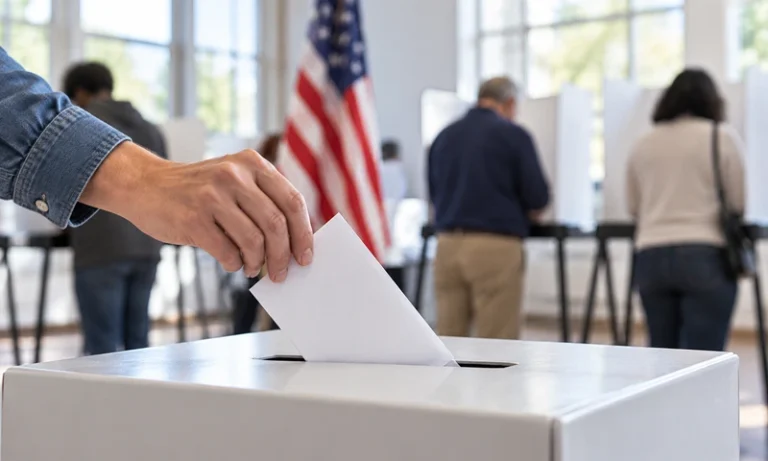
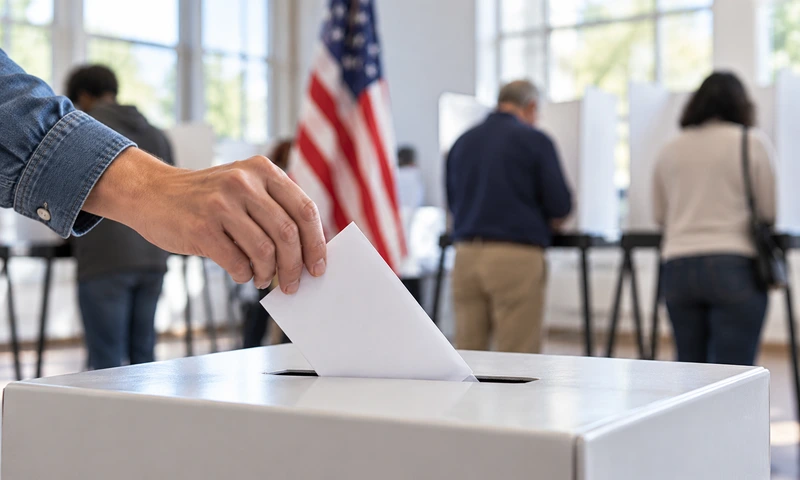
Americans vote on November 3 in the 2026 US midterm elections, with congressional control and President Donald Trump’s agenda at stake.
Early voting has continued for weeks. Voters will elect all 435 House members, 35 senators and governors in 36 states. Nearly every state also holds legislative elections.
The presidency is not on the ballot. However, results could force White House policy changes and shape candidates’ strategies for 2028.
Republicans hold a 218-214 House majority, alongside two vacancies and one independent who caucuses with them. Democrats need four additional seats for control.
Read More: Muslims in US Midterms Become Major Campaign Flashpoint
Republicans lead the Senate 53-47, where Democrats also need a net gain of four. Ten contests could prove decisive, including Maine, Ohio, North Carolina, Iowa and Georgia.
Turnout could exceed 100 million if participation resembles 2022, although midterms generally attract fewer voters than presidential elections. More than 155 million voted in 2024.
Political advertising spending reached a record $3.8 billion by October 12, according to AdImpact. Senate races in Texas, Ohio and Michigan led spending.
Campaign finance records cited by Reuters showed Elon Musk had spent approximately $366 million supporting Republicans.
A September Reuters/Ipsos poll put Trump’s approval at a record-low 32%. Rising consumer prices threaten Republican support, while Democrats show stronger voting enthusiasm.
Early voting trends could favour Democrats if they continue. Some Latino voters who supported Trump in 2024 also show frustration with economic conditions and immigration enforcement.
Nevertheless, a Democratic landslide remains uncertain. Republican spending advantages, distrust of Democrats and moderate voters’ concerns about left-wing primary winners could limit Democratic gains.
A Democratic House victory would likely make New York Representative Hakeem Jeffries speaker, the first Black American to hold that office. The speaker stands second in presidential succession after the vice president.
Jeffries has promised investigations into “unprecedented levels of corruption” under Trump. His affordability priorities include healthcare, groceries, housing and energy.
A Republican victory would preserve the party’s speakership, under Mike Johnson or a successful challenger. Republicans would likely pursue further tax cuts, defence spending increases and social safety-net reductions, extending Trump’s 2025 “One Big Beautiful Bill.”
Key House contests include Republican Mike Lawler’s New York district, which Kamala Harris won in 2024. Democrats also target two Pennsylvania seats and one in New Jersey.
Read More: Trump Promises Every American $5,000 if Republicans Win
An open Nebraska swing seat merits attention as farmers and truckers face higher fuel costs linked to the US war against Iran.
History illustrates the stakes. Republicans gained 63 House seats and six Senate seats in 2010 amid economic weakness and opposition to Barack Obama’s healthcare overhaul.
Democrats lost the House but retained the Senate. Obama called the result a “shellacking” and subsequently faced demands for non-defence spending cuts.
In 2018, Democrats gained 40 House seats but lost two Senate seats. Republicans currently hold 55% of state legislative seats; Democrats hold 43.8%.
Meanwhile, election officials and congressional Democrats are preparing legal challenges against possible administration intervention. States administer elections, and Trump’s repeated claims of widespread cheating since 2020 lack supporting evidence.