


The Pakistan Cricket Board opened direct signings for all eight HBL Pakistan Super League franchises on Friday. It also confirmed January 23, 2027, as the PSL 12 player auction date. The tournament will run from March 18 to May 2, 2027, with 44 matches across 46 days. Teams will contest 40 league fixtures and four playoff matches. Read More: PCB Names Michael Smith as Pakistan’s New Batting Coach For the first time, the league plans to stage matches across five to six venues. The announcement did not identify the host cities. The PCB previously confirmed the tournament window on October 8, with all eight franchises returning for the upcoming season. Friday’s announcement adds the player recruitment timetable and outlines the next steps for squad building. PSL 12 direct signing rules and deadline The direct signing window runs from October 23 to November 23, 2026. Each franchise can recruit one marquee player who did not feature in either PSL 10 or PSL 11. A franchise cricketing workshop next week will finalise the player retention deadline, pre-auction trade window, auction rules and playing conditions. Further announcements will follow in the coming weeks. The opening match takes place on March 18, while the final falls on May 2. National T20 tournaments become player pathway The PCB has formally aligned its domestic competition calendar with the PSL pre-season cycle. PCB Chairman Mohsin Naqvi chaired the HBL PSL Governing Council meeting as the roadmap for Season 12 was confirmed with Direct Signings now open and the Player Auction set for 23 January 2027. With 44 matches across 46 days and five to six venues for the first time, #HBLPSL12 is set to take the league to new heights. 📅 18 March – 2 May 2027 More Details: https://t.co/NndT8QeTLp #NewEra | #HBLPSL — PakistanSuperLeague (@thePSLt20) October 23, 2026 The National T20 Gold and National T20 Silver tournaments will serve as the primary talent-identification events ahead of the January auction. Outstanding performers will have a clearer route from domestic cricket into franchise squads and potential national team consideration. The announcement establishes these competitions as a formal recruitment pathway. However, it leaves detailed auction regulations and retention arrangements for the forthcoming workshop. Naqvi and Naseer outline expansion plans PCB Chairman Mohsin Naqvi said: “HBL PSL is Pakistan cricket’s biggest stage, and Season 12 will be its most ambitious yet. HBL PSL 11 ended before a record crowd, and we are building on that momentum by taking the league to more cities than ever before. The road map we have finalised and are partially announcing today gives every stakeholder, from franchises and players to commercial partners and broadcasters, the certainty to plan at the highest level. With the foundations now in place, we are looking forward to an exciting season.” Read More: PCB Opens National Champions Cup 2026 to Fans for Free HBL PSL CEO Salman Naseer linked the expanded venue footprint to broader access for supporters. “For the first time, HBL PSL will go to five to six venues, bringing the league closer to fans across Pakistan and giving more cities the chance to host the best of T20 cricket. From today, the race to build the best squad for HBL PSL 12 is on. Every Direct Signing, every trade, every retention decision over the coming weeks will shape the teams that take the field in March. We look forward to a season that takes this league further than it has ever gone.”
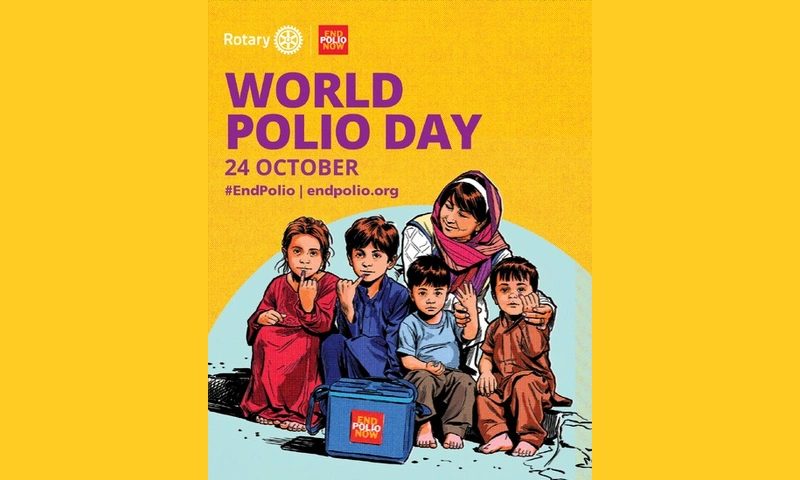
Pakistan Polio Eradication: Rotary Renews World Polio Day Pledge
KARACHI: Rotary International reaffirmed its support for Pakistan’s polio eradication efforts ahead of World Polio Day, urging sustained funding and community engagement. Pakistan and Afghanistan remain the only countries where wild poliovirus transmission remains endemic. In an October 23 statement, Rotary highlighted decades of financial contributions, volunteer work and support for vaccination campaigns. It urged governments, donors and partners to keep eradication a priority despite substantial global progress. World Polio Day falls on October 24. Rotary established the observance to honour Dr Jonas Salk, who developed the first safe and effective polio vaccine over 70 years ago. Decades of funding and vaccination support Rotary helped establish the Global Polio Eradication Initiative (GPEI) in 1988. At that time, polio affected 350,000 children annually across 125 countries. According to Rotary, cases have since fallen by more than 99.9%, sparing over 20 million people from paralysis. The organisation described itself as the first to envision a polio-free world. “We have contributed more than US$3 billion—including US$1.3 million from Rotary members in Pakistan–and invested more than half a billion of these funds and countless volunteer hours to protect over 45 million children in Pakistan from this paralyzing disease,” said Rotary International President Olayinka Hakeem Babalola. Babalola helped lead Nigeria’s eradication efforts before the African region achieved wild poliovirus-free certification in 2020. “Africa’s achievement demonstrates that with collaboration and political and financial support, ending polio in Pakistan and eradicating it globally is possible.” Community trust remains essential Rotary members also advocate for government support and promote vaccination awareness. The organisation said vaccine refusals continue to obstruct efforts to reach every child in Pakistan. “Pakistan is demonstrating strong progress with only a handful of reported cases this year, and in order to safeguard our credibility and maintain trust, we are continuing to address other community needs,” said Aziz Memon, chair of Rotary’s Pakistan National PolioPlus Committee. “For example, the Committee has helped establish water filtration plants across Pakistan, resource centers to bond with the community, team support centers to facilitate frontline workers, and permanent transit posts to cover children in transit.” These initiatives extend the committee’s work beyond vaccination campaigns. They address water access, community relationships, frontline workers’ needs and vaccination opportunities for travelling children. Regional commitment and misinformation challenges GPEI’s October 21 update reported renewed regional political support for eradication following a WHO meeting in Cairo. Saudi Arabia, Qatar and the UAE reiterated support, particularly for reaching underserved areas. Separately, Rotary identified online vaccine misinformation as a significant obstacle in an article published ahead of World Polio Day. That challenge reinforces the importance of credible communication alongside immunisation campaigns. Rotary said it and its GPEI partners possess the tools and expertise needed to end polio. It called for continued political and financial backing and directed readers to endpolio.org for further information.
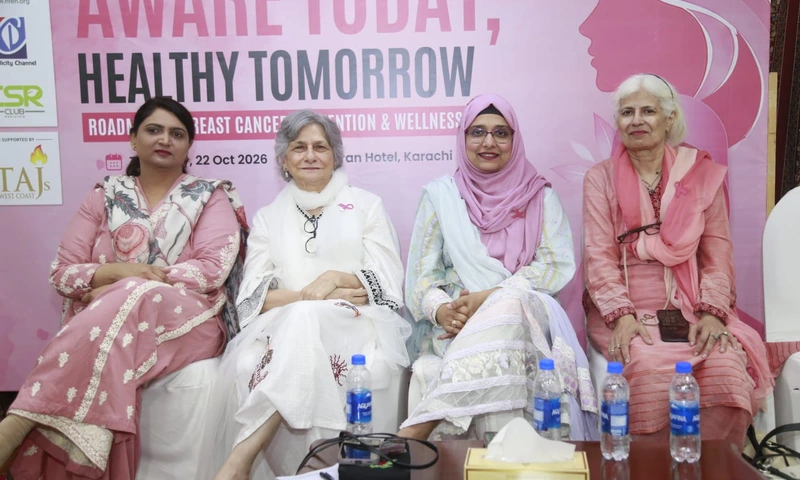
Early Breast Cancer Diagnosis: Experts Urge Timely Screening
Oncologists and survivors urged women to seek early breast cancer diagnosis and treatment at a Pink October seminar in Karachi. They stressed that fear, embarrassment and misconceptions should not delay examinations or access to care. The National Forum for Environment & Health (NFEH) organised the seminar, where speakers called for affordable screening and compassionate support. Mammograms and timely examinations Keynote speaker Dr Rufina Soomro, a senior oncologist and breast surgery department head, explained that mammography uses specialised breast X-rays. She said it could identify abnormalities before clinical symptoms, potentially detecting cancer an average of two years earlier. Earlier diagnosis generally improves treatment outcomes and may shorten treatment, she added. Soomro advised women aged 40 and above to discuss mammography with their doctors, with two-year screening intervals where appropriate. She also recommended clinical examinations and breast self-awareness. The US Preventive Services Task Force recommends mammograms every two years for average-risk women aged 40–74. Screening carries potential harms, including false-positive findings, so individual risk matters. Soomro said breast cancer represented up to 35% of cancers among Pakistani women, citing lifetime risk of one in eight to nine. She added that Pakistani women typically received diagnoses about a decade earlier than Western women. Qualified professionals could conduct examinations, while trained midwives could expand preliminary screening access, she said. She urged women not to fear biopsies, which establish a definitive diagnosis when doctors suspect cancer. Women should report unusual changes promptly rather than wait for pain, she cautioned. Survivors seek awareness and counselling Mahanaz Rahman, a survivor and former Aurat Foundation Karachi resident director, recalled receiving her diagnosis at 75. She said breast cancer caller tunes from a nationwide campaign led by Pakistan’s then First Lady prompted her to investigate symptoms. She urged mobile operators to revive these messages, particularly during October. Rahman also called for specialist counselling that reassures women instead of adding psychological pressure. Psychiatrist Dr Isra Hyder Shaikh sought accessible mental healthcare for patients and close relatives to support morale and emotional wellbeing. Journalist and survivor Afia Salam urged younger women, especially those with family histories, to seek advice on hereditary risk and screening. Nutrition expert Dr Zubala Yasir Lutfi recommended balanced diets containing essential nutrients to support health and immune function. Soomro identified smoking, alcohol and obesity as risk factors. She recommended four hours of weekly exercise, discussed reproductive factors and noted breastfeeding’s protective association. Affordable services beyond major cities NFEH Secretary General Ruqiya Naeem, also a survivor, urged governments, businesses, charities, civil society and philanthropists to expand affordable care nationwide. Rural and disadvantaged women often cannot afford urban services, delaying diagnosis and treatment, she said. She proposed mobile screening and mammography vans, timely referrals, accessible treatment and sustained education. NFEH President Muhammad Naeem Qureshi urged authorities to investigate environmental contributors to cancer and reduce pollution-related health risks. WHO’s Global Breast Cancer Initiative similarly prioritises early detection, timely diagnosis and comprehensive treatment. These coordinated services underpin efforts to reduce deaths.

Islamabad Manhattan-Style City and Safari Park Planned
Interior Minister Mohsin Naqvi announced plans Friday for a Manhattan-style development, high-rise projects and a 450-acre safari park in Islamabad. Addressing the Saudi-Pak Real Estate Expo in Lahore, he offered investors land without upfront payment in exchange for project inventory. High-rise plots offered through inventory auction The government plans to offer one-, three- and six-acre plots for hotels, shopping malls and residential complexes. Buildings must stand at least 600 feet tall. “The interesting thing is that it will be free of cost. We will not be asking for any money. We will go for inventory, and we will start the auction at 15% of the inventory. Then it will depend on the investor how much they offer us,” he said. “We have only two demands: to complete the project within two years from the day of approval,” he said. The minimum building height forms the second condition. Naqvi promised Interior Ministry approvals through a one-window operation. “We can do it within three to four weeks, so the investor does not need to go to any other office,” he stated. It was reported that Naqvi invited Saudi investors to participate in a December auction. He prioritised Pakistani and foreign investors’ security and proposed a five-member auction committee. Representatives of NAB, SIFC, FIA and CDA would serve under a judge. Whether that judge would be serving or retired remains undecided. “All the stakeholders and those who could create hurdles for investors in the future will be part of the committee,” he added. Manhattan-style development behind PM House The proposed city would occupy 1,000 acres behind the Prime Minister’s House. “We are launching a Manhattan-style city in Islamabad, which will have a completely different set of laws, rules and standard operating procedures (SOPs),” he said. “It will be just like Manhattan, with a Central Park in the middle and a lake, surrounded by residential and commercial complexes,” he added. Safari park targets recreation demand Naqvi also proposed what he described as “Asia’s largest safari park, spanning 450 acres in Islamabad,” without presenting comparative figures. He cited a neglected Punjab safari park that authorities rebuilt within six months, adding animals. Its annual auction value rose from Rs20 million to Rs680 million within a year, despite having half the planned animals. “This is the potential we have for entertainment in Pakistan. Our people are eager for entertainment, but we lack facilities, whether in the form of safari parks or other attractions,” he said. He highlighted residential and entertainment opportunities, cited steps addressing high property prices and anticipated Saudi investment. “I can assure you of one thing: it will be a one-window operation. You will not need to visit any other government office. Everything will be handled by the Ministry of Interior,” he said. “We look forward to welcoming all of you to Islamabad, and I can assure you that these projects will change Pakistan,” he added.
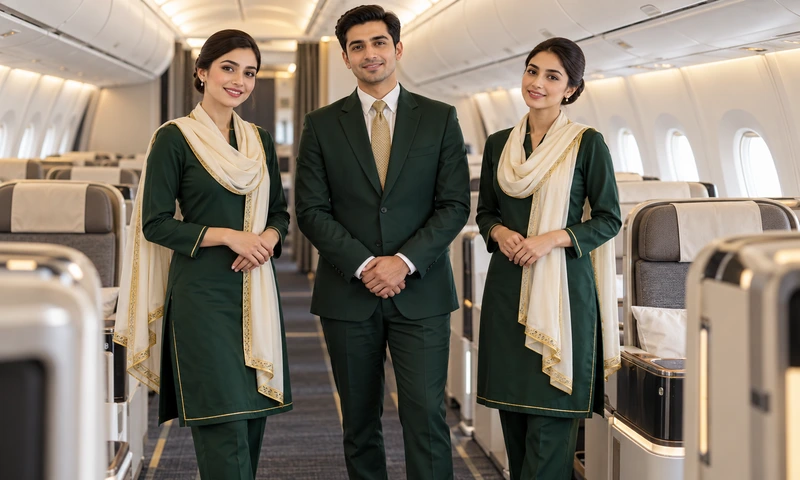
HSY PIA Uniforms Unveiled Ahead of October 31 Debut
Pakistan International Airlines has unveiled new cabin crew uniforms by Hassan Sheheryar Yasin, known as HSY, ahead of their October 31 debut. The airline announced the designer’s selection on Thursday, October 22, and presented the collection in Lahore. PIA plans to introduce the uniforms aboard its inaugural Boeing 787-9 Dreamliner flight from London to Islamabad, according to its statement. The redesign forms part of the airline’s ongoing transformation under consortium-led new management. The collection combines contemporary tailoring with Pakistani cultural heritage. PIA says it places crew confidence, practical comfort and passenger experience at the centre of its refreshed identity. New uniforms prioritise comfort on long flights HSY’s collection follows a ‘lifestyle first’ philosophy, with designs that accommodate movement and withstand long-haul duties. Soft, breathable fabrics complement structured tailoring. Meanwhile, the colour palette and detailing draw subtly on Pakistan’s craftsmanship while retaining the polished appearance required of cabin crew. “Designing for our national flag carrier is about capturing our collective pride and the genuine warmth of Pakistani hospitality,” Yasin said in the statement. “We wanted uniforms that our crew feel extraordinarily confident and comfortable apparel that respect our heritage, reflect modern fashion, and tell our story beautifully in every airport across the globe.” Yasin has built his reputation through red-carpet creations, international celebrity clients and efforts to showcase Pakistani fashion abroad. The PIA assignment brings that experience into uniforms intended for daily airline operations. HSY wins competitive design showcase PIA selected Yasin after a competitive showcase in Karachi. Ten leading Pakistani designers presented their concepts to a jury comprising fashion figures and industry leaders. Other participants included Maheen Khan, Deepak and Fahad, Generation, Ismail Farid and Munib Nawaz. Deepak Perwani, Faraz Manan, Amir Adnan and Nomi Ansari also presented collections, Dawn Images reported. The appointment extends PIA’s longstanding association with prominent local and international designers, whose work helped shape its visual identity. French designer Pierre Cardin created the airline’s pioneering A-line tunic and hood in 1966. The design helped establish PIA’s reputation for distinctive aviation fashion. Sir Hardy Amies, Queen Elizabeth II’s royal couturier, brought his refined tailoring to the airline during the 1970s. More recently, Nomi Ansari’s uniform inspiration remained part of PIA’s identity for 12 years, according to the airline’s account. London-Islamabad flight to launch new look PIA released a photograph on October 22 showing cabin crew wearing the new uniforms aboard an aircraft. Passengers will see the collection enter service later this month under the announced rollout. “Passengers won’t have to wait long to experience the new visual identity,” the PIA statement said. “The collection makes its official skyward debut on October 31, 2026, aboard PIA’s inaugural Boeing 787-9 Dreamliner flight from London to Islamabad, signaling a fresh chapter of comfort, sophistication, and national pride connecting Pakistan to the world.”

Why Is Apidra Insulin Running Short in Pakistan?
Pakistan faces a shortage of an insulin product after its German manufacturer halted supplies during product upgrades, parliament heard Friday. Parliamentary Secretary for Health Nelson Azeem said the disruption affected patients using the treatment for Type 1 diabetes. Responding to MNA Syeda Amna Batool, Azeem said no shortage existed until June, while available stocks lasted until September. Supplies from Germany stopped in October, triggering the current shortage. Supplies fall as manufacturer upgrades products “The impact of the shortage is being felt not just here, but across Asia, as well as in Australia and Europe,” Azeem said. “The product will be available as soon as international supplies are restored.” He said supplies had dropped from 3,500 kits to 1,000 and could fall further during the year-long upgrade process. Read More: Fatty Liver Can Damage Your Body Before Symptoms Appear The health ministry had asked importing distributors to arrange supplies. However, Azeem acknowledged difficulties because the manufacturer had halted production. “The product is manufactured in Germany. It is an issue that we are trying to resolve,” he said. Azeem maintained that alternative insulin products offered the same dosage and mode of action. Patients could switch on their doctors’ recommendation, he added. Lawmaker questions affordability and access Batool challenged those assurances, saying alternatives cost at least 20 per cent more and many patients lacked access to doctors. “Currently, around 34.5 million people in Pakistan have Type 1 diabetes, including children,” she said. “Alternatives are not readily available. Has the health ministry or the Drug Regulatory Authority of Pakistan (Drap) ensured their easy availability?” However, International Diabetes Federation data puts Pakistan’s adult diabetes population at approximately 34.5 million in 2024, covering diabetes overall. That figure does not represent Type 1 diabetes alone or include children. The exchange highlighted competing accounts of availability, alongside concerns about the cost and practical difficulties of changing treatment. Ministry identifies Apidra supply constraints On Tuesday, October 20, health authorities rejected reports of a widespread insulin shortage, saying only one brand was unavailable. “Insulin glulisine (Apidra, Sanofi) is currently unavailable due to international supply constraints. Alternate rapid-acting analogues within the same pharmacological class, specifically insulin aspart (NovoRapid, Novo Nordisk) and insulin lispro (Humalog, Eli Lilly), are readily available nationwide,” health ministry spokesperson Sajid Shah had said. Read More: Top Tips for Diabetics Who Want to Fast This Ramadan Shah added that all other primary insulin classes remained fully accessible across Pakistan. The current disruption follows broader concerns about medicine availability. In August 2025, the Pakistan Medical Association warned of “an unprecedented” and severe shortage of essential medicines, threatening millions of patients. The association said at least 80 important medicines were unavailable, including 25 without substitutes. These included treatments for diabetes, cancer, Alzheimer’s, Parkinson’s, heart disease and psychiatric disorders. Azeem linked the product’s return to restored international supplies but gave parliament no firm date for availability in Pakistan.

Airbnb Limits Cleaning Chores From November 20, but Exceptions Remain
Airbnb will limit the checkout chores hosts can ask guests to complete under a new policy announced on October 20. The changes address a familiar frustration for travellers: paying a cleaning fee while facing a list of household tasks. The policy applies to reservations booked on or after November 20, 2026. Hosts generally cannot ask guests to strip beds, wash and put away dishes, or take rubbish offsite. Airbnb says cleaners should handle tasks that require substantial time or effort. However, simpler requests remain acceptable. Hosts can ask guests to leave used dishes in the sink, gather used towels and separate rubbish from recycling. “Remember to think like a guest and keep in mind what you’d find unreasonable,” Airbnb tells hosts in its announcement video. The distinction matters for guests who already pay cleaning fees. Checkout chores have repeatedly caused friction, and Airbnb has acknowledged that cleaning charges can create different expectations between hosts and travellers. The new policy does not remove every responsibility at departure. Hosts can still require guests to lock up and explain where to return keys. They can also request that guests switch off air conditioning when leaving. However, they generally cannot restrict access to amenities advertised with the property. Local conditions may justify exceptions. In areas with bears, hosts may ask guests to place rubbish in animal-proof containers. Airbnb also cites drought-related water restrictions as a possible reason for requesting shorter showers. The company considers the property, type of stay and local circumstances when assessing requests. Hosts must disclose every house rule and request in the designated listing section before guests book. They cannot introduce additional requirements through private messages, signs inside the property or other parts of the listing. Airbnb has also organised standard house rules into seven categories. These cover maximum overnight guests, quiet hours, events, pets, smoking, commercial photography and filming, and locking up at checkout. Smoking rules include vaping and electronic cigarettes. Guests can review the information before booking and through their Trips tab. Airbnb may warn hosts and request changes when listings breach the policy. Persistent violations could trigger notices for guests or reduce a listing’s visibility in search results. Guests must follow house rules, while Airbnb encourages compliance with reasonable requests. The changes continue Airbnb’s effort to make stays more predictable. In 2023, chief executive Brian Chesky described the uncertainty guests sometimes face when arriving. “A lot of guests have described booking Airbnb, once they check in, it’s a moment of truth. Is the house exactly what they expected?” he told The Associated Press. “We don’t want this to be a moment of truth. We want you to know exactly what you’re going to get before you book.”
