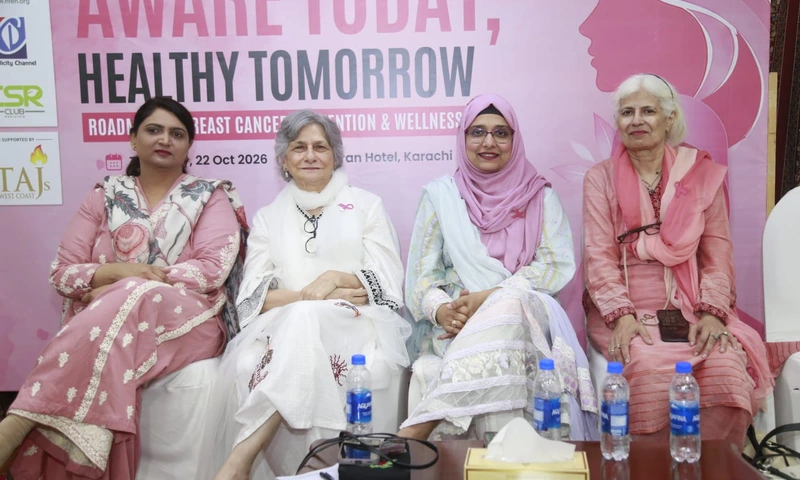
Oncologists and survivors urged women to seek early breast cancer diagnosis and treatment at a Pink October seminar in Karachi. They stressed that fear, embarrassment and misconceptions should not delay examinations or access to care.
The National Forum for Environment & Health (NFEH) organised the seminar, where speakers called for affordable screening and compassionate support.
Mammograms and timely examinations
Keynote speaker Dr Rufina Soomro, a senior oncologist and breast surgery department head, explained that mammography uses specialised breast X-rays. She said it could identify abnormalities before clinical symptoms, potentially detecting cancer an average of two years earlier.
Earlier diagnosis generally improves treatment outcomes and may shorten treatment, she added.
Soomro advised women aged 40 and above to discuss mammography with their doctors, with two-year screening intervals where appropriate. She also recommended clinical examinations and breast self-awareness.
The US Preventive Services Task Force recommends mammograms every two years for average-risk women aged 40–74. Screening carries potential harms, including false-positive findings, so individual risk matters.
Soomro said breast cancer represented up to 35% of cancers among Pakistani women, citing lifetime risk of one in eight to nine. She added that Pakistani women typically received diagnoses about a decade earlier than Western women.
Qualified professionals could conduct examinations, while trained midwives could expand preliminary screening access, she said. She urged women not to fear biopsies, which establish a definitive diagnosis when doctors suspect cancer.
Women should report unusual changes promptly rather than wait for pain, she cautioned.
Survivors seek awareness and counselling
Mahanaz Rahman, a survivor and former Aurat Foundation Karachi resident director, recalled receiving her diagnosis at 75.
She said breast cancer caller tunes from a nationwide campaign led by Pakistan’s then First Lady prompted her to investigate symptoms. She urged mobile operators to revive these messages, particularly during October.
Rahman also called for specialist counselling that reassures women instead of adding psychological pressure.
Psychiatrist Dr Isra Hyder Shaikh sought accessible mental healthcare for patients and close relatives to support morale and emotional wellbeing.
Journalist and survivor Afia Salam urged younger women, especially those with family histories, to seek advice on hereditary risk and screening.
Nutrition expert Dr Zubala Yasir Lutfi recommended balanced diets containing essential nutrients to support health and immune function.
Soomro identified smoking, alcohol and obesity as risk factors. She recommended four hours of weekly exercise, discussed reproductive factors and noted breastfeeding’s protective association.
Affordable services beyond major cities
NFEH Secretary General Ruqiya Naeem, also a survivor, urged governments, businesses, charities, civil society and philanthropists to expand affordable care nationwide.
Rural and disadvantaged women often cannot afford urban services, delaying diagnosis and treatment, she said. She proposed mobile screening and mammography vans, timely referrals, accessible treatment and sustained education.
NFEH President Muhammad Naeem Qureshi urged authorities to investigate environmental contributors to cancer and reduce pollution-related health risks.
WHO’s Global Breast Cancer Initiative similarly prioritises early detection, timely diagnosis and comprehensive treatment. These coordinated services underpin efforts to reduce deaths.