

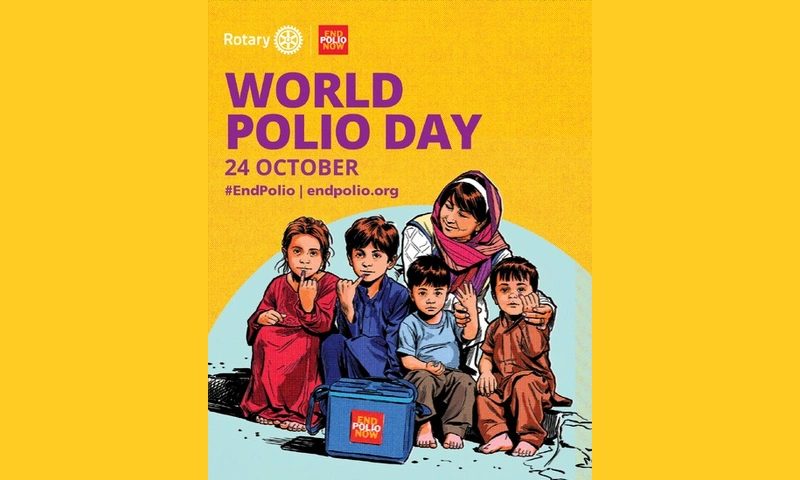
KARACHI: Rotary International reaffirmed its support for Pakistan’s polio eradication efforts ahead of World Polio Day, urging sustained funding and community engagement. Pakistan and Afghanistan remain the only countries where wild poliovirus transmission remains endemic.
In an October 23 statement, Rotary highlighted decades of financial contributions, volunteer work and support for vaccination campaigns. It urged governments, donors and partners to keep eradication a priority despite substantial global progress.
World Polio Day falls on October 24. Rotary established the observance to honour Dr Jonas Salk, who developed the first safe and effective polio vaccine over 70 years ago.
Decades of funding and vaccination support
Rotary helped establish the Global Polio Eradication Initiative (GPEI) in 1988. At that time, polio affected 350,000 children annually across 125 countries.
According to Rotary, cases have since fallen by more than 99.9%, sparing over 20 million people from paralysis. The organisation described itself as the first to envision a polio-free world.
“We have contributed more than US$3 billion—including US$1.3 million from Rotary members in Pakistan–and invested more than half a billion of these funds and countless volunteer hours to protect over 45 million children in Pakistan from this paralyzing disease,” said Rotary International President Olayinka Hakeem Babalola.
Babalola helped lead Nigeria’s eradication efforts before the African region achieved wild poliovirus-free certification in 2020.
“Africa’s achievement demonstrates that with collaboration and political and financial support, ending polio in Pakistan and eradicating it globally is possible.”
Community trust remains essential
Rotary members also advocate for government support and promote vaccination awareness. The organisation said vaccine refusals continue to obstruct efforts to reach every child in Pakistan.
“Pakistan is demonstrating strong progress with only a handful of reported cases this year, and in order to safeguard our credibility and maintain trust, we are continuing to address other community needs,” said Aziz Memon, chair of Rotary’s Pakistan National PolioPlus Committee.
“For example, the Committee has helped establish water filtration plants across Pakistan, resource centers to bond with the community, team support centers to facilitate frontline workers, and permanent transit posts to cover children in transit.”
These initiatives extend the committee’s work beyond vaccination campaigns. They address water access, community relationships, frontline workers’ needs and vaccination opportunities for travelling children.
Regional commitment and misinformation challenges
GPEI’s October 21 update reported renewed regional political support for eradication following a WHO meeting in Cairo. Saudi Arabia, Qatar and the UAE reiterated support, particularly for reaching underserved areas.
Separately, Rotary identified online vaccine misinformation as a significant obstacle in an article published ahead of World Polio Day. That challenge reinforces the importance of credible communication alongside immunisation campaigns.
Rotary said it and its GPEI partners possess the tools and expertise needed to end polio. It called for continued political and financial backing and directed readers to endpolio.org for further information.