


Easypaisa has reaffirmed its commitment to protecting customer accounts, personal information and financial transactions, outlining safeguards against digital financial fraud. In an October 23 statement, the State Bank of Pakistan-regulated digital bank highlighted identity checks, transaction monitoring and customer alerts. It also reiterated its commitment to regulatory cooperation and stronger customer protection as digital banking expands across Pakistan. The bank said its security framework follows a “Trust by Design” philosophy. This approach incorporates security, privacy and customer protection into products and services from the outset. Read More: Easypaisa App to Reach New Infinix, TECNO and itel Smartphones Easypaisa said it uses several layers of authentication to balance account security with convenience. These include One-Time Passwords (OTPs), biometric verification linked to NADRA’s database, liveness detection and enhanced Know Your Customer (KYC) procedures. According to the bank, these controls help establish customer identities and prevent unauthorised account access. They also aim to maintain a seamless experience for people using its digital financial services. Beyond identity verification, easypaisa said it continuously monitors suspicious activity and alerts customers to potential risks. Its monitoring covers failed login attempts and access from unrecognised devices. Other warning signs include account or SIM migrations, unusual changes in location and high-risk transactions. The bank said combining monitoring systems with customer notifications helps users stay informed about evolving threats. The statement also addressed the handling of financial information. Easypaisa described such data as among the most sensitive information individuals share. It reiterated its commitment to high standards of data privacy and ethical data use. The bank linked these commitments to its wider compliance, risk management and governance arrangements. Easypaisa said it works closely with regulators and continues to strengthen both KYC and Know Your Business (KYB) processes. These measures aim to improve customer protection and confidence in digital financial services. The announcement builds on the bank’s transition into commercial digital banking. On January 28, 2025, SBP announced the award of Pakistan’s first Digital Retail Bank licence to Easypaisa Bank Limited. Read More: New Easypaisa Feature Could Bring Millions of Investors to PSX The licence authorised the institution, formerly Telenor Microfinance Bank Limited, to begin commercial digital retail banking operations. At the licensing ceremony, SBP Governor Jameel Ahmad emphasised customer digital literacy and cybersecurity as essential to protecting trust. Customer awareness also features in easypaisa’s public fraud prevention guidance. Its official fraud-awareness page warns users against sharing OTPs with anyone who contacts them seeking the code. That guidance addresses attempts to obtain authentication details directly from customers. It reinforces the role of customer vigilance alongside the bank’s technical controls and monitoring systems. Easypaisa said it would continue investing in advanced security controls, fraud prevention capabilities and customer safeguards. The bank framed these investments as part of its responsibility to millions of Pakistanis using digital banking. Its stated objective remains a secure, trusted and reliable banking experience as financial services and fraud threats evolve.

AI Ethics in Accounting: 61% Rank AI as Top Challenge
Artificial intelligence has become the leading ethical challenge for accountants, with 61% identifying its use as their biggest concern. The figure rose from 32% in 2024, according to new research from ACCA, the Association of Chartered Certified Accountants. ACCA highlighted the findings in an October 22 statement, following Global Ethics Day on October 21. Its report, Navigating ethics for trust, draws on 1,178 responses from finance and accountancy professionals across 135 countries. Roundtable discussions provided additional insights. Ethical leadership ranked second among respondents’ challenges at 43%, followed by ethical culture at 39%. Both also featured among the leading concerns in 2024. Half of respondents said ethical challenges had become harder to resolve over the past three years. Meanwhile, 53% reported witnessing unethical behaviour during that period. Sarah Lane, ACCA’s Head of Ethics and Assurance, said: “The overall picture is one of a profession that remains ethically grounded, self-aware, and willing to adapt. Finance professionals are not asking for more rules, the fundamental principles remain the ethical anchor. They are asking for the tools, support and guidance needed to apply the fundamental principles in an increasingly complex world.” The findings also show that accountants recognise AI’s benefits. ACCA’s online report says 72% believe AI tools improve their work’s quality and efficiency. Risks include overreliance, inadequate verification, reduced human judgement, confidentiality concerns and unclear accountability. Assad Hameed Khan, Head of ACCA in Pakistan, said: “As AI becomes more embedded in business and finance, its use must be guided by the same principles that underpin trust in the accountancy profession: integrity, objectivity, professional competence, confidentiality and professional behaviour. For Pakistan’s finance professionals, this means applying sound judgement, questioning AI-generated outputs and ensuring that accountability remains clear. Strong ethical leadership, supportive organisational cultures and continuous learning will be essential to using technology responsibly while maintaining public confidence.” Despite growing pressure, 89% agreed that ethical capability within the profession remains strong. Respondents nevertheless recognised its dependence on continuous professional development. Strong ethical standards led the factors underpinning trust at 46%. Transparency followed at 38%, while independence accounted for 36%. The report treats ethical behaviour as a shared responsibility. It identifies organisational culture and leadership as essential conditions for putting principles into practice. A practical toolkit accompanies the research. It offers a 10-step process for applying the International Code of Ethics for Professional Accountants, known as the IESBA Code. The process addresses real-world situations. ACCA also plans to strengthen ethics education through its redesigned qualification, due for introduction in 2027. Lane added: “Ethics has always been at the heart of the ACCA Qualification. We’re stepping that up still further when we introduce our redesigned qualification next year, which has ethics integrated throughout to help future generations navigate emerging challenges.”
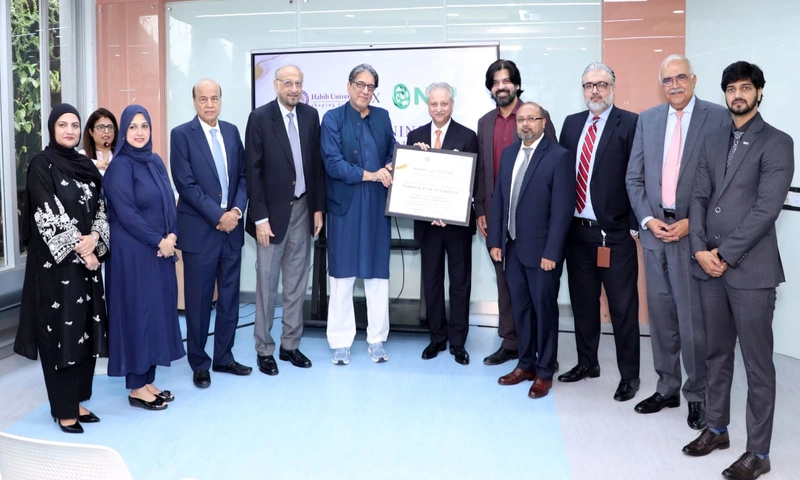
NBP, Habib University Offer Scholarships for 13 Women
National Bank of Pakistan will support four years of undergraduate education for 13 female students through a partnership with Habib University Foundation. The initiative will prioritise talented young women from rural and underserved areas across Pakistan. NBP announced the partnership in a statement dated October 21, 2026. The institutions signed a memorandum of understanding at Habib University’s Karachi campus. The programme aims to widen access to higher education and strengthen women’s participation in society. It also forms part of NBP’s efforts to promote education, women’s empowerment and inclusive social development. Habib University described the support as fully funded four-year undergraduate scholarships. The initiative covers opportunities in science, technology, engineering and mathematics, alongside the humanities. It targets students whose financial circumstances could otherwise restrict their access to university education. Read More: NBP Wins ABF Award for Rs850 Million Solar Financing Naved A. Khan, chairman of NBP’s board of directors, linked the partnership to educational opportunity. “At NBP, we believe that access to quality education can transform lives and open doors to greater opportunities. Our partnership with Habib University reflects our commitment to supporting talented young women, particularly those from underserved communities, in pursuing their academic ambitions. We hope this initiative will enable these students to build successful futures and contribute to the progress of their families, communities and Pakistan.” Mirza Muhammad Asim Baig, group chief of NBP’s Human Resource Management Group, highlighted the bank’s longstanding support for women. “NBP has a strong history of creating opportunities for women, both within the Bank and through initiatives that promote access to education and empowerment. By ensuring that women have access to education, we enable them to contribute meaningfully as professionals, entrepreneurs and within their communities. I hope this initiative marks the beginning of a lasting partnership that creates opportunities for many more young women.” Saman Abbasi also addressed the importance of sustained institutional support. She heads NBP’s Capability, Culture & Corporate Impact division. Abbasi said such support helps promising young people turn their potential into achievement. She highlighted corporate engagement’s role in building a more inclusive society and creating lasting value for future generations. Read More: Aurangzeb NBP Meeting Focuses on Digital Banking, SMEs Habib University President Wasif Rizvi welcomed the bank’s contribution. “NBP is helping ensure that talent finds its rightful place. We see this milestone as the beginning of an impactful, enduring partnership.” Mohammad Tariq Rafi signed the agreement for Habib University Foundation. He chairs its Resource Development Committee. Baig signed on behalf of NBP. Foundation board members, university leaders and senior NBP representatives attended the ceremony. The partnership adds targeted support for female students to the university’s existing financial assistance programmes. Habib University says it has invested more than $42 million in scholarships and financial aid since its inception in 2014. That assistance has supported students from diverse socioeconomic backgrounds.

KAPCO Profit Surges Over 100-Fold to Rs499.79m in Q1FY27
Kot Addu Power Company Limited’s KAPCO net profit climbed to Rs499.79 million in the first quarter of financial year 2026-27. Higher revenue, a return to gross profit and investment earnings supported the sharp recovery. The result compares with just Rs4.88 million in the corresponding quarter last year, representing an increase of approximately 10,150%. The unusually low comparison base magnified the percentage increase in earnings. Basic and diluted earnings per share reached Rs0.57 for the three months ended September 30, 2026, against Rs0.01 a year earlier. That represents a 5,600% increase using the reported rounded EPS figures. Read More: Major Shake-up in Cement Sector as Fauji Cement and KAPCO Take Joint Control of Attock Cement KAPCO disclosed its quarterly financial results through the Pakistan Stock Exchange on October 23. Revenue rose 182% to Rs11.72 billion from Rs4.16 billion, reaching approximately 2.8 times the previous year’s level. Cost of sales increased 134% to Rs11.69 billion, compared with Rs4.99 billion. Revenue growth outpaced the increase in generation costs, allowing KAPCO to reverse its earlier gross loss. The company posted gross profit of Rs38.79 million, compared with a loss of Rs831.40 million a year earlier. Despite that turnaround, the gross margin remained thin at approximately 0.33%, based on the disclosed figures. Cost of sales still absorbed almost all quarterly revenue. Administrative expenses fell 36% to Rs141.13 million from Rs221.47 million, providing further support to earnings. However, other operating expenses increased 32% to Rs28.86 million, against Rs21.84 million in the corresponding period. Other income declined 29% to Rs922.45 million from Rs1.29 billion. KAPCO also recorded Rs397.42 million as its share of net profit from investments accounted for under the equity method. The comparative period carried no contribution under this heading. These investment earnings helped support profitability as financing expenses rose sharply during the quarter. Finance costs reached Rs427.16 million, compared with Rs5.02 million a year earlier, an increase of approximately 8,409%. Profit before levy and income tax nevertheless rose 261% to Rs761.52 million from Rs211.11 million. KAPCO then booked Rs146.56 million in minimum and final tax levies, against no comparable charge last year. Read More: Pakistan Plans to Ease Home Loans for Low-Income Families After these levies, profit before income tax stood at Rs614.96 million, up 191% from Rs211.11 million. The income tax charge fell 44% to Rs115.18 million from Rs206.24 million. This left quarterly net earnings at Rs499.79 million, reflecting improvements across revenue, gross profitability and investment contributions. KAPCO owns and operates a multi-fuel power plant at Kot Addu in Punjab with a nameplate capacity of 1,600 megawatts. Its official business profile lists gas, furnace oil and diesel among the fuels the facility can use. The plant combines gas and steam turbines, using exhaust heat to produce additional electricity. KAPCO identifies the Central Power Purchasing Agency (Guarantee) Limited as its electricity purchaser.

Bank Alfalah Profit Jumps 43% to Rs30.61bn in 9M 2026
Bank Alfalah Limited reported a 42.8% increase in profit after tax to Rs30.61 billion for January to September 2026. Capital gains, higher net interest income and controlled expenses supported the bank’s earnings growth. Earnings per share climbed to Rs9.71 from Rs6.80 in the corresponding period of 2025. The board approved the financial results on Thursday, October 22, covering the nine months ended September 30, 2026. Directors also declared a third interim cash dividend of Rs1.50 per share, equivalent to 30% of face value. This takes the cumulative nine-month payout to Rs4.50 per share, or 90%. The corresponding restated payout in 2025 stood at Rs3.75 per share, or 75%. The latest dividend brings the payout 20% above the comparable period last year, based on the disclosed per-share figures. Earlier this year, shareholders approved a two-for-one share split at the bank’s annual general meeting on March 26. The split increased its share count to 3,154,330,238 and reduced the face value to Rs5 each. Consequently, the bank restated comparative earnings and dividend figures per share. Read More: Bank Alfalah and UK’s BII Join Hands to Fund Pakistan’s Green Future Bank Alfalah’s total deposits remained above Rs2.5 trillion, closing September at Rs2.62 trillion after growing 20.8% year on year. Current deposits reached Rs1.10 trillion, an increase of 16.9% over the same period. The gross loan book expanded 11.3% to Rs1.20 trillion. Lending to small and medium enterprises, agriculture and consumer segments drove that growth. Net interest income increased 5.5% year on year. The bank attributed this improvement to sustained higher average current account volumes and better margins on lending. Non-funded income grew faster, rising 31.1% during the nine-month period. Capital gains from strategic portfolio rebalancing, higher foreign exchange income and broader fee growth supported the increase. Fee income growth came across remittances, government-to-person payment schemes, branch banking and trade. Cash management and wealth management services also contributed, according to the bank. Read More: Bank Alfalah Posts Major Profit Growth in First Half of 2026 Bank Alfalah limited operating expense growth to 4.1% through its ongoing cost-optimisation measures. Expenses therefore grew more slowly than both net interest income and non-funded income during the reporting period. The bank said it would maintain disciplined cost management while pursuing operational improvements and sustainable growth. Its stated priorities also include stronger customer focus, digital innovation and long-term competitiveness, alongside its core strategic objectives. Bank Alfalah reported a capital adequacy ratio of 14.79% as of September 30 and described its capital position as adequate. The nine-month performance follows higher earnings in the first half of 2026. Bank Alfalah previously reported a 39.6% increase in half-year profit after tax to Rs21.32 billion. Earnings per share for that period rose to Rs6.76 from Rs4.84 a year earlier. The latest results extend that earnings growth into the third quarter.

The World’s Youngest Self-Made Female Billionaire Rarely Takes a Day Off
Luana Lopes Lara has an estimated $2.6 billion fortune, but becoming a billionaire has barely altered her daily routine. The 30-year-old Kalshi co-founder and chief operating officer still works 12 to 14 hours a day and rarely takes time off. The Brazilian entrepreneur, whom Forbes identifies as the world’s youngest self-made female billionaire, says building the prediction-market platform remains her priority. Her occasional indulgence is a better meal. “When I say it didn’t change my life much, it’s because I think that I’ve always been laser-focused” on building Kalshi, Lara told Fortune Daily’s Ellie Austin. “Maybe I’ll get a fancier lunch once in a while because I want to eat nice.” Lara grew up in a middle-class family and trained to become a professional ballerina in Brazil before entering technology. She later studied computer science at the Massachusetts Institute of Technology. Forbes estimates that Lara and fellow co-founder Tarek Mansour each own roughly 12 percent of Kalshi. She first became a billionaire in December 2025, aged 29. Her estimated fortune subsequently doubled as investors increased the company’s valuation. Despite that financial leap, Lara finds her billionaire status difficult to fully comprehend. She views her wealth and Kalshi’s valuation as indicators of progress rather than defining features of her life. She occasionally pays for meals with friends and took her family to the Vatican for Christmas Mass. Beyond those experiences, her attention remains on the business rather than expensive luxuries. Kalshi lets users trade contracts linked to event outcomes, including elections, sporting competitions and economic decisions. Its valuation rose from $2 billion in June 2025 to $11 billion that December. A further funding round brought the figure to $22 billion in May 2026. Reuters reported in September that Kalshi was discussing another $1 billion fundraising round at approximately $40 billion. Potential investors included Tiger Global Management and Dragoneer Investment Group. Those discussions concerned a proposed transaction, rather than a confirmed funding round. Kalshi declined to comment on the Reuters report. Kalshi’s expansion has also brought scrutiny from several US states. They argue that its sports-related contracts constitute illegal gambling. The company maintains that it operates a federally regulated financial exchange rather than a traditional sportsbook. “We don’t make money like a sportsbook,” Lara told Fortune Daily. The Commodity Futures Trading Commission designated Kalshi as a contract market in November 2020. That federal status sits at the centre of its regulatory position. Lara argues that prediction markets generate useful forecasts by combining information from people willing to back their views financially. Mansour, Kalshi’s co-founder and chief executive, has said the dispute over regulatory authority could ultimately reach the US Supreme Court.
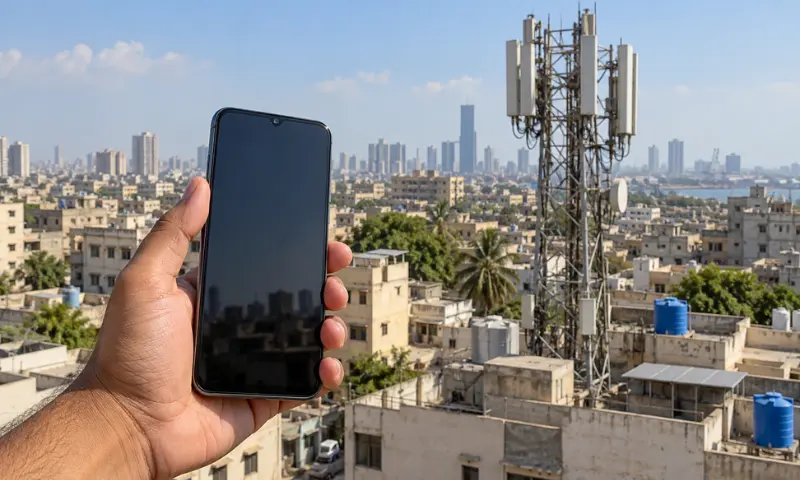
Pakistan Deploys 1,782 5G Sites: Is Your City on the List?
Pakistan has deployed 1,782 5G sites across 24 cities, with Jazz providing more than half of the reported infrastructure. However, compatible smartphones start at around Rs36,000, highlighting an affordability hurdle for consumers seeking faster mobile internet. Minister for Information Technology and Telecommunication Shaza Fatima Khawaja shared the figures in a government reply. Jazz accounts for 1,015 sites, followed by China Mobile Pakistan, operating as Zong, with 640. Ufone has deployed 127 sites. Jazz’s share stands at approximately 57 percent, based on the reported totals. Karachi has the largest network footprint by site count, with 385 installations. Lahore follows with 373 and Islamabad with 276. Faisalabad has 144 sites, Peshawar 122, Rawalpindi 108 and Multan 103. Sialkot has 87, Quetta 65 and Sheikhupura 55. Jazz leads deployment in Karachi, Lahore, Faisalabad and Multan. Zong has a stronger presence in Peshawar, Quetta, Sheikhupura and Sialkot, while Ufone’s rollout remains comparatively limited. The 24-city footprint includes Islamabad, Karachi, Lahore, Rawalpindi, Faisalabad, Peshawar, Quetta, Multan, Gujranwala, Sialkot, Sheikhupura and Hyderabad. It also covers Abbottabad, Attock, Jhelum, Kasur, Kohat, Mardan, Rahim Yar Khan, Sahiwal, Sukkur, Swabi, Chitral and Gujrat. Operators have launched services or are consolidating their networks in these locations. The figures describe deployed infrastructure, rather than guaranteeing coverage throughout every city. The minister said Pakistan introduced 5G following a multiband spectrum auction. Operators signed the new Next Generation Mobile Services licences on March 19, 2026. The government-approved, four-phase rollout began on March 20. Licence obligations require operators to improve existing 4G services alongside their phased introduction of 5G. The first phase mandates deployment in the federal and provincial capitals. Operators can expand into other cities according to their business models. All cellular operators conducted technical 5G trials nationwide between 2020 and 2025, according to the minister. Radio Pakistan reported on March 20 that PTA had authorised Jazz, Ufone and Zong to start services. Operators would publish coverage information and compatible handset lists on their websites. Local manufacturers assembled 607,093 5G-capable handsets between January and August 2026, the minister said. The cheapest available compatible model cost approximately Rs36,000. The government gave no definitive timeline for making 5G affordable for ordinary consumers. Instead, it pointed to growing local assembly as a potential route to wider device availability and lower access costs. Existing 4G-capable SIM cards can support 5G without replacement. Consumers still need compatible phones and network coverage. Jazz’s official guidance directs users to device compatibility information and coverage maps. Zong also advises checking handset settings and confirms that existing 4G packages work on its 5G network.

Why France Is Sending 70,000 Security Personnel Onto Its Streets
France will deploy about 70,000 security personnel nationwide on Saturday, October 24, following some of its worst urban violence in years. Interior Minister Laurent Nunez warned that social media carried calls for violence and looting. The deployment represents roughly 20 percent more personnel than last weekend, amid questions about police preparedness and intelligence. High school protests over learning conditions sparked the movement, which expanded as anger over living costs spread. Reuters reported that elite units, armoured vehicles, helicopters and water cannon would support regular police. President Emmanuel Macron met secondary school representatives on Friday. They urged students to continue protesting until the government offered concrete proposals. His government has distinguished legitimate grievances from the looting, fires and ransacking that accompanied last Saturday’s demonstrations. Justice Minister Gerald Darmanin said courts had jailed 217 people, half of them first-time offenders. On Thursday, Macron demanded “the utmost severity” against “acts of delinquency”. He accused “ultra-left” groups of seeking to “bring down the republic”. An extreme-left group in western France urged supporters online to be “uncatchable, unpredictable, to evade the deployment” of police. Authorities expect 20,000 to 30,000 counter-protesters in Orleans, where Marine Le Pen will host her National Rally congress this weekend. Thousands of party supporters will attend, raising fears of clashes. The prefecture has barred the counter-demonstration from the city centre. Lyon has also closed central areas to protesters. Paris police revoked permission for a union march between Bastille and Nation squares. They offered an afternoon route along the city’s southeastern edge instead. Unions pledged to use the original route, citing safety concerns about the alternative. Marseille authorities reversed an earlier ban, allowing a union demonstration on an “exceptional basis”. It remains the only authorised protest in Bouches-du-Rhone. Leading Paris museums, including the Louvre, will close on Saturday. Art Basel has shortened its programme. Amnesty International condemned “a slide toward authoritarian practice”, saying restrictions were “jeopardising the right to demonstrate peacefully”. “Police have a responsibility both to ensure that protests can take place peacefully and safely and to protect the public from violent disorder,” said Eva Cosse, senior Europe researcher at Human Rights Watch. She also expressed alarm over reports that crowd-control weapons had severely injured children during recent gatherings. The unrest comes six months before elections to replace Macron. Violence has damaged France’s image, while its government debt continues to concern investors. A Harris Interactive poll for M6/RTL, conducted after the violence, put Le Pen ahead with 33 to 35 percent in first-round voting. It suggested hard-left leader Jean-Luc Melenchon would reach the runoff against her. The poll projected Le Pen winning that contest with about 70 percent, indicating stronger support following the unrest.
