
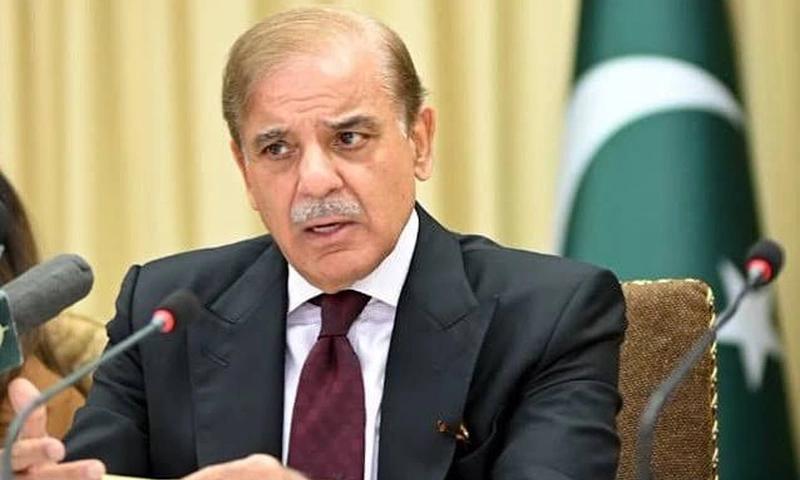
Prime Minister Shehbaz Sharif has raised the maximum financing limit under the Youth Business and Agriculture Loan Scheme to Rs25 million. The previous ceiling stood at Rs7.5 million. At a review meeting on November 8, he also directed authorities to lower the minimum eligibility age from 21 to 18. He ordered officials to reserve 30% of loans for women. However, a November 10 official announcement still lists general eligibility at 21–45 years, with an 18-year minimum for IT and e-commerce. Applicants should therefore confirm the revised age rules with their selected bank. Official announcement clarifies loan tiers The latest government announcement identifies four business and agriculture financing tiers: Tier Loan amount Borrower markup Tier 1 Up to Rs500,000 0% Tier 2 Above Rs500,000 to Rs1.5 million 5% Tier 3 Above Rs1.5 million to Rs7.5 million 7% Tier 4 Above Rs7.5 million to Rs25 million 8% These official figures differ from the three-tier structure in the supplied report, which placed Rs25 million loans at 7%. PMYP Chairman Rana Mashhood Ahmad Khan said the Economic Coordination Committee and federal cabinet had approved the new Tier 4. It offers repayment periods of up to eight years. The expanded tier will support activities including agro-processing, cold chains, mechanised farming, solar energy, manufacturing and exports. How to apply online Applicants must submit their requests through the official PMYP application portal. They do not need paper application forms. First, enter a valid CNIC number and accurate date of birth for NADRA verification. Next, select the appropriate financing tier and a participating commercial or Islamic bank. Listed options include National Bank of Pakistan, Bank of Punjab, Bank Alfalah and Sindh Bank. Complete the personal, business or agricultural, and financial sections. Upload the requested CNIC copy, passport-size photograph and feasibility report, where applicable, and provide reference details. Review all mandatory fields before submitting. The selected bank will contact the applicant for further processing and assess the request. Applicants must reside in Pakistan and hold a valid CNIC. IT and e-commerce applicants need matriculation or an equivalent qualification. Government employees and financial defaulters cannot apply, while specific restrictions also cover ZTBL employees. Funding and business support Officials told the review meeting that 581,341 young people had received Rs313.9 billion since January 2023. They described the beneficiary count as ten times the preceding decade’s total. The meeting cited Rs292 billion for FY2026–27, targeting approximately 266,700 borrowers. The November 10 announcement put the annual target at Rs292.5 billion. Shehbaz directed SMEDA to provide startup guidance, consultancy and technical assistance. He also ordered a nationwide awareness campaign. He praised Finance Minister Muhammad Aurangzeb and his team for supporting youth financing. Aurangzeb attended alongside Rana Mashhood Ahmed Khan and political affairs aide Talha Burki.

Pakistan Plans 45 New Car Safety Standards: What Buyers Should Know
Pakistan plans to introduce 45 additional vehicle safety standards under its new auto policy, covering locally manufactured vehicles and imported used cars. The measures aim to bring vehicle safety requirements closer to international benchmarks. Adviser to the Prime Minister for Industries and Production Haroon Akhtar Khan announced the initiative on Saturday, November 7. He addressed a press conference alongside Information Minister Attaullah Tarar in Islamabad. Akhtar said the government had incorporated the additional standards in accordance with the United Nations’ WP.29 framework. “When our vehicles will go through these safety codes, they will be considered the world’s safest vehicles, both manufactured and used,” he said. The announcement forms part of a broader automotive policy covering six priorities. These include affordable vehicles, exports, localisation, electric vehicle adoption, vehicle safety and transparency. Safety requirements to cover used imports Akhtar highlighted inadequate safety standards, particularly in imported used vehicles, as a serious concern. He pointed to defective brakes, tyre failures and non-functional seat belts while explaining the need for stronger requirements. The proposed measures would extend safety obligations across local production and used vehicle imports, rather than focusing solely on new domestic models. However, the announcement did not provide a complete list of the 45 additional standards or a detailed implementation timetable. Akhtar also said the government was pursuing vehicle safety legislation. According to his briefing, the relevant bill had cleared the National Assembly’s standing committee and would proceed to the House. What the UN WP.29 framework covers WP.29 is the World Forum for Harmonization of Vehicle Regulations, operating under the United Nations Economic Commission for Europe. It develops harmonised technical rules for vehicles, equipment and components. Its work covers safety, environmental performance, energy efficiency and protection against theft. Pakistan’s earlier Auto Industry Development and Export Policy 2021–26 already identified 17 UN regulations for adoption. These covered areas including brakes, steering, tyres, lighting, safety belts, seats, airbags, collision protection, glazing and mirrors. The proposed expansion therefore builds on an existing policy commitment to international vehicle standards. WP.29 alignment establishes technical requirements rather than a global ranking of cars. Akhtar’s description of Pakistani vehicles becoming the world’s safest represents his assessment of the proposed changes. Policy also targets booking practices Alongside safety, the government plans third-party audits and tighter consumer protection measures. Manufacturers would face a restriction against collecting more than 20% of a vehicle’s price upfront at booking. Akhtar said the measure would address excessive advance payments and concerns surrounding additional booking charges, commonly known as on-money. The wider policy also seeks greater domestic manufacturing, stronger local supplier networks and increased automobile exports. Prime Minister Shehbaz Sharif has approved the final draft, according to the briefing. The government will now submit it to the federal cabinet for consideration and formal approval before implementation.
South Air Gilgit Flights: G-B Plans Aircraft Lease Deal
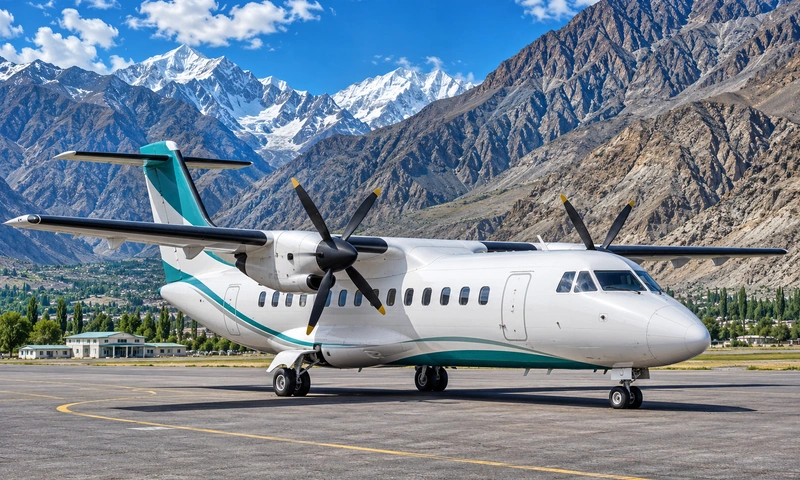
The Gilgit-Baltistan government plans to lease aircraft through a joint venture with South Air, seeking better air connectivity for the region. The government announced the proposal on Monday, November 9, amid persistent complaints about unreliable flights. Under the proposed arrangement, the government would provide guarantees for the leased aircraft. South Air would operate the flights through the joint venture. Chief Minister Amjad Hussain discussed the proposal with South Air management, which agreed to operate the services. “The arrangement is aimed at improving air connectivity for G-B,” CM Amjad said. He added that the government would guarantee the aircraft leases, while South Air would handle flight operations. The announcement did not specify aircraft numbers, lease costs, flight schedules or a launch date. Government discusses air links and boundary disputes The proposal also featured in discussions between Amjad and Khyber-Pakhtunkhwa Governor Faisal Karim Kundi. Their meeting covered regional cooperation, longstanding boundary disputes and professional training. Both leaders agreed that their chief secretaries would first discuss the disputed boundaries before referring the issues to the political leadership. They committed to pursuing a settlement through mutual understanding and amicable negotiations. Amjad also requested professional training opportunities in Peshawar for Gilgit-Baltistan Testing Service staff. Kundi welcomed the request and directed his staff to arrange the training. Separately, South Air launched its Peshawar-Lahore service on November 9. At the inauguration, Kundi announced plans for future services to Chitral and Gilgit-Baltistan, adding context to the proposed partnership. Repeated cancellations disrupt Gilgit travel Weather frequently disrupts Islamabad-Gilgit flights, while Gilgit Airport’s short runway restricts aircraft operations. Residents and visitors regularly face delays, cancellations and uncertainty over travel arrangements. In June 2024, erratic PIA schedules and prolonged delays disrupted the peak tourism season. Then chief minister Haji Gulbar Khan sought federal intervention over the repeated cancellations. He warned that unreliable services were hurting tourism, local businesses and government officials travelling to Islamabad. Disruptions continued in 2025, when PIA cancelled six northern-area flights. These included five services between Islamabad and Gilgit and one Islamabad-Skardu flight. The cancellations stranded passengers and forced them to seek alternative transport. Short runway strengthens case for new airport A July 2026 report highlighted Gilgit Airport’s approximately 1,646-metre runway, limited capacity and frequent weather disruptions. These constraints restrict operations to smaller ATR aircraft. Between March and June 2026, Gilgit Airport handled around 4,000 passengers. Skardu Airport, by comparison, handled more than 50,000 during the same period. In July, Amjad Hussain Azar urged the federal government to build a modern, Boeing-compatible airport in Gilgit. He argued that larger aircraft access would support tourism and improve year-round connectivity. The regional government also offered land and cooperation under a public-private partnership model. In September, the defence ministry told a Senate committee that a feasibility study for a new Gilgit airport was nearing completion. The proposed greenfield project covered approximately 1,800 acres.

COP31 Climate Talks Open Amid Finance and Fossil Fuel Disputes
COP31 climate talks opened in Türkiye on November 9 with an early dispute over funding for developing countries. UN Secretary-General Antonio Guterres urged leaders to accelerate emissions cuts after a year of devastating weather extremes. Thousands gathered at Antalya’s Expo Center for the November 9–20 conference. The opening ceremony started 90 minutes late, without explanation. “We have entered a new age of climate extremes,” Guterres said. He urged leaders to “get serious by cutting emissions faster, accelerating a just transition from fossil fuels and delivering the finance and protection vulnerable countries need”. Climate Finance Dispute Delays Progress Negotiators held late-night discussions on Sunday over developing countries’ demands to include climate finance in the official agenda. “This has already been a difficult start for COP31,” said Jasper Inventor, head of Greenpeace’s delegation. He accused developed countries of “taking a hard line” over a finance discussion platform agreed at COP30 in Brazil. African countries also sought dedicated discussions on tripling adaptation finance. Such funding supports measures including sea walls and drought-resistant crops. However, negotiators did not make that demand a standalone agenda item. A senior EU official had warned of “no political will” for additional funding pledges. An oil price shock, the US war with Iran and Russia’s conflict in Ukraine have further dampened expectations of major breakthroughs. Extreme Weather Raises the Stakes The summit follows European heatwaves, Indonesian wildfires and catastrophic Nepal floods, alongside an exceptionally strong El Niño. The World Meteorological Organization’s opening-day update put January–September temperatures about 1.47°C above preindustrial levels. It reported record ocean heat and sea levels, with El Niño threatening further extremes into 2027. The EU climate monitor expects 2026 to rank second-hottest, while scientists warn 2027 could set another record. The UN has also warned that warming will exceed the Paris Agreement’s ambitious 1.5°C threshold. “Global leaders must pull us back from the brink and commit to rapidly transitioning away from fossil fuels and expanding renewable energy, an imperative reinforced by the current energy affordability crisis,” said Rachel Cleetus of the Union of Concerned Scientists. Electrification Plan Faces Fossil Fuel Questions Türkiye holds the presidency under Environment, Urbanisation and Climate Change Minister Murat Kurum. Australia’s Chris Bowen leads negotiations under a compromise that settled competing hosting bids. The partners call the summit the “implementation COP”, prioritising delivery over further promises. Türkiye’s voluntary action agenda covers artificial intelligence, waste management and electrification. Its flagship proposal would raise electricity’s share of final energy consumption from roughly 20 per cent to 35 per cent by 2035. The EU wants “clean” electrification, raising questions about fossil fuels’ role. COP28 agreed to transition away from fossil fuels. However, COP30’s final deal omitted explicit fossil fuel language following opposition from oil-producing countries. Brazil instead developed a voluntary transition roadmap. President Donald Trump has sent no administration officials. A US congressional delegation will attend following Democrats’ midterm election victory.

Pakistani Farmers Take German Giants to Court Over 2022 Flood Losses
Thirty-nine farmers from Sindh are pursuing a climate lawsuit against German energy company RWE and cement producer Heidelberg Materials. They seek compensation for losses from Pakistan’s devastating 2022 floods. The farmers argue that the companies’ greenhouse gas emissions contributed to climate change and intensified rainfall that destroyed crops, livestock and homes. Both companies reject the claims. Abdul Hafeez Khoso, 43, travelled to Germany to pursue the case. He lives with his wife and toddler in a Jacobabad village of about 800 people. “They’re spreading pollution: up in the sky there are no borders, it can affect anywhere,” he said. “We had nothing left.” Farmers Seek Compensation for Lasting Losses The farmers filed their lawsuit at Heidelberg Regional Court on December 22, 2025, following an unsuccessful demand for compensation. Supporting organisation ECCHR says their combined losses exceed €1 million. The plaintiffs attribute 0.68 per cent of global industrial emissions to RWE and 0.12 per cent to Heidelberg Materials. Their case concerns historical emissions rather than specific company operations in Pakistan. Pakistani and European organisations support the litigation. HANDS Welfare Foundation helped mobilise affected communities. Read More: Pakistan Puts Women, Farmers and Small Businesses at Heart of Green Finance Development expert Mir Keerio said scientific evidence connects climate change with increasingly severe extreme weather. He argued that major contributors must face accountability. The floods killed about 1,700 people, affected more than 30 million and inundated roughly a third of Pakistan. In Dadu district, Abdul Khalique Laghari, 55, estimates losses of $14,000, including his home, livestock and crops across 40 acres. “To this day, we are unable to repay our debt,” he said. “This has caused us serious mental harm.” Munawar Khatoon, 43, a female landowner in Usman Samtio village, described losing her family’s main agricultural income. “We worry about how the next generation will manage to live if this continues,” she said. German Ruling Shapes Climate Liability Fight The lawsuit builds on a May 2025 ruling involving Peruvian farmer Saúl Luciano Lliuya and RWE. Germany’s Higher Regional Court of Hamm dismissed his claim because the evidence did not establish sufficient flood danger. However, the court recognised that German civil law does not automatically exclude liability for climate impacts abroad. Lawyer Roda Verheyen, involved in both cases, argues that companies knew the general consequences of climate change decades ago. “Large companies knew about the general impacts of climate change since the 1960s,” she said. Both defendants call the claims “unfounded”. Heidelberg Materials says its operations complied with German law and rejects retrospective standards. Read More: Faysal Bank and Waseela Pakistan Launch Major Islamic Finance Drive for Farmers RWE describes the lawsuit as “yet another attempt to shift climate policy demands to German courtrooms”. It argues that lawful emissions should not create retrospective civil liability. The civil proceedings could take years. Lawyers say compensation proportionate to corporate emissions would represent a major breakthrough. Pakistan contributes less than one per cent of global emissions but faces severe climate impacts. “This case is for justice,” Khatoon said. “We hold these companies responsible for our destruction.”
Saudi Investment in Karachi Port: Key Projects Draw Interest
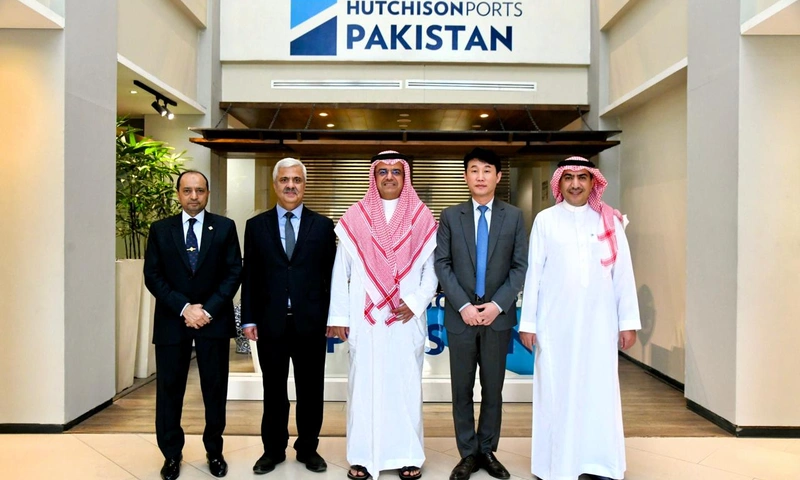
Saudi-Pakistani Joint Business Council Chairman H.H. Prince Mansour bin Muhammad Al-Saud expressed keen interest in Karachi Port investment opportunities during a November 9 visit. His priorities included green port initiatives, terminal infrastructure expansion and projects to improve freight connectivity. Prince Mansour, who heads the council’s Saudi chapter, led a high-level Saudi business delegation to Karachi Port Trust’s head office. The delegation also visited South Asia Pakistan Terminals Limited (SAPTL–HPH) to examine its operations and modern cargo-handling infrastructure. KPT Chairman Rear Admiral Shahid Ahmed SI(M), S.Bt (Retd) received the visitors alongside senior maritime officials. They included Federal Maritime Affairs Secretary Capt. Muhammad Khurram Agha (Retd) and Gwadar Port Authority Chairman Noor-ul-Haq Baloch. Prince Mansour and the federal secretary jointly chaired the subsequent session, which focused on investment opportunities and closer maritime cooperation. Maritime Business District and Manora Shipyard During the briefing, Ahmed outlined Karachi Port’s evolution into a fifth-generation facility and its ongoing modernisation programme. He also highlighted record performance during FY2025–26 and expanding transshipment operations. The KPT chairman presented the proposed 140-acre Maritime Business District as a major opportunity for Saudi investors. He also highlighted the development of Manora Shipyard among the port’s investment priorities. Read More: Karachi Port Connectivity Hits Record as Pakistan Eyes Hub Role The business district already forms part of an earlier cooperation framework involving Saudi and Pakistani partners. In June, KPT signed a memorandum of understanding to explore the development on its waterfront land at M.T. Khan Road. The partners include Saudi Business Council–NAJD Gateway Holding Company, Arif Habib Dolmen REIT Management Limited and the Pakistan Corporate Consortium. The framework envisages commercial infrastructure to attract investment, generate employment and support urban development. However, the project must meet Pakistan’s regulatory and legal requirements before proceeding. Freight Connectivity and Green Port Initiatives Ahmed also outlined four strategic connectivity projects: the M-10 Port Link, KPT-Pipri Freight Corridor, ML-1 railway linkage and East-West Wharves Connectivity Bridge. The proposed links formed a central part of the investment presentation, alongside terminal infrastructure and waterfront development. Prince Mansour expressed keen interest in these connectivity initiatives, green port projects and terminal expansion. He recognised their potential for mutually beneficial Saudi investment and joint ventures. Read More: Karachi Port Receives 179 Electric Buses From China At SAPTL–HPH, the delegation gained first-hand insight into the terminal’s operational capabilities. The visit allowed Saudi representatives to examine cargo-handling facilities alongside the infrastructure proposals presented at KPT headquarters. KPT said the engagement reaffirmed its commitment to Saudi-Pakistani business partnerships and attracting investment. The authority aims to strengthen Karachi Port’s position as a leading regional maritime and logistics hub. The supplied statement announced no investment amount, implementation timetable or new agreement from the November 9 visit. Discussions centred on identifying opportunities across port development, commercial infrastructure and transport connectivity.