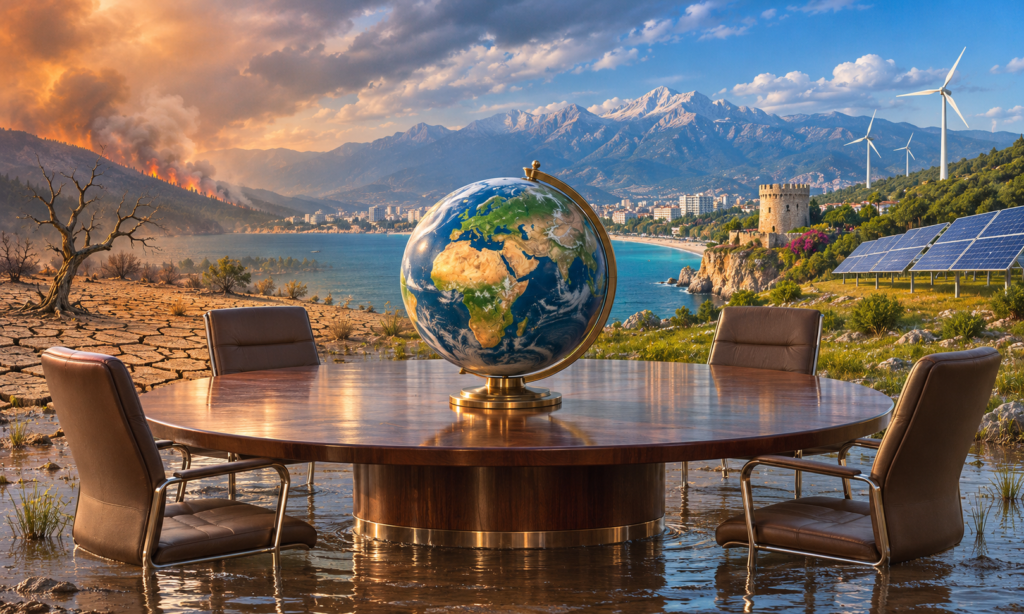
COP31 climate talks opened in Türkiye on November 9 with an early dispute over funding for developing countries. UN Secretary-General Antonio Guterres urged leaders to accelerate emissions cuts after a year of devastating weather extremes.
Thousands gathered at Antalya’s Expo Center for the November 9–20 conference. The opening ceremony started 90 minutes late, without explanation.
“We have entered a new age of climate extremes,” Guterres said.
He urged leaders to “get serious by cutting emissions faster, accelerating a just transition from fossil fuels and delivering the finance and protection vulnerable countries need”.
Climate Finance Dispute Delays Progress
Negotiators held late-night discussions on Sunday over developing countries’ demands to include climate finance in the official agenda.
“This has already been a difficult start for COP31,” said Jasper Inventor, head of Greenpeace’s delegation.
He accused developed countries of “taking a hard line” over a finance discussion platform agreed at COP30 in Brazil.
African countries also sought dedicated discussions on tripling adaptation finance. Such funding supports measures including sea walls and drought-resistant crops. However, negotiators did not make that demand a standalone agenda item.
A senior EU official had warned of “no political will” for additional funding pledges.
An oil price shock, the US war with Iran and Russia’s conflict in Ukraine have further dampened expectations of major breakthroughs.
Extreme Weather Raises the Stakes
The summit follows European heatwaves, Indonesian wildfires and catastrophic Nepal floods, alongside an exceptionally strong El Niño.
The World Meteorological Organization’s opening-day update put January–September temperatures about 1.47°C above preindustrial levels. It reported record ocean heat and sea levels, with El Niño threatening further extremes into 2027.
The EU climate monitor expects 2026 to rank second-hottest, while scientists warn 2027 could set another record. The UN has also warned that warming will exceed the Paris Agreement’s ambitious 1.5°C threshold.
“Global leaders must pull us back from the brink and commit to rapidly transitioning away from fossil fuels and expanding renewable energy, an imperative reinforced by the current energy affordability crisis,” said Rachel Cleetus of the Union of Concerned Scientists.
Electrification Plan Faces Fossil Fuel Questions
Türkiye holds the presidency under Environment, Urbanisation and Climate Change Minister Murat Kurum. Australia’s Chris Bowen leads negotiations under a compromise that settled competing hosting bids.
The partners call the summit the “implementation COP”, prioritising delivery over further promises.
Türkiye’s voluntary action agenda covers artificial intelligence, waste management and electrification. Its flagship proposal would raise electricity’s share of final energy consumption from roughly 20 per cent to 35 per cent by 2035.
The EU wants “clean” electrification, raising questions about fossil fuels’ role.
COP28 agreed to transition away from fossil fuels. However, COP30’s final deal omitted explicit fossil fuel language following opposition from oil-producing countries.
Brazil instead developed a voluntary transition roadmap.
President Donald Trump has sent no administration officials. A US congressional delegation will attend following Democrats’ midterm election victory.