
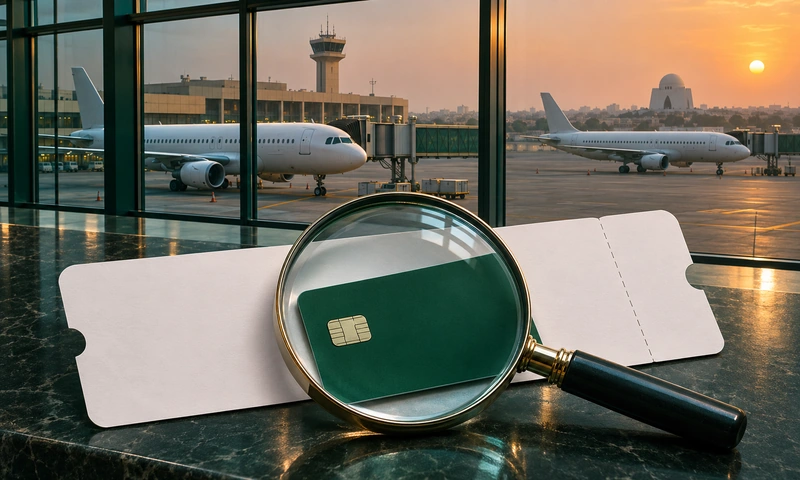
The Aircraft Owners and Operators Association (AOOA) has urged Pakistan’s government to conduct a five-year forensic tax audit of every airline operating in the country. The association estimates an annual gap of $2 billion to $2.4 billion in airline ticket revenue. It wants regulators to determine whether airlines processed ticket payments overseas and met their tax obligations in Pakistan. AOOA founder Imran Aslam Khan called for immediate intervention in a November 11 letter to the federal minister for finance and revenue. He raised concerns that offshore payment gateways could keep ticket proceeds outside Pakistan’s banking system and beyond the view of tax authorities. The association’s estimate reflects a gap in the figures it compiled. Its letter provides no transaction-level evidence to confirm how much money moved offshore or whether any airline evaded tax. How the association calculated the $2.4bn gap The AOOA put annual ticket revenue at $3.2 billion to $3.6 billion, based on historical sales estimates from industry sources. It attributed about $750 million to Pakistan International Airlines (PIA) and $65 million to other domestic carriers. The letter put officially recorded foreign remittances at $80 million to $411 million. Using the upper remittance figure, the association accounted for $1.226 billion across those categories. That left a gap of roughly $2 billion to $2.4 billion in its calculation. The letter also cited market estimates of more than $6 billion for Pakistan’s broader flight market. The AOOA estimated that roughly 40 to 42 scheduled airlines serve Pakistan, including four domestic carriers and around 36 or 37 foreign operators. It said foreign carriers account for nearly two-thirds of Pakistan’s international ticket revenue. The letter also questioned why some domestic airlines use foreign payment gateways. AOOA calls for SBP payment controls and direct FBR collection Khan wants all ticket sales for travel to or from Pakistan to go through gateways that the State Bank of Pakistan (SBP) regulates. He proposed collecting applicable taxes in real time through the Federal Board of Revenue (FBR) at the point of sale, “with zero exemptions permitted.” He also called for airlines to submit verified passenger manifests and sales records for every flight through an automated system. Khan urged the government to hire three leading international audit firms to carry out separate forensic reviews. The audits would cover five years of passenger and sales taxes across all operating airlines. He called for immediate recovery of any shortfalls the auditors identify. The SBP’s Foreign Exchange Manual already allows foreign airlines to remit surplus passenger and freight collections after accounting for local expenses and taxes. For passenger fares, banks can authorise remittance only after travellers complete their journeys. The rules also require supporting sales records, including statements from the International Air Transport Association’s Billing and Settlement Plan and detailed counter sales reports.
NADRA CNIC Without Birth Certificate: Who Can Apply?
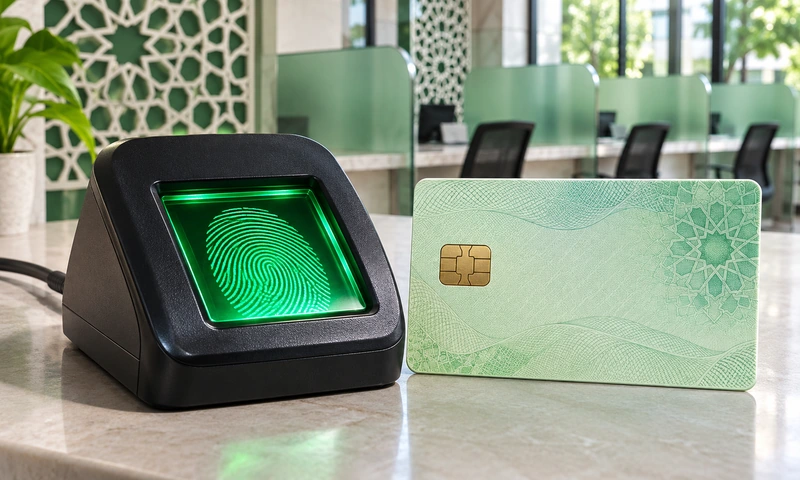
Pakistan’s National Database and Registration Authority (NADRA) is allowing eligible citizens to apply for their first Computerised National Identity Card (CNIC) without a birth certificate until December 31, 2026. The temporary facility covers women aged 18 and above and men over 24 who have never held a CNIC. Applicants must meet NADRA’s family verification requirements. NADRA first announced the facility in February after reviewing a decade of registration data. The authority put adult registration at about 98.3%, leaving a gap of roughly 1.7%. It found larger gaps among women and in districts with weaker civil registration. NADRA identified the lack of a computerised birth certificate as the main barrier in most of those cases. The authority’s board approved the alternative process under the NADRA Ordinance, 2000, and the NADRA NIC Rules, 2002. CNIC requirements for married and unmarried women Married women must bring a computerised marriage certificate from their local Union Council. They must visit a NADRA registration centre with their husband and either their father or mother. Both relatives must hold a valid CNIC or National Identity Card for Overseas Pakistanis (NICOP). NADRA requires biometric verification of the husband and the accompanying parent. Read More: Pakistan Gets New Chipless CNIC With Smartphone Verification Unmarried women aged 18 and above need one parent with a valid CNIC or NICOP. That parent must undergo biometric verification. NADRA’s written guidance allows an authorised officer to waive biometric verification if both parents or the husband have died and their records remain in its database. The officer must verify the family link through those records and be satisfied with the applicant’s answers. How men over 24 can apply Men over 24 who have never obtained a CNIC need at least one parent and one sibling with a valid CNIC or NICOP. A parent must normally accompany the applicant to the registration centre for biometric verification. If both parents have died, the November guidance says the applicant must bring a brother or sister with a valid CNIC or NICOP. NADRA’s February announcement also makes any biometric exemption subject to checks against its records. NADRA waives the fee for normal non-smart CNICs NADRA will issue standard non-smart CNICs free of charge under the Normal category through this facility. The authority directs eligible applicants to their nearest NADRA registration centre. Staff will use the information applicants provide to enter their parents’ details, date of birth and place of birth in the National Identity System. Read More: Senate Panel Approves Bill Allowing NADRA to Block CNICs “Once recorded in the National Identity System, parentage, date of birth and place of birth shall be irrevocable and non-changeable,” NADRA said. The authority urged applicants to check the accuracy of all three details during registration.

Vlektra Bolt Price in Pakistan Drops to Rs529,000
Vlektra has cut the price of its flagship Bolt electric motorcycle to Rs529,000 under its 11.11 sale in Pakistan. The Rs80,000 discount takes about 13% off the regular price of Rs609,000. The promotion began on November 11 and runs until Black Friday, November 27, 2026. The regular price is expected to return after the promotion ends. Vlektra’s homepage advertises the Rs529,000 offer, while the dedicated Bolt product page still displays Rs549,000. At the advertised sale price, the Bolt costs Rs190,000 more than Vlektra’s Velocity 180, which the company lists at Rs339,000. The Velocity 180 has a claimed range of 180 km and a listed top speed of 70 km/h. The Bolt remains one of the most expensive bikes in Vlektra’s lineup even with the discount. Vlektra Bolt range, top speed and warranty Vlektra lists a top speed of 105 km/h and claims the Bolt can cover 150 km on a single charge. The listed speed puts it among Pakistan’s quicker electric two-wheelers. Many electric bikes and scooters on the local market top out at around 60 km/h, while quicker options reach 80 to 90 km/h. Vlektra lists a charging time of 3.5 hours for the Bolt. The Bolt uses a 3,000-watt brushless DC motor rated at 120 Nm of torque. Its 72-volt, 38-amp-hour lithium iron phosphate battery has a capacity of about 2.74 kWh. The bike offers Economy and Sports modes, along with Reverse for manoeuvring. Vlektra offers a two-year replacement warranty on the motor and a three-year replacement warranty on the battery. Dual-piston disc brakes handle stopping duties at both ends. The front suspension uses an upside-down fork, while a monoshock supports the rear. Vlektra also lists a combined braking system on the Bolt’s product page. The Bolt’s Bluetooth exhaust can play music One of the Bolt’s more unusual features sits inside its mock exhaust. A small speaker, described as roughly two to four inches across, plays a simulated engine sound that responds to acceleration. Riders can switch off the engine sound, pair a phone over Bluetooth and play music through the exhaust housing. The handlebar carries the speaker controls. In pairing mode, the speaker announces, “The Bluetooth device is ready to pair”. Vlektra demonstrated the feature on the Bolt Dark at EV Expo Pakistan in Lahore on May 15. Major two-wheeler brands used the event to show new technology and introduce models. The Bolt Dark’s display bike had two exhaust-shaped speaker housings with animated LED flames at the tips. The standard Bolt also offers the sound feature. The Rs529,000 promotion applies to the flagship Bolt.
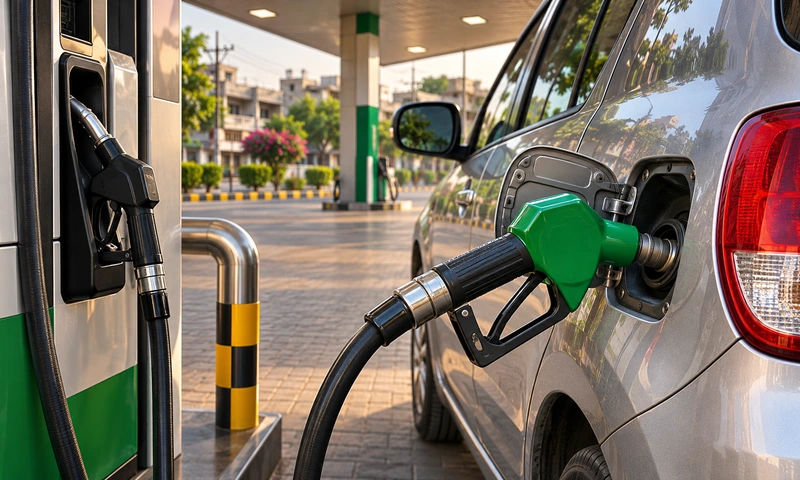
Pakistan Petroleum Levy Brings In Rs220 Billion in Two Months
The federal government collected Rs220 billion from the petroleum levy in July and August 2026. The receipts account for 13.1% of Pakistan’s annual petroleum levy target in the first two months of FY2026-27. The figures come as the government continues talks with Jamaat-e-Islami (JI) over the Rs80-per-litre levy on petrol and high-speed diesel. Petroleum levy target rises by about Rs109 billion The federal budget puts the full-year petroleum levy target at Rs1.6765 trillion. That is about Rs109 billion more than the Rs1.567 trillion the government collected in FY2025-26. Last year’s receipts exceeded the original Rs1.468 trillion budget estimate by Rs99 billion. The current fiscal year runs through June 30, 2027. The petroleum levy is one of the federal government’s largest sources of non-tax revenue. It also makes up a substantial part of the price motorists pay at the pump. Parliament has authorised the federal government to adjust the levy without seeking fresh approval for each change. Climate and vehicle levies bring in Rs34.7 billion The Climate Support Levy, also known as the carbon levy, generated Rs27.5 billion in July and August, or 55% of its Rs50 billion annual target. The government collected Rs50.159 billion under that levy in the previous fiscal year. The New Energy Vehicle (NEV) Adoption Levy brought in Rs7.225 billion over the same two months. Its full-year target stands at Rs22.481 billion. Together, the petroleum levy and the two additional charges generated Rs254.725 billion in July and August. Petrol and diesel prices fall as levy talks continue Petrol fell by Rs3 to Rs335 per litre on November 12. High-speed diesel fell by Rs7 to Rs364 per litre. The government has yet to confirm any reduction in the Rs80-per-litre petroleum levy. Under a separate 30-day arrangement announced on November 2, oil refineries will contribute a combined Rs15 billion towards the levy. The government says that arrangement enabled a Rs14.71-per-litre reduction in the petrol price. JI chief Hafiz Naeemur Rehman met Prime Minister Shehbaz Sharif in October to press for the levy’s abolition. The two sides agreed to set up a joint committee to consider expanding the existing fuel relief scheme. The scheme began on September 17 and covers owners of motorcycles, rickshaws and vehicles with engines of up to 800cc. The government and JI held another round of talks on November 11. The FY2026-27 budget framework agreed with the International Monetary Fund under its $7 billion Extended Fund Facility leaves limited room for a substantial levy cut. A lower levy could ease pump prices if the government passes the reduction on to consumers. It would also make the annual revenue target harder to meet. The government has yet to say how it will address JI’s demand.

Nvidia Board Weighs Ousting CEO Jensen Huang after Reports of a Second Affair
Nvidia’s board met late Wednesday to decide whether to remove co-founder and CEO Jensen Huang, Reuters reported, citing a person familiar with the matter. The Wall Street Journal first reported that directors were preparing to oust him. The reports followed allegations of a second extramarital affair and an Nvidia investigation into whether a foreign intelligence operation targeted Huang. Nvidia did not immediately comment on the meeting, and the board’s decision remained unclear. Nvidia investigates reported foreign intelligence effort On Sunday, Huang acknowledged a relationship with Alice Huang in a note to employees, writing, “I was unfaithful to my wife.” The two share a surname and have no family connection. Alice Huang held a senior role at Megaspeed, a Singapore-based data centre company and major Nvidia customer. The Journal reported that photographs showed the two together in Taipei in 2024 and 2025. US intelligence officials reportedly circulated a memo in the spring alleging that Alice Huang was an asset of China’s Ministry of State Security. US authorities have also scrutinised whether Megaspeed helped Beijing obtain advanced Nvidia chips subject to US export restrictions. Read More: Apple Takes On Microsoft and Nvidia With Macs Built for Local AI Nvidia’s board announced an independent investigation on Sunday. A committee of independent directors will oversee the inquiry with help from outside counsel. The board said it had confidence in Huang and his leadership team. It also said it had no reason to believe the matter had compromised US national security or Nvidia’s confidential information. “I support the investigation and will cooperate fully. I love our country and our company,” Huang wrote. Three Republican House committee chairs have asked him to brief lawmakers behind closed doors on November 18. Second affair report adds pressure as Nvidia shares fall The New York Times reported Wednesday that Huang, 63, had a second affair with Kimberly Powell, 48, Nvidia’s vice president of healthcare. Powell reported to Huang and has publicly promoted Nvidia’s work in healthcare and higher education. The Times cited video evidence and said the two “were seen being affectionate at the hotel” during a conference in San Jose, California. Powell did not respond to the Journal’s request for comment. Nvidia shares fell more than 8% in extended trading Wednesday. The company is due to report quarterly results on November 17. Retail investor Mark Kistenmacher filed a proposed class action in California on Monday. The complaint alleges that Nvidia and Huang misled investors about the relationship with Alice Huang and its national security implications. Read More: Nvidia Warns Customers of Major AI Server Price Increase Huang accepted the National Medal of Science from President Donald Trump last month. He joined Elon Musk, Jeff Bezos and Mark Zuckerberg in pledging industry self-regulation of AI. Trump rejected calls for government oversight and dismissed warnings that AI could threaten humanity’s survival. Nvidia’s graphics processing units, or GPUs, originally handled 3D visuals in video games. They now power many of the systems that train and run AI models. Taiwan Semiconductor Manufacturing Company, the world’s largest contract chipmaker, manufactures most of Nvidia’s processors.
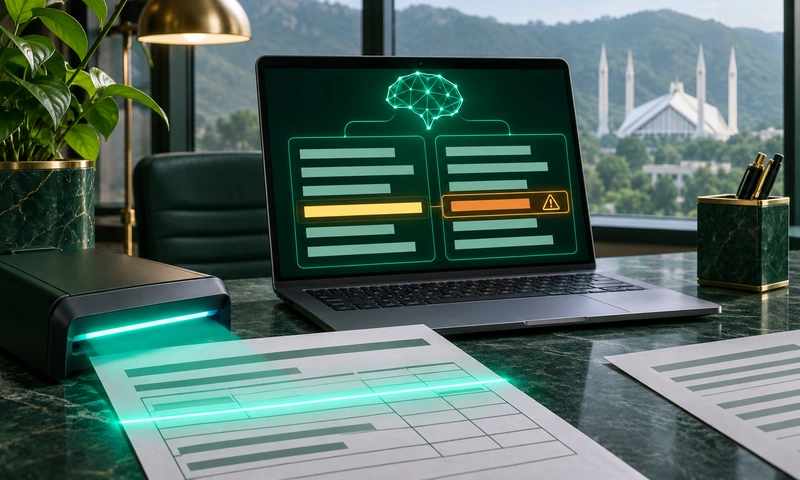
FBR’s AI will cross-check your tax return. What can it flag?
The Federal Board of Revenue (FBR) has expanded its use of artificial intelligence to check individual income tax returns for discrepancies. Taxpayers will receive an electronic alert through IRIS if the system spots a potential issue. They will have at least seven days to explain the difference or correct an error before the FBR moves to legal or penalty proceedings. The FBR released SRO 2098(I)/2026 on Wednesday, November 11, to amend the Income Tax Rules, 2002. The notification adds a rule titled “38B. Procedure for electronic scrutiny and intimation of issues detected by the automated system”. The procedure covers returns that the FBR processes under Section 120(2A) of the Income Tax Ordinance, 2001. Read More: FBR Opens New Route to Cancel Sales Tax Invoices After 72 Hours The FBR will use its automated risk management system to scrutinise returns for tax year 2026. The system will compare information that taxpayers declare in their returns with other records available to the tax authorities. It can flag factual errors, legal mistakes and discrepancies between records. The rule also provides for a Change Request Form to implement the data checks and electronic communications. How FBR tax return notices will work in IRIS The system can send an online advisory or an advance intimation through IRIS. The Officer of Inland Revenue with jurisdiction over the taxpayer can also issue the same system-generated advance intimation. The notice will identify the issue and must clearly state the deadline for a response. During that period, taxpayers can explain why the figures differ, correct a mistake or take other steps to address the issue. If a taxpayer misses the initial deadline, the system will send a reminder. That reminder must allow at least seven additional days for a reply. IRIS already handles requests to revise filed income tax returns. The FBR’s filing guidance says taxpayers can seek a revision within five years of the original filing to correct an omission or inaccurate statement. They apply through IRIS and can submit the revised return once the FBR approves the application. Inland Revenue officers will review flagged returns The officer responsible for the taxpayer will receive details of the discrepancies, the notices and any replies. The system will log every notice, response and subsequent action in a dedicated dashboard. Officers can use that record to monitor cases and check what happened at each stage. Read More: FBR Extends 2026 Tax Return Deadline to October 31 The officer will review any explanation or correction the taxpayer provides. If the taxpayer stays silent after the reminder, the officer can assess the case without a reply. The officer will then decide whether the case warrants further action under the Income Tax Ordinance, 2001, and its accompanying rules. The first step for a flagged return is therefore an IRIS alert that gives the filer a chance to address the specific issue.