

Venezuela has been plunged into one of the most severe political and security crises in its modern history following US military action near the capital Caracas and extraordinary claims from Washington that President Nicolás Maduro and First Lady Cilia Flores were captured and taken to the United States. The developments have sharply escalated tensions between the two countries and triggered widespread concern across Latin America and the international community. JUST IN: 🇻🇪🇺🇸 Close up video of Nicolás Maduro being escorted out of a plane by US authorities in New York. pic.twitter.com/SNP9KHDBxO — BRICS News (@BRICSinfo) January 4, 2026 What unfolded overnight In the early hours of January 3, 2026, explosions and intense military movement were reported in Caracas and surrounding regions. Venezuelan authorities said multiple locations were hit, describing the incident as direct foreign military aggression. Security alerts were raised nationwide, and movement was restricted in parts of the capital as the situation rapidly deteriorated. Shortly afterward, US political leadership dramatically escalated the situation. Former US President Donald Trump publicly stated that American forces had carried out a large-scale operation inside Venezuela, claiming that Maduro and Flores had been detained and flown to the United States, where they would face legal proceedings. The US is bombing Venezuela in an actual unprovoked attack. Many excuses will be given over the next days: Narco-terrorism; Hezbollah, Hamas, Iran and others “operating” in Venezuela; democracy promotion backed by the Nobel Peace Prize etc. pic.twitter.com/qhiVq0OOZu — Glenn Diesen (@Glenn_Diesen) January 3, 2026 The US justification According to US statements, the operation was linked to long-standing criminal accusations against Maduro, including allegations involving narcotics trafficking and links to armed groups—claims that have been raised by US authorities for years. Trump framed the action as a decisive step to enforce accountability, though no detailed legal documentation or congressional authorization was immediately made public, fueling debate within the United States over the legality of the operation. Trump also went further, announcing that the United States would temporarily oversee Venezuela’s political and administrative system until a new government is established—an announcement that stunned diplomats and legal experts worldwide. Venezuela’s response Venezuela’s leadership has categorically rejected the US claims, calling the events an illegal attack, an abduction, and an attempted regime change. Officials insist the country’s sovereignty has been violated and accuse Washington of fabricating or exaggerating claims to justify intervention. Emergency measures were announced, and senior officials urged the population to remain calm while warning that Venezuela would resist any foreign-imposed authority. Casualties and damage: what is known Early reports suggest that people were killed and injured during the overnight strikes, though exact numbers remain unclear and vary across accounts. Venezuelan officials have spoken of fatalities and civilian harm, while US statements have focused on the scale of the operation and said American personnel were injured but not killed. Independent verification remains limited, and analysts caution that all casualty figures should be treated as provisional until further confirmation is available. Regional and global fallout The developments sparked immediate international reaction. Cuba strongly condemned the US action, describing it as an act of state terrorism, while reactions across Latin America have been sharply divided—reflecting deep political splits over Venezuela’s leadership. International concern has focused heavily on sovereignty, international law, and precedent, with growing calls for emergency discussions at global forums, including the United Nations. Wider impact beyond Venezuela The crisis has also disrupted regional travel and commerce. Heightened security measures and airspace restrictions led to widespread flight cancellations and delays across parts of the Caribbean and northern South America, affecting thousands of passengers. What happens next Several critical questions remain unresolved: Governance in Caracas: Venezuelan institutions say they remain in control, but the balance of power is uncertain amid conflicting claims. Legal battle ahead: If Maduro is indeed in US custody, the case is expected to trigger a major legal and diplomatic confrontation over jurisdiction and international norms. Risk of escalation: Analysts warn that further military action or retaliatory measures could destabilize the region and deepen an already volatile crisis. While many details remain contested, one reality is clear: US–Venezuela relations have entered an unprecedented and dangerous phase, with consequences that could reshape regional politics and global debates on intervention and sovereignty.
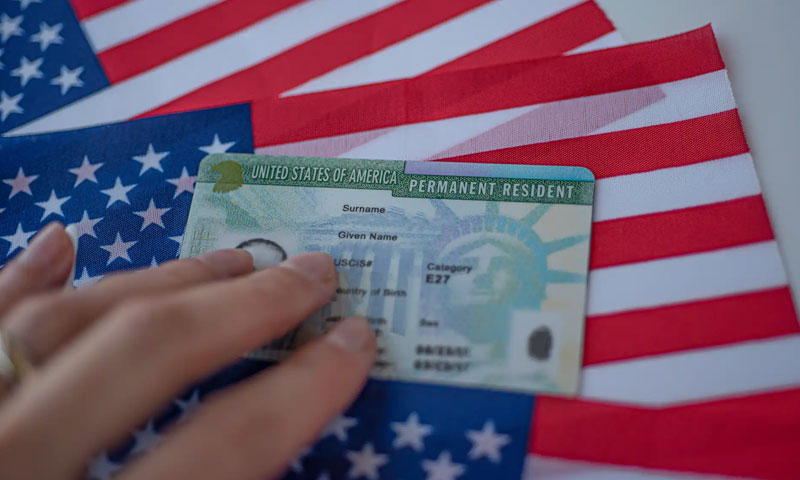
Marriage to a US citizen is no longer a guaranteed route to a Green Card
A Permanent Resident Card commonly known as a Green Card allows immigrants to live and work permanently in the United States and places them on the pathway to eventual citizenship. While Green Card holders do not enjoy all the rights of US citizens, they are entitled to many key legal and social protections. For decades, marriage to a US citizen has been viewed as one of the most reliable ways to secure permanent residency. Under US immigration law, the spouse of an American citizen qualifies as an “immediate relative”, making them eligible to apply for a Green Card through the US Citizenship and Immigration Services (USCIS). However, immigration attorney Brad Bernstein says that legal marriage alone is no longer sufficient. Speaking in a recent social media video, Bernstein—who has more than three decades of experience and practices at the Law Offices of Spar & Bernstein—said marriage-based applications are now being examined far more aggressively. Authorities, he explained, are focused less on marriage certificates and more on whether couples genuinely live as spouses. “Being married does not get you a Green Card,” Bernstein said. “Living together gets you a Green Card.” Cohabitation under intense scrutiny Bernstein cautioned that couples who are married but live separately face a high risk of denial. According to him, USCIS officers give little weight to explanations such as work, education, finances or convenience. “Immigration officers don’t care why you live apart,” he said. “They only care whether you actually share a home as husband and wife.” Under current enforcement practices, a marriage is considered bona fide only if the couple maintains a shared residence and daily life together. Failure to do so, Bernstein warned, often triggers deeper investigations, tougher interviews and, in many cases, outright rejection of the application. “If spouses are not living together full-time, the case is already in trouble,” he said, urging applicants in such situations to seek legal advice before filing. How USCIS assesses ‘good faith’ marriages USCIS evaluates marriage-based Green Card cases by examining the “totality of the relationship,” rather than relying solely on documents or addresses. Officers look for evidence that the marriage was entered into in good faith, with a genuine intent to build a life together. Under USCIS policy, a marriage may be legally valid yet still denied if officials determine that the couple had no real intention to live together and entered the union primarily to bypass immigration laws. Part of a broader immigration crackdown The tougher approach reflects wider immigration measures under President Donald Trump, whose administration has tightened several legal immigration pathways. These steps have included suspending the Diversity Visa Lottery, which previously offered up to 50,000 visas annually to applicants from underrepresented countries. USCIS has also shortened the validity period of work permits for Green Card applicants to 18 months and ordered a sweeping review of permanent residency holders from 19 countries previously labelled “countries of concern.” The increased oversight follows a series of violent incidents involving Green Card holders, which the administration has cited as justification for stricter enforcement. For prospective applicants, immigration experts say the message is clear: marriage alone is no longer enough. Proving a shared life—under one roof—has become central to securing a marriage-based Green Card.

From First Fireworks to Final Countdown: Where the New Year Starts and Ends
As fireworks light up skies around the world and countdown clocks hit zero, the arrival of a new year is not as simultaneous as it feels. In fact, due to the way Earth is divided by time zones, it takes 25 full hours for the New Year to sweep across all inhabited parts of the planet. At the heart of this staggered celebration is the International Date Line — the imaginary boundary that marks where each new day begins and ends. While it generally follows the 180th meridian in the Pacific Ocean, the line doesn’t run straight. That’s because, as explained by the National Oceanic and Atmospheric Administration, the date line has no legal international status. Countries are free to decide which calendar day they observe — and some have used that freedom to their advantage. The First Place to Ring in the New Year The honor of welcoming 2026 first belongs to Kiritimati (Christmas Island), part of the island nation of Kiribati. Although the island lies almost directly south of Hawaii, it celebrates the New Year a full day earlier. This wasn’t always the case. Before 1995, the International Date Line actually split Kiribati, meaning different islands were living on different calendar days. That changed when the country’s president shifted the date line eastward to wrap around the nation, unifying its time zones. The decision unexpectedly placed Kiribati at the very front of the global calendar — a move that also ensured it became the first country to welcome the year 2000. As a result, Kiribati entered 2026 when it was still 5 a.m. on December 31 in the US Eastern Time Zone. Soon after, Samoa and Tonga followed, with Auckland in New Zealand becoming one of the first major cities to celebrate the New Year with large public events. The Last to Say Goodbye to 2025 On the opposite end of the timeline are Niue and American Samoa. Located just southwest of Kiribati, these islands are the final inhabited places on Earth to enter the New Year. By the time American Samoa welcomes 2026, much of the world has already been living in the new year for nearly a full day. In US Eastern Time, the moment arrives at 6 a.m. on January 1 — closing the 25-hour global New Year journey.
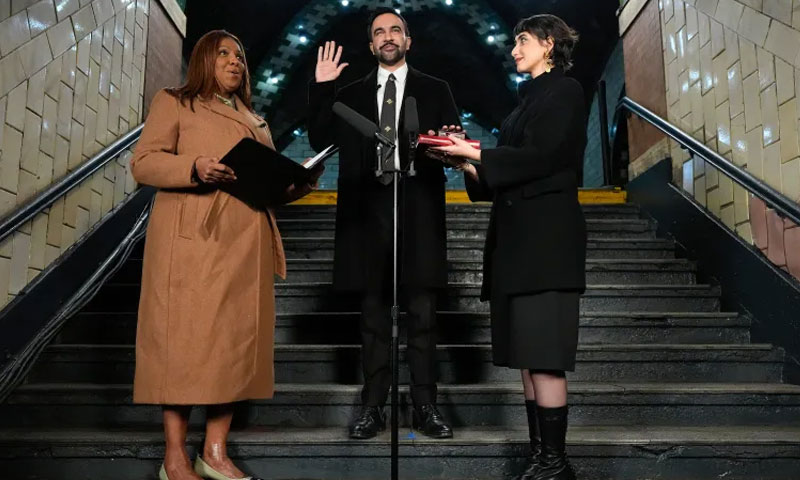
Zohran Mamdani Makes History as New York City’s First Muslim Mayor, Takes Oath on the Quran
Zohran Mamdani has officially assumed office as the mayor of New York City, marking a historic moment as the city’s first Muslim mayor and the youngest to lead the metropolis in generations. The 34-year-old Democrat was sworn in just after midnight on Thursday at a rare and symbolic location — the long-decommissioned City Hall subway station in Manhattan. During the ceremony, Mamdani placed his hand on the Quran while taking the oath, underscoring the city’s deep-rooted diversity and multicultural character. Calling the moment “the honour and privilege of a lifetime,” Mamdani said the responsibility of leading the United States’ largest city was both humbling and deeply personal. The oath was administered by New York Attorney General Letitia James, a close political ally, inside the historic station known for its ornate arches and architectural beauty. Zohran Mamdani becomes the mayor of New York City after taking the oath of office at an historic, decommissioned subway station in Manhattan. Mamdani was sworn in as the first Muslim leader of America’s biggest city, placing his hand on a Quran as he took his oath. pic.twitter.com/D6qyebCa6L — The Associated Press (@AP) January 1, 2026 Later in the day, Mamdani is scheduled to be sworn in again at a public ceremony at City Hall. The oath will be administered by US Senator Bernie Sanders, a longtime inspiration for the new mayor. The event will be followed by a public celebration on Broadway’s famed “Canyon of Heroes,” a site traditionally reserved for iconic ticker-tape parades. Beyond becoming the city’s first Muslim mayor, Mamdani is also the first mayor of South Asian descent, the first born in Africa, and one of the most closely watched progressive politicians in the country. Born in Kampala, Uganda, Mamdani moved to New York City at the age of seven. Growing up in a post-9/11 America, he has spoken openly about the challenges faced by Muslim communities during that period. He became a US citizen in 2018. Mamdani rose to prominence on a campaign centred on affordability in one of the world’s most expensive cities. His platform includes proposals for free child care, fare-free buses, a rent freeze affecting nearly one million households, and a pilot programme for city-run grocery stores. As he takes office, Mamdani inherits one of the most demanding roles in American politics — balancing bold reform promises with the daily realities of governing a city of more than eight million people, from public transport and housing to sanitation, infrastructure, and public safety.
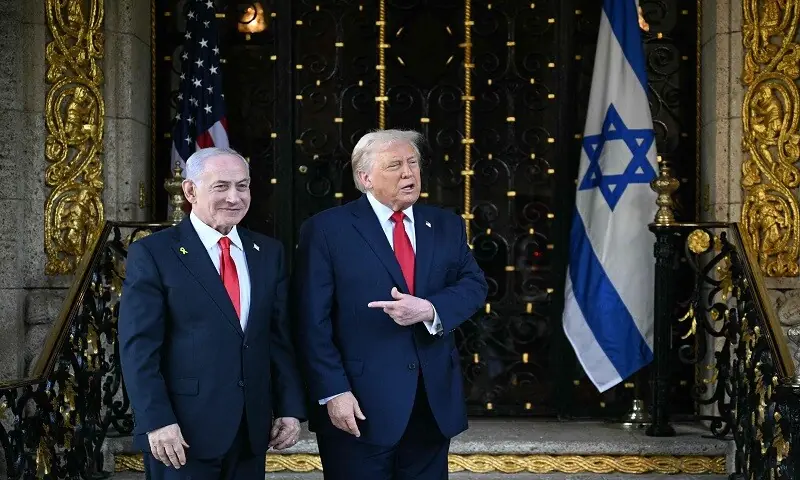
Netanyahu Meets Trump in Florida as Gaza Ceasefire and Iran Tensions Take Center Stage
Israeli Prime Minister Benjamin Netanyahu arrived in Florida on Monday for high-stakes talks with US President Donald Trump, as Washington presses for progress on the fragile Gaza ceasefire while Israel seeks to refocus attention on Iran. The meeting, held at Trump’s Mar-a-Lago residence, comes amid growing concern within the White House that both Israel and Hamas are delaying the second phase of the Gaza truce agreed last year. US officials believe the next stage is critical to preventing a renewed escalation in the war-ravaged enclave. According to sources familiar with the talks, Trump intends to push Netanyahu to move forward with phase two of the agreement, which includes Israel’s military withdrawal from Gaza, the establishment of a temporary technocratic Palestinian authority, and the deployment of an international stabilization force. Netanyahu, however, is expected to use the meeting to emphasize what he describes as the growing threat from Iran. Israeli officials say he will urge Washington to maintain pressure on Tehran and consider further action against its missile and nuclear capabilities. Ahead of his meeting with Trump, Netanyahu held separate discussions with US Secretary of State Marco Rubio and Defense Secretary Pete Hegseth. His office said the talks focused on Gaza’s future security framework and regional threats. Israeli government spokesperson Shosh Bedrosian said Netanyahu would insist that Gaza must be fully demilitarized and that Hamas be stripped of its weapons — a demand the group has repeatedly rejected. Hamas’s armed wing, the Ezzedine al-Qassam Brigades, reiterated on Monday that it would not surrender its arms while Israeli occupation continues. In a video statement, the group also confirmed the death of its longtime spokesperson, Abu Obeida, months after Israel said he was killed in an airstrike. The Gaza ceasefire, brokered with international mediation, is considered one of the major foreign-policy achievements of Trump’s return to the White House. The first phase led to the release of nearly all Israeli hostages taken during Hamas’s October 7, 2023 attack, while Israel scaled back major military operations. Despite this, mutual accusations of ceasefire violations persist. Israeli strikes have continued in parts of Gaza, while negotiations on governance and security arrangements have stalled. Reports suggest Trump hopes to announce a Gaza transitional plan as early as January, potentially unveiling it at the World Economic Forum in Davos. However, US officials are said to be increasingly frustrated with Netanyahu’s reluctance to commit publicly to the roadmap. Analysts say tensions are also rising over Iran. While Israel argues Tehran is rebuilding its missile capabilities, some US experts believe the issue is being amplified to justify renewed confrontation. Iran has dismissed reports of imminent conflict as psychological warfare and warned that any new attack would trigger severe retaliation. As diplomacy intensifies, the outcome of the Trump-Netanyahu talks could prove decisive for both Gaza’s future and the broader stability of the Middle East.
