

US President Donald Trump has dramatically escalated pressure on Iran, announcing a sweeping new tariff policy aimed not only at Tehran but also at countries that continue to trade with it. In a social media post on Monday, Trump said the United States would impose a 25 percent tariff on any country doing business with Iran while also maintaining commercial ties with the US. He said the measure would take effect immediately, describing it as “final and conclusive,” though he did not clarify which countries would be targeted first. The announcement comes as Iran faces its most serious wave of unrest in years. Protests, initially sparked by economic grievances, have spread nationwide and evolved into a broader challenge to the ruling system that has governed the country since the 1979 Islamic Revolution. According to economic data platform Trading Economics, Iran’s largest trading partners include China, Turkiye, the United Arab Emirates, and Iraq — all nations with varying degrees of trade exposure to the United States. Iranian authorities have responded to the unrest with force and a near-total internet blackout, measures that rights groups say are intended to obscure the true scale of casualties. The Norway-based NGO Iran Human Rights warned that the communications shutdown has made independent verification of deaths and injuries nearly impossible. “The international community has a duty to protect civilian protesters against mass killing by the Islamic republic,” said IHR director Mahmood Amiry-Moghaddam. Despite the crackdown, protests have persisted for more than two weeks, defying heavy security deployments. Iranian officials have blamed foreign powers for inflaming the unrest and have organised mass pro-government rallies in response. On Monday, Iran’s supreme leader Ayatollah Ali Khamenei, who has ruled since 1989, claimed the demonstrations had failed. Speaking on state television, he said large counter-rallies across the country sent a “warning” to the United States and showed that foreign-backed plans had been thwarted. At a rally in Tehran’s Enghelab Square, parliament speaker Mohammad Bagher Ghalibaf accused the US and Israel of waging a “four-front war” against Iran, citing economic, psychological, military and internal security pressures. He warned that any direct attack would provoke a severe response. Meanwhile, Washington signalled that military options remain on the table. The White House said Trump was “unafraid” to use force if necessary, while still prioritising diplomacy. The US State Department also issued a fresh warning to Americans in Iran, urging dual nationals to leave the country using Iranian passports and cautioning that US citizens face a high risk of detention. China swiftly rejected Trump’s tariff threat. A spokesperson for the Chinese embassy in Washington said Beijing opposed “unilateral sanctions and long-arm jurisdiction,” warning that tariff wars benefit no one and vowing to protect China’s interests. Europe, meanwhile, has taken a harder political stance. The European Union said it was considering additional sanctions over Iran’s handling of protests, while the European Parliament banned Iranian diplomats from its premises. French President Emmanuel Macron condemned what he called indiscriminate state violence against protesters. Russia, a key ally of Tehran, criticised what it described as foreign interference in Iran’s internal affairs, signalling deepening geopolitical divisions as the crisis unfolds. With protests ongoing, diplomacy fragile, and economic pressure intensifying, Iran now finds itself facing mounting isolation — and the growing risk of a broader international confrontation.

Meta Appoints Former Trump Adviser Dina Powell McCormick as President and Vice Chairman
US technology giant Meta has announced a major leadership appointment, naming Dina Powell McCormick as its new President and Vice Chairman, marking a significant expansion of her role within the company. In an official statement released on Monday, Meta said Powell McCormick will join its senior management team after previously serving on the company’s board of directors. The move comes as Meta intensifies its long-term focus on advanced artificial intelligence, large-scale computing infrastructure, and what it describes as the pursuit of “personal superintelligence.” Meta founder and CEO Mark Zuckerberg said Powell McCormick’s global experience and policy background make her a strong fit for the company’s next phase. “Dina’s leadership experience, combined with her deep relationships across governments, finance, and international institutions, positions her uniquely to help guide Meta’s strategy as we scale our most ambitious technologies,” Zuckerberg said. In her new role, Powell McCormick will help shape Meta’s overall strategic direction and oversee execution at the highest level. She will also work closely with teams responsible for compute capacity and infrastructure — areas that have become central to Meta’s AI ambitions. The company added that she will lead efforts to secure new strategic capital partnerships and explore innovative funding models aimed at expanding Meta’s long-term investment capabilities. The appointment drew a public reaction from US President Donald Trump, who congratulated Powell McCormick in a post on his social media platform Truth Social. Calling the decision “a great choice,” Trump praised her past service, saying she had represented his administration “with strength and distinction.” Powell McCormick previously served as deputy national security adviser during Trump’s first term. Earlier in her career, she held senior roles in the George W. Bush administration, including assistant secretary of state and senior White House adviser, building a long résumé spanning diplomacy, national security, and global finance. She stepped down from Meta’s board in December 2025, a move that fueled speculation about a broader operational role — speculation now confirmed with her elevation to one of the company’s top leadership positions. Her appointment underscores Meta’s growing emphasis on blending political, financial, and technological expertise as it positions itself at the forefront of the next wave of artificial intelligence development.
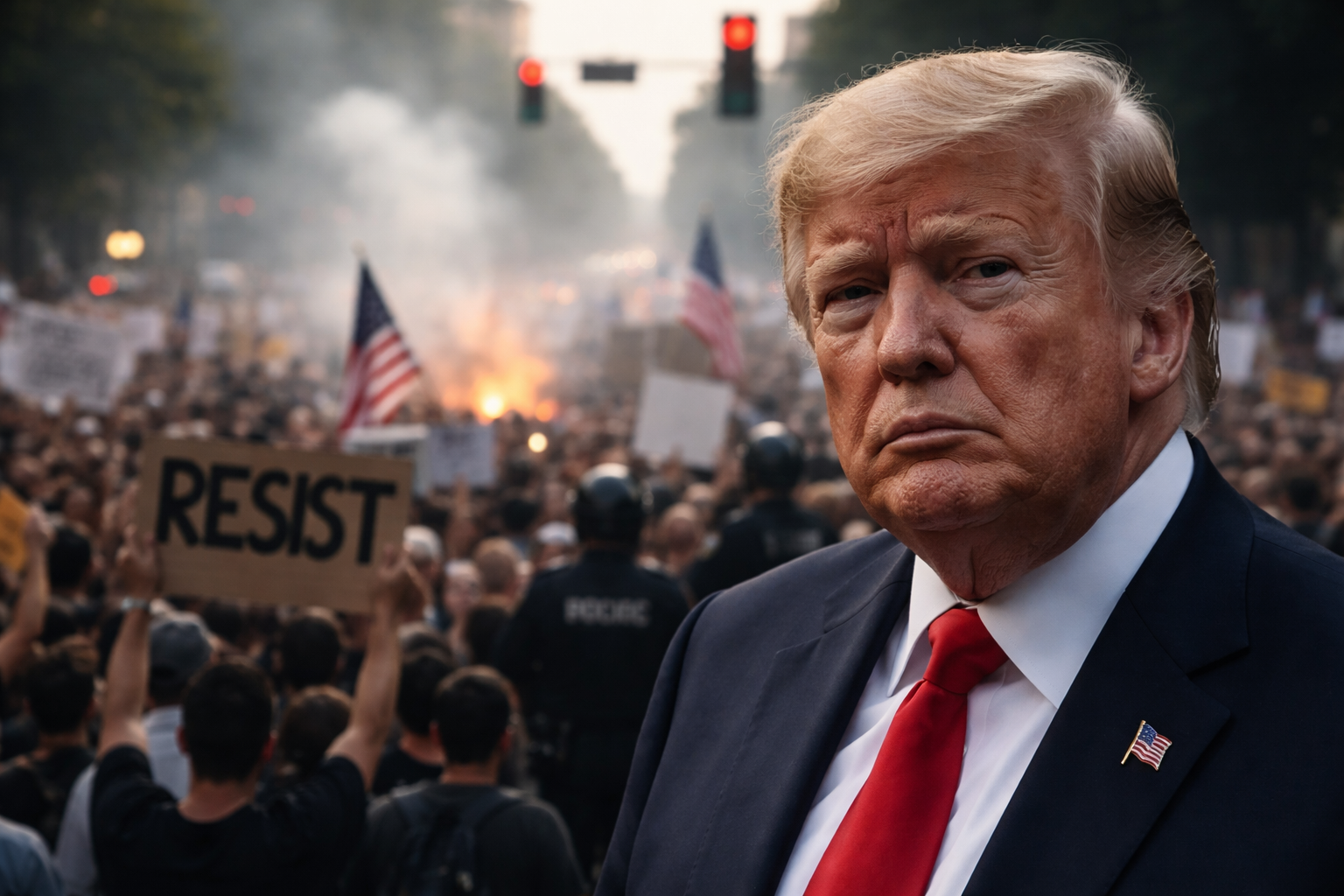
America on the Streets: Why Rising Protests Are Testing Trump’s Grip on the Presidency
From Minneapolis to major coastal cities, a widening wave of protests against Donald Trump is turning into one of the most sustained opposition movements of his current tenure—raising questions about how much political pressure the White House can absorb while pushing controversial policies. The latest flashpoint emerged in Minneapolis, where thousands poured onto the streets after a fatal shooting involving a federal immigration officer during an enforcement operation. City officials described the incident as unjustified, while federal authorities defended the officer’s actions. The clash ignited days of demonstrations, some peaceful and others tense, forcing local authorities to deploy additional police and issue repeated appeals for calm. Massive protests in Minneapolis happening right now demanding justice for Renee Good. A revolution is brewing. The people are fed up with the system. We need this all over the country. It’s the only way to make change! pic.twitter.com/mGjXvVCpKf— Power to the People ☭🕊 (@ProudSocialist) January 10, 2026 What stands out, however, is that Minneapolis is no longer an exception—it has become part of a nationwide pattern. How widespread are the protests? Independent protest-tracking initiatives and academic research paint a clear picture: opposition to Trump’s policies has translated into tens of thousands of protest events across the United States since January 2025. Civil rights groups and grassroots coalitions have coordinated hundreds to more than a thousand demonstrations on single national days, while smaller, localized protests continue almost daily. Importantly, these rallies are not limited to traditionally liberal urban centers. Research shows that more than a third of U.S. counties have witnessed at least one protest in peak months, including areas that previously voted for Trump. Unlike one-off protest surges seen in earlier political cycles, this movement has shown persistence. Protest activity has flared repeatedly around immigration enforcement, civil liberties, and federal-state tensions—creating a rhythm of mobilization rather than a single moment of outrage. Why this matters for Trump’s presidency Street protests alone do not remove a U.S. president from office. Yet analysts warn that the scale, spread, and consistency of the current demonstrations could still pose a serious challenge to Trump’s ability to govern effectively. First, the geographic reach matters. When opposition activity spills into politically mixed or conservative-leaning regions, it increases pressure on Republican lawmakers and local officials who must balance party loyalty with voter sentiment. 🇺🇸 Protests erupt in several cities across the United States🚨 The United States rises up in protest against Trump’s repressive policies. pic.twitter.com/PcGz2IZHJy— China pulse 🇨🇳 (@Eng_china5) January 9, 2026 Second, the protests are policy-driven, especially around immigration raids and federal enforcement actions. Each new operation risks triggering another cycle of demonstrations, lawsuits, and political confrontation—draining time and political capital. Third, sustained protests shape the national narrative. They influence media coverage, energize opposition voters, and keep controversial policies in the spotlight ahead of critical elections and legislative battles. The bigger picture The demonstrations erupting in Minneapolis—and echoed across the country—signal that public resistance to Trump’s agenda is no longer sporadic. It is organized, recurring, and increasingly national in character. While the White House remains institutionally secure, the growing protest movement represents a long-term political stress test: not an immediate threat to Trump’s position, but a mounting force capable of complicating governance, weakening public approval, and reshaping the political landscape as his tenure continues.
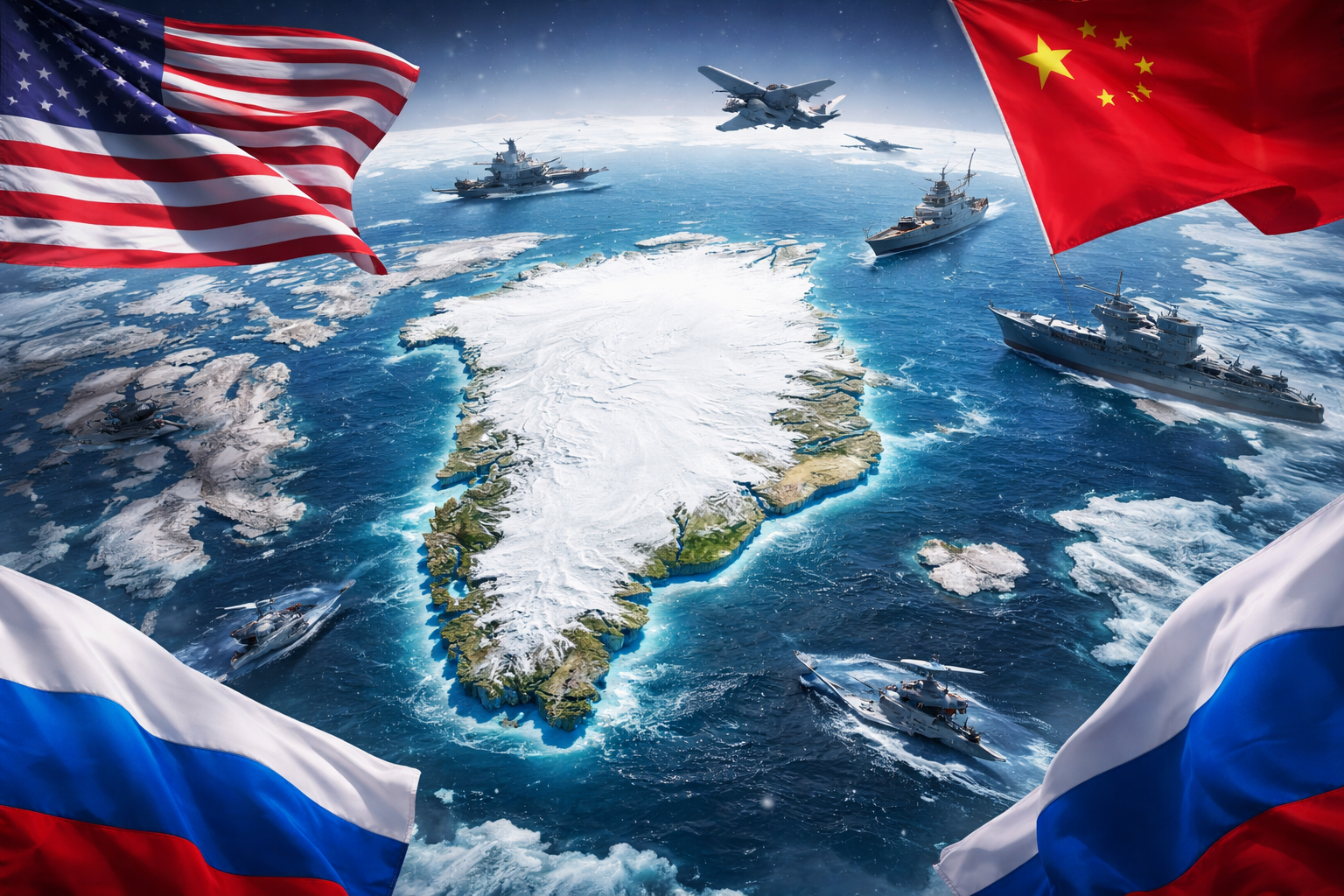
Greenland in Focus: Why the US, China and Russia Are Eyeing the Arctic Island
Greenland has emerged as an unlikely but critical focal point in global geopolitics, drawing the attention of the United States, Russia, and China. While it is sparsely populated and largely covered in ice, the world’s largest island holds strategic value far beyond its size — a fact increasingly shaping international competition in the Arctic. Recent remarks by US President Donald Trump have once again thrust Greenland into the spotlight. Trump has repeatedly argued that the United States must ensure Greenland does not fall under the influence of rival powers, particularly Russia and China, warning that losing ground in the Arctic would threaten American security interests. Greenland isn’t a joke anymore. “Easy way or hard way.” That’s not talk. That’s intent. Who blinks first? • Does Denmark concede expanded U.S. basing rights? • Does Greenland block cooperation and escalate? • Does NATO formalize Arctic security guarantees? • Does China… pic.twitter.com/AUrf9Lj1rf — BRKT 👑 (@BRKTgg) January 10, 2026 But the strategic interest in Greenland did not begin with political rhetoric. It is rooted in geography, security, and resources. A Strategic Arctic Crossroads Greenland sits at a vital junction between North America and Europe, overlooking key air and sea corridors in the North Atlantic and Arctic. As climate change continues to reduce ice coverage, the Arctic is becoming more accessible, increasing its importance for shipping routes, military movement, and surveillance. Control or influence over Greenland offers a commanding position in this rapidly evolving region. A Pillar of US Defence The United States already maintains a long-standing military presence in Greenland through the Pituffik Space Base, a critical installation for missile detection, space monitoring, and early-warning systems. This base forms part of the broader North American defence shield and plays a role that cannot easily be replicated elsewhere. For Washington, Greenland is not just territory — it is a cornerstone of strategic defence planning. Russia and China’s Growing Arctic Interest Russia has steadily expanded its Arctic military infrastructure, reopening Cold War-era bases and increasing patrols along northern routes. China, meanwhile, has adopted a long-term economic and scientific approach, declaring itself a “near-Arctic” stakeholder and investing in research, infrastructure projects, and potential future shipping lanes linked to its global trade ambitions. While China has no territorial claims in the Arctic, Western analysts increasingly view its presence as part of a broader strategy to secure influence over future trade routes and critical resources. Hidden Wealth Beneath the Ice Greenland is believed to hold significant reserves of rare earth minerals and other critical resources essential for modern technologies, renewable energy systems, and defence industries. As countries seek to reduce dependence on limited supply chains, Greenland’s resource potential has become increasingly attractive — despite the high costs and environmental challenges of extraction. Sovereignty Still Matters Despite external interest, Greenland remains a self-governing territory within the Kingdom of Denmark, and its leaders have firmly rejected the idea that the island is open for acquisition or external control. Greenlandic officials have consistently stressed that decisions about the island’s future will be made by its people, not foreign powers. The Bigger Picture Greenland’s rising profile reflects a larger shift in global power dynamics. As the Arctic transitions from a frozen frontier to a contested strategic zone, competition among major powers is intensifying. Geography, defence, resources, and climate change have combined to transform Greenland from a remote landmass into a geopolitical prize. Whether through diplomacy, defence cooperation, or economic engagement, one reality is clear: Greenland is no longer on the margins of global politics — it is firmly at the centre of a new Arctic rivalry.
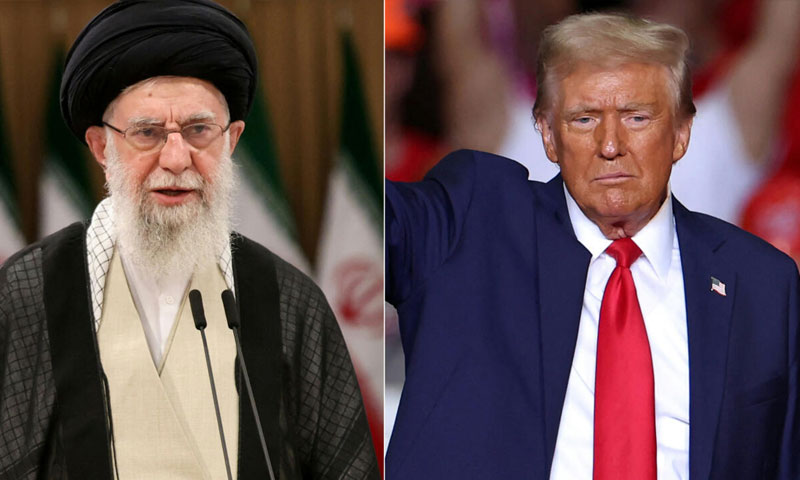
Khamenei Blames Iran Unrest on US Influence, Warns of Tougher Crackdown
Iran’s Supreme Leader Ayatollah Ali Khamenei on Friday signalled a harder line against ongoing anti-government protests, accusing demonstrators of acting in the interests of foreign powers — particularly the United States — as unrest persisted across several Iranian cities under a sweeping communications blackout. In a short address broadcast on state television, the 86-year-old leader said some protesters were “destroying their own streets to please the president of another country,” a clear reference to Donald Trump. Responding to chants of “Death to America” from the audience, Khamenei warned that the Islamic Republic would not tolerate individuals he described as “mercenaries” working on behalf of external forces. Khamenei also lashed out at Trump directly, urging him to focus on domestic challenges in the United States rather than commenting on Iran’s internal affairs. Iranian officials have repeatedly accused Washington, Israel, and their allies of encouraging instability inside the country. Defiant Rhetoric and Historical Warnings Striking a defiant tone, Khamenei dismissed what he described as threats from Trump, drawing comparisons with historical figures he said were removed from power despite their dominance. He named Pharaoh, Nimrod, Reza Khan, and Mohammad Reza Pahlavi as examples of rulers who, he claimed, fell at the height of their authority — adding that Trump would meet a similar fate. The remarks underscored the leadership’s determination to frame the unrest as a foreign-backed plot rather than a domestic uprising. Protests Continue Despite Blackout The true scale of the demonstrations remains difficult to verify due to extensive internet shutdowns and restrictions on international phone services. However, the unrest is widely seen as the most serious challenge to Iran’s leadership in several years. The protests began on December 28 over rising prices, unemployment, and economic hardship. Since then, they have evolved into broader expressions of political anger, with demonstrators openly challenging the ruling system. Exiled Royal Figure Reappears in Public Discourse The protests have also revived debate over the influence of exiled crown prince Reza Pahlavi, who has urged Iranians to sustain demonstrations. Some rallies reportedly featured chants supporting the former shah — a taboo act in the past that once carried severe punishment — highlighting the depth of public frustration. Scenes of Unrest and Official Response Short video clips shared by activists online showed crowds chanting anti-government slogans around bonfires, with debris scattered across streets in Tehran and other cities. State media later acknowledged the unrest but blamed what it called “terrorist elements” linked to the US and Israel for setting fires and inciting violence, reporting casualties without providing details. Despite official warnings and an increased security presence, protesters were reported to have continued marching into Friday morning, defying authorities as international scrutiny of Iran’s response intensified.

$1.7bn Bond Shock: Zoho Founder Faces Court Oversight as Divorce Dispute Deepens
A court in the United States has directed Sridhar Vembu, co-founder of software firm Zoho, to post a $1.7 billion bond as part of an ongoing divorce case, raising rare judicial scrutiny over corporate ownership and marital asset protection. The order, issued in January 2025 by the Superior Court of California, followed concerns that large financial and structural decisions involving Zoho-linked entities could impact the fair division of community property. The development was first reported by The News Minute. Court Cites Risk to Community Property In its ruling, the court said it was compelled to act after identifying potential risks related to asset movements made after divorce proceedings were initiated. It noted that these actions could undermine the financial interests of Vembu’s estranged wife, Pramila Srinivasan. To safeguard assets while the case proceeds, the court appointed a receiver to oversee certain Zoho-related companies and temporarily blocked a proposed corporate restructuring. According to the order, the court found reason to believe that decisions taken by Vembu — and by entities allegedly acting under his direction — could disadvantage Srinivasan’s stake in shared marital assets. Dispute Over Zoho Shareholding Srinivasan, an academic and entrepreneur based in the United States, alleged in filings submitted in November 2024 that Vembu transferred a significant portion of shares in Zoho’s US subsidiary to an entity controlled by one of his long-time associates. She claimed the transfer was structured in multiple phases and executed without disclosure. In a statement quoted by The News Minute, Srinivasan said she financially supported Vembu during Zoho’s early years, enabling him to leave paid employment and focus on building the company. She said she was taken by surprise to later learn that he claimed ownership of only a small percentage of the firm. Vembu has rejected these allegations, consistently stating that his personal stake in Zoho has always been limited to 5%, despite his role as co-founder and former chief executive. Wealth and Family Control According to the Forbes 2025 wealth rankings, Vembu and his siblings collectively hold a net worth of around $6 billion and control more than 80% of Zoho’s shares. Vembu and Srinivasan were married for nearly 30 years and raised a son in the United States. Vembu relocated to India in 2019, while divorce proceedings formally began in 2021. Who is Pramila Srinivasan Srinivasan holds a doctorate in Electrical and Computer Engineering and has spent much of her career working in healthcare technology, particularly in electronic medical records and specialised care systems. She is also the founder of The Brain Foundation, a US-based non-profit focused on autism research, treatment, and community support.
Crude Prices Climb as Venezuelan Oil Export Uncertainty and Iran Unrest Shake Markets
Oil prices climbed for a second straight session on Friday, positioning the market for a third consecutive weekly gain as traders weighed heightened geopolitical risk centered on Venezuela and growing unrest in Iran. Brent crude futures ticked up 0.71% to $62.43 a barrel, while U.S. West Texas Intermediate (WTI) crude rose 0.68% to $58.15 in early European trading. The uptick followed a rebound from recent losses, with Brent on track for about a 2.7% weekly advance and WTI up roughly 1.4% as concerns over future oil supplies intensified. Venezuela in Focus After U.S. Seizure of Maduro Market attention remains sharply focused on Venezuela after the U.S. captured President Nicolás Maduro in a high-profile operation earlier this month. The Trump administration has since signaled it will assert control over Venezuela’s oil production and exports, offering storage crude to global buyers and negotiating with U.S. traders including Chevron, Vitol, and Trafigura to move Venezuelan barrels. Traders say uncertainty about how stored Venezuelan crude will be sold — and whether inventories will be released quickly into the market — is keeping a geopolitical risk premium on oil prices. Iran Unrest Adds to Supply Risk Alongside Venezuelan tensions, unrest across Iran is adding to concerns about potential production disruptions. Nationwide protests over economic conditions have triggered internet blackouts and raised questions about the stability of Iran’s oil output. Analysts caution that unless Iran’s situation worsens significantly, the market’s rebound may prove limited, especially amid other factors weighing on crude. Oversupply and Inventories Still Key Bullish Check Despite geopolitical pressures, global oil inventories remain ample — a factor that could cap further gains in prices. Abundant supply from OPEC+ producers and rising stockpiles in consuming nations continue to exert downward pressure on crude markets. Energy analysts note that while headline risks are rising, structural oversupply and slower demand growth — driven by efficiency gains, alternative energy sources, and evolving consumption patterns — are keeping a lid on a more dramatic price surge. What’s Next for Oil Markets? Traders say the next major market catalysts will include: clarity on how Venezuelan crude will be marketed and delivered, further developments in Iran’s domestic unrest, and U.S. economic data related to oil demand and inventories. Absent significant escalation in supply disruptions, analysts believe the recent rebound may struggle to evolve into a sustained breakout rally.

Think Saudi Arabia Has the Most Oil? Here’s the Real Top 10 List
Fresh political upheaval in Venezuela has once again drawn global attention to a striking paradox: the country sitting on the largest confirmed oil reserves on Earth remains largely unable to turn that wealth into economic or energy power. Oil markets initially braced for disruption following the US removal of Venezuelan leader Nicolás Maduro. Analysts expected instability in Caracas to push fuel prices higher, particularly jet fuel. Instead, oil prices moved lower on Monday, reflecting broader supply dynamics and confidence that global output would remain sufficient. Venezuela’s reserves estimated at 303 billion barrels remain the largest proven stockpile in the world. Yet much of this oil is effectively locked underground, constrained by years of mismanagement, sanctions, underinvestment, and infrastructure decay. A world rich in oil, but uneven in power The renewed attention on Venezuela comes alongside a widely circulated list on social media ranking the world’s top countries by confirmed oil reserves. The comparison highlights a fundamental reality of today’s energy landscape: large reserves do not automatically translate into high production. Oil Reserve Barrels 🇻🇪 Venezuela — 303,200 M 🇸🇦 Saudi Arabia — 267,200 M 🇮🇷 Iran — 208,600 M 🇨🇦 Canada — 163,100 M 🇮🇶 Iraq — 145,000 M 🇦🇪 United Arab Emirates — 113,000 M 🇰🇼 Kuwait — 101,500 M 🇷🇺 Russia — 80,000 M 🇺🇸 United States — 74,400 M 🇱🇾 Libya — 48,400 M 🇳🇬 Nigeria —… pic.twitter.com/oPnbVqUeeM — Evelyn Janeidy Arevalo (@JaneidyEve) January 4, 2026 Venezuela tops the list in terms of proven reserves, yet its current output remains well below historical levels due to long-standing structural and economic constraints. In contrast, some countries with comparatively smaller reserves produce larger volumes of oil, driven by technological methods such as shale extraction and intensive field development. The disparity underscores a widening divide between nations that hold vast underground resources and those that are able to sustain high levels of production, illustrating how policy, investment, and infrastructure often matter as much as geology in determining energy influence. OPEC’s dominance — on paper The list also shows the continued dominance of OPEC members. Collectively, OPEC countries hold close to 1.7 trillion barrels, accounting for more than 60 percent of global proven reserves. After Venezuela, Saudi Arabia ranks second with around 267 billion barrels. Riyadh retains significant flexibility over supply, producing roughly 9 million barrels per day while coordinating output cuts through OPEC+ to manage prices. Iran and Iraq follow with approximately 209 billion and 145 billion barrels, respectively. Both countries play critical roles in regional energy flows, despite sanctions, political instability, and infrastructure pressures. Sanctions, chaos, and market reality Western sanctions on Venezuela, Iran, and Russia have tightened long-term supply forecasts, particularly looking toward 2026, according to Reuters. However, record output from the US and steady production from Canada and Brazil have helped prevent major shortages. Energy analysts warn that Venezuela’s instability is unlikely to ease quickly. As a result, markets increasingly rely on Middle Eastern stability and North American abundance to balance global demand. Beyond oil The renewed attention on oil reserves comes at a moment when the global energy transition is accelerating. As geopolitical shocks expose the fragility of oil dependence, investment continues to shift toward renewables and diversification. The lesson from the rankings is clear: oil reserves still matter, but technology, governance, and stability matter more.

Security Shock in Cincinnati as US Vice President JD Vance’s Home Is Targeted
A security scare unfolded early Monday morning outside the Cincinnati residence of US Vice President JD Vance, prompting a swift response from local police and the US Secret Service. Authorities confirmed that a suspect has been taken into custody following reports of suspicious activity and property damage. The incident occurred shortly after midnight in the East Walnut Hills neighbourhood, where law enforcement officers were dispatched after receiving reports of a possible break-in. According to officials, responding officers observed an individual running eastbound near the vice president’s home, triggering an immediate search of the area. When police arrived at the property, they discovered multiple shattered windows, raising concerns about a potential intrusion. Officers quickly secured the scene, and a suspect was arrested nearby soon afterward. Authorities have not yet disclosed the individual’s identity, motive, or the specific charges that may be filed. Officials stressed that the investigation remains active, and further details will be released once more information is confirmed. Vance and family were not home Vice President Vance and his family were not present at the residence at the time of the incident. According to reports, Vance departed Cincinnati on Sunday afternoon. Notably, the city had recently lifted road closures and security checkpoints around the property before the incident occurred. 🧐Un terroriste de gauche à brisé des fenêtres de la maison de JD Vance dans l’Ohio Heureusement, sa famille n’était PAS là. La gauche ne s’arrêterapas, jamais.pic.twitter.com/YR5NuLfQIR — ⚜ France for Trump ⚜ (@VirginiePerez15) January 5, 2026 Investigators are still working to determine whether the suspect managed to enter the home. While broken windows were clearly visible, authorities said there is no confirmed evidence yet that the house was breached beyond the exterior damage. Secret Service response The US Secret Service joined Cincinnati police officers at the scene and assisted with securing the property and conducting the initial investigation. After several hours, Secret Service agents left the area, while local police continued monitoring and inspecting the home throughout the morning. Residents in the neighbourhood reported a heavy police presence, with patrol vehicles and police tape surrounding the property as investigators worked. Neighbours and passersby gathered at a distance, watching developments unfold. Investigation ongoing Cincinnati officials have so far released limited information. They confirmed that a suspect is in custody but declined to comment on whether the incident was politically motivated or a random act of vandalism. Authorities said they are collecting evidence and reviewing security footage. Police indicated that an official update is expected later in the day as investigators assess the full extent of the damage and clarify what occurred.
Elon Musk Backs Venezuelans as Starlink Offers Free Internet After Maduro’s Removal
Billionaire entrepreneur Elon Musk has voiced public support for the people of Venezuela as Starlink, operated by SpaceX, announced it would provide free broadband internet access across the country for a limited period amid dramatic political changes. In a post on X on Sunday, Musk wrote, “In support of the people of Venezuela,” while sharing Starlink’s official announcement. The company said it would offer free broadband service through February 3, aiming to maintain connectivity during a period of political uncertainty. In support of the people of Venezuela 🇻🇪 https://t.co/JKxOFWsikP — Elon Musk (@elonmusk) January 4, 2026 The announcement followed a stunning development in Caracas, where the United States confirmed the capture of Venezuelan leader Nicolás Maduro. Footage released by US authorities showed Maduro in handcuffs during a staged perp walk, where he appeared calm and briefly addressed reporters and US Drug Enforcement Administration agents before being taken into custody. The sudden removal of Maduro created an immediate leadership vacuum in Venezuela. Within hours, the country’s Supreme Court issued an emergency ruling assigning interim authority to Vice President Delcy Rodríguez. Reading the decision on state television channel VTV, Supreme Court Justice Tania D’Amelio said Maduro was in a “material and temporary impossibility to exercise his functions.” The court ordered Rodríguez to assume all presidential powers to ensure administrative continuity and what it described as the comprehensive defense of the state. The ruling cited provisions in Venezuela’s constitution that require the vice president to take over executive authority in the event of a president’s temporary or absolute absence. Musk reacted positively to Maduro’s arrest earlier, posting in Spanish: “Venezuela ahora puede tener la prosperidad que merece” (“Venezuela can now have the prosperity it deserves”). His comments quickly gained traction online, especially among Venezuelans who have long struggled with internet restrictions, censorship, and infrastructure breakdowns. Reliable internet access has been a persistent challenge in Venezuela, where outages and state control have limited digital communication. Starlink’s temporary intervention is expected to help citizens stay connected to news, emergency services, and family abroad during the transition period.
